The Ultimate 5-Minute Binary Strategy for Quotex (With Proof)

What is Quotex? Full Platform Walkthrough for Beginners (2025 Update)

How to Withdraw Quotex Profits to Crypto Wallets Instantly

I still vividly recall the day I hit the most significant win on Quotex. I had just finished three successful trades, and it felt like I was on top of the world. The funds were already in my Quotex wallet, and I was excited to withdraw them. 

I still vividly recall the day I hit the most significant win on Quotex.

I transferred it to my bank account and waited patiently for the amount to be credited. To my surprise, I was met with a hold that dragged on for days. To make matters worse, my bank placed the transaction under review. I was stuck in a frustrating cycle of identity verification, source of income explanation, and waiting for the next business day. When the money finally came through, the excitement had long dissipated.

This was a real eye-opener for me. I realized there had to be a quicker and more reliable way to access my funds. That’s when I discovered the power of cryptocurrency wallet withdrawals. Thankfully, you don’t have to go through the frustrations I did. 

In this blog, I will explain how to withdraw winnings from Quotex immediately through a cryptocurrency wallet like Binance. Whether you’re a first-time trader or already making a killing, this guide will show you how to quickly eliminate the wait time and frustration and transfer your money where you want it.

Is it easy for Quotex to withdraw profits from a crypto wallet?

Quotex has made its withdrawal process a lot easier, and the quickest way to get your funds is through a crypto wallet. I was sceptical when I initially transitioned from traditional withdrawal processes, and I believed it would be too complex or even too high-tech. But to my surprise, it was much simpler than I anticipated. 

Is it easy for Quotex to withdraw profits from a crypto wallet

One of the main reasons for using crypto wallet withdrawals is the speed of the transactions. If you choose cryptocurrency, your money moves faster than it would through the usual banking system. What would take two or three working days with a bank transfer would take less than an hour via cryptocurrency.

There’s also the benefit of not being subject to bank restraints. Crypto doesn’t mind whether it’s a weekend, a holiday, or whether your bank has imposed arbitrary thresholds. You can initiate a transfer at midnight on Sunday and see the money in your wallet a few minutes later.

Cryptocurrency wallets like Binance also offer global access. Whether you’re in Asia, Europe, or Africa, it doesn’t matter. Wherever you go, your crypto goes with you. This is why search terms like “Quotex Bitcoin payout” and “crypto wallet payouts” have become increasingly popular.

Binance is my preferred wallet platform. It’s secure and simple and accepts a variety of cryptocurrencies, including Bitcoin (BTC) and Tether (USDT), which Quotex also accepts.

Step-by-Step Guide: How to Withdraw from Quotex

Step-by-Step Guide How to Withdraw from Quotex

Follow this simple step-by-step guide and cash out your winnings quickly and safely:

Step 1: Log in to Your Quotex Account

Start by logging in to your Quotex account. This will be the starting point when opening your wallet and requesting a withdrawal. After you’ve logged on, you will see your account balance at the very top of the dashboard.

Step 2: Visit the Withdraw Section

A list of menu options appears on the left side of the dashboard. Click on “Withdraw.” It will take you to the withdrawal screen and give you plenty of options. E-wallets and bank cards are my preferred cryptocurrency options. You will choose the cryptocurrency option since we’re trying to do this as efficiently and quickly as possible.

Step 3: Select Your Preferred Cryptocurrency

Quotex supports multiple cryptocurrency types, but Tether (USDT) and Bitcoin (BTC) are the two most used for withdrawing money. I like working in USDT on the TRC20 network because it’s cheaper and has faster confirmation period than Bitcoin. If you’re used to working in Bitcoin or already hold some in your account, you can withdraw in whatever cryptocurrency you prefer. This means you can easily convert them into the currency of your choice.

Step 4: Get Your Binance Wallet Address

You should now find the correct receiving address in your Binance account. Open Binance and go to Wallet. Go to “Fiat and Spot” and look for USDT or Bitcoin, depending on which you used on Quotex. Click on “Deposit,” choose the correct network (TRC20 if you used USDT or BTC if you used Bitcoin), and copy the receiving address pop-up.

It’s so important to be on the right network. For example, if you choose TRC20 on Binance but choose a different network on Quotex, your funds will be lost forever. I always double-check the network and even copy and paste the address into a notepad to ensure I don’t have any hidden characters or formatting errors.

Step 5: Give Withdrawal Details and Confirm

Copy a Binance wallet address and paste it into the corresponding address on Quotex. Enter the amount you would like to withdraw. The system will automatically show the amount of cryptocurrency you’ve chosen. Carefully review everything and then press “Confirm.”

Step 6: Confirm the Withdrawal via Email

Once you’ve confirmed on Quotex, they will email you asking you to confirm the withdrawal. They do this for your safety and security, and I appreciate it. Please open the email and follow the link included in it. This will tell Quotex to complete your transaction.

Your withdrawal will be in a queue and sent on the blockchain shortly. My USDT withdrawals generally take less than 30 minutes to reach my Binance.

Quotex Crypto Withdrawal Time and Bank Transfers

Let’s talk time. My verdict is that Crypto withdrawals are faster. Isn’t this a good thing? I want to present you with my experience using both methods.

Quotex Crypto Withdrawal Time and Bank Transfers

With Crypto, I withdrew $150 in USDT (TRC20) once. The request was made exactly at 10:14 AM on Quotex. By 10:36 AM, the funds were already in my Binance wallet, which took precisely 22 minutes. There is no waiting around, no verification calls from the bank, no surprises, just a pure and easy transfer process.

However, compare this with a bank withdrawal I tried to make at the start of this year. I initiated the withdrawal request on a Friday morning, expecting the cash in the evening. Unfortunately, I didn’t receive the funds until Tuesday afternoon because of the weekend and regular inter-bank lag time. That’s nearly four full days of wait time and practically an eternity if you’re working in the time-sensitive confines of trading on the web.

Thanks to Crypto, everything is different now. Blockchain operates around the clock, 24/7. It doesn’t mind a Sunday evening or a holiday when humans don’t work. No intermediaries delay things here. As soon as a withdrawal has been released from Quotex and put on the network, the blockchain delivers it from there.

Moreover, there are a few differences that you need to note when it comes to transaction fees. Fees on the TRC20 network will be less than a dollar. For instance, Bitcoin will sometimes be higher due to congestion issues, but it’s generally less expensive and more transparent than bank processing fees. And be fair, you’re paying for reliability and expediency, which are worth the investment.

Real User Scenario: Instant Crypto Payout Success

Let me take you through one of my recent withdrawals step by step so you can get a realistic impression of how quick and easy this has become.

Surprisingly, I closed a few trades, and they both went well. I was already in high spirits and proceeded to withdraw $200 in USDT through the TRC20 network, as it has the lowest fee and extremely high speed. I placed my withdrawal request at Quotex at exactly 8:12 AM. It was a matter of a few clicks, copying and pasting my receiving wallet address on Binance. It also authorized the amount and completed the transaction through the link sent via email from Quotex.

Only 17 minutes later, at 8:29 AM, a message came from Binance. My funds had arrived. That’s quick when everything goes smoothly. I immediately checked the transaction hash on the blockchain, and the three confirmations were already in place. There was no question about it, no sitting around waiting for it to arrive or wondering if it would come soon or be delayed.

This was not a strange moment of fortune either. I make it a habit to withdraw like this each time I cash out on Quotex.

Troubleshoot and Common Issues

While it’s effortless to cash out at Quotex to a cryptocurrency wallet, it’s a good practice to understand what technical issues you may experience. Based on personal experience and feedback from other users, the following are the three most probable issues you will likely face in the process and their practical solutions.

Troubleshoot and Common Issues

1. Delayed Withdrawals

One of the most common issues is a delayed payment. If you’ve waited longer than an hour and your funds haven’t yet been credited into your wallet, you should sign in to your Quotex account and review the Transaction History.

If you see a “Pending” status, a few things could have happened. The most likely reason is that you haven’t confirmed Quotex’s email to approve the withdrawal. This confirmation step is a security measure, and your transaction won’t go through until you click the link in that email.

Other possible causes for the delay could be selecting the wrong blockchain network or experiencing network congestion. For example, TRC20 transactions are generally faster than BTC ones. If it’s a congestion issue, just hang tight. And if you’re ever in doubt, don’t hesitate to contact Quotex for clarification.

2. Invalid Wallet Address

Sending funds to the wrong wallet address is a big no-no since crypto deposits are irreversible. If your funds end up at an incorrect or incompatible address, they cannot be returned. To avoid costly mistakes, I suggest copying and pasting your wallet address from Binance and not manually typing it out.

Here is the best trick that works for me. Before you transfer a larger amount, you could try making a small test withdrawal from the new address to ensure all is well. This helps you prevent huge losses. 

3. Network Fees and Confirmations

Each blockchain has a confirmation time and fee mechanism. For example, TRC20 (USDT) is confirmed quickly and cheaply. For less than $1, confirmation for Bitcoin (BTC) usually takes longer and has a higher fee system, especially when the network has a lot of traffic.

The most important thing to remember here is the accurate matching of networks. When you add your Binance wallet address in Quotex and choose the wrong network type, e.g., ERC20, your funds might be lost if your wallet only supports TRC20. Make sure both platforms (Binance and Quotex) share the same type of network before proceeding.

Awareness of those possible issues and acting on a best-practice level ensures a smoother and safer withdrawal experience. Taking those few extra seconds to double-check information will give you the maximum speed and convenience of cryptocurrency wallet withdrawal.

Withdraw Your Trade Earnings with Quotex Today

Getting your profits from Quotex doesn’t have to be challenging or time-consuming. Having crypto makes it run smoother and more pleasurable. Switching to crypto payouts completely changed how I managed my trade earnings.

With an exchange like Binance, all of this is easy to do. It’s quick, it’s secure, and it’s where you happen to be anywhere in the world. It doesn’t matter if your bank permits certain transfers or if it’s a holiday. Crypto is 24/7.

If this is your first time, I suggest starting small. Do a trial withdrawal and get comfortable with the steps. Once you see the money land in your wallet in minutes, you’ll understand why crypto is the future of payouts. You control your funds, whether you’re going for a Quotex Bitcoin payout or a USDT withdrawal.

Say goodbye to delays and restrictions. With crypto, you can trade, profit, and cash out, sometimes in under 30 minutes. It’s efficient and empowering, and it’s now the only way I withdraw from Quotex.

FAQs

Withdrawal of profits from Quotex directly to Binance?

Yes, you can do so. Just copy your Binance receiving address for the cryptocurrency of your preference (e.g., USDT or BTC), paste it on Quotex in the withdrawal option, and approve it through email. The amount will be received in Binance in approximately an hour.

What crypto is best for Quotex payouts: Bitcoin or USDT?

They’re both accepted, but I prefer using USDT on the TRC20 network as it’s much faster and cheaper. Bitcoin’s okay, but it will take some time, depending on blockchain congestion.

Is there a fee for crypto withdrawals from Quotex?

Yes, and they’re small ones. USDT (TRC20) will generally have a network fee of less than $1. Bitcoin’s fees will be higher when the network is congested.

Quotex Risk Management: How to Protect Your Capital

I spent my week trading on Quotex, feeling like I was living in a fairy tale, but it quickly became a nightmare. In just two days, I went from making $160 to a $100 loss, and by the end of the week, my account was empty. 

I was in a losing streak and overtrading with no proper plan. It wasn’t until I hit rock bottom and felt humbled that I realised something significant about proper trading.

It is not about how quickly you can have your money where you want, but how long you can keep playing the game.

When you trade blind, it’s essentially like rolling the dice. That’s when the likes of Quotex come into play as the tools that teach you valuable lessons to those adventurous traders riding blind. And the good news is that you can protect your capital and trade wisely even if you have a small trading account by employing the right risk management tools. 

Through this guide, you will learn the practical approaches that I know to survive and succeed in Quotex. We’ll discuss the fundamentals of stop-loss orders, how to manage your positions, and the importance of risk-reward ratios. Moreover, I will provide examples of charts and insider secrets to avoid pitfalls.

Why Is It Important to Safeguard Your Capital?

When you want to become a great trader in sites like Quotex, the aim is much further away than making fast gains. 

The objective is to survive and use consistency to develop. This is equivalent to dealing with your capital in all ways possible. Without a risk management protocol, one trade can take days, weeks, and even months to make profits, which you would have made from that initial capital.

The markets are a mind of their own. Even with the best of plans, some things are out of your control, such as economic announcements, unexpected price movements, or the market’s instability. For that reason, maintaining your capital is even better than any other idea you can think of. You cannot trade if there is nothing to trade with.

I have been there too. Once, I got into a position without the protection of a stop-loss, thinking that it would be a “sure thing”. The price exceeded my expectations, and I lost almost 40% of the account before I started to know about it. It was painful, but it was a lesson. Capital preservation is the path to the long run.

Stop-Loss Techniques: Your First Line of Defense

Stop-Loss Techniques: Your First Line of Defense

Stop-loss is one of the simplest and most effective strategies for managing risk. It is a safety net that closes for you whenever the market is moving against you. A stop-loss is used to specify how much loss you can endure in a trade. Here are some of the stop-loss techniques you can apply:

1. Fixed Stop-Loss

A stop-loss is the loss you will endure before closing the trade. For instance, you purchase EUR/USD at 1.1000 and set the stop-loss at 1.0980. When the price hits 1.0980, you close the trade, and the loss is restricted at $20. It is a simple way to prevent losing more than you want.

When I started to trade, I once had a fixed stop-loss, which closed my trade with minimal losses. But remember, there is always a catch; you must choose the right level. If it’s set too tight, you’ll get stopped out just because of the usual market ups and downs. Conversely, you could face much bigger losses if it’s too loose.

2. Trailing Stop-Loss

A trailing stop-loss is a flexible technique that you can apply. The stop-loss follows the market. When the trade goes your way, the stop-loss tracks the price, helping secure your profits. If the price starts to reverse, the trailing stop kicks in and closes the trade.

For example, assume that you are buying EUR/USD at 1.1000. The price shifts to 1.1030, and the trailing stop can shift to 1.1010 in the background to lock in a $10 profit. As the price moves higher, the stop-loss follows. But if the price dips, the trade closes, and your profit is safely tucked away.

I prefer to employ a trailing stop-loss when seeing a strong trend. It lets me ride bigger moves while still locking in profits.

3. Common Stop-Loss Mistakes

A significant mistake most traders often make is placing their stop-loss too close. For example, the market may move against you only a few pips, and you are out of the trade. Just because that happens doesn’t mean that your trade idea was wrong; sometimes, it is just a normal market fluctuation. 

I found this hard when using a too-tight stop-loss in a volatile market. A thumb rule would be to place your stop away from the solid support or resistance levels. This way, you leave your trade time to breathe a bit.

Position Sizing: Don’t Go All In

As a novice in trading, you will believe that since the risk is increased, the more you earn. This is, however, a dangerous attitude when trading. Once you add more risk to your trading, a handful of consecutive bad trades can wipe out your trading account.

Why Position Sizing Matters

Position sizing is all about the amount of capital you’re willing to risk in each trade. You should also know that position sizing is even more important than choosing the right asset. If you risk too much per trade, you will lose before you even have the chance to master your skills.

Most professional traders risk only 1-2% of their account balance per trade. Doing this gives you plenty of capital to continue trading even with a losing streak.

The Percent-Risk Model

The percent-risk model is a simple, effective strategy. You are risking the same percentage of the account with all the trades. If you have a $1,000 account and risk 2% per trade, you risk $20 on every trade. If the trade hits your stop-loss, you lose $20.

It helps maintain your capital and minimises the risk of blowing your account. Regardless of whether there are some consecutive losses, the account balance will not change.

Calculating Position Size

Assuming you have $ 1,000 in your account, you wish to risk $1 from each trade, which equals $10 altogether. Your stop-loss is at 20 pips. For starters, if you consider a 20-pip stop-loss available at your disposal, you must find a way to trade on the asset in terms of pip value without going overboard to spend more than 10 bucks.

Here is a general position sizing formula:

Position Size = Amount to Risk / Stop-Loss Distance

Since the value per pip is $0.50 for EUR/USD, you can trade 0.5 lots if your risk is $10 and you have a 20-pip stop-loss.

You can ensure a losing streak won’t wipe out an account with the correct position sizing.

Risk-Reward Ratios: Only Take Trades That Make Sense

The risk-reward ratio tells you how much you stand to gain against how much you are risking in a trade. A good ratio helps to determine whether or not to take a trade.

What Is a Risk-Reward Ratio?

The risk-reward ratio is a function of the amount you can earn against the amount you are willing to risk. For example, if you are willing to put at risk $10 to make $30, possibly, that implies you are ready to make a 1/3 ratio. In other words, you could win three for the dollar you risk.

I aim for a risk-reward ratio of at least 1:2, meaning I collect at least two dollars for every dollar I risk. If you maintain a favorable risk-reward ratio, you are not forced to be right on every trade. You have a greater chance of being profitable even if you lose 50% of the trades.

Common Risk-Reward Setups

Some standard risk-reward contracts are:

  • 1:1 is a break-even point where you risk $10 to receive $10. It is not the best, but it is appropriate for some market conditions.
  • 1:2 – It is a good wager where you wager $10 to earn $20.
  • 1:3—This is a good structure where you wager $10 to generate $30. This is the best ratio for me.

An individual should always consider whether the risk justifies the potential reward. A transaction should not be made if the risk regarding the possible return is not explained.

Examples of Good vs. Bad Risk-Reward Ratios

Let us consider two trades:

Bad Example: You can lose $100 to win $50. That is a 10:5 ratio. You will lose even if you’re right 60% of the time.

Good odds: You wager $100 to win $200. That is a 2:1 ratio. A 50% win ratio can allow you to break even.

You should look for the second one. It also has better long-term financial success.

Bonus Tips for Quotex Trading Safety

In addition to risk-reward relations, stop-losses, and position-sizing, I have several other risk-management habits in my arsenal when trading on Quotex.

1. Don’t Chase After Losses

One of the worst errors traders make is chasing losses. Every time they execute a losing trade, they believe they must double up to cover the loss. This only results in even larger losses.

Instead of pursuing losses, I exit a losing trade. I step aside, calm down, and start again with the system with a clear head. I thereby avoid revenge trading, a path to disaster.

2. Keep a Trading Journal

The trade journal is an excellent tool. It keeps you organized and on track with how you are progressing by putting a few words on paper every once in a while. With each trade that I make, I make sure that I have the following noted:

  • Point of entry
  • Point of exit
  • Why did I make the trade
  • Take profit level
  • Stop-loss level
  • What went right or wrong

By referring to my journal, I’m able to identify patterns in my behavior. I may constantly lose in certain market conditions or be overly aggressive at the end of the day. A journal helps me improve over time.

3. Use Demo Mode to Test Strategies

Before I test a new strategy or trading technique, I try it in demo mode. Demo mode allows you to practice without risking real money, and it is a good way to test new strategies and concepts. 

4. Stick to Your Plan

When you are filled with emotions, it may be tempting to double down or go off-game about your trading plan. Believe me, I’ve learned that it is essential to stick to your strategy. If you have specified a particular risk for every trade, don’t blow it up because you feel lucky. Remember, consistency is key!

Protect Your Capital at All Costs with Quotex

Capital protection at Quotex is not about avoiding losses at all costs. It is simply preserving your risk in a rational, controlled way. Use stop-loss orders, position-sizing, and appropriate risk-reward ratios to keep you from risking the entire account on a single transaction. 

Use the following to increase your chances of long-term market profitability. Remember that risk management is not about fearing losing, but being smart and preparing for long-term success. Stay disciplined, stay smart, and happy trading!

Get 50% on top of your deposit when you sign up through here.

Quotex VIP Program: Do You Need the Upgrade?

Everything changed when I joined a traders’ community channel. I noticed a small group of names consistently raking in profits far beyond what I was making. They weren’t any luckier. They happened to be Quotex VIP members.

Quotex VIP Program

That night, I began investigating what VIP status on Quotex entailed. I had to figure out if all the hype was genuine or if there was a way to boost my earnings. After a couple of weeks of testing, diving into research, and late-night conversations with my assigned account managers, I had my answer.

In this article, I’ll take you through everything I’ve learned over time about the benefits of upgrading (Quotex VIP Program), show you the upgrade process, and help you decide whether upgrading is right for you.

What is the Quotex VIP Program?

The Quotex VIP account is a premium account for active traders who want to take their trading to the next level. This VIP level offers more returns, faster withdrawals, one-on-one assistance, and special tools than the basic account.

By the way, if you sign up with this link, you’ll get 50% off your first deposit on Quotex.

To help you better understand the VIP program, I’d like to draw an analogy between basic accounts and a regular car whose core function is to get you from A to B. In contrast, the VIP account is like a sports car, offering quicker and more responsive performance.

The program is designed to reward both loyal customers and high-volume traders. It’s not concealed in jargon applications or cryptic language. The more capital you invest in the platform, the more VIP Quotex upgrades you automatically receive. The platform closely monitors your deposit and the number of trades behind the scenes. Once you cross the mark, you are welcomed into the VIP club.

However, you need to understand that this level is for traders who:

  • Make large or frequent trades
  • Seek quicker access to capital
  • Prioritize direct support and personal guidance
  • Seek out enhanced signals and intelligence

What I’ve learned over the years is that VIP privileges are not all about flashy badges. The enhanced commissions and resources make a significant difference, particularly when trading large volumes.

Quotex VIP Benefits: What You Get

Quotex VIP Benefits What You Get

The list below is an outline of the most essential benefits that make VIP traders different from other account holders:

1. Higher payout percentages

Standard users make a maximum of 87% on successful trades. VIP users make as much as 98%. At first glance, that difference might not seem like a big deal, but it adds up over time. In a single test with over 50 trades, my VIP account made 12% more profit from the same positions.

2. Faster withdrawals

Before joining VIP, waiting for withdrawals was like watching wet paint dry. The process was agonizingly slow. However, with VIP withdrawals, my payments are typically processed within 24 hours. For instance, I recently made a $500 withdrawal on a Friday afternoon. The funds arrived in my account by Saturday morning. This speed is essential when you need to reinvest or pay bills.

3. Personal account manager

I still enjoy the personal touch to my account. My VIP manager, Maria, responded within minutes to questions. She set up custom alerts for me, outlined complicated strategies, and even provided a market overview before the significant announcements.

4. Exclusive signals and tools

Basic account users receive general indicators. VIP users receive advanced alerts, customizable chart templates, and priority access to webinars. I used a VIP-exclusive volatility heat map to discover profitable breakout trades. To my surprise, it paid for itself in the first week.

5. Personalized rebates and bonuses

Sometimes, there are significant general sales, yet personalized offers are even better. Being part of a VIP trader has allowed me to receive rebates for my losses and bonuses for the amount I deposited. Thanks to that little help, I overcame a few rough times.

6. Prioritized entry to tournaments

Quotex holds regular monthly trading contests. And if you are a VIP user, you get priority access and larger prizes. For instance, I recently participated in a weekday contest, which I ended up winning third place, earning just enough to cover my VIP entry deposit.

Here’s a quick comparison table of the core benefits:

FeatureStandard AccountVIP Account
Maximum Payout RateUp to 87%Up to 98%
Withdrawal Processing Time2–5 DaysWithin 24 Hours
Dedicated Account ManagerNoYes
Advanced Signals & Market ToolsBasicPremium
Custom Bonuses & CashbackNoYes
Tournament PriorityNoYes

Each one of them is great individually. All together, they change the trading process.

VIP vs Regular Accounts: Profitability Comparison

Numbers do not lie, and trading on Quotex is no exception. Even a difference of percentage points can significantly impact your overall profit. Let us examine this in the real world by comparing the results of regular and VIP accounts.

Suppose you enter a single trade for $1,000. For a standard account with an 85% payout, a winning trade will earn you $1,850. That’s your initial $1,000 investment plus a $850 profit. 

Suppose you make the same trade but use a VIP account, which can provide a 90% payout. Here, your winning trade will earn you $1,900, with a profit of $900. That $50 difference may not seem significant at first, but over the long term, it adds up to a substantial amount.

The extra five percent can add up to thousands of dollars yearly, especially if you frequently make big trades or trade regularly. For example, if you execute 100 successful trades of $1,000 each, you could pocket an additional $5,000 in profit with a VIP account compared to a standard one.

Apart from the numbers, the additional benefits of faster withdrawal, improved trading instruments, and personal assistance can also elevate your trading game. All of the above enhance decision-making and reduce delays, thus further increasing long-term gains.

How to Become a Quotex VIP

How to Become a Quotex VIP

Moving to a Quotex VIP account is a simple process, and it is your first step towards a more powerful and rewarding trading experience. Here is how to become one:

1. Make the Qualifying Deposit

The first step towards becoming a Quotex VIP is depositing a qualifying amount. Quotex demands a minimum deposit of $1,000 or equivalent in your native currency. It is not a charge but your very own trading capital, which you can utilize for any trade on the platform. 

P.S. You can get up to 50% off your first deposit by signing up here.

For my case, when I upgraded to a VIP, I made the deposit using my favorite e-wallet and had the amount reflected in my account within minutes. If you are depositing with cryptocurrency or transferring funds from a bank, the process will be slightly different, although it remains fast and reliable.

2. Automatic Upgrade

The upgrade is usually automatic once you have deposited the $1,000 into your trading account. You are not required to fill out application forms or contact support to upgrade. You will know about the upgrade when you notice a VIP badge on your profile. 

You can also be greeted with an upgrade welcome message or email. I had a smooth process for this upgrade, which was hassle-free, making it even more satisfying.

3. No VIP fees every month

Maintaining your VIP status is as simple as can be. You do not have to pay any upgrade or recurring monthly fees. You only need to keep in mind that you must be active. If you withdraw over half your initial investment or do not make trades over extended periods, your VIP status can be reviewed and revoked.

To steer clear of this, you should make frequent trades, even if you only do so a handful of times a week. Also, leaving a little capital in your account demonstrates that you’re an active trader.

4. Confirm through Dashboard

To verify your VIP status at any moment, log in to your Quotex dashboard. Your profile will display the badge. In addition to this, your account manager might even contact you to provide support. For instance, when I first saw the VIP icon, I knew I had reached a new level in my trading endeavors.

Generally, the upgrade process is quick, efficient, and one that will reward diligent traders. If you are determined to optimize your trading returns and prepared to advance your trading skills, becoming a Quotex VIP is an intelligent and accessible step.

Is the Quotex Premium Account Worth It? 

I have explained the benefits, profit disparity, and upgrading process for the Quotex VIP account. But now the ultimate question is: Is it worth it for you? The answer is entirely up to the way you trade, the amount you trade, and what is most valuable to you in your trading. 

Who Will Benefit the Most from VIPs?

To help you better understand who benefits the most, I’ve condensed it down to five trader types to make things easier to understand:

1. High-Frequency Traders

If you’re trading daily or just a few times a week, you’ll find that even the smallest changes in payout percentages can significantly impact your earnings. Usually, the average trader can make an 87% return, while VIP members can make as much as 98%. The 11% difference becomes even more significant when multiplied by hundreds or dozens of trades.

For instance, a trader placing two weekly trades for $100 each can earn an additional $220 weekly from the VIP commission alone. A month later, that’s almost $900 in profit. Such a return easily repays the $1,000 deposit used for the upgrade.

2. Large-Capital Traders

A winning trade will give you more if you are betting with a higher amount. On the other hand, account holders without premium access may not derive as much benefit from trading, which means that traders could be missing out on potential profits.

An example is a $1,000 trade with an 87% payout, which yields $870 if profitable, but at 98%, it yields $980. The $110 extra cost becomes more noticeable as your trades increase in size. 

The VIP account can significantly increase your earnings when you trade over $500 regularly and often make monthly trades. And because withdrawals are quick, it becomes a more convenient choice.

3. Traders employing sophisticated techniques

Traders who use more sophisticated strategies can benefit from VIP-only tools. When trading using signals, technical indicators, or a specific market event, the VIP tools can make a significant difference. 

VIP members receive a more advanced analysis of the market, personalized signals, and educational materials, which can lead to more accurate entries and improved risk management. For those who have been relying on third-party services for technical setups or signals, Quotex’s integrated VIP tools help minimize dependence on external services.

When VIP May Not Be Worth It

The upgrade may not work out for everyone. Below are a few scenarios in which I would advise waiting:

1. Casual or periodic traders

Unless you are a frequent or heavy trader, the VIP upgrade will not be a worthwhile investment. With capital and volume, benefits are achieved. A person who executes a handful of $20 weekly trades will not see much difference in earnings. You will be fairly paid as a regular user without needing a large deposit.

2. New Traders Still Learning

If you’re diving into trading or just getting the hang of the platform, starting with a basic account is the way to go. VIP tools and sophisticated functionality can be overwhelming for a first timer. Prioritize becoming good at it first. After you have a solid methodology and are trading significant sums, upgrading is the next step.

3. Platform Testers

When considering exploring many exchange sites to compare features, execution speed, or accessibility, there is no need to commit $1,000 upfront. Use the standard account to test whether Quotex is your long-run option. You can upgrade later when you’re certain.

Is it Worth Upgrading to VIP?

The Quotex VIP program benefits serious traders who want to maximize their profits. The lucrative payout percentages alone can be a game-changer, especially for large traders with substantial capital. 

Additionally, they receive priority withdrawal handling and one-on-one service. Such benefits ensure a smoother and more profitable trading experience.

Nonetheless, the upgrade is not suitable for everyone. The upgrade will be less helpful for beginners and casual traders until their trading volume is more regular and substantial. You must balance your volume, style, and goals before making a decision.

Ultimately, if you are intent on actively trading and are willing to use all the features, upgrading to Quotex VIP can be a great move. It is an investment in your trading success worthy of serious consideration. Sign up here to get 50% off your first deposit on Quotex.

FAQs

1. Can I lose VIP status once I qualify?

Yes. Extended inactivity or withdrawal of most of your deposit will prompt a status review. Be active to maintain your VIP privileges.

2. Does the VIP account guarantee higher profits?

No trading platform guarantees a profit. VIP provides you with additional payments and tools, yet your risk management and strategy ultimately determine your outcomes.

3. Are there any hidden fees?

No, you are not subject to a recurring VIP charge. You only have regular trading fees and spreads, with no additional VIP charge.

4. What if I deposit in a different currency?

The $1,000 is converted to your account’s currency by Quotex. Visit the deposit page for exact equivalents. 

5. How quickly can I start withdrawing as a VIP?

The majority are settled within 24 hours. I have used both e-wallet and banking withdrawals, and have experienced regular speed-ups compared to the usual processing times. 

How to Trade Forex on Quotex Like a Pro

Have you ever felt intimidated by the complexity of forex trading? You are not alone if you have been struggling to understand market dynamics. 

But have you ever considered what risk management to use, how to enter trades, and how to set profit and spot exit levels? Many beginner traders don’t have a forex trading strategy. Most of the time, they get into the forex market without one. As a result, they get frustrated and lose, like I did as a noob trading on Quotex. The easy money lured me in, but the market showed no mercy since I had no trading plan.

This guide will equip you with the knowledge and tools to trade on the Quotex platform like a professional. It explores the best Quotex forex strategies and how to implement them.

Key Takeaways

  1. Major pairs to begin – when starting out, stick to dependable ones like EUR/USD or USD/JPY. They are less unpredictable, which is advantageous.
  2. Price action over indicator soup – avoid clutter using clear charts and support and resistance zones.
  3. The key to profitability is to practice discipline: don’t wing it, track news religiously, and test strategies in the demo account. 

Top Quotex Forex Trading Currency Pairs for Beginners to Start With

Top Quotex Forex Trading Currency Pairs for Beginners to Start With

EU/USD: The “Vanilla” of Forex, Predictable and Chill

The EUR/USD is the world’s most traded currency pair, known for its liquidity and relatively smooth movements. It is less “scary” for new traders, allowing them to predict direction better and use profitable Quotex forex trading strategies. 

The fact that it is predictable somewhat depends on the stability of the US economy and the Eurozone, which gives starting traders a strong grounding to gain experience.

GBP/USD: A Bit More Action, but Still Manageable

Referred to as “Cable,” the GBP/USD pair has a volatility edge compared to the EUR/USD pair and can thus be more profitable. However, this higher mobility requires a more localized approach. 

To make smart trading decisions, beginners need to pay attention to economic data from the US and UK, like employment figures and interest rate decisions.

USD/JPY: Moves at a Pace That’s Not Too Crazy

USD/JPY is another favored pair for newbies because of its moderate volatility and good liquidity. The Japanese yen is considered a safe-haven currency that may appreciate during periods of market illiquidity. Analyzing the economic ties between the US and Japan allows traders to understand the possible market trends, which is important for developing strategies.

Pairs to Avoid Initially: The Wild Ones

Even though exotic pairs like USD/TRY or USD/ZAR can offer high returns, novices should avoid them due to their unpredictability and low liquidity. 

These pairs frequently experience abrupt and notable price fluctuations due to economic instability and geopolitical events. Before entering these erratic markets, obtaining experience with major pairs is best.

What Makes Forex on Quotex Different from Other Assets?

Not Like Crypto or Binary Options

Not Like Crypto or Binary Options

Forex trading differs from other assets, such as cryptocurrencies or binary options, on our Quotex trading platform. 

While crypto markets are open 24/7 and run on technological trends coupled with market sentiment, forex markets run on macroeconomic fundamentals and open and close on a set schedule within market hours.

Alternatively, binary options are speculation on an asset’s price movement within a specific timeframe and can result in a win or lose scenario. Forex trading also gives the option to have more control over the trades by stop-loss and take-profit levels.

Short Timeframes = Quicker Decisions

We support short-term forex trading with 1-minute, 5-minute, and other time frames. These smaller time frames necessitate quick decisions on the part of any trader involved and also place a premium on a defined plan and rapid reflexes. If not applied correctly, these can lead to swift profits and losses.

Movement Depends on Global Money Talk, Not Just Tech Trends

Global economic indicators, from interest rates to inflation data to employment statistics, play a major role in Forex markets. 

Whereas social media fads or tech trends can influence cryptocurrencies, forex trading requires understanding macroeconomic fundamentals and how they apply to currency values. Keeping track of economic calendars and news releases is essential to preparing for market moves.

Volatility Hits Different Here

Forex market volatility presents opportunities as well as potential dangers. The major currency pairs are less volatile than exotic pairs, which makes them more suitable for beginners. 

However, sudden price changes due to unforeseen economic occurrences or geopolitical conflicts are also a possibility. One way to help avoid losses during these volatile times is to employ risk controls such as stop losses and caps.

Quotex Forex Strategy Basics (That Don’t Suck)

Stick to One or Two Pairs Only at First

Limiting the number of currency pairs to trade allows the trader to study each pair’s behavior and the reasons behind its movement. The more concentrated scope allows for more insightful analysis of specific market movements and, ultimately, trading decisions. 

Once they have gained confidence and experience, they may also want to add extra pairs to their portfolio.

Focus on Price Action, Not Shiny Indicators

Technical indicators are good, but they will result in analysis paralysis only if used as a guide and not as an isolated truth. Price action trading is the method of studying past prices to spot patterns in the market that may help predict future movements. 

This practice allows the trader to focus on understanding market psychology and reacting to the actual price dynamic rather than following the signals generated by lagging indicators.

Use Support and Resistance Range Zones; Keep It Clean

Locating these critical support and resistance zones aids traders in locating possible entry and exit points. 

Support levels show the price point at which the price will cease declining and begin to increase, and resistance levels point out the price that begins to stop increasing and starts to decrease. Identifying these ranges in charts allows traders to plan and trade more informedly, including setting stop-loss and take-profit levels.

Risk Only What You’re Fine Losing

Risk management is an important factor in forex trading. Risking small amounts of their trading capital on any given trade, generally between 1% and 2%. Our risk management tools will also assist in getting the right amounts to execute trades easily without risking the entire account. 

In this way, the whole account is not risked on a streak of losing trades, which keeps traders in the game longer and allows them to learn from their experiences.

Trade Slow, Don’t Chase Wins

Patience is a virtue in forex trading. Chasing after quick profits or recovering losses rapidly can lead to impulsive decisions and increased risk. Developing a disciplined trading routine, sticking to a planned strategy, and avoiding overtrading are essential for long-term success.

Timing > Volume (Less Is More Here)

Forex traders need to be patient. Pursuing short-term gains or attempting to recoup losses quickly leads to rash decisions and higher risk. The keys to success are having a solid trading plan, being disciplined in following that plan, and not overtrading. 

Pro Tips Most New Traders Miss

Find Pro Tips for Trading on Quotex

Don’t Switch Pairs Too Fast

One of the new trader’s biggest mistakes is regularly switching currency pairs, hoping to find the “perfect” one. The result is superficial understanding and suboptimal decisions. 

The best practice on Quotex is to focus on one or two pairs and learn how these markets behave, and it will be easier to predict movement and work on your strategy as you go along. 

Each pair has its own reaction to news, economic events, and technicals. Jumping around only diffuses a trader’s attention and causes a lot of unnecessary losses.

Consistency is an incredibly strong ally in trading. Staying with a familiar pair allows the trader to recognize repeating situations and be sensitive to changing circumstances. Discipline in picking partners is an underrated but essential quality for long-term success.

Always Check the News (Economic Calendar = Free Edge)

Forex trading is not only about technical charts but is also correlated with world economics. Currency prices can be substantially affected by inflation figures, interest rates, geopolitical developments, jobs reports, etc. Quotex traders who do not do this are basically trading in the dark.

The good news is that staying on top of economic news is easier now than ever. Free, live updates can be accessed via tools like Investing.com’s economic calendar or ForexFactory. 

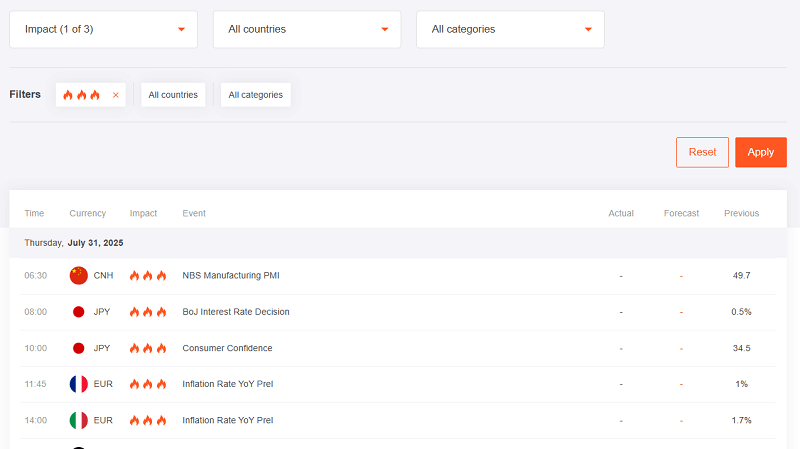
Knowing when/days the U.S. Fed has a rate decision or inflation figures for the Eurozone are coming out can make the difference between a clever trade and a gut-wrenching loss. Traders must plan to stay out of the volatility or use it to their advantage around high-impact events.

Don’t Trade Just Because the Market’s Open

The forex market is open almost 24 hours a day during the week, but that doesn’t mean every hour is a good time to trade. The best times to trade are when sessions overlap, like London/New York. On top of that, these periods present the most volume and reliable price action.

Trading during low-volume times, like the Asian session, if not trading JPY pairs, often results in choppy and unpredictable moves. Successful Quotex traders learn to wait for the market to present opportunities rather than forcing trades out of boredom or impatience.

Demo Trading Isn’t Just for Noobs; Use It to Test New Ideas

Our Quotex demo account is not only for newbies, as experienced traders can also use it to develop and test new strategies. Curious to see what a news-based strategy looks like? Wondering whether the new support-resistance method enhances the results? Try out our demo account.

Practicing on a demo minimizes real money losses from ideas that have never been tested. More importantly, it allows traders the space to experiment and develop without the stress of live market ramifications. Most professionals will often use demo accounts to enhance their edge.

Wrap-Up Cheat Sheet

Things To Do Before Trading on Quotex
  • Choose slow, stable pairs such as EUR/USD or USD/JPY
  • Use price action and clean charts; don’t clutter them with indicators
  • Concentrate on a handful of trades per day at most
  • Always check the news before trading
  • Sample test all new tactics one going live
  • Take the loss and run. Never pursue a win.
  • Never risk what you wouldn’t be okay to lose.
  • “Trade into the move. Stay out during the active hours.”
  • Make habits, not hero trades

Conclusion: Make the Shift from Gambling to Strategic Trading

Forex trading on Quotex is not gambling but rather about preparation, discipline, and constant learning. Most traders fail not because the market is rigged but because they approach trading as gambling. They skip the basics, overlook risk, and pursue every shiny object.

This guide has provided a step-by-step path to calm currency pairs, respect price action, manage risk, and develop consistent habits. Demo trading is a zero-risk environment, so it can now be done for those willing to take this seriously.

To see real progress, try all your learning in a Quotex demo account now. Use the methods described above, modify them as necessary, and begin to develop the habits of a professional trader.

Ready to level up? Get 50% off on Quotex today!

Frequently Asked Questions (FAQs)

Is Quotex good for forex trading?

Yes, Quotex is beginner-friendly and offers an intuitive interface, quick trade execution, and multiple timeframes for forex trading.

What’s the best forex pair to trade on Quotex?

For most beginners, EUR/USD is the best starting point due to its stability and predictability.

How do I know when to trade on Quotex?

Trade during high-volume market sessions like the London-New York overlap, and check economic calendars for impactful events.

Do I need indicators to trade forex on Quotex?

No. Many successful traders use price action and simple support-resistance setups without relying heavily on indicators. Some successful indicator strategies include Bollinger Bands.

Can I trade Forex on Quotex using a mobile app?

Yes, Quotex offers a mobile platform that supports full forex trading functionality.

How to Use the Quotex Copy Trading Feature (If Available)

Within 15 minutes of trading, I lost $200 on binary options trading. Although I have encountered losses, this one is a loss I will never forget. To be honest, I was devastated. So, where did I go wrong? 

Within 15 minutes of trading, I lost $200 on binary options trading

I started trading without a strategy or any clear idea. Driven by the desire to enter the financial market, I made that huge loss. As I was almost losing hope, I discovered Quotex copy trading

I got a hint from social media; at first, it seemed like a scam of fake news. However, several years later, this finding represents a significant leap forward.

As I delved deeper into learning how to use Quotex copy trading, I came across Quotex’s social trading options. Through this platform, I gained a deeper understanding of how to compare and select the best Quotex traders to copy. 

So why wait to have an unforgettable loss? Follow me and reduce risks.

Key Takeaways

  1. Quotex stands out as the best platform for copy trading for binary options
  2. Quotex still lacks certain advanced features, but both beginners and professionals can rely on the signal section for reliable support. 
  3. Using quotes and copy trading is brilliant, but you must still be smart and develop your strategy to avoid higher risks.

What Is Copy Trading on Quotex

After learning about the Quotex platform, I first had to train on copying trades according to the quotes. This would also be the best place for you to begin. 

So, what is copy trading? 

When you use a platform that allows you to observe another trader’s trading pattern and copy that pattern to trade, it is known as copy trading. In a nutshell, you observe the trades and replicate those of professional traders. 

And what is good about this? You may ask.

It helps you take time to learn before making an actual trade, where you commit your money. This minimizes your chances of losing. 

Therefore, if you are a beginner and want to improve your trading capabilities, copying trades based on quotes is the first place to start. Copy trading is a method where you observe and replicate the trades of seasoned traders. You can take time to learn from their expertise before committing your amount.

As you consider using the Quotex platform, remember that it does not have a feature specifically designed for copy trading. But worry not. There is the signals section instead. 

What I love about this platform is that it provides trading signals, along with market analysis and trading recommendations.

This is now the most interesting part of this platform. There are various assets represented in the signals. An example is a currency pair like GBP/USD and EUR/USD. The signals also indicate potential market movements.

Now note! It is only by following these signals that you can make informed decisions about trading. Your decisions will align with professional analysis.

How Quotex Copy Trading Would Work (If It’s There)

If Quotex were to create a copy trading feature specifically designed for this purpose, the outcome would be remarkable. This is what I expect.

1. Account Setup and Funding

First, it will have a fund feature. As the first step, you will be required to sign in. Signing up should be very easy. From there, you will be able to transact. The feature will come with options for funding using methods such as cryptocurrencies, online payments, Perfect Money, and credit cards.

Won’t that be amazing?

Not only is this feature amazing, but it is also a must-have, as the mode of payment must be flexible for both local and international traders. Therefore, if you are a trader working with international brokers, this feature will make it easier for you to transact using various currencies and payment methods. 

It will be very easy because, after verifying your account, you will instantly access the copy trading dashboard.

2. Trader Selection with Smart Filters

Another feature that it will have, and that is also considered a must-have, is the trader selection with smart filters. I assure you, this feature will be exciting. Imagine having Quotex’s copy trading feature, which provides a dashboard-style interface.

Won’t it be amazing to have intelligent analytics merged with social trading?

How awesome will it be to read through lists of professional and high-ranking signal providers easily? Then, every trader’s profile indicates their percentage of wins. The profile may also include the average return per trade, the risk levels they prefer to take on, and the trading instruments they consistently use. 

Trading instruments include forex trading and binary options. 

I am sure their number of copiers, their trading history, and even assets traded will be included.

You may wonder how all these will help you. Listen carefully. With this information, you will be equipped with sufficient knowledge to make informed, data-driven decisions. At least you will not fall for the hype, but consider making data-supported decisions. 

The best thing about Quotex is that it helps you filter these options in a way that suits you well. That is, they will align with your desired market, risk tolerance, and payout expectations.

3. Parameter Setting: Your Copy, Your Rules

Thirdly, it will have a parameter setting. This is what I’m talking about: once you’ve settled on your best Quotex trader to copy, you can customize the level of control you want.

For instance, you can decide how much balance you will dedicate to copying. This is called allocating capital. You will also set loss limits, which is crucial because it allows you to protect your bankroll. Be careful; you might cap the maximum drawdown. 

Additionally, you can select trade types by copying only specific assets or traders, such as forex or binary options trading. You will also decide on the copy ratio.

4. Monitoring and Adjustment: Stay Engaged

The fourth feature on this Quotex trading copy is the monitoring and adjustment features. If you think copy trading is hands-off, you are wrong. Even when automated, it is essential to monitor performance regularly.

Therefore, it would have features such as real-time profit or loss tracking, alerts for risky trading behaviors or levels, tools to balance between multiple strategies and make switches, and options to stop paying a particular trader.

That will be amazing. What do you think?

The financial market is volatile, and even the best traders can hit a losing streak, so you must know when to distribute your funds, when to pivot, and when to reduce exposure.

5. Advanced Tools & AI Filters (Hypothetical but Helpful)

Lastly, Quotex copy trading would work excellently with advanced tools and AI filters. I foresee Quotex following the trend of competitor platforms like IQ Option and Pocket Options. Therefore, expect to see the following features:

  • An AI-engineered recommendation for picking traders.
  • Copy trading signals merged into one dashboard
  • Trader ratings or community voting
  • Time filters allow you to copy trades based on market analysis predictions or during specific market hours.

You will agree that if these features are added, Quotex will not be “just another binary broker.” It will stand out.

It will create opportunities for both rookies and professionals and be the best binary options broker.

So what am I saying in all these?

If Quotex copy trading is implemented, it will be a game-changer for those who want to simplify option trading.

How to Spot the Best Quotex Traders to Copy

One important lesson I have learned while using Quotex copy trading is that identifying the right traders to copy is fundamental if you want to succeed. These tips I use might be helpful to you.

  1. When looking, look for traders with consistent win rates of over 60 percent within a significant period.
  2. Additionally, when searching, evaluate traders’ risk profiles and select only those that align with your risk tolerance.
  3. When looking, always seek out active traders—those with a proven history of regular trading activity. Such indicators are of experienced traders who engage with the market regularly.
  4. This is very important. Select a trader after reviewing the information they provide. Traders with clear information about their trading strategies and previous performances are a “yes.”

Traders without transparency are a red flag—be cautious of them. Also, be cautious of those with inconsistent performance or who take excessive and unjustified risks.

What Could Go Wrong? (And How to Chill About It)

Thus far, if you are the cautious type, I am sure you are asking yourself, “What could go wrong?” Do not worry. I have covered this because it is an excellent question.

Whether you have worries or not, please take note of this: Copy trading offers the outstanding advantage of leveraging experienced traders, but it also comes with its risks. Let me share a few that I have identified during my interaction with it.

  1. Market volatility is at the top of the list of disadvantages. Hear it from me: Even the most seasoned traders sometimes count their losses. Losses are inevitable when market conditions are unpredictable.
  2. Second on the list is overreliance. Remember! Do not rely solely on another trader’s decisions. Such an approach can prove risky, so it is essential to regularly monitor their choices.
  3. Third on that list, yet essential, is the lack of diversification. I recommend diversifying across multiple traders. Copying only one trader exposes you to increased risks.

Cheer up; I have mitigation strategies for the above risks.

  1. Start small and test the waters: Begin with a modest investment as a trial to test the market.
  2. Diversify and keep risks away: Copy several traders who use different approaches so that you can keep yourself safe from risks.
  3. Monitor regularly: Keep track of the performance of copied trades and be prepared to make adjustments as needed.
  4. Learn: Educate yourself on monitoring markets so you do not rely solely on copying traders.

Quick Tips for Playing It Smart

I still have a few tips to share that can help you trade smart, even when using Quotex’s copy trading feature.

  • To play smart, use demo accounts. Do not rush into trading before you are well-prepared, which is why Quotex offers demo accounts that allow you to practice with virtual funds until you understand how copy trading works. Then, you should invest real money.
  • Also, play smart by selecting traders with a proven track record of consistency, not hype. In other words, choose traders with steady performance, not big occasional wins.
  • It is also wise to set limits. In this case, define maximum loss thresholds to protect your capital.
  • Finally, play smart by staying informed. You know that common old phrase, “Information is power?” Take it literally: Stay up-to-date with market news and trends; it is your power, combined with strategies copied from successful traders.

Trading on Quotex

Trading on Quotex

Features of Quotex

Features of Quotex
Features of Quotex

Frequently Asked Questions

1. Does Quotex have an official copy trading feature right now

Currently, No. Quotex does not offer dedicated copy trading features, but you can utilize the “signals” section. Through it, you can follow market analysis and make recommendations.

2. Can you lose money by copying traders?

Yes. Trading is about risk-taking, especially if the market is unpredictable. So, it is possible to incur losses even when copying a trader.

3. How do I find trustworthy traders to copy?

As shared above target traders with consistent results, transparent performance records, and strategies that align with trading goals and risk tolerance.

4. Is copy trading suitable for beginners?

Absolutely! Beginners can benefit significantly from copy trading because they learn from experienced traders. However, beginners must understand that risks are involved; therefore, they should not rely entirely on others’ trading decisions.

5. Can I use copy trading with a demo account?

Yes. It is advisable to use a demo account because it allows one to practice copy trading approaches without risking real money.

Try Quotes & Get 50% Off on Your First Deposit!

Do you want to explore trading? You can now do that under the guidance of experienced traders through Quotex. 

Quotex offers a user-friendly platform with different tools that help you. Currently, dedicated copy trading features are unavailable; however, the signal segment can be helpful. 

Get 50% off your first deposit when using this link.

Best Time to Trade on Quotex for Maximum Profits

Did you know that around 80% of new traders experience losses in their first few trades? I smile at my inexperience when I think of my first trade on Quotex. I remember kicking off with hope and excitement, but only for my first attempt to end in a brutal loss. So, what went wrong?

I remember entering a position at 2 P.M. with the belief that the market was right. In fact, I told myself, “Hey, the market’s always moving, right?” But then I was wrong because I later learned that timing matters big time when trading on Quotex.

I want to share my lessons learned the hard way. So, stick around and learn in case you are trying to figure out when to trade on Quotex to get maximum profit. 

Also, if you are thinking of selling on Quotex or have started on the wrong foot like me, read on and learn that the best way to trade on Quotex is by digging into Quotex market hours. This is important, so let’s get in. 

Why Timing Even Matters

Take it from me, the horse’s mouth, because this was my first hard-learned lesson: timing is the key step in succeeding in trading. 

Let’s get one thing right: price movements don’t stay consistent all day—they fluctuate. Depending on the timing, the price action can be wild, chill, or flat-out dead.

Certain trading hours roar with action and surging volume, while others drift by as quietly as a lazy Sunday nap. Therefore, get your timing right. While timing is not the only secret to trading on Quotex for maximum profit, it is a winning card that you should keep.

Know your trading sessions because they will be your superpowers and make Quotex trading meaningful. This is one thing I learned, which David Materazzi also emphasizes, that the best time to enter the financial market could mean the difference between profitable trades and ones that fizzle.

Having begun as an amateur, I learned to use time as my weapon, and since then, I’ve seen my win rate skyrocket significantly. So, you can scale up your figures by focusing on the right Hour. It’s like surfing; all you need is the right wave.

Peak Trading Hours by Asset Type

The second lesson I learned, which is an extension of timing, is identifying the trading hours by asset type. Here, I would like to explain Forex, crypto, and stocks.

Forex (Currency Pairs)

Let’s talk forex trading first. The best time to nail those juicy currency pairs is between 8 AM and 12 PM EST. 

Experts like Catherine Brock also support my observation and reinstate the fact that these are the hours when the London and New York Stock Exchanges have overlapping sessions.

The best and simplest way I can describe overlapping sessions for you is that they are a time of severe market volatility, tons of trading activity, and opportunities galore.

Now that you know your timing with Forex, let me give you another secret for increased success before we move to crypto. Stick with major pairs like EUR/USD. Trust me, this is not as profoundly hidden a secret as you think. It is something even seasoned traders do.

Crypto

Now, let us look at crypto. Crypto is its own best. So, what is the best time for crypto? The best time for crypto is between 11 PM and 2 AM EST. Troy Segal adds that these hours are right because those are the hours when Asia is starting to get energized, and Europe is leisurely joining in.

Again, these are exciting trading hours because the market is volatile at the time, and crazy prices are moving. What a trading opportunity to keep you awake the whole night!. If you are working with crypto, try these hours and thank me later.

As we move on to stocks, remember that the beauty of crypto is that it never sleeps. Smart traders who are professional surfers know when the tides are highest.

Stocks (Synthetic Assets on Quotes)

Let’s get into stocks. If there is an area of trading where timing is everything, it is here. Many people in this area fail because of timing, but you won’t be in those statistics after reading this. 

The best time is right after the market opens at 9:30 AM until 11:30 AM EST and again around 3 PM when folks start making their last moves.

Trust me, from experience, I learned that these hours are very high-action trading hours, packed with market sentiment and wild market trend shifts. But take caution even as you celebrate because while these are golden hours for profitable trades, they can also backfire, and you may retreat with a significant loss if you’re unprepared. There is a little luck in there.

Weekend vs. Weekdays on Quotex

As a beginner, I thought that weekends had nothing to offer for anyone trading on Quortex for maximum profit. But again, I was as surprised as you are about to be. I learned that trading during the weekends can also be profitable.

Remember, trading over the week gives you a more stable and consistent market flow. This trend can be best for you if you focus on the forex market, commodities, or synthetic stock assets and have enough time during weekdays to spare and trade. 

Generally, weekdays are attractive because financial markets like the London Stock Exchange and the New York Stock Exchange operate from Monday to Friday.

These institutions are essential because they provide the largest percentage of liquidity needed for tighter spreads, predictable price movement, and reliable market sentiment.

Trading volume data from the forex market supports my observation because they discovered that over $6 trillion changes hands globally every day of the week. However, the volume plunges over the weekend when the key institution players take a break.

Therefore, most professional traders and seasoned investors only trade on Quotex from Monday to Friday.

Over the weekend, things are different. The forex market is closed, chiefly, and stock-related synthetic assets on Quotex indicate inactivity. But crypto never sleeps, so take your weekend action to crypto.

According to Nikita Tambe, 20% of weekly crypto trading volumes occur on Sundays and Saturdays. Adds that knowledge to my personal experience, and then you can reaffirm that you can still trade on weekends and make a profit.

However, cool down the excitement and watch out for the following challenges:

  • Weekends have lower liquidity because there are few participants, and major institutions, so take a break because prices are erratic and unpredictable.
  • Then, there are sudden volatility spikes. When institutional volume is lacking and the market is unstable, a big buy or sell can ignite exaggerated price swings.
  • The lower market activity during these two days of the week can cause orders to fill at less favorable prices.
  • Lastly, brokers, including Quotex, widen the spread over the weekend since it is off-peak to manage risks. You risk losing your profit, or entering or exiting at deal levels would be harder.

So does that mean the weekends are that bad? No, you can still be profitable if you only have free time on Saturday or Sunday and want to trade. But, tighten your trading strategy, target low-risk setups, keep your position sizes smaller, and constantly use stop-loss orders to shield your capital.

Also, weekends can be a time to fine-tune your indicators, analyze charts, and test strategies using a Quotex demo account. Enhancing your skills in a live market is a smart move. A smart upcoming trader uses the weekends to practice and plan for the coming week.

Let me put all that in two sentences for you to remember

  • Weekends are best suited for experienced or crypto-focused traders who effectively manage risks.
  • Weekdays are ideal for a newbie or for a trader who wants a structured, data-driven trade with higher predictable price action and increased liquidity.

How Volatility Messes With (or Boosts) Your Strategy

Now, your strategy is well planned, but be aware of volatility. Telling you from experience, volatility is both friend and foe.

If you’re a trader focused on binary options trading or binary trading, celebrate your fast moves because fast moves can mean fast wins. However, for seasoned traders who prefer smooth, clean trends and then target low volatility, it’s your safe space.

One thing I learned the hard way is the union between trading strategy and market conditions. Your trading strategy must be in sync with the market conditions so you can trade on Quotex for maximum profits. You can’t go scalping when the market is slow and expect success or trend-hope when prices are spiking rapidly after 30 seconds, and expect profits.

Like the surfer who reads the waves and knows when to make a move, trading is all about reading the market sentiments and then adjusting your approach.

Final Tips for Timing It Right on Quotex

If you’ve been keen up to this point, then now you know the best timing. But let me add some precious tips: call them gold nuggets.

  • Tip 1: Test before attempt. Use the Quotex demo and Quotex demo account to test your timing before you go live.
  • Tip 2: Watch out for your hot streak. Your best Hour might be the market’s worst Hour, so keep tabs on your winning streaks.
  • Tip 3: Don’t dive before your time. Do not jump in and start trading because it is an active trading hour. Be patient and wait for your setup.
  • Tip 4: Wait for indicators—only trade when the stars align and indicators alert you.
  • Tip 5: Use tools. Automate your moves with automated trading tools if you find consistency.

For increased success without guesswork, I recommend you sign up for the official Quotex site. Once you are signed in, use a Quotex promo code to start. 

By the way, Quotex also has a Quotex bonus that you can use to kickstart your trade. Also, take your time and explore the Quotex trade platform once you are in. Try every advanced tool until you are conversant with them.

Even as you use the Quotex app or access Quotex on your desktop, you will find it sleek, intuitive, and powerful. Remember to check the Quotex withdrawal limit and access the platform only through the Quotex broker login to function fully.

Quotex Review Quick Hits:

  • It is a user-friendly trading platform
  • It has tremendous trading tools for any trader-level user
  • It is the best for forex broker seekers and binary options trading fans
  • It is a reliable Quotex broker with access 24/7
  • It has competitive spreads, and it’s responsive to market changes and trends

Wrapping Up

Looking back on where I began, my trading journey with Quotex has been full of progressive learning. It has not been limited to learning candlestick patterns and mastering indicators. I have learned my timing, the best time to trade on Quotex, how to align with international market hours, and how to know precisely when to trade on Quotex.

This journey has been a game-changer for me. Therefore, whether you are a beginner or want to up your game, remember that it’s all about timing, not what you are trading. And now, through Quotex, I ride the waves, only moving when the markets move with me. 

Sign up today and kickstart your trading experience. 

Disclaimer: Trading binary options involves financial risk. Assess your trading skills before investing real money.

Do This Before Every Quotex Trade: My 5-Point Checklist That Works

How I Made $500 in 19 Minutes with This Trading Strategy (LIVE Trades + Analysis)

How I Made $450 in 15 Minutes Trading GBP/AUD (With Live Proof)

How to Withdraw Profits from Pocket Option to Crypto Wallets Instantly

I remember the first time I hit a solid streak on Pocket Option. After days of testing signals and adjusting my strategy, I finally made some real profits. But then came the big question: How do I get this money into my hands fast? I’d heard horror stories about brokers holding funds or making it difficult to withdraw. But after a few trials and errors, I figured out the fastest, most reliable way: withdrawing to a crypto wallet.

withdrawing to a crypto wallet

In this guide, I’ll walk you through the exact steps I use to withdraw my earnings from Pocket Option to my crypto wallet. I’ll show you screenshots, real proof of transactions, and even compare crypto withdrawals with traditional bank options. If you’re tired of delayed payouts or confusing processes, keep reading.

Why I Prefer Crypto Withdrawals Over Bank Transfers

Before we jump into the how-to, here’s why I switched to crypto withdrawals:

  • Speed: Most crypto withdrawals from Pocket Option hit my wallet within 10–20 minutes.
  • Lower Fees: Banks usually charge a flat fee or take a cut in exchange rates. With crypto, the network fee is often much cheaper.
  • No Middlemen: With crypto, there’s no bank to approve, delay, or question your transaction.
  • Global Access: I can withdraw from anywhere, even while traveling.

Let’s break it down with a quick comparison:

FeatureCrypto WithdrawalBank Transfer
Speed10–30 minutes2–5 business days
FeesNetwork fee only (varies)$20–50 or more
Withdrawal LimitFlexibleOften capped
KYC/DelaysNo extra verificationSometimes required
Availability24/7Only on business days

Want lightning-fast payouts like this? Sign up with Pocket Option and link your crypto wallet today, skip the delays and start withdrawing in under 30 minutes.

Step-by-Step: Pocket Option Crypto Withdrawal Process

This is the exact method I follow, using Bitcoin as the example. The steps are the same for USDT, ETH, LTC, and other coins available.

Step 1: Make Sure Your Account is Verified

You can’t withdraw without verifying your Pocket Option account. Here’s how I did it:

Make Sure Your Account is Verified
  1. Go to your Profile > Verification.
  2. Upload a photo ID (passport or driver’s license).
  3. Upload proof of address (bank statement or utility bill).
  4. Wait for approval, mine took 3 hours.

Step 2: Link Your Crypto Wallet

You need to have a wallet ready. I use Trust Wallet and Binance, depending on the coin.

  1. Open your crypto wallet.
  2. Choose the coin you want to use (e.g., Bitcoin).
  3. Click Receive and copy your wallet address.

Important: Make sure the address you copy matches the coin you’re withdrawing. Never send Bitcoin to a USDT wallet.

Step 3: Log In to Pocket Option

  1. Go to Pocket Option and log in.
  2. Click on the Finance tab at the top.
  3. Choose Withdrawal.

Step 4: Choose the Crypto Method

  1. You’ll see a list of options. Choose Bitcoin, Ethereum, Tether, or your preferred coin.
  2. Enter the amount you want to withdraw.
  3. Paste your crypto wallet address.
  4. Confirm the withdrawal.

Pocket Option will show a summary. Double-check the address. If you make a mistake here, your funds could be lost forever.

Step 5: Confirm the Withdrawal via Email

You’ll get an email from Pocket Option to confirm the transaction.

  1. Open your email and find the confirmation message.
  2. Click the confirmation link.

Without this step, your withdrawal won’t be processed.

Followed all the steps but still unsure? Open a Pocket Option account now and get a 50% bonus on your first deposit, plus access to fast, crypto-based withdrawals from day one.

Real Transaction Proof

Here’s a screenshot of one of my Bitcoin payouts:

  • Date: April 16, 2025
  • Amount: $92.90
  • Time Requested: 09:02 AM
  • Time Received in Wallet: 10:09 AM
Real Transaction Proof

Common Issues and How to Fix Them

Withdrawal Stuck on “Processing”

Sometimes withdrawals take longer due to:

  • Network congestion (common with Ethereum)
  • Verification not complete
  • Wallet address errors

Fix: Check email confirmation and make sure your address is correct. If it takes more than 2 hours, contact live support.

Withdrawal Rejected

This usually happens if:

  • You’re using a different method than the one you deposited with
  • You haven’t completed identity verification
  • You made multiple requests too quickly

Fix: Always withdraw using the same method as your deposit at least once. After that, you can switch.

How Much Can You Withdraw via Crypto?

I’ve tested small and large withdrawals:

  • Minimum $10 for most crypto methods
  • Maximum Up to $10,000 per day (based on account level)

Tip: For larger withdrawals, split them into 2–3 transactions to avoid delays.

Hidden Tips Most Traders Don’t Know

Use Low-Fee Coins Like Litecoin or Tron

Bitcoin and Ethereum sometimes have high gas fees. I often use Litecoin or TRC20 USDT, which have faster processing and cheaper fees.

Withdraw During Off-Peak Hours

Network congestion affects speed. I found that crypto withdrawals are faster in the early morning (3–6 AM UTC).

Save Wallet Addresses for Future Use

Pocket Option allows you to save addresses. I label mine by coin and platform (e.g., BTC Trust Wallet).

Never Withdraw Directly to Exchange Wallets

Some exchanges (like Coinbase) reject certain transactions. Always send to your personal wallet first, then transfer to an exchange if needed.

FAQs about Pocket Option Crypto Withdrawal

How long does Pocket Option take to send crypto?

Most withdrawals are processed within 1–2 hours. Crypto usually arrives in your wallet within 30 minutes.

Is there a fee for withdrawing crypto from Pocket Option?

Pocket Option doesn’t charge a withdrawal fee, but you pay the blockchain network fee (varies by coin).

Can I withdraw profits using a different method than I deposited?

You need to first withdraw using the same method you used for depositing. After that, you can switch methods.

Can I withdraw to any crypto wallet?

Yes, as long as it supports the coin and network. Just double-check you’re using the correct address.

Do I need to complete KYC to withdraw?

Yes. Before you can make your first withdrawal from Pocket Option, you must complete the identity verification process.

What is the minimum withdrawal?

It’s usually $10 for crypto methods, but it varies slightly based on the coin.

Can I withdraw on weekends?

Yes. Crypto withdrawals work 24/7, including weekends and holidays.

Final Thoughts: Why I’ll Stick with Crypto Withdrawals

After trying both crypto and bank withdrawals, I’m 100% sticking with crypto. It’s faster, cheaper, and far more reliable. As someone who scales up trades and withdraws regularly, I can’t afford to wait days for a wire transfer to be processed.

If you’ve been frustrated with slow or denied withdrawals, I highly recommend switching to crypto. Just follow the steps I shared above, and you’ll get your profits within minutes; no waiting, no stress.

If you’re new and want my cheat sheet with my crypto settings, wallet types, and withdrawal templates, just ask. I’m happy to share what works.

Let your trades work for you, and more importantly, get your money out fast.

Don’t let your profits sit idle. Join Pocket Option, verify your account, and experience the freedom of 24/7 crypto withdrawals, where your money actually moves at your pace.

Pocket Option Trading Tools: What You Should Be Using

Back when I first opened an account on Pocket Option, I was all over the place. Clicking buttons, adding indicators I didn’t understand, and chasing trades without a solid plan. I thought the platform alone would make me profits. But it took several losses and a few sleepless nights before I realized something: tools matter. The right tools, used the right way, make all the difference.

The right tools, used the right way, make all the difference.

This article isn’t just another breakdown of what indicators Pocket Option offers. You can find that in their help center. I’ll take you inside my personal trading setup, show you what most traders miss, and walk you through the exact mix of tools that helped me go from random trades to strategic execution.

Why Tools Make or Break Your Pocket Option Strategy

When you’re trading short timeframes—especially 1-minute or 5-minute trades—you don’t have time to second-guess. You need confirmation. You need a plan. And you need tools that make decisions easier, not harder. The built-in charting tools are a great start, but if you’re relying only on those, you’re leaving money on the table.

Let’s break it down.

Ready to put these tools to the test? Create your free Pocket Option account and start using the built-in indicators, chart types, and quick execution features that can transform how you trade.

Built-In Pocket Option Charting Tools (And How to Actually Use Them)

Pocket Option comes with a range of technical tools. They’re simple but powerful—if you use them right.

1. Indicators

Here’s what I personally use out of Pocket Option’s default list:

  • Bollinger Bands – Great for spotting volatility and overbought/oversold levels. I set the period to 20 and the deviation to 2. Watch how price hugs the bands before reversals.
  • RSI (Relative Strength Index) – I use a 7-period setting instead of the default 14. It gives quicker signals for binary options. Look for divergence, not just overbought/oversold zones.
  • Moving Average (EMA) – I layer two EMAs: 5 and 13. Their crossover gives me quick trend confirmation.
  • MACD – Not just for trends. I use MACD histogram momentum to judge entry strength. Rising histogram = good confirmation.
  • Fractals – A simple tool for support/resistance. Add them and zoom out. You’ll start seeing price respect these points.
You’ll start seeing price respect these points

Most traders just turn them on and wait for a signal. But that’s not trading—that’s gambling. The trading hack is to combine them.

Here’s how I do it:

  1. Use the EMA cross as a base trend direction.
  2. Wait for RSI divergence or reversal signal.
  3. Confirm with the MACD histogram momentum.
  4. Check Bollinger Bands for squeeze or breakout pattern.
  5. Use Fractals for placing entry/exit points.

2. Chart Types

Pocket Option offers several chart types: Line, Candlestick, Area, Heiken Ashi, and Bar.

  • Candlestick: My default. Shows market sentiment clearly.
  • Heiken Ashi: I switch to this during trending markets. It smooths out noise.
  • Bar chart: Great for scalping. Easier to spot quick reversals.
Easier to spot quick reversals

Tip: Switch between them while analyzing. Candlesticks for setup, Heiken Ashi for confirmation.

3. Timeframes

For binary options, the most useful timeframes are:

  • 1 minute for fast scalping.
  • 5 minutes for mid-range setups.
  • 15 minutes for strong trend confirmation.

What I do: Analyze for 5 minutes, enter for 1-minute. Always zoom out to the 15M chart once a day to check market context.

External Tools That Give You an Edge

Most people ignore external tools, thinking Pocket Option is “enough.” It’s not. These tools helped me go from 50/50 wins to consistently above 70%.

1. TradingView (Free Version Works Fine)

Hands down, the best charting platform out there. Use it to:

  • Analyze clean charts without the clutter.
  • Draw precise support/resistance zones.
  • Create alerts for patterns or price levels.
  • Spot divergence more easily than on Pocket Option.

I mark key levels on TradingView, then return to Pocket Option to place trades.

Bonus: You can use indicators like TDI, Supertrend, or custom RSI-MACD combos that aren’t available on Pocket Option.

2. Economic Calendar (Investing.com or ForexFactory)

I learned the hard way: never trade right before major news. These sites give you daily calendars showing:

  • Which economic news events are coming?
  • What currency or asset will they affect?
  • The expected volatility.

Tip: Avoid trading 15 minutes before and after red-folder news events. Market gets wild.

3. Signal Providers (Only Use as Confirmation)

I don’t rely on them. But I use tools like:

  • Autochartist
  • Pocket Option’s built-in Signals tab
  • Trading Central

Treat these like another opinion. Don’t follow them blindly.

4. Screen Recording Software (OBS Studio)

This changed everything for me. I record my sessions. Then review them afterwards. Helps me catch patterns in my behavior, like revenge trading or ignoring signals.

5. Notebook or Notion Template

Keep a journal. Write:

  • Why did you take the trade
  • What tools did you use
  • What went right or wrong

After 50 trades, you’ll see patterns emerge. Mine was overtrading during lunchtime hours. I fixed it by only trading during the London and New York open.

Pair your TradingView insights with live trading setups inside Pocket Option. Join Pocket Option now and unlock a platform where smart tools meet fast decisions.

Real-Life Use Case: My 3-Hour Trading Window

Let me show you what an average session looks like.

Time: 8:00 AM to 11:00 AM (New York Session open)

  1. Open TradingView. Scan EUR/USD, GBP/USD, and USD/JPY.
  2. Mark support/resistance. Check for any clean trends or ranging behavior.
  3. Check the economic calendar. Avoid trading during USD news periods.
  4. Switch to Pocket Option. Load EMA, RSI, MACD, and Bollinger.
  5. Wait for alignment:
    • Price pulls back to the EMA zone
    • RSI shows bullish divergence
    • MACD histogram rising
    • Price near support with previous bullish candle
  6. Enter a 1-minute trade in the direction of the setup.

I take 5–7 trades per session. If I win 4 or more, I stop. No chasing losses.

Mastering the 3-Hour Trading Window

Common Mistakes with Trading Tools (And How I Avoided Them)

  • Using too many indicators: Clutter creates confusion. Stick to 3–4 max.
  • Not testing settings: Default values aren’t always best. Test RSI at 7, EMA at 5/13.
  • Ignoring context: Tools don’t work the same in every market. A ranging market kills trend indicators.
  • Not syncing analysis: Use TradingView and Pocket Option side by side. Match your levels.

What Most Traders Miss (That I Learned the Hard Way)

This part isn’t talked about enough.

  • Market Phases Matter: Are you in accumulation, markup, distribution, or markdown? Use volume and price structure to judge. Most indicators work better in certain phases.
  • Psychological Tools: Ever used a countdown timer to stop overtrading? Try it. Or limit your trades to 3 a day. It improves quality.
  • Correlation Tools: Use websites like Mataf.net to check asset correlation. If EUR/USD and GBP/USD are both bullish, you get double confirmation.

FAQs About Pocket Option Trading Tools

What are the best tools for Pocket Option? 

The best combo includes EMA (5,13), RSI (7), MACD, and Bollinger Bands. Add TradingView for deeper analysis.

Are Pocket Option indicators reliable?

Yes, but only when used with a market context. Combine indicators and confirm with price action.

Can I use TradingView with Pocket Option? 

Yes. Use it to mark levels, analyze trends, and create alerts. Then trade based on that on Pocket Option.

Is there a tool to auto trade on Pocket Option? 

Pocket Option allows bots and signal-based EAs via their API, but use caution. Manual trading with tools offers more control.

What’s the best chart type for Pocket Option? 

Candlesticks are the most detailed. Heiken Ashi is smoother for trend-following.

How many indicators should I use? 

Three to four. More than that, and signals get mixed. Use tools that complement each other.

When should I avoid using tools? 

During high-impact news, low volume hours (like lunch time), or sideways markets.

Final Thoughts: Tools Are Your Trading Allies

When I stopped treating tools like magic and started treating them like filters, everything changed. Each tool is a lens to view the market. The more in sync they are, the clearer the trade becomes.

If you’re just clicking around Pocket Option and hoping to hit green, you’re wasting time. But if you combine the built-in tools with external ones, log your trades, and stick to a system, you give yourself a real edge.

This post isn’t theory. It’s what I actually do, every day, I trade.

Don’t just study trading tools—use them where it counts. Start trading on Pocket Option and apply your strategy with confidence using real-time data, smart indicators, and flexible timeframes.

The 3 Best Indicators for Quotex in 2025 (With Real Profit Results)

How I Made $980 in 1 Hour Trading Crypto on Quotex (BTC/USDT) Using MACD + Moving Average

$600 Profit in Under 10 Minutes Trading EUR/USD – Quotex Strategy Explained (LIVE)

How I Turned $300 into $1,050 in One Morning Using RSI and MACD (LIVE TRADING PROOF)

How I Made $720 in 1 Hour Trading Gold on Quotex (Live Proof)

Pocket Option AI Trader: 67% Profit Boost in 7 Minutes (Live Test)

Pocket Option AI Trader Review: $11, 13 Minutes, Real Trades