How I Mastered Correlation Trading in Binary Options
I still remember the night I almost threw my laptop across the room. I was staring at a 60-second EUR/USD chart, trying to predict whether the next candle would finish green or red. To me, it felt like flipping a coin in a dark room. I did everything the gurus told me to do. I loaded my screen with RSI, MACD, and Bollinger Bands until the actual price bars were barely visible. Still, my account balance kept bleeding.
That was the day I realized a harsh truth. I was looking at the market in absolute isolation. I treated the EUR/USD like it was the only financial instrument on the planet.
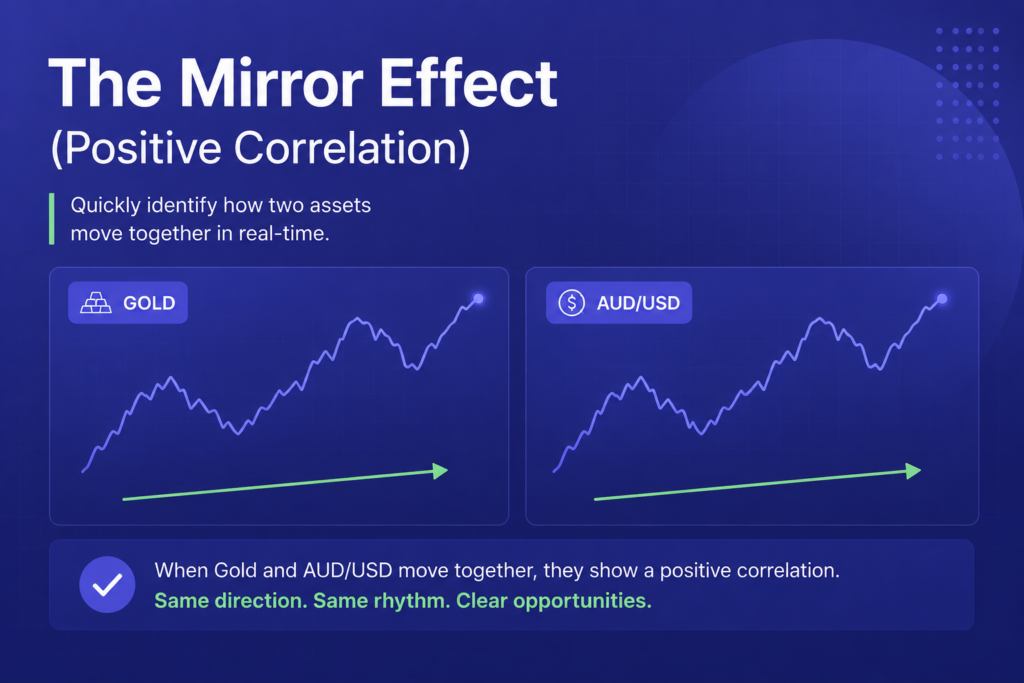
Everything changed when I accidentally opened two chart windows side by side: Gold and the AUD/USD currency pair. As Gold began to climb, a few minutes later, the AUD/USD followed it upward like an obedient shadow. They weren’t identical, but they were deeply connected.
That was my introduction to correlation trading. It is the strategy that took me from a frustrated novice to a trader who actually understands why the markets move. If you are tired of losing trades because a single candle suddenly spikes against you, let me share how looking at the bigger picture can completely transform your binary options journey.
The Epiphany of the Connected Market
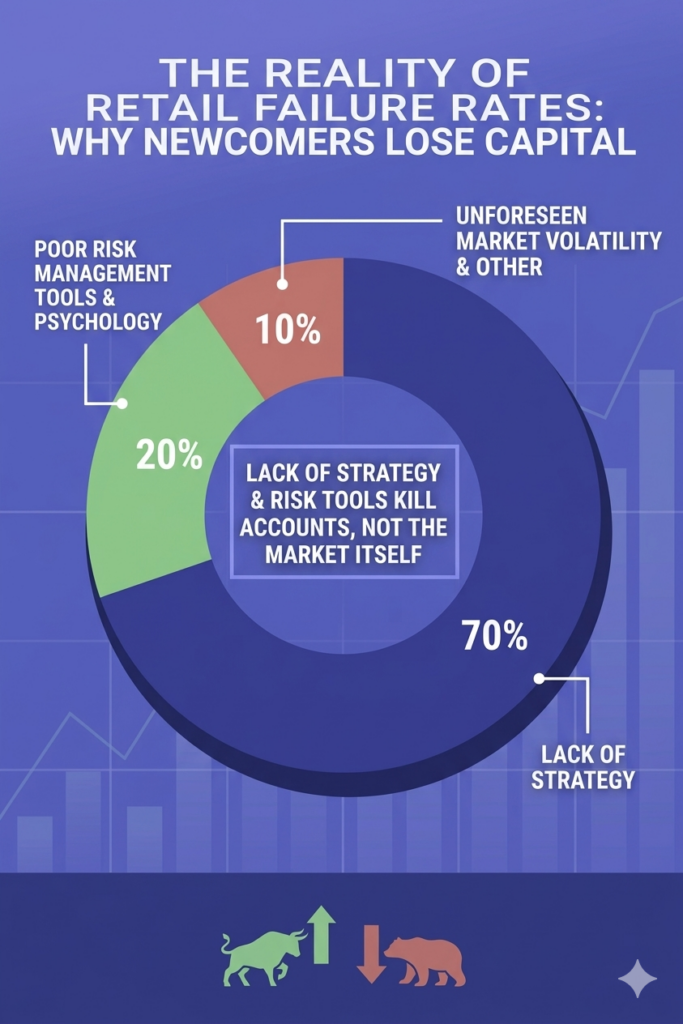
When you are starting out, binary options look deceptively simple. You choose an asset, select an expiry time, and click “Higher” or “Lower.” Because of this simplicity, it is incredibly easy to fall into bad habits. In fact, understanding how assets interact is one of the main differences between those who find consistency and the overwhelming number of people who fail. If you want to know more about those early traps, you can read about why 90 percent of traders lose money to see exactly what to avoid.
Correlation trading is the practice of analyzing two separate assets that share a historical relationship to predict the price movement of one of them. In the financial world, assets do not move in a vacuum. Economies are tied together by supply, demand, and global politics.
When you learn to spot these relationships, you gain a massive advantage. Instead of staring at one chart and guessing where it will go, you watch a leading asset to see what your target asset is likely to do next. It is like having a weather forecast for your trades.
Before you can trade this strategy effectively, you need a platform that lets you view multiple charts simultaneously or switch between them instantly without lag. When I was testing this strategy, I spent a lot of time finding the right home for my funds. You can check out my breakdown of the top 3 trading platforms that actually pay to see which setups handle multiple asset analysis the best.
Positive and Negative Correlations Explained
To use this strategy, you need to understand the two ways assets interact: positive correlation and negative correlation.
Positive correlation means two assets move in the same direction. When Asset A goes up, Asset B goes up. A classic example is Gold and the Australian Dollar (AUD). Australia is one of the largest gold producers in the world. When the price of Gold rises, the Australian economy strengthens, which usually pushes the value of the AUD higher.
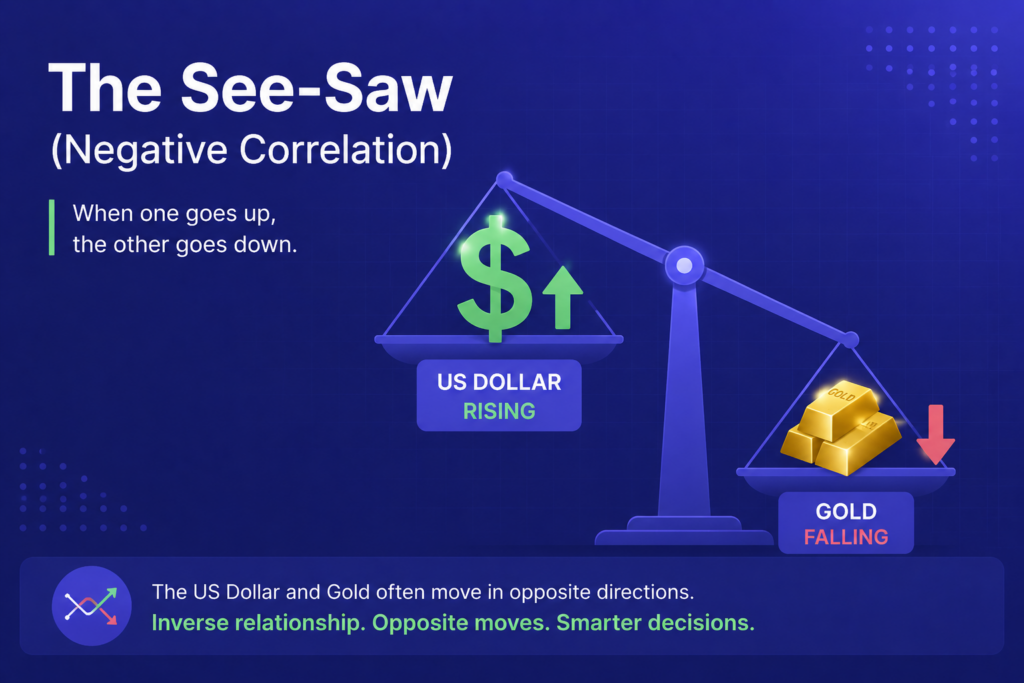
Negative correlation means two assets move in opposite directions. When Asset A goes up, Asset B goes down. The most famous example is the US Dollar (USD) and Gold. Because Gold is priced in US dollars globally, a stronger dollar makes Gold more expensive for overseas buyers, driving its price down. Therefore, if the USD index spikes upward, Gold typically drops.
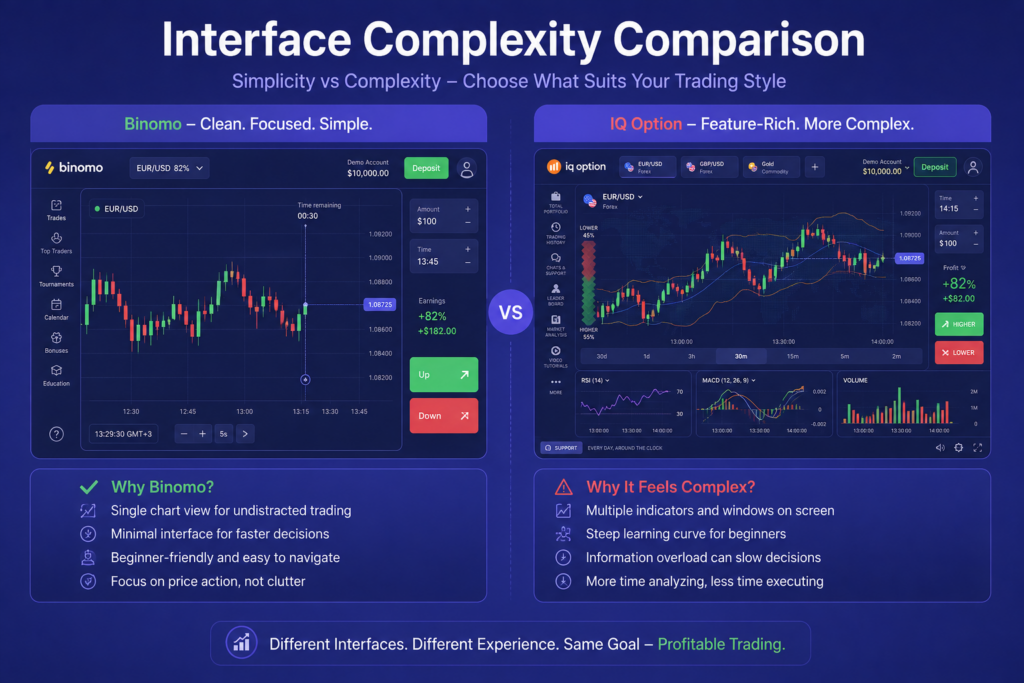
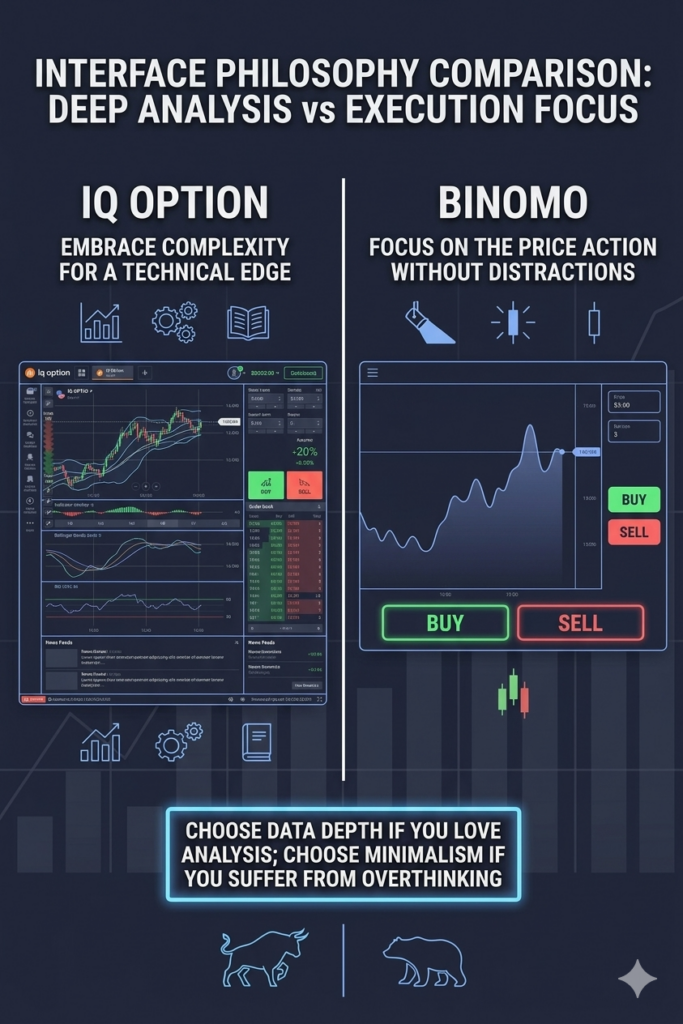
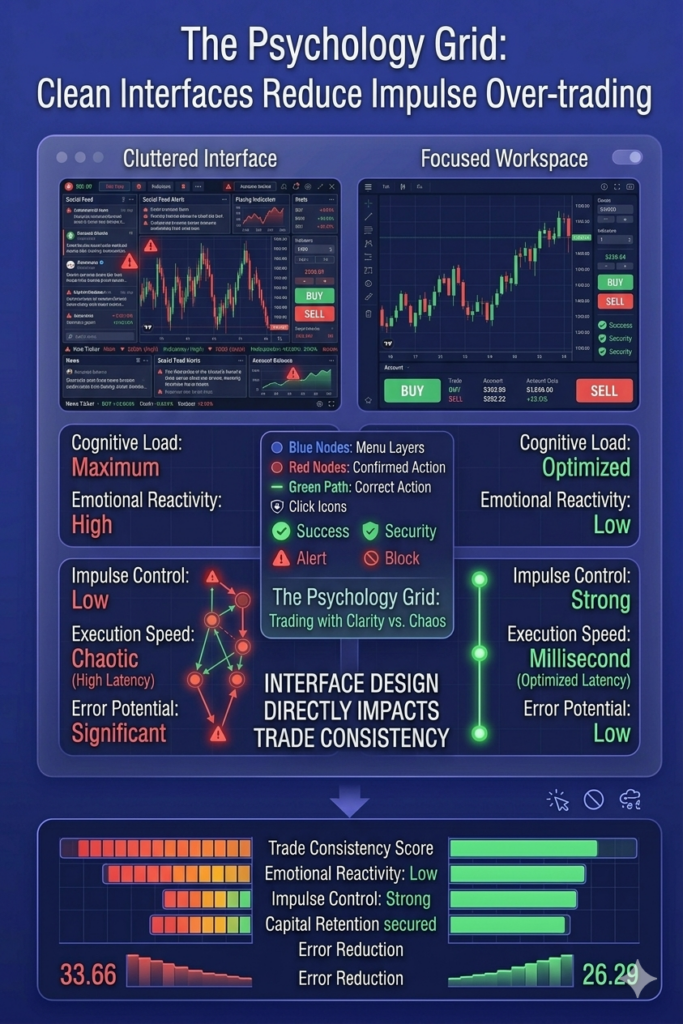
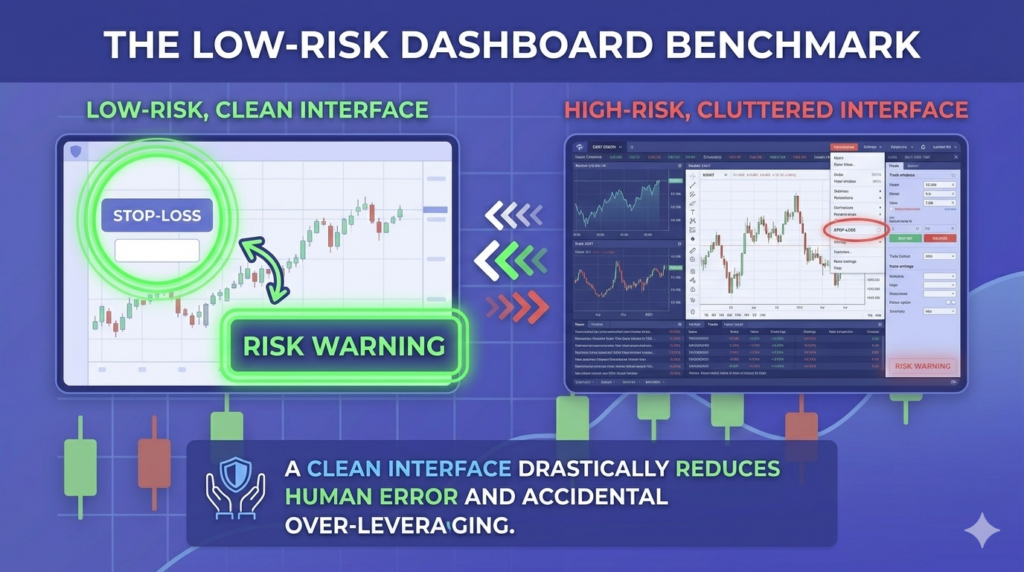
When I first started executing these trades, I needed a broker with an interface clean enough to track these movements without giving me a headache. If you are struggling with a cluttered screen, take a look at my real comparison of which broker has the cleanest interface to make your charting experience much smoother.
My Go-To Correlation Pairs for Beginners
If you want to practice this strategy today on a demo account, here are the pairs I highly recommend monitoring:
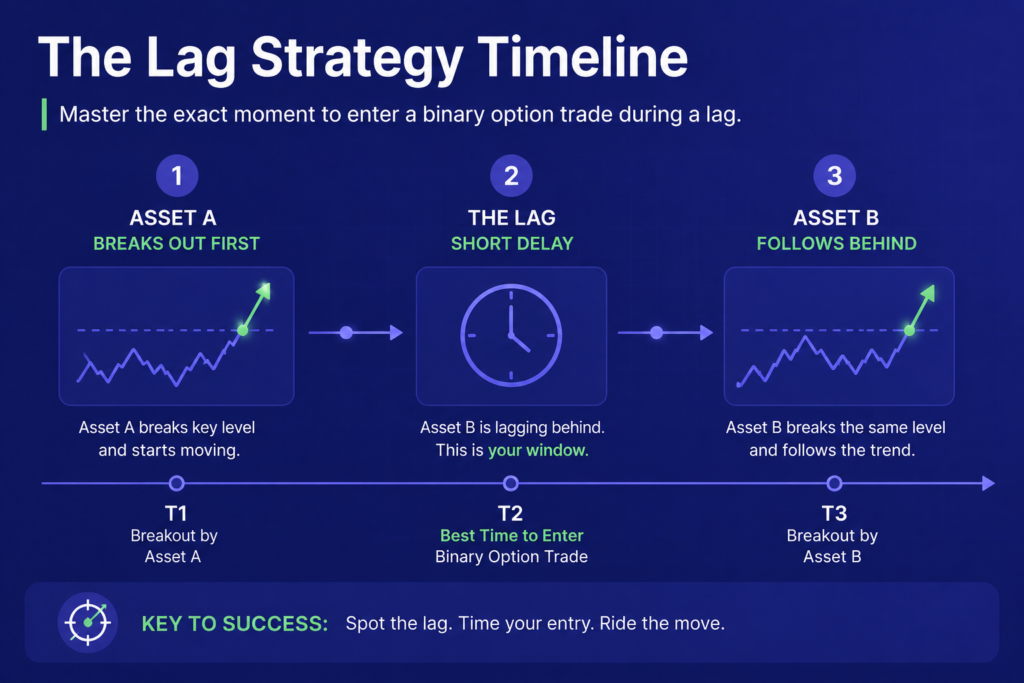
Gold (XAU) and AUD/USD (Positive): Watch Gold for the leading move. If Gold breaks through a major resistance level and climbs, look for a “Higher” binary option opportunity on AUD/USD on the next candle.
Brent Crude Oil and USD/CAD (Negative): Canada is a massive exporter of oil. When oil prices rise, the Canadian Dollar strengthens. Because CAD is the second currency in the USD/CAD pair, a stronger CAD pushes the overall USD/CAD chart downward. So, when Oil goes up, look for a “Lower” option on USD/CAD.
EUR/USD and USD/CHF (Negative): The Euro and the Swiss Franc generally move together against the US Dollar. Because the USD is the base currency in USD/CHF and the quote currency in EUR/USD, these two pairs move like opposite mirrors. If EUR/USD rallies, USD/CHF almost always falls.
To trade these pairs smoothly, you need an environment with fast execution. I personally love comparing platforms to see which ones offer the best interface for tracking these pairs. For a direct comparison of two massive platforms, you can check out my guide on Deriv vs IQ Option for beginners in 2026 to see how they stack up for new traders.
How I Execute a Correlation Trade Step by Step
Let me walk you through exactly how I traded a negative correlation between the US Dollar and Gold just last week.
First, I opened two charts side by side. On the left was the US Dollar Index (DXY) or a major USD pair like USD/JPY. On the right was Gold (XAU/USD). I set both charts to the 5-minute timeframe.
Second, I waited for a market catalyst. I watched the USD/JPY break out of a morning consolidation zone, surging violently upward through a known resistance level.
Third, I looked over at my Gold chart. Because of the negative correlation, I expected Gold to drop. However, Gold hadn’t moved yet; it was stalling at the top of a recent bullish candle. This is what traders call a “lag.” The correlation gave me an early warning of what was coming.
Fourth, I quickly opened my binary options platform, selected Gold, set a 15-minute expiry time to give the market room to breathe, and placed a “Lower” trade. Within three minutes, the surging US Dollar dragged Gold down, and my trade cleared safely in the profit.
If you want to try this strategy on platforms that offer excellent charting tools, you can sign up and practice using the IQ Option registration portal or explore the multi-chart features available through the Binomo platform setup. Both platforms give you the visual flexibility needed to track these assets side by side.
Managing the Risks of the Broken Correlation
Here is the warning the textbook writers won’t tell you: correlations do not work 100 percent of the time. They are tendencies, not absolute laws.
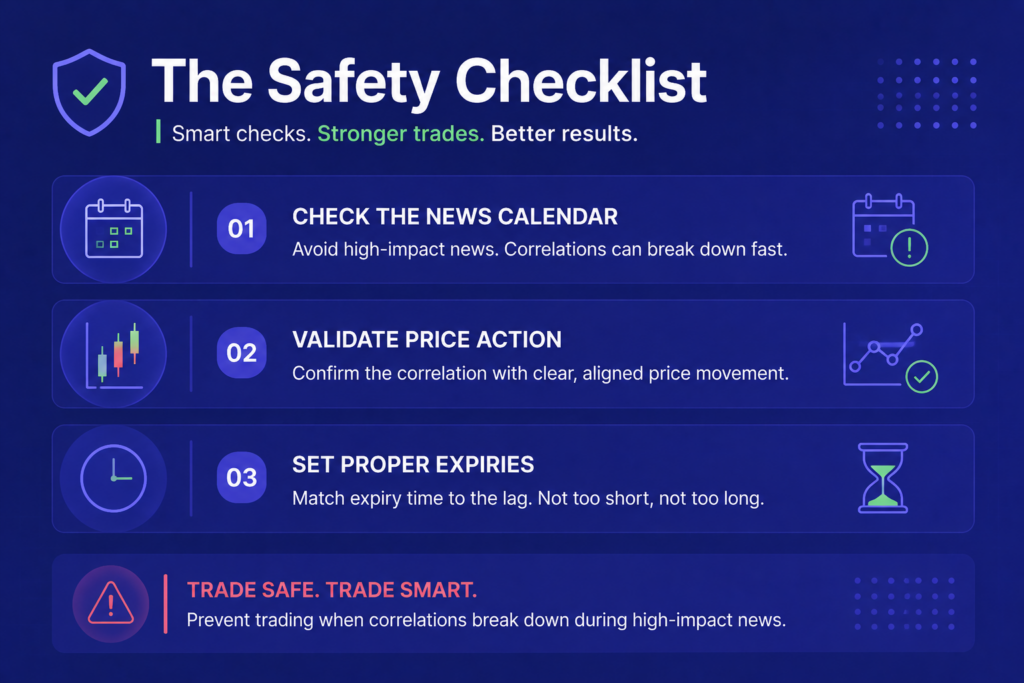
There are times when a correlation breaks down. For example, during a major global economic crisis, investors might rush into both the US Dollar and Gold at the exact same time looking for safety. Suddenly, a pair that usually moves in opposite directions is moving upward together. If you blindly place trades assuming the correlation holds, you will take losses.
To protect my capital, I never enter a trade based solely on correlation. I use correlation as an alert system. Once the correlation shows me a potential setup, I look at the target asset’s actual price action. If Gold should drop because the USD is rising, I wait until I see at least one bearish rejection candle on the Gold chart before clicking “Lower.”
Choosing the right broker also plays a huge role in risk management. You need a platform that offers transparent pricing and reliable expiries so your correlation analysis isn’t ruined by bad execution. For a deep dive into platform security, read my analysis on the safest trading platforms and their risk breakdowns to keep your capital secure.
Taking Your Technical Edge to the Next Level
Correlation trading completely changed how I look at financial markets. It took me away from the chaotic guessing games of short-term charts and forced me to think like a professional macro trader. Suddenly, the market made sense.
If you are just getting started and want to build your routine without risking massive amounts of capital, you can read my guide on how much money you really need to start trading for a realistic view of building an account. For those who want to jump right into practicing with other reliable brokers, you can also look into the Deriv tracking setup, try out the Pocket Option fast track, check out the Quotex registration gateway, explore ExpertOption accounts, or look at the tools provided on CapitalCore trading.
However, monitoring global macro relationships, tracking economic calendars, and calculating mathematical correlation coefficients by hand can become overwhelming if you are doing it completely alone. It takes hours of daily screening to find the highest-probability setups.
That is exactly why I stopped doing all the heavy lifting myself. If you want to skip the endless hours of chart watching and get straight to actionable data, you can view live market setups at the Becoin Forecast Hub.
If you are ready to truly gain a professional edge, stop guessing, and trade with deep analytical backing, unlock daily high-probability asset insights by joining the Becoin Premium Membership program today. Let the experts scan the correlations while you focus on executing flawless trades.
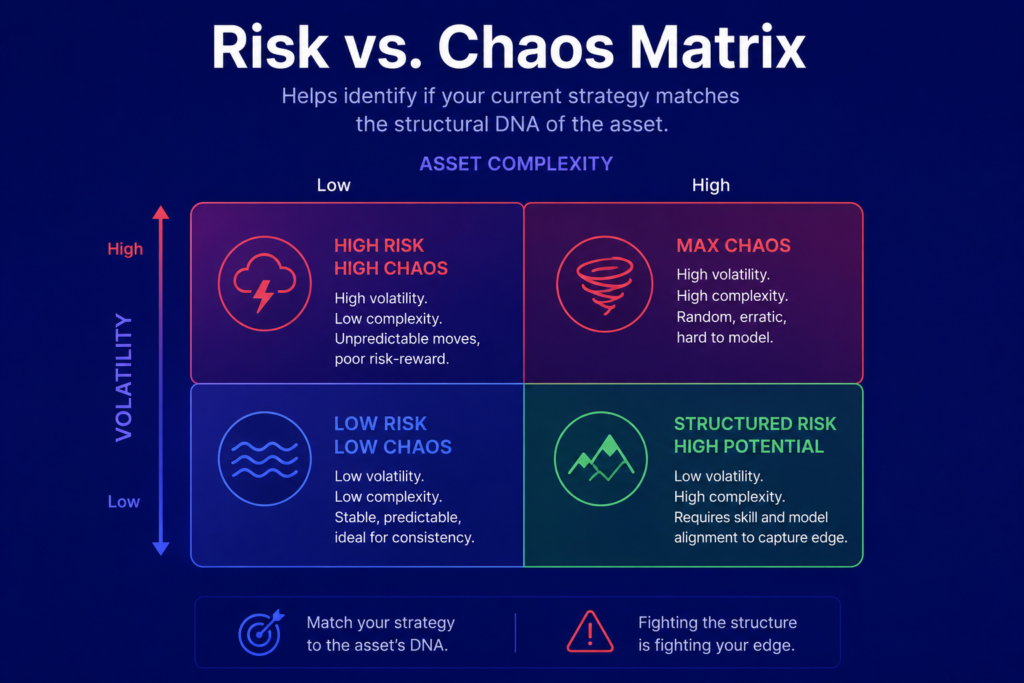
Why Some Assets Are Easier to Predict Than Others
I still remember the night I realized I was fighting a losing battle against a ghost. It was 2AM, my coffee had gone cold, and I was staring at a 1-minute chart of an exotic currency pair. Every technical indicator I threw at it failed. Support levels shattered like glass. Resistance lines vanished into thin air. I was applying textbook price action, yet the market was behaving like a toddler on a sugar rush.
The next morning, out of pure frustration, I switched over to a highly liquid asset during the peak of the London session. To my absolute shock, the candles moved with an almost poetic rhythm. They hit a level, paused, retested, and bounced exactly as the books predicted.
That was the day I stopped trading and finally started making money. It dawned on me that the problem wasn’t necessarily my strategy. The problem was that I expected every asset to play by the same rules. The truth is, some financial assets are hardwired to be more predictable than others. Understanding why this happens is the closest thing to a cheat code you will ever find in this game.
The Illusion of Uniform Markets
When you first step into the trading world, you are flooded with promises of universal strategies. The gurus tell you that if you master a head-and-shoulders pattern or a moving average crossover, you can apply it to anything from Bitcoin to soybeans and print money.
They are wrong.
Markets are not uniform entities. They are collections of human behavior, institutional algorithms, and structural rules. An asset’s predictability is determined by the invisible forces humming beneath the surface: liquidity, participant intent, and market structure. When I finally sat down to figure out how much money you really need to start trading, I realized that allocating capital to the wrong asset is the fastest way to turn a healthy account into a zero balance.
Let’s pull back the curtain on why some charts look like beautiful geometric steps, while others look like a heart monitor in an emergency room.
Liquidity and the Law of Large Numbers
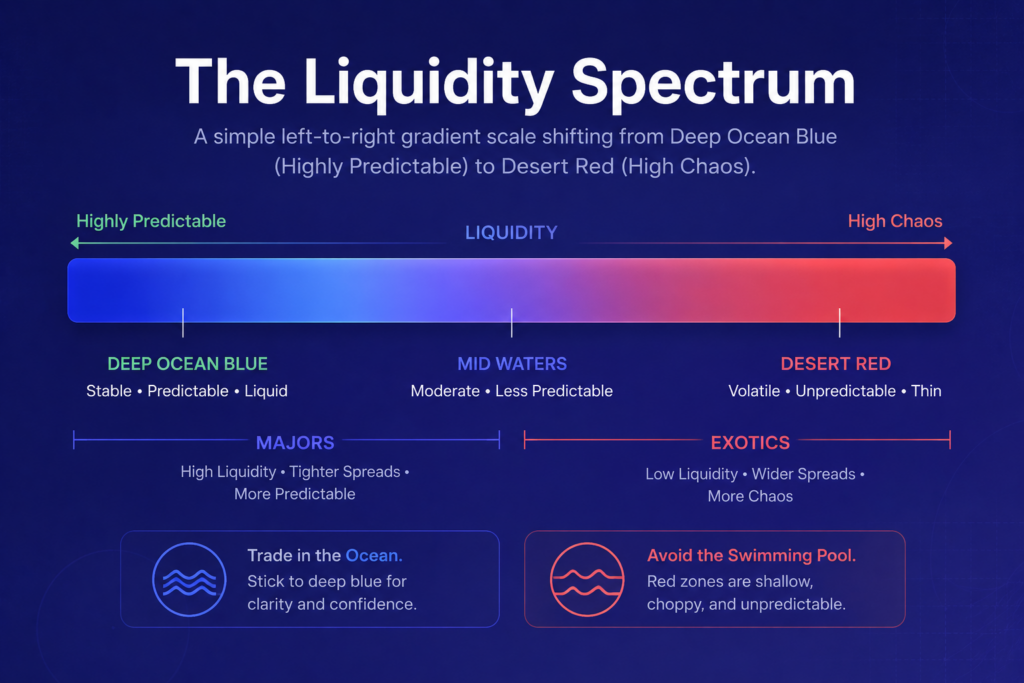
To understand predictability, we have to talk about liquidity. Think of liquidity as a deep, massive ocean. If you throw a giant boulder into the Pacific Ocean, the water absorbs the impact, and the overall sea level barely moves. But if you throw that same boulder into a backyard swimming pool, you create a tidal wave that empties half the pool.
In trading, the boulder is an institutional order.
Major currency pairs like EUR/USD or heavily traded assets are the Pacific Ocean. Millions of traders, central banks, and algorithms are constantly buying and selling. Because there are so many participants, it takes an astronomical amount of capital to shift the price drastically. This creates a smoothing effect. Price action follows established trends because no single player can easily manipulate the market.
Conversely, when you trade illiquid assets or exotic pairs, you are trading in a swimming pool. A single hedge fund or an aggressive whale can step in, execute a relatively small order, and completely ruin your technical analysis. If you have ever wondered why 90 percent of traders lose money, it is often because they try to trade chaotic, illiquid environments where technical analysis breaks down completely.
For beginners trying to find their footing without drowning in noise, starting on platforms designed for clear execution is crucial. I spent months analyzing how different environments handle these structural shifts, documenting my observations in a breakdown of the safest trading platforms, which highlights how risk changes across various brokers.
The DNA of Predictable Assets
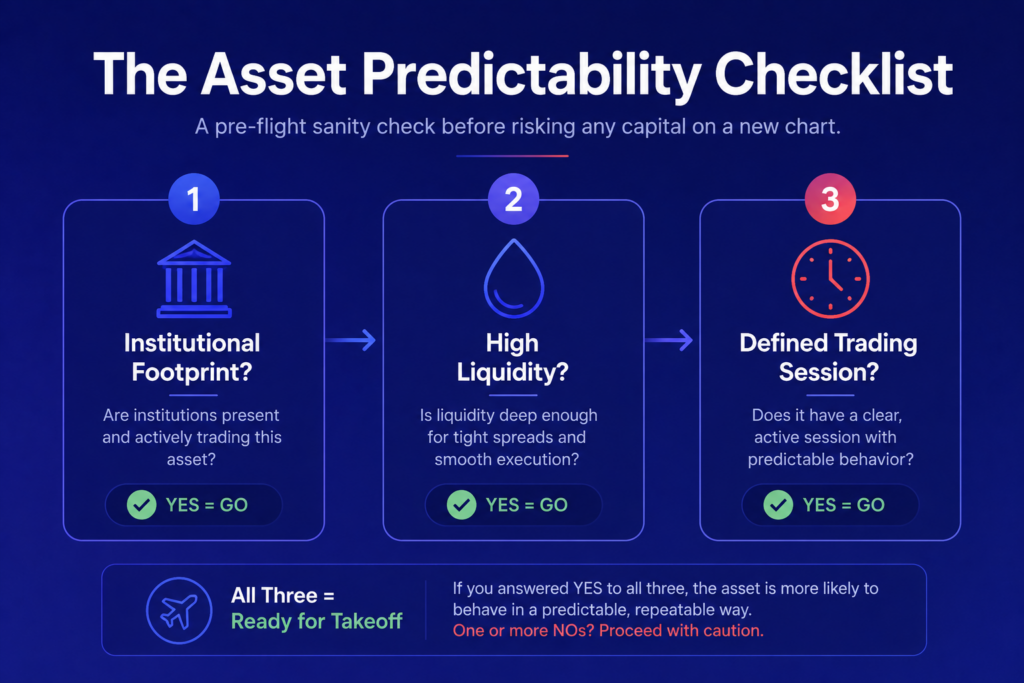
What makes an asset actually comply with your indicators? Through years of trial and error, I found that predictable assets share three core traits.
Clear Institutional Footprints
Institutions do not trade on gut feelings or 1-minute candle color changes. They buy and sell in zones, leaving massive footprints known as order blocks or support and recovery areas. Predictable assets have highly visible institutional interest. When the price retraces to a major daily level on a liquid asset, you can almost guarantee a reaction because major banks have automated buy orders waiting at those exact coordinates. Learning how to spot these zones completely changed my results when I was searching for the best broker for learning price action.
Session-Driven Rhythms
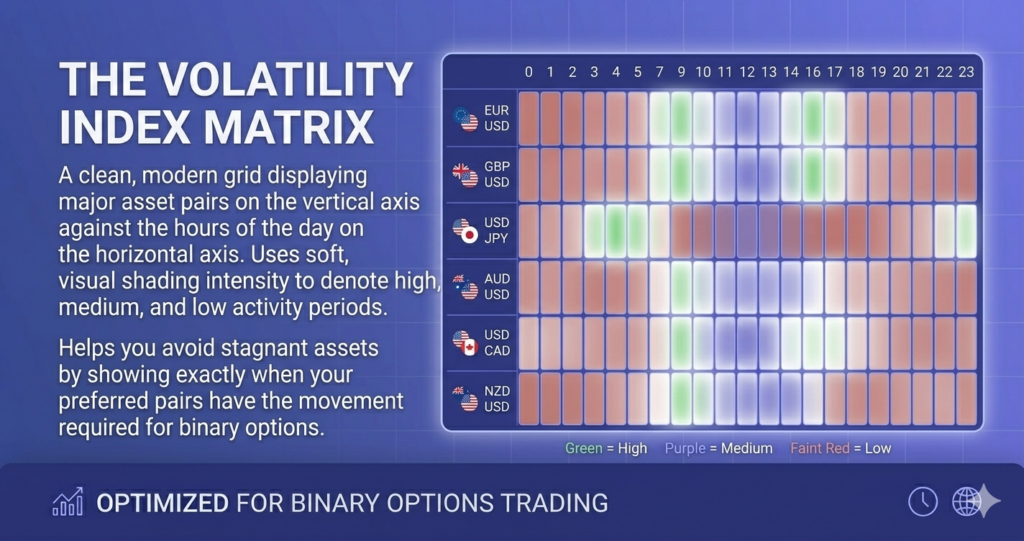
The most predictable assets adhere strictly to time. They possess a natural biological clock. If you track the major currency pairs, you will notice they come alive during specific hours and go completely flat during others. My entire perspective shifted when I stopped forcing trades at random times and leaned into the hidden rhythm of session-based trading. When a market has a defined open and close, volume pours in predictably, creating clean trends rather than choppy sideways traps.
Macroeconomic Alignment
A predictable asset moves based on visible fundamental realities, not just speculative hype. If the Federal Reserve raises interest rates, the US dollar strengthens. It is a logical, causal relationship. When an asset reacts logically to news, you can form a reliable hypothesis. When an asset moves purely based on social media tweets or speculative manipulation, predictability drops to zero.
The Wild West of Unpredictability
On the other end of the spectrum live the unpredictable assets. These are the charts that make you want to throw your laptop through a window.
Think about certain digital tokens, penny stocks, or exotic currency crosses. Why are they so volatile? It comes down to a lack of structural maturity. There are no massive central banks keeping the price stable. The order books are thin, meaning there is a massive gap between the buying price and the selling price.
In these environments, a chart pattern is practically useless. You might see a perfect bull flag forming, but because the market lacks depth, a single large market order can trigger a cascade of stop-losses, wiping out your position in milliseconds. I used to think I could tame these wild markets until I learned to sit on my hands during choppy conditions, accepting that survival matters more than being right in a chaotic environment.
Tailoring Your Strategy to the Asset
Once you accept that some assets are naturally easier to read, your job as a trader changes. You stop trying to force your favorite strategy onto an incompatible market. Instead, you hunt for the specific environment where your strategy has an unfair advantage.
If your strategy relies heavily on clean trends, Fibonacci retracements, and classic chart patterns, you belong in highly liquid, major macro markets. If you prefer rapid, short-term scalp trades based on pure volatility, you might look for faster-moving environments.
Finding this alignment is a deeply personal journey. I remember documenting my own struggles trying to find the right balance, which I wrote about in a personal account of chasing safety in a high-stakes world, where I detail how finding the right platform and asset class salvaged my career.
To help visualize how these factors stack up against each other, here is a quick breakdown of how predictability scales across different asset characteristics:
Asset Characteristic
Predictability Level
Primary Driving Force
Recommended Strategy
High Liquidity / Major Volume
High
Institutional Order Flow
Trend following, Price Action
Low Liquidity / Exotic Crosses
Low
Retail Speculation / Whales
Breakout trading with tight stops
Clear Session-Based Hours
High
Global Corporate & Bank Activity
Session-open momentum trading
Continuous 24/7 Speculative
Medium-Low
News Sentiment & Hype
Mean reversion, Risk-off scalping
For those just beginning to navigate these waters, selecting the right gateway is half the battle. If you want to see how the major entry-level choices stack up in real-world scenarios, check out my hands-on comparison between Binomo and IQ Option to see which one fits your daily operational routine best.
Navigating the Broker Landscape
Choosing what to trade is only part of the equation; where you trade it matters just as much. Different brokers cater to different styles of asset predictability.
For instance, if you are looking for an intuitive, smooth interface to practice reading clean asset movements, the IQ Option Registration provides an incredibly responsive charting engine that makes spotting price action fluid. On the flip side, if you value alternative market structures like synthetic indices, which emulate pure market mechanics without unexpected fundamental disruptions, checking out the Deriv Platform can offer an entirely different edge.
If you are exploring alternative brokers with highly competitive environments, you can look into the Pocket Option Sign-up or check the streamlined trading features available via the Quotex Portal. For those who prioritize rapid execution speeds during fast-moving news events, options like the ExpertOption Registration, the classic interface at Olymp Trade, or the institutional feel of Capital Core provide diverse environments to test your theories on asset predictability.
Moving Beyond Guesswork
At the end of the day, trading shouldn’t feel like a trip to Las Vegas. If you feel like you are guessing, you are likely trading an asset that lacks the structural integrity required for predictability. By aligning your strategy with highly liquid, session-driven assets, you remove a massive layer of randomness from your trading business.
But even with the best assets, navigating the markets alone can be an uphill battle. The real shifts happen when you stop guessing and start utilizing deep, institutional-grade analysis.
If you want to stop reacting to the market and start anticipating it with precision data, join the elite inner circle at the Becoin Tariff Plan and gain instant access to institutional-grade insights. For real-time updates and professional market direction breakdowns, bookmark the Becoin Forecast Hub to secure your unfair edge in the markets today.
Trading Currency Strength Instead of Single Pairs
It was a Tuesday afternoon when I realized I was fighting a losing battle against a ghost. My screen was a chaotic web of indicators. I had the EUR/USD chart open, a moving average crossing over here, a relative strength index flashing oversold there, and a price action setup that looked textbook perfect. I clicked “Buy.”
Within four minutes, the trade tanked. Price slashed straight through my support level like it wasn’t even there.
Frustrated, I opened the GBP/USD chart to find a different setup. Shockingly, it was plunging too. I flipped over to AUD/USD. Same story. Red candles everywhere. I felt that familiar, sinking feeling in my chest. If you have ever wondered why 90% of traders lose money, look no further than this exact moment. I thought I was analyzing three independent charts, but I was actually just making the same blind bet against the US Dollar three times over.
I was looking at the individual trees and completely missing the forest fire. That was the day I stopped trading isolated pairs and started trading currency strength.
The Flaw of the Single Pair Lens
When most of us start out, we pick a pair like EUR/USD or GBP/USD because someone online said it has the highest liquidity. We treat that pair like a single stock. We study its support levels, its moving averages, and its quirks.
But a currency pair is not a stock. It is a tug-of-war between two entirely separate economies.
When you look at EUR/USD and see price going down, your brain naturally thinks, The Euro is weakening. But is it? What if the Euro is actually incredibly strong today, gaining ground against the British Pound, the Japanese Yen, and the Australian Dollar, but the US Dollar just happens to be experiencing a massive, unexpected surge due to an unannounced institutional inflow?
If you only look at EUR/USD, you are blind to that reality. You might take a short position on the Euro, only to watch it aggressively reverse because the Euro itself wasn’t weak at all. You were simply trading the wrong side of a hidden macro trend.
To fix this, I had to completely reshape how I viewed the market dashboard. I needed an environment that allowed me to see the raw velocity of individual currencies, not just their blended combinations. If you are still hunting for a workspace that gives you this kind of raw clarity without overwhelming your screen, check out this breakdown of which broker has the cleanest interface. Seeing the data clearly is half the battle.
Discovering the Currency Strength Matrix
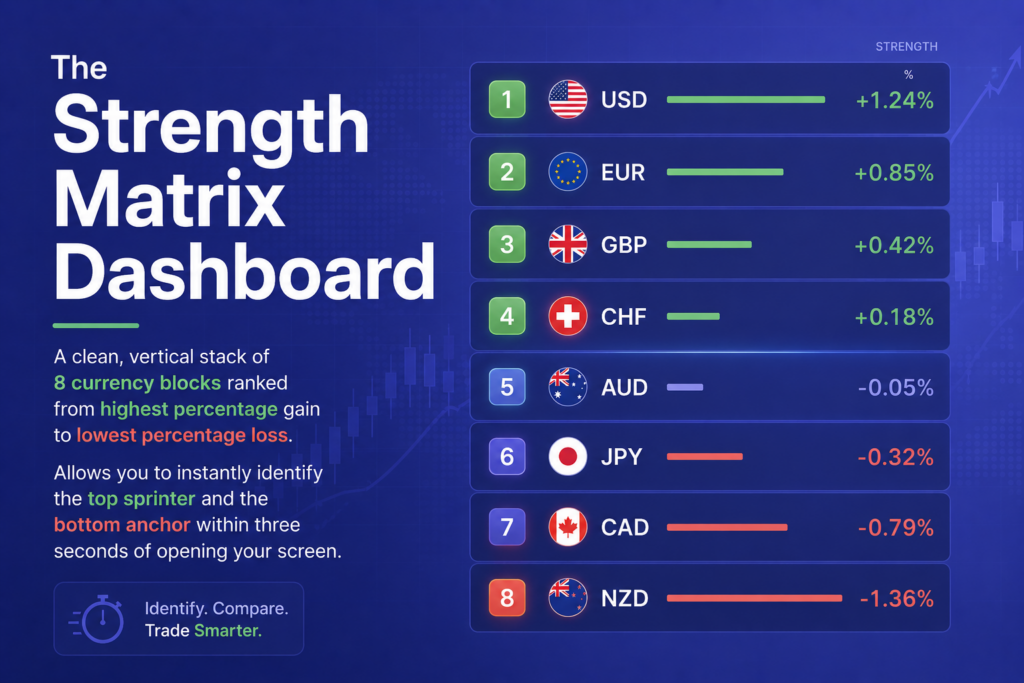
The turning point for me came when I threw out my standard indicator stack and replaced it with a simple Currency Strength Matrix. This isn’t a complex, proprietary mathematical formula. It is an overlay that measures how an individual currency is performing against a basket of its peers over a specific timeframe.
Imagine eight runners in a race. If you only look at Runner A and Runner B, you can tell who is winning between the two, but you have no idea if they are both moving at a snail’s pace while the other six runners fly past them. A strength matrix lets you look down from the stadium press box and instantly see who is sprinting, who is jogging, and who is completely out of gas.
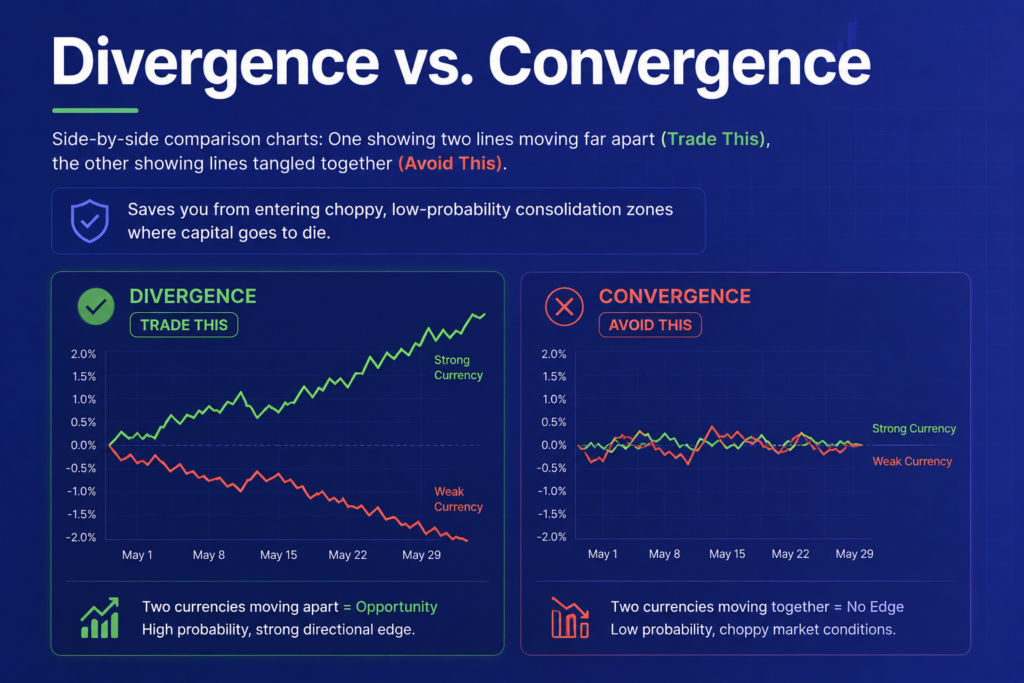
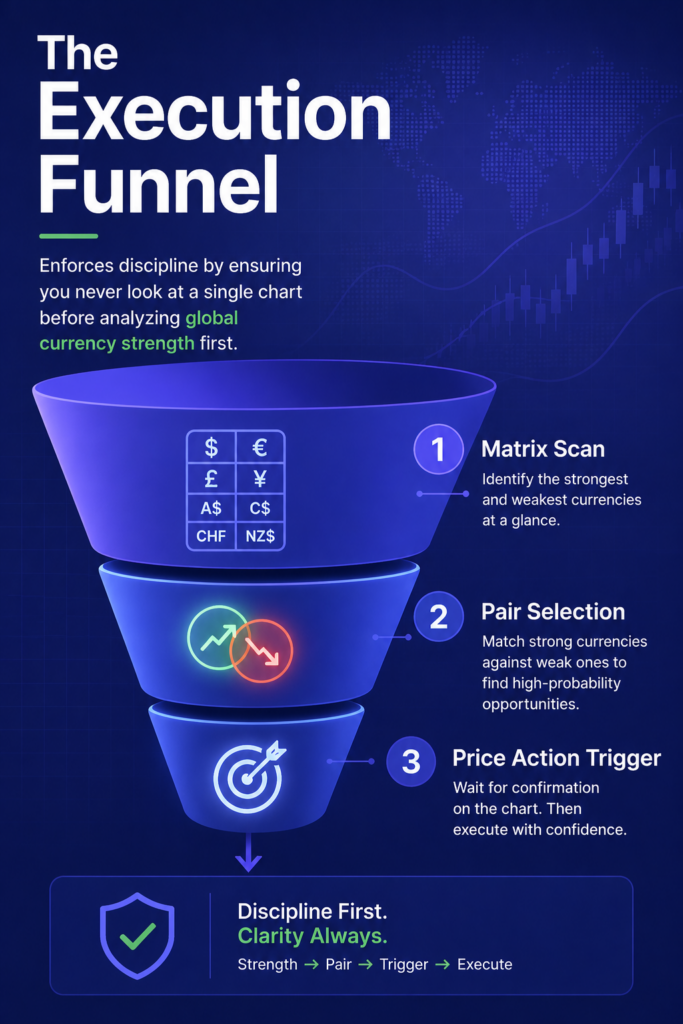
When I look at the market now, I look for extreme divergence. I want to pair the absolute strongest currency of the day with the absolute weakest currency of the day.
If the US Dollar is a rocket ship and the Japanese Yen is an anchor, I do not want to guess at support levels on EUR/USD. I want to trade USD/JPY. That is where the real, unadulterated momentum lives. This structural shift is what keeps you alive in volatile environments. It is a core philosophy I adopted while reading about how understanding market structure saved my binary options trading.
From Theory to the Live Terminal
Let me walk you through how this actually plays out when you sit down at your terminal. I start my session by opening a multi-currency heat map. I am not looking at candlestick formations yet. I am looking at percentages and directional velocity across the majors: USD, EUR, GBP, JPY, AUD, CAD, and CHF.
On a particular morning, the Euro was showing a clean +0.85% average gain across all its pairs. It was beating the Dollar, crushing the Pound, and stepping all over the Aussie. At the exact same time, the Canadian Dollar (CAD) was sitting at -1.10%, bleeding value across the board due to an overnight drop in crude oil prices.
The trade setup was screaming at me: EUR/CAD Long.
Instead of fighting the choppy, indecisive ranges of EUR/USD, I stepped into a market where the buyers were highly aggressive and the sellers were completely checked out. I opened my execution platform, verified the clean price action structure on the EUR/CAD chart, and executed the trade. Because I paired true strength with true weakness, the price didn’t linger or tease my stop loss. It moved cleanly, smoothly, and predictably into profit.
If you want to test this strategy yourself without risking a massive amount of capital, you can start small. I highly recommend checking out the entry barriers outlined in how much money do you really need to start trading. You don’t need thousands of dollars to practice reading true market velocity.
For execution on these momentum setups, I rely on platforms that offer fast order filling and zero lag, because catching a strength divergence requires precision. You can explore the live execution environments on IQ Option or set up a clean charting layout on Binomo to keep tabs on multiple asset classes simultaneously.
Filtering the Noise and Staying Cash
The greatest benefit of trading currency strength isn’t just that it shows you what to trade. Its real power lies in showing you what not to trade.
There are days when the strength matrix looks like a tangled ball of yarn. The USD is up a fraction, the EUR is down a fraction, the GBP is flat, and everything is hovering around the zero line. In the past, I would have forced a trade anyway. I would have zoomed down to the one-minute chart on GBP/USD, convinced myself I saw a double bottom, and given my money right back to the market.
Now, when the matrix shows convergence—meaning all currencies are performing relatively similarly—I sit on my hands. No divergence means no true trend. No true trend means no mathematical edge. If you struggle with the urge to trade during these dead zones, take a moment to read about my personal journey of learning how to sit on my hands during choppy markets. It will completely reframe how you view patience.
When the market context is right, you want an environment that won’t lock up your funds when it is time to harvest your wins. I always cross-reference my execution venues based on processing performance, which you can see in this independent test of the fastest withdrawal brokers.
For high-volume days where I want straightforward, lightning-fast contract entries without wading through bloated features, I use alternative matching engines like Pocket Option or Quotex. If you are caught between choosing platforms for your daily execution routine, you can read this direct breakdown on which is easier for beginners: Binomo or IQ Option to map out your specific infrastructure needs.
Elevate Your Analytical Horizon
Switching to currency strength took me out of the reactive, emotional loop of chasing individual candles and elevated me into a structural strategist. I stopped guessing where the market was going because I could finally see exactly where the capital was flowing in real time.
But a matrix tool is only your foundation. To truly scale your consistency and stay ahead of institutional shifts, central bank interventions, and hidden sentiment reversals, you need to go deeper than basic retail tools. You need institutional-grade forecasting, daily directional bias breakdowns, and real-time structural analysis.
This level of depth is exactly what we build inside our private network every single day. If you are tired of trading blind and want a definitive edge in your market analysis, explore our real-time data feeds at the Becoin Forecast Hub, and unlock our complete institutional toolkit by joining the Becoin Premium Tariff Plan. Let’s stop guessing at single pairs and start trading the actual flow of global capital together.
How Liquidity Affects Binary Options Results
When I first started trading binary options, I believed success was all about finding the perfect indicator. I spent weeks testing moving averages, RSI settings, support and resistance levels, and dozens of YouTube strategies that promised easy wins. Some worked for a few trades, but most failed.
What confused me was that the same setup could produce completely different results on different days. One morning, a simple breakout would run perfectly to expiry. The next day, the exact same setup would stall, reverse, and finish out of the money.
At first, I blamed the broker. Then I blamed the strategy. Eventually, I discovered the real culprit: liquidity.
Understanding liquidity completely changed how I approached binary options trading. More importantly, it helped me stop taking low-probability trades that looked attractive on the chart but had almost no chance of producing consistent results. If you trade binary options and have ever wondered why some days feel easy while others feel impossible, liquidity may be the missing piece.
What Is Liquidity in Trading?
Liquidity refers to the amount of buying and selling activity taking place in a market.
High Liquidity: There are plenty of buyers and sellers participating actively.
Low Liquidity: Fewer market participants are active.
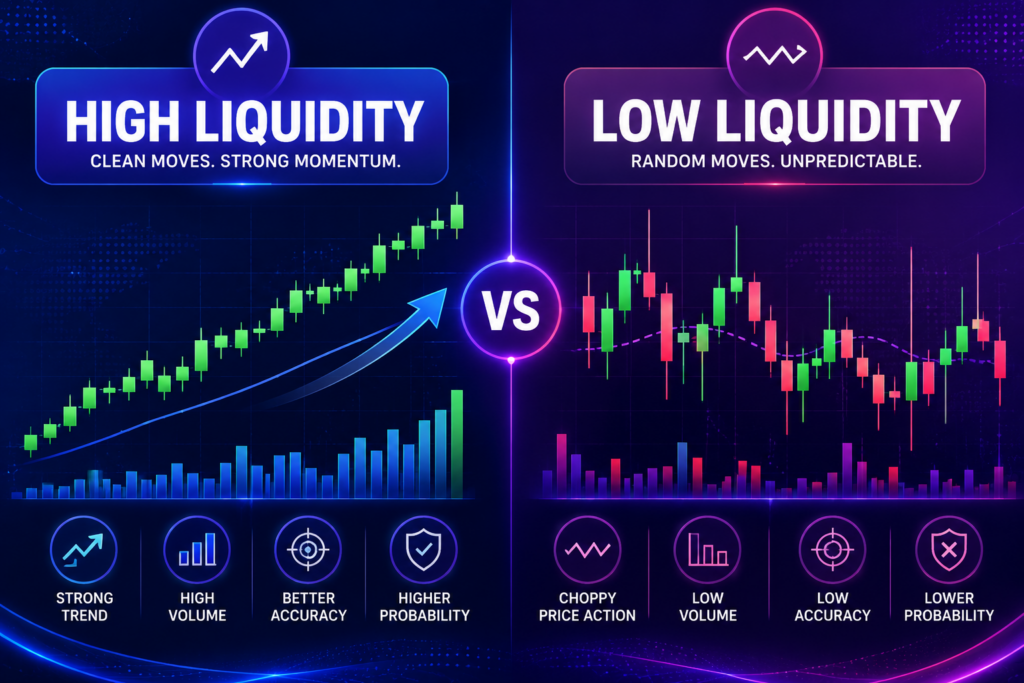
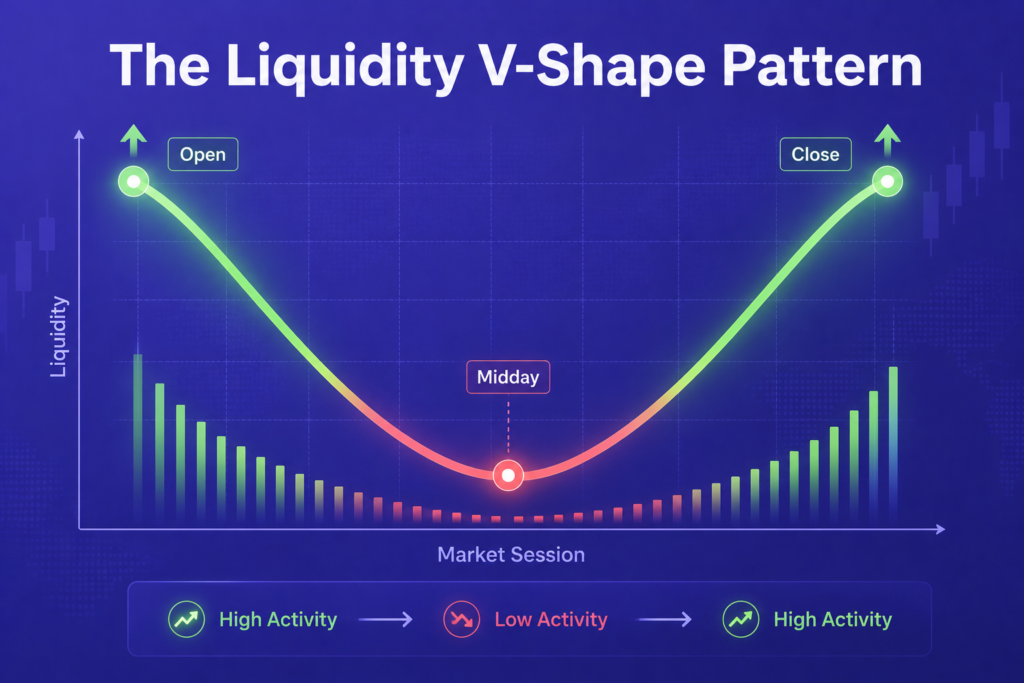
For binary options traders, liquidity matters because it directly affects how price moves. High liquidity creates cleaner price action, while low liquidity often creates random, erratic movements that are incredibly difficult to predict.
I learned this lesson the hard way. One evening, I found what looked like a perfect support bounce setup on EUR/USD. Everything aligned. The level had held multiple times, momentum indicators agreed, and the market structure looked healthy.
I entered confidently, but price suddenly spiked right through support for a few seconds before returning to the original direction. The trade expired as a loss. The next day I checked the chart and realized I had traded during a period of extremely low market activity. The setup wasn’t bad; the timing was. If you want to avoid these traps, finding your rhythm starts with choosing the right platform workspace, a journey I wrote about in Finding My Perfect Workspace: The Search for the Best Broker for My Daily Trading Routine.
Binary options depend entirely on one specific thing: where price closes at the exact expiry moment. Unlike traditional trading where you can hold positions longer to weather random spikes, binary traders need accurate, short-term price movement. That makes liquidity even more important.
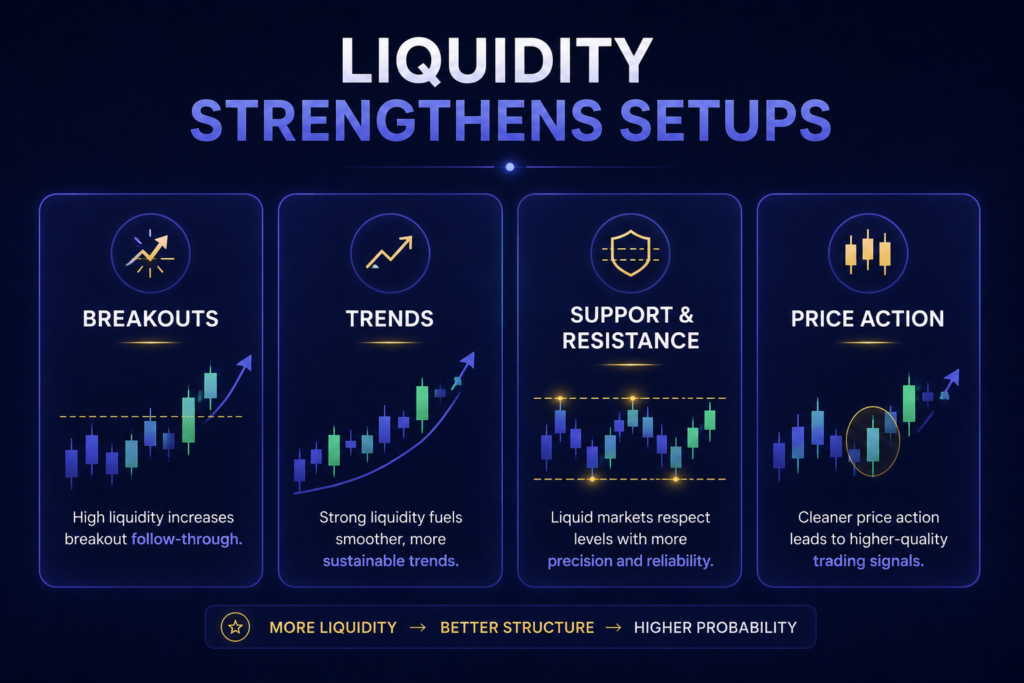
When liquidity is strong:
Trends move more smoothly.
Support and resistance levels react more reliably.
Breakouts have greater follow-through.
Candlestick patterns become more meaningful.
Random market noise decreases.
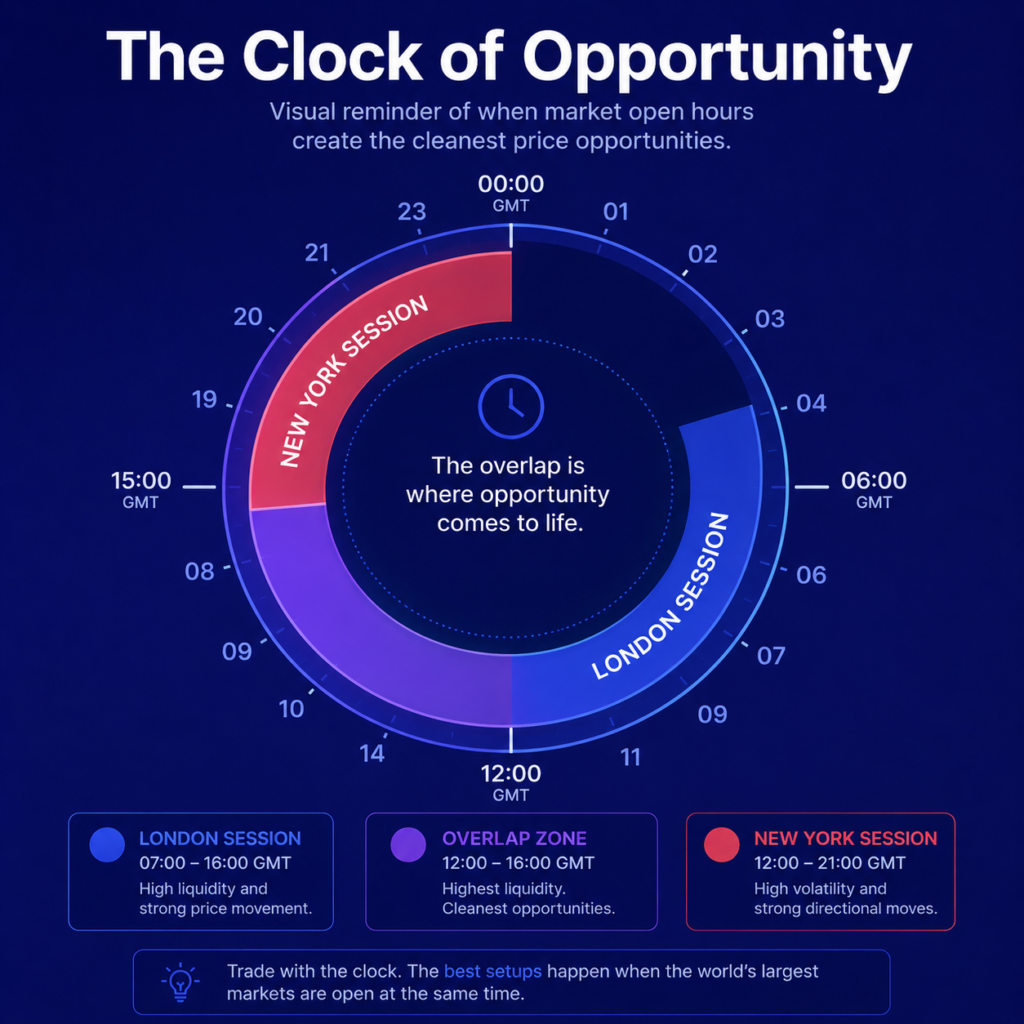
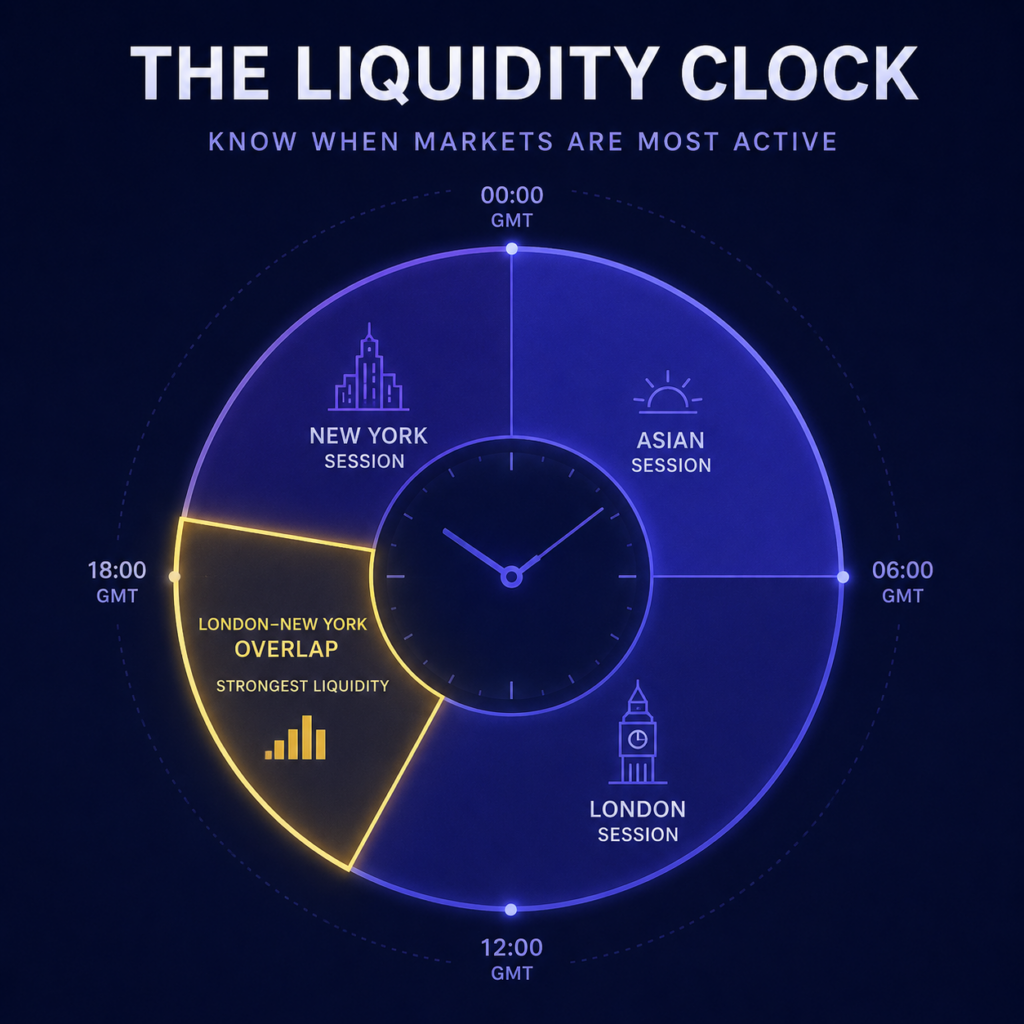
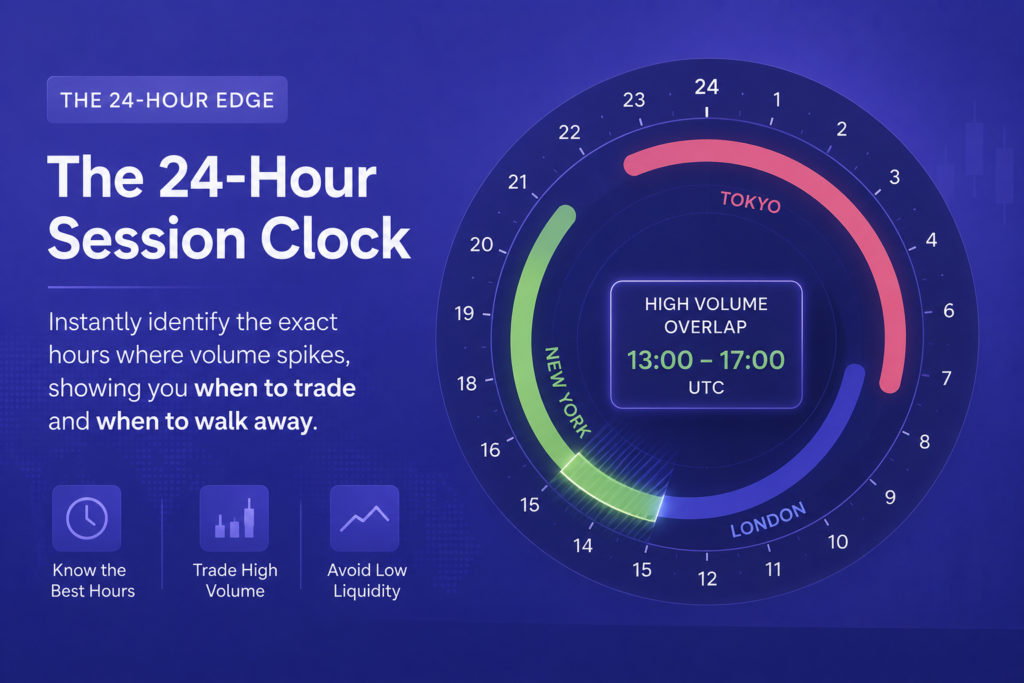
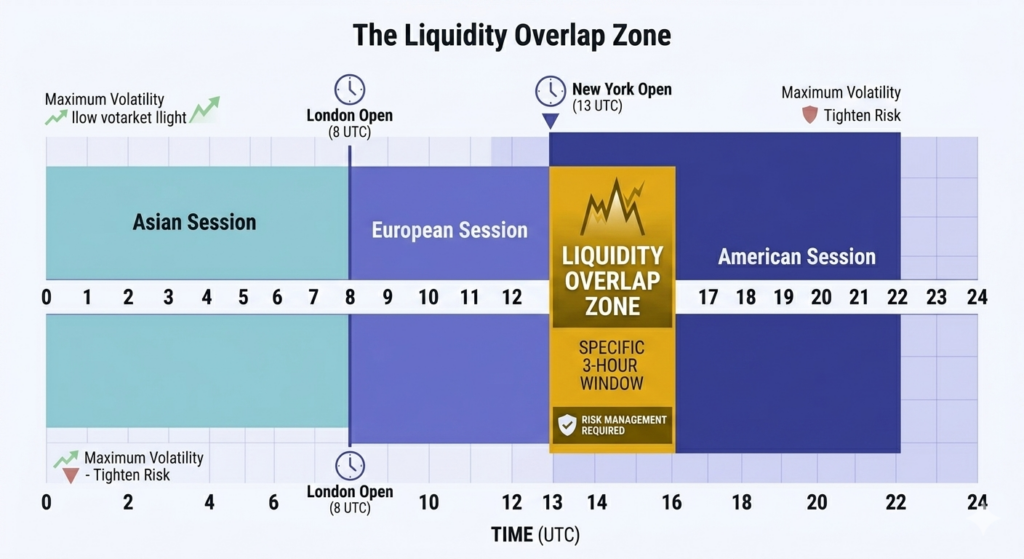
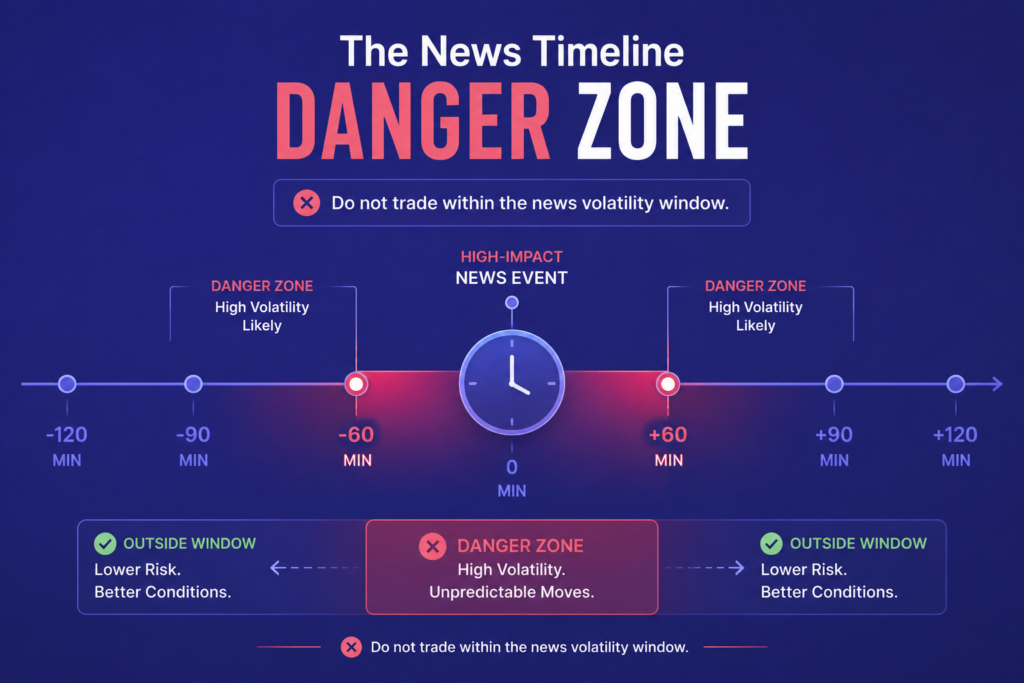
This is one reason session timing plays such an important role. In my experience, the best setups often appear when major financial centers overlap. The London and New York overlap remains one of the most active trading periods globally, where price moves with clear purpose rather than hesitation. If you want to understand how trading sessions influence your setups, read my detailed guide on The Clock and the Cash: My Journey Into the Hidden Rhythm of Session-Based Trading.
The Hidden Danger of Low Liquidity
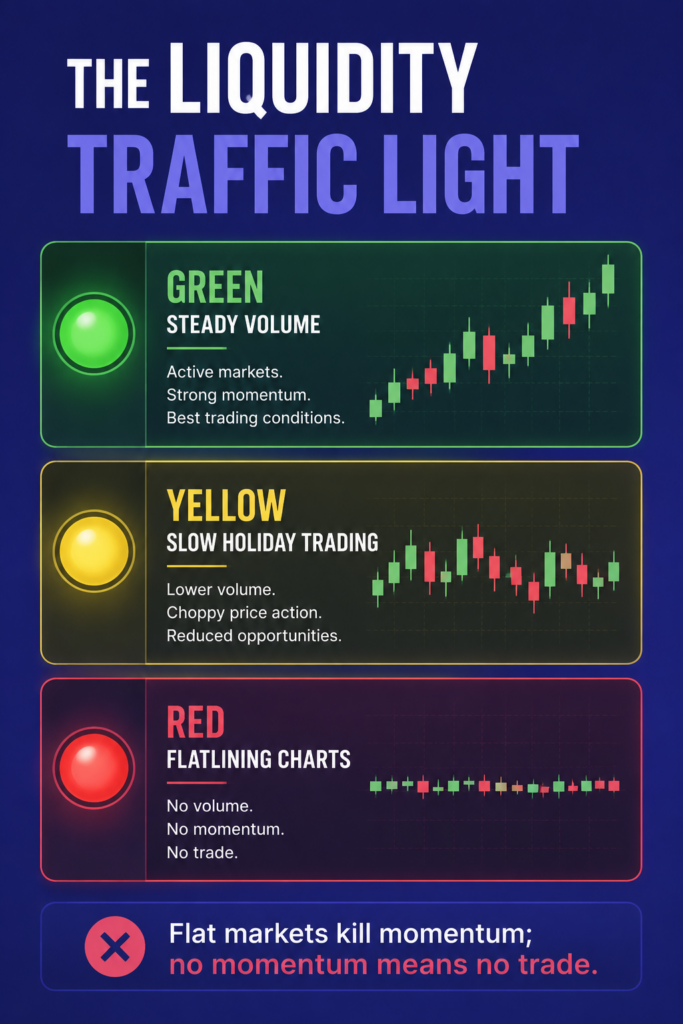
Most beginners focus entirely on finding trades, whereas professionals focus on avoiding bad conditions. Low liquidity creates environments where probability becomes harder to measure. During these quiet times, you will often notice:
Long, unpredictable candlestick wicks
Sudden, unexplained reversals
Frequent false breakouts
Slow, grinding price movement
Choppy consolidations
I used to force trades during quiet periods because I felt I needed action. That mindset cost me more money than any structural strategy mistake. Eventually, I realized that choosing not to trade is often the best trading decision you can make.
One of the biggest breakthroughs in my trading came from tracking liquidity throughout the day. I noticed that the exact same strategy produced dramatically different results depending on the active trading session.
The strongest liquidity generally appears during:
The London Session: European markets generate substantial volume and often establish the core direction for the day. This environment makes it the best broker for learning price action in 2026 tested by real traders a crucial asset if you are trying to master structural movements.
The New York Session: American traders enter the market, creating heavy participation and clean momentum.
The London-New York Overlap: This is where the highest liquidity peak appears, and many of my best binary options trades occurred during this specific window.
Meanwhile, low-liquidity periods often include late New York hours, holiday periods, and session transition dead zones. If you are restricted to trading outside these hours, you have to adjust your strategy completely. For instance, some platforms offer synthetic indices that mimic true market liquidity even on weekends. You can see how platforms handle this in our comparison of Deriv vs IQ Option for Synthetic Indices: Which Platform Is Better in 2026, or check out our guide on Why Market Open Hours Create the Best Trading Opportunities.
How Liquidity Impacts Common Binary Options Strategies
Liquidity affects nearly every strategy you deploy on your charts.
The Connection Between Liquidity and Trader Psychology
What surprised me most wasn’t the market impact; it was the intense psychological impact. Low-liquidity environments actively encourage overtrading. Because nothing seems to happen, traders become impatient. They start inventing setups, forcing entries, and abandoning their core discipline.
Ironically, the periods with the fewest real opportunities often generate the biggest account damage. This destructive behavioral loop is why so many beginners struggle to protect their balances. If you are wondering why consistency feels so elusive, our extensive breakdown in Why 90% of Traders Lose Money: Real Reasons Beginners Don’t Realize explores many of these hidden behavioral traps.
Choosing a Platform That Supports Better Trading Conditions
Liquidity itself comes from the broader global market, not individual brokers. However, platform quality still matters tremendously. Execution speed, chart responsiveness, available asset variety, and session accessibility all directly influence your ability to capitalize on liquid windows.
Many traders compare major platforms before choosing where to start out. If you are assessing your options, it helps to read real, head-to-head performance evaluations:
Today, before entering any binary options position, I force myself to answer five simple questions:
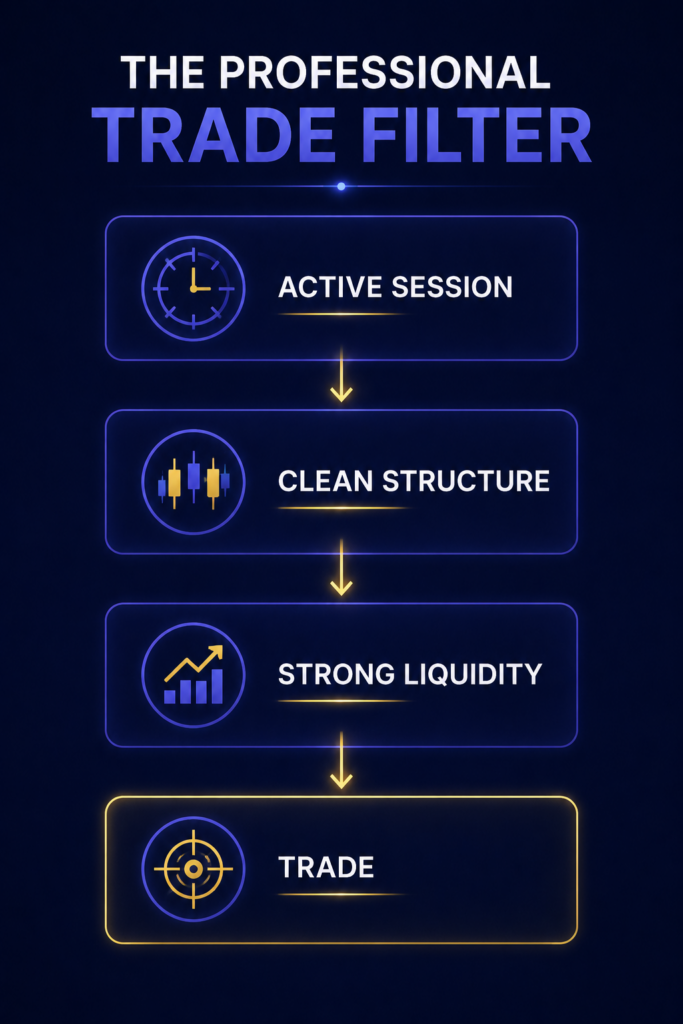
Is the underlying market currently active?
Am I trading during a major regional session or overlap?
Is the price moving cleanly without erratic, hyper-extended wicks?
Are technical support and resistance levels actively respecting historical structure?
Would I still take this exact setup if my trade volume size were twice as high?
If I cannot confidently answer “yes” to those questions, I walk away from the chart. The difference in my long-term account survival has been night and day.
Final Thoughts
For years I searched for a magic technical indicator, but the truth was much simpler. Market conditions matter far more than the tools you overlay on top of them. Liquidity influences trend quality, breakout reliability, support and resistance reactions, and overall predictability. Many losses that retail traders blame on strategy failure are actually liquidity problems in disguise.
Once I stopped chasing trades during quiet markets and focused heavily on high-participation periods, my daily results stabilized. If you’re serious about improving your binary options performance, start paying attention not only to where price is moving, but also to how much volume exists behind that move.
If you want deeper market analysis before placing your next trade, explore our Forecast Hub for comprehensive insights and daily market preparation. For traders who want a genuine structural edge, you can access institutional-style analysis, volume liquidity mapping, session planning, and premium asset forecasts through BECOIN Premium.
The biggest improvement in my career did not come from finding more trades. It came from learning which market environments were actually worth risking capital in the first place.
How Understanding Market Structure Saved My Binary Options Trading
I remember the exact moment my trading account hit zero for the third time in a single month. It was a rainy Tuesday evening, and I was staring at a 1-minute chart on my laptop screen. The price had been moving up aggressively. It looked like a flawless rocket ship to the moon. I clicked the green “Higher” button, confident that the momentum would carry my trade to an easy payout in sixty seconds.
Instead, the very next candle reversed with terrifying speed. It didn’t just drop; it crashed straight through my entry point, leaving me empty-handed. Desperate to recover the loss, I immediately entered a “Lower” trade, assuming the market was crashing. The market instantly flipped back upward.
I felt like an invisible entity was watching my screen, actively trading against me. If you have ever felt this way, you are not alone. It is exactly why 90% of traders lose money. We enter the market chasing colors and momentum without understanding the underlying architectural layout of the asset.
Everything changed for me when I stopped downloading messy technical indicators and started learning market structure. I realized that the market isn’t a chaotic ocean of random ticks. It is a highly organized, repetitive system driven by institutional order flow and retail psychology. Once you learn to read the architectural bones of a chart, binary options stop looking like a gamble and start looking like a game of calculated probabilities.
What is Market Structure and Why Does It Matter for Binary Options?
In simple terms, market structure is the study of the trend, the asset’s current phase, and the structural high and low points on a price chart. While forex or crypto traders use market structure to find massive moves that span days, binary options traders use it to predict the direction of the very next few candles.
Because binary options are fixed-time contracts, precision is everything. You do not just need to be right about the direction; you need to be right right now.
When I first started, I used to hunt for the best broker for learning price action because I realized indicators lagged too much for short-term expiration times. Price action operates on the foundation of market structure, which is divided into three distinct phases: bullish trending markets, bearish trending markets, and ranging or consolidating markets.
The Anatomy of a Bullish Trend
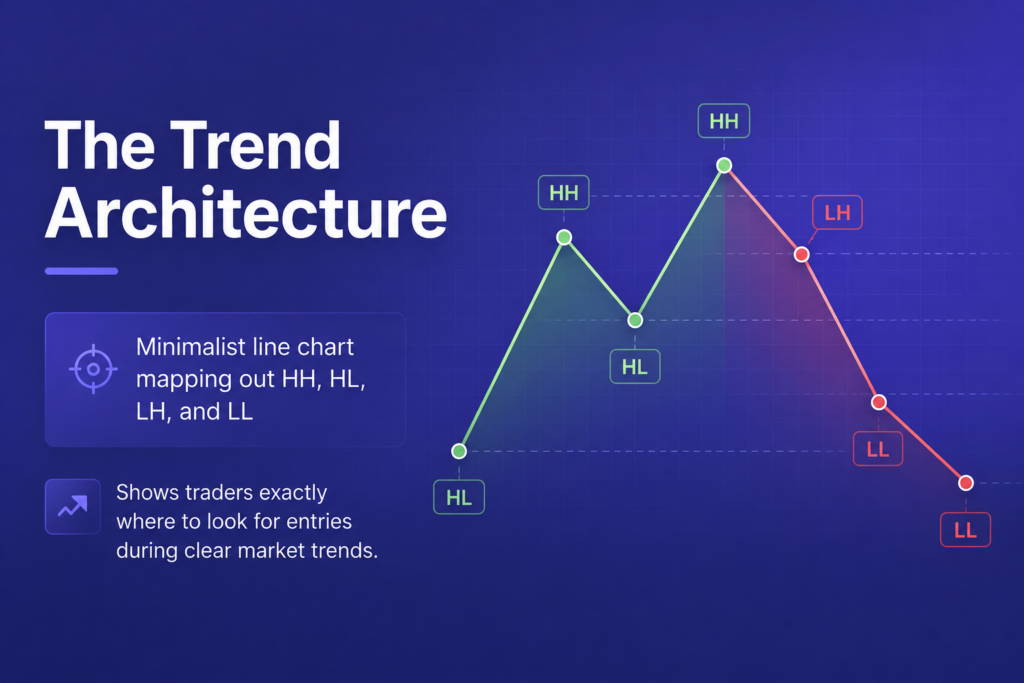
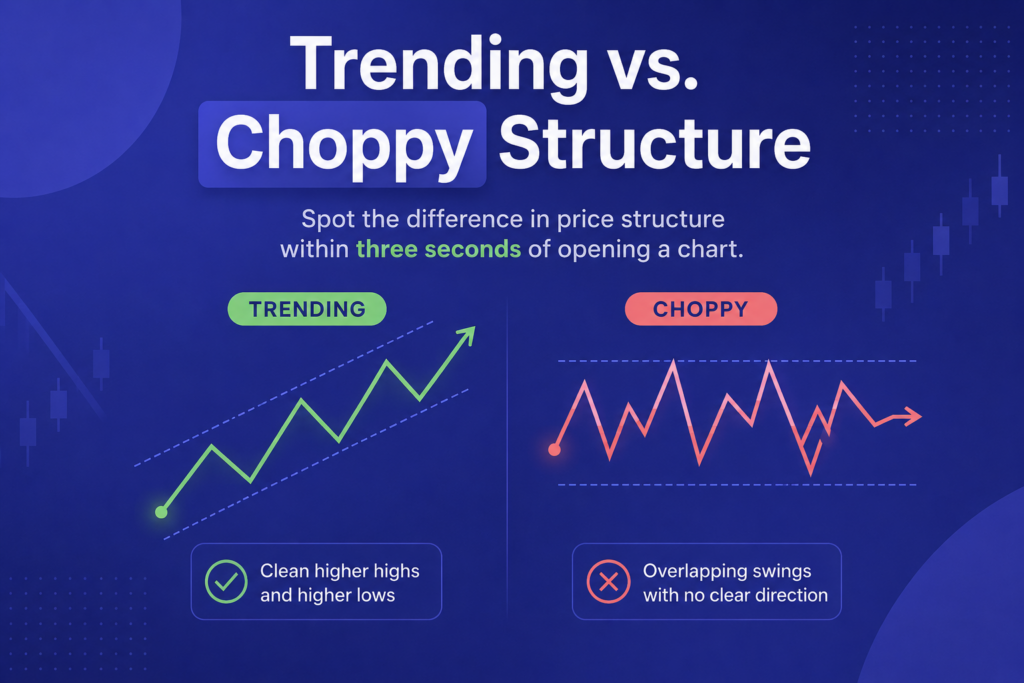
A bullish market structure is defined by a series of Higher Highs (HH) and Higher Lows (HL). When big buyers push the price up, it creates a peak (a high). When those buyers pause to take profits, the price dips temporarily, creating a trough. If the buyers step back in before the price falls past the previous low, they create a Higher Low.
For binary options, the absolute best time to take a “Higher” trade is not when the price is breaking out into a new Higher High. That is where beginners get trapped by sudden pullbacks. The golden entry is at the termination of a pullback, right as the asset forms its Higher Low.
The Anatomy of a Bearish Trend
Conversely, a bearish market structure consists of Lower Highs (LH) and Lower Lows (LL). Sellers drive the price down, take a breather, cause a minor upward retracement, and then slam the price down even lower.
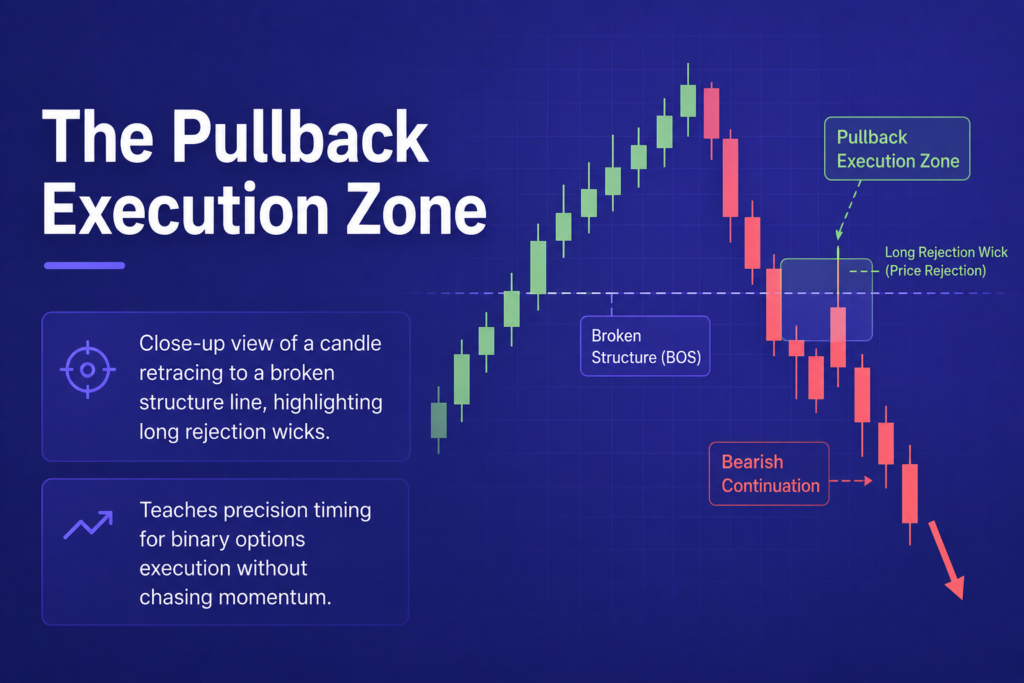
If you are looking to place “Lower” trades, your eyes should be glued to the Lower Highs. Waiting for the price to bounce upward into a previous structural broken floor turned ceiling gives you the highest mathematical probability of winning a short-duration binary trade.
The Range: The Binary Options Trap
The third structure is the range, where the asset moves sideways between a relatively equal ceiling of resistance and a floor of support. While ranging markets can offer clean bounces if the channel is wide enough, tight ranges are highly toxic for short-term traders. I spent months learning how I learned to sit on my hands during choppy markets because attempting to trade a narrow range with 1-minute expiries is financial suicide.
Reading Structural Shifts: The Break of Structure (BOS)
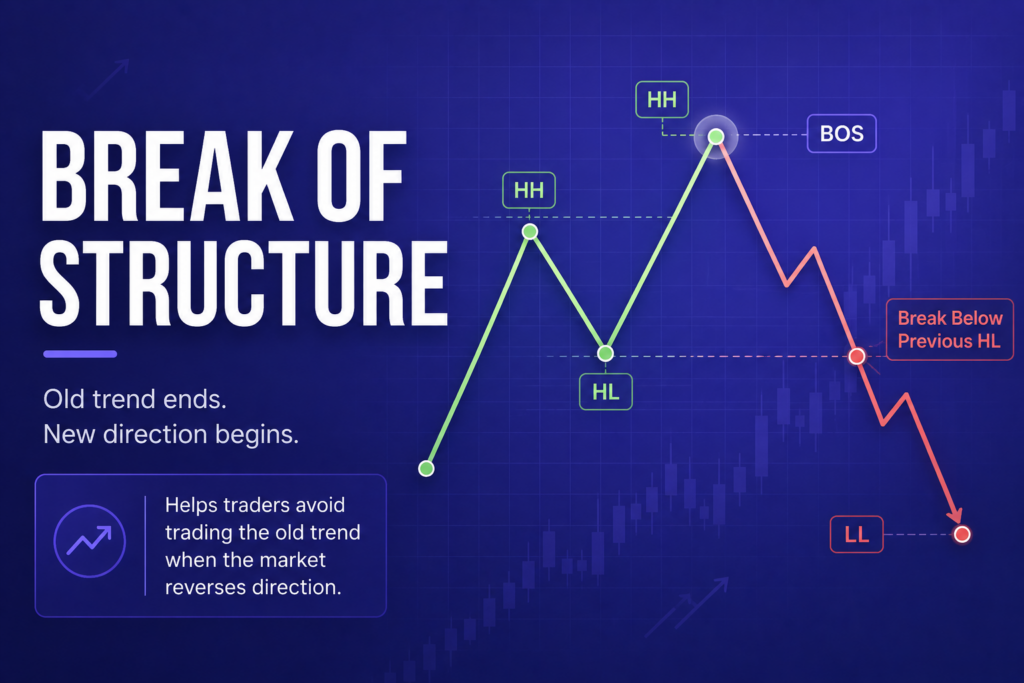
The real magic happens when you learn to identify when a trend is dying. A trend does not just stop out of nowhere; it gives clear architectural warning signs. This signal is known as a Break of Structure (BOS) or a Change of Character (CHoCH).
Imagine a bullish market that has been printing Higher Highs and Higher Lows consistently. Suddenly, the price rallies but fails to break above the previous Higher High. It prints a Equal High or a Lower High instead. Then, sellers aggressively push the price down, crossing clean through the last Higher Low.
The structural floor is broken. The bullish structure is officially dead, and a new bearish cycle has begun.
When I spot a Break of Structure on a clean platform like the IQ Option Platform, I immediately shift my bias. Instead of looking for buy entries, I wait for the price to retest that broken structural level from below to hunt for a high-probability sell trade.
Structuring Your Workspace for Short-Term Analysis
To trade market structure effectively, you do not need a screen cluttered with twenty different colorful lines. You need a platform that offers lightning-fast execution and highly responsive charting tools.
When I am testing out new strategies, I always check the safest trading platforms to ensure my charting lines stay exactly where I put them and don’t lag during high-volatility sessions. For traders who appreciate minimalism, finding a platform that doesn’t overwhelm you with unnecessary features is critical. Many beginners prefer reading pure price lines on a platform designed to be the best broker without complicated features to keep their psychological focus sharp.
Let’s look at how to map out a clear structural chart step-by-step:
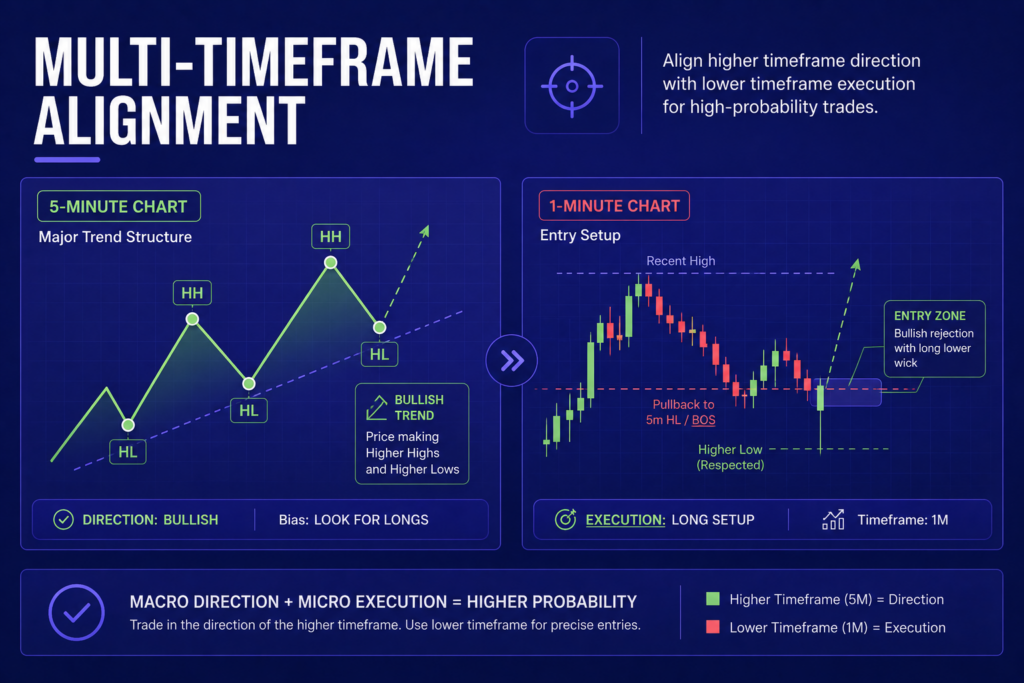
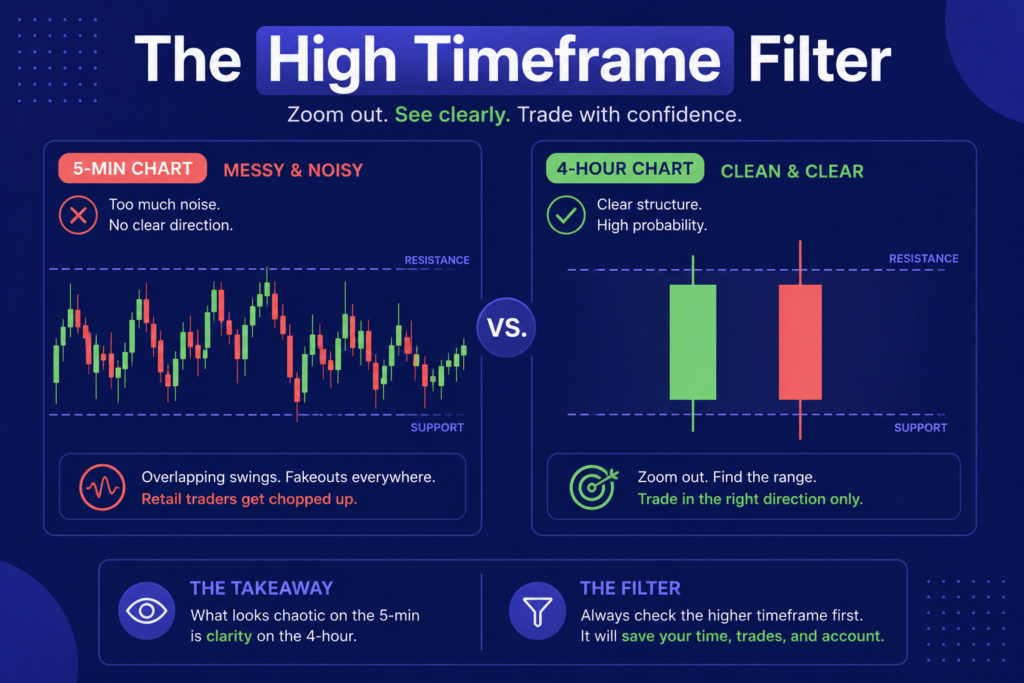
Identify the Master Trend on a Higher Timeframe: If you are trading 1-minute expiries, look at the 5-minute or 15-minute chart first. Is the overall market structure moving up or down? Always trade in the direction of the higher timeframe structure.
Mark Your Swing Highs and Swing Lows: Draw horizontal lines across the clear peaks and troughs on your chart. These represent the real battlegrounds of supply and demand.
Watch the Reaction at the Key Levels: When price approaches a previous structural point, do not guess. Look for candle rejection wicks. A long wick pointing downward at a Higher Low means the structure is holding, signalling a perfect moment to execute.
Practical Application Across Different Trading Ecosystems
Different brokers handle structural movements uniquely depending on their internal chart feeds and available assets. For instance, if you are looking to trade highly predictable, mathematically driven structures that run 24/7 without being affected by real-world news events, you might look toward synthetic assets. Many traders prefer the Deriv Platform for this specific reason, as its synthetic indices follow clean, algorithmic price action patterns beautifully.
If your style leans heavily toward trading traditional currency pairs during major sessions, you need rapid order fulfillment so you do not suffer from slippage at structural levels. For those who prioritize execution speed and clean interface mapping, exploring alternative options like the Pocket Option Platform, the Quotex Platform, or the highly responsive Expert Option Platform can make a substantial difference in catching volatile structural breaks.
Similarly, platforms like the Olymp Trade Platform and Capital Core offer excellent technical environments for drawing clear support and resistance lines across multi-timeframe structures.
Shifting From Gambler to Structural Master
The day I stopped guessing whether the next candle would be green or red was the day I finally started treating binary options like a real business. It requires patience. It requires you to sit on your hands and wait for hours if necessary until the price arrives exactly at a verified structural zone.
If you are tired of watching your hard-earned capital vanish due to unpredictable market swings, it is time to stop trading blindly. You need deep analytical insights, precise daily forecasts, and a community that decodes the real movements behind the scenes.
To truly take your market comprehension to an institutional level, check out the specialized insights available at the Becoin Forecast Hub and step up your game by securing your access to the Becoin Premium Tariff Plan. Do not let the market dictate your financial future; learn its structure, read its blueprints, and take control of every single trade you make.
How I Learned to Sit on My Hands During Choppy Markets
I remember the morning vividly. It was a Tuesday. The coffee on my desk was still piping hot, the charts on my screen were blinking, and I was feeling incredibly confident. I had just finished reading about how market open hours create the best trading opportunities, and I was ready to hunt for a clean setup.
My favorite currency pair had been in a beautiful, clean uptrend for three consecutive days. It was a textbook setup. I expected a minor pullback to a key support level, followed by a strong bounce back to the skies.
Instead, I stepped directly into a meat grinder.
The price hit my level, and I bought. Almost instantly, the market reversed and knocked out my stop-loss. I shook it off. It happens. Loss is part of the game. I waited a few minutes, noticed a massive bearish engulfing candle, and decided to flip my bias. I went short. Two minutes later, the market aggressively spiked upward, taking out my second stop-loss.
Frustration started to warm up the back of my neck. I adjusted my indicators, looked closely at the screen, and placed a third trade. Wipeout. Within forty-five minutes, I had lost two weeks’ worth of hard-earned profits. The market wasn’t trending up, and it wasn’t trending down. It was violently jerking back and forth in a tight, unpredictable twenty-pips range. It was a choppy market.
That day, I didn’t just lose money. I lost my emotional balance. It took me months to realize that the problem wasn’t my technical strategy or my indicators. The problem was my lack of situational awareness. I was trying to use a map meant for a highway while driving through a swamp.
Here is what I learned from that painful experience, and how you can save your account from the slow, agonizing death of a thousand cuts that sideways markets love to inflict.
Understanding the Beast: What is a Choppy Market?
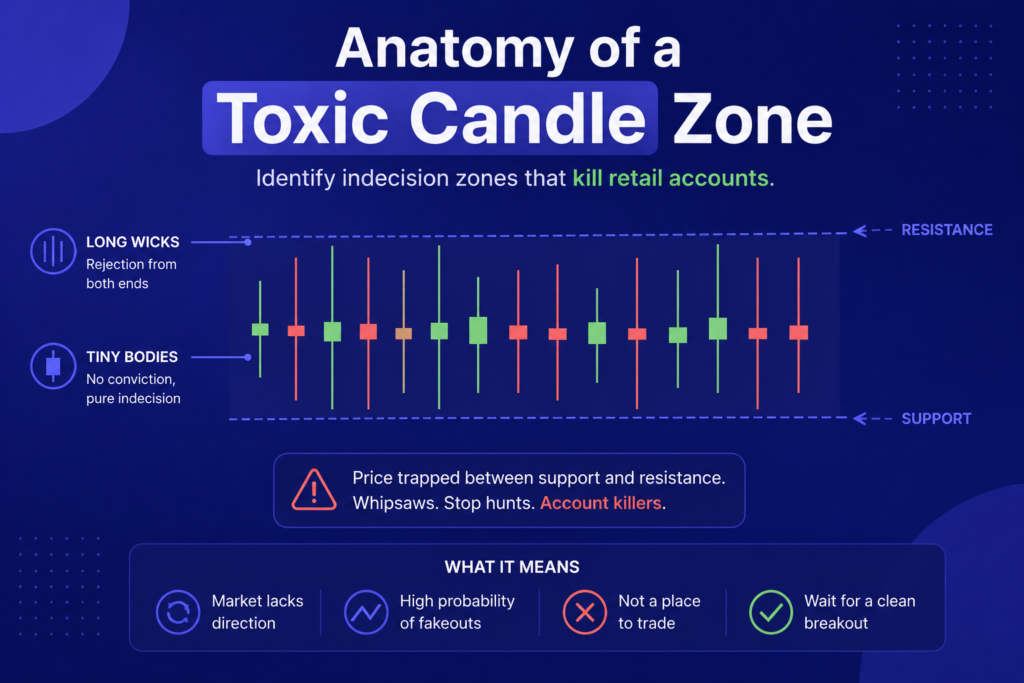
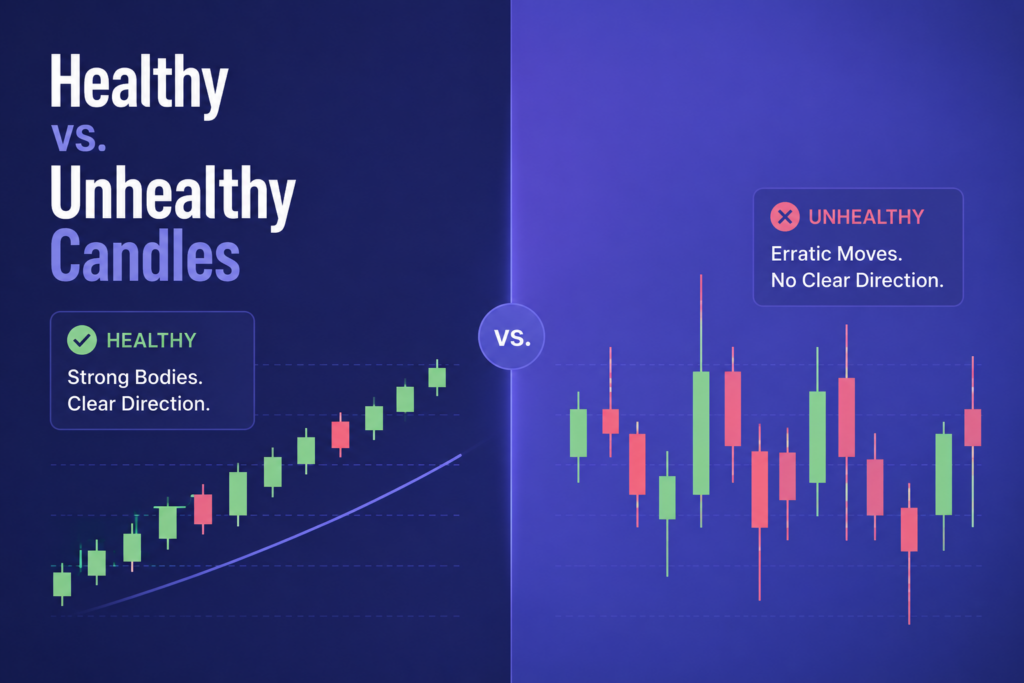
Before you can avoid a choppy market, you have to recognize it. In simple terms, a choppy market occurs when the price moves sideways in a highly erratic fashion without any clear direction. Unlike a healthy ranging market, where the price bounces smoothly between a defined support floor and a resistance ceiling, a choppy market breaks minor levels constantly, prints long wicks on both sides of the candles, and mimics breakouts only to fail immediately.
It is a state of equilibrium driven by indecision. Big institutional players are either sitting on the sidelines or actively accumulating positions without pushing the price out of its current zone.
When you look at your dashboard during these times, everything looks messy. If you are using a platform known for having the cleanest interface real comparison for beginners in 2026, the messiness becomes even more glaringly obvious because the candles will look fragmented and chaotic.
The primary trap here is psychological. As retail traders, we are conditioned to believe that more activity equals more profit. We look at the moving tickers and feel an overwhelming urge to participate. But in a choppy environment, participation is exactly what the market wants because it feeds on your transaction fees and your stop-losses.
The Signs I Missed: Identifying Choppiness Early
I used to think that identifying a choppy market was something you could only do in hindsight. I was wrong. The market leaves subtle clues at the very beginning of a sideways phase.
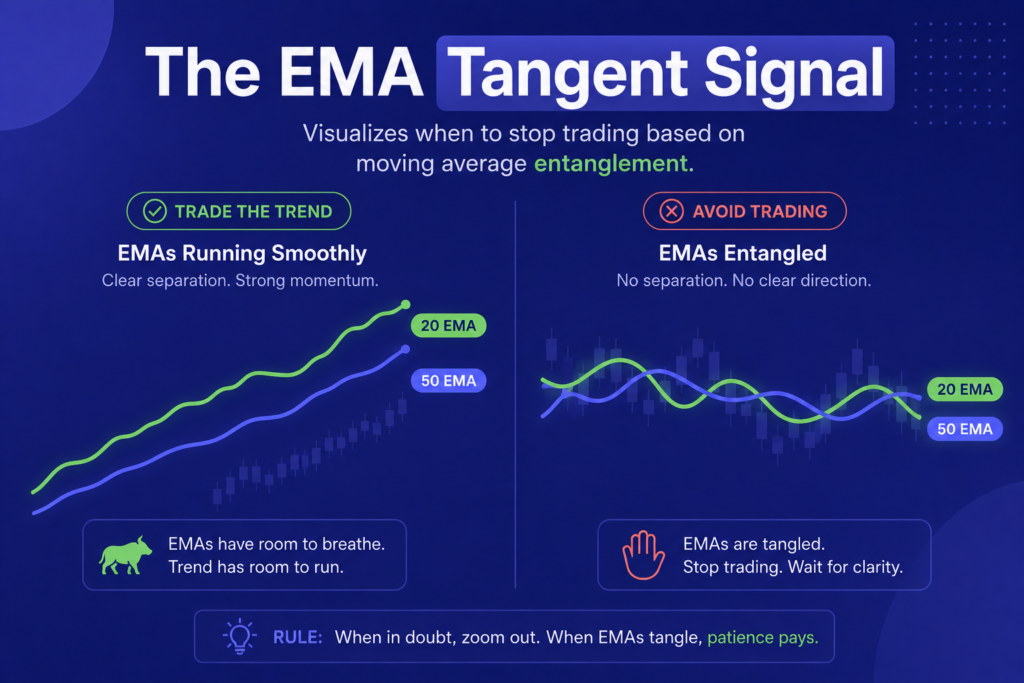
First, watch the moving averages. If you use a simple tool like a 20-period and a 50-period exponential moving average (EMA), look at how they interact. In a strong trend, they run parallel to each other, acting as dynamic support or resistance. In a choppy market, they start to flatten out and repeatedly cross over one another like a tangled ball of yarn. When the price begins to weave through your moving averages like a slalom skier, step away from the order button.
Second, pay close attention to candle wicks. If you see consecutive candles with small bodies and long wicks pointing both up and down, it means neither buyers nor sellers are controlling the narrative. It is a violent tug-of-war where both sides are losing strength.
If you want to practice spotting these structural shifts without risking a large sum of money, it is highly recommended to use a platform that accommodates micro-investments. You can read my breakdown on the best broker for $10 deposit tested platforms 2026 to see where you can safely test your market-reading skills.
The Mental Trap of “Recouping Losses”
The most dangerous part of a choppy market isn’t the initial loss. It is the emotional spiral that follows. When I lost those first two trades on that fateful Tuesday, my logical brain went completely dark. A dark, vengeful entity took over my hands. I wanted my money back, and I wanted it immediately.
This is why 90% of traders lose money real reasons beginners don’t realize. They don’t understand that the market doesn’t owe them a single dime. When you lose money in a sideways market, your immediate instinct is to tighten your stops or increase your lot size to win it back in one single shot. In a choppy environment, a tighter stop-loss just means you will get stopped out even faster.
I remember staring at my screen, watching the balance drop, and wondering if my execution app was lagging. I even questioned if my internet connection was causing bad fills. If you ever feel like your technical setup is working against you, it helps to check if you are using the best trading platform for slow internet in 2026 to eliminate technical variables from your frustrations. But let me be entirely honest with you: most of the time, it isn’t the internet. It is the choppy price action playing tricks on your mind.
Your Survival Guide: Concrete Rules for a Sideways Market
Over the years, I developed a strict set of personal rules that keep me safe when the charts start looking erratic.
First, I implemented a “Two Strikes and Out” rule. If I take two consecutive losses in a single trading session, I close my charts immediately. I don’t look at my phone, I don’t check my open PnL, and I don’t try to find a “perfect” setup to break even. Two losses mean either my analysis is wrong, or the market conditions are completely unplayable. In both scenarios, staying active is a losing proposition.
Second, I learned to track session volume. Choppiness often occurs during the transition periods between major global financial sessions. If you study the clock and the cash my journey into the hidden rhythm of session based trading, you will notice that the market frequently dries up right after the London session closes and before the New York afternoon volume kicks in. Trading during these dead zones is an absolute recipe for account destruction.
Third, change your perspective by shifting to a higher timeframe. If the 5-minute chart looks like an irregular heartbeat, zoom out to the 1-hour or the 4-hour chart. Frequently, you will realize that what looked like a massive breakout attempt on the lower timeframe is actually just a tiny, insignificant wick on a higher timeframe candle. Zooming out grounds your perspective and prevents you from chasing ghosts.
For those who prefer a highly systematic approach, choosing platforms that offer robust analytical layouts can make a massive difference. You can read a direct head-to-head analysis on the IQ Option vs Deriv chart comparison to see which interface gives you a clearer view of high-level trends versus low-level noise.
The Power of Doing Absolutely Nothing
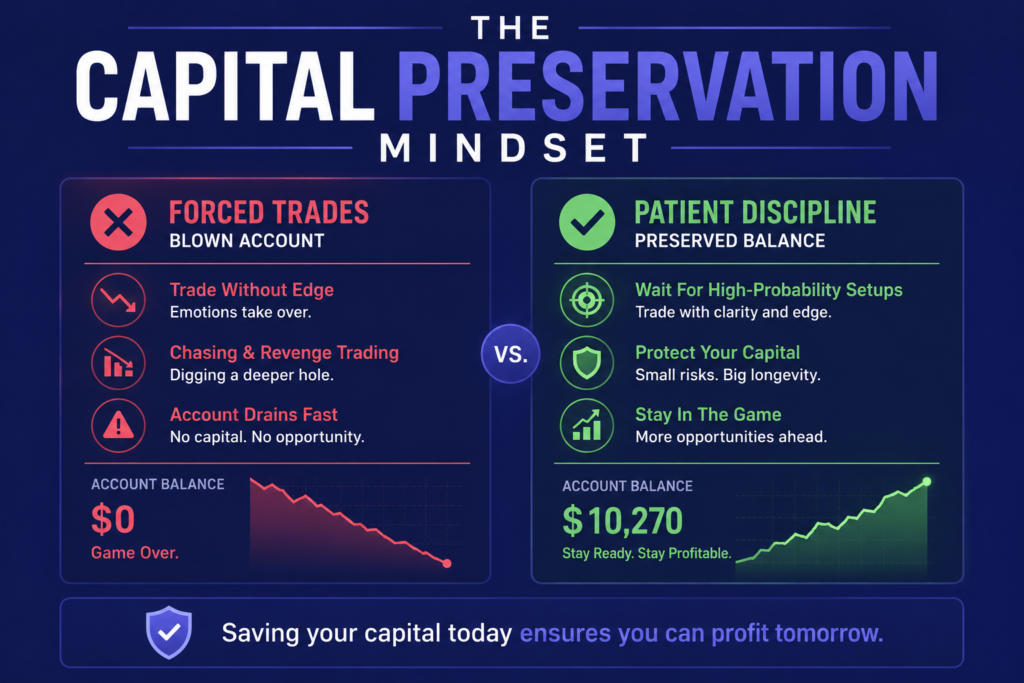
It takes a massive amount of discipline to look at a live chart and decide to do absolutely nothing. We live in a world that rewards constant hustle and endless productivity. In trading, the opposite is frequently true. Sometimes, the most profitable action you can take is to close your laptop, walk outside, and preserve your capital for a day when the market is ready to cooperate.
When you protect your capital during bad market conditions, you ensure that you still have money to trade when beautiful, high-probability trends return. Think of your account balance as your ammunition. If you waste all your bullets shooting at shadows in the dark, you will have nothing left when the target finally walks out into the clear daylight.
If you are currently looking for a reliable, heavily tested environment to build your skills and manage your trades during clean market conditions, it is vital to pick platforms with a proven track record. For beginners starting out with smaller balances, exploring the options available via the IQ Option platform can provide a highly stable starting ground. Alternatively, you can explore the features of the Binomo trading portal to see if its execution flow aligns better with your personal pace. For a detailed breakdown of how these specific ecosystems stack up against each other regarding execution speed and entry requirements, don’t miss my analysis on which is easier for beginners Binomo or IQ Option.
Upgrading Your Edge
Learning to sit on your hands during low-volume, erratic environments changed my career entirely. It was the day I stopped trading and finally started making money. But discipline is only half the battle. The other half is access to institutional-grade insights that help you anticipate these bad market phases before they destroy your balance.
If you are tired of guessing whether the market is starting a clean breakout or entering a deadly trap, you need to elevate your analytical toolkit. By joining the BeCoin Premium Membership, you gain access to institutional-grade, predictive data streams and direct access to the BeCoin Forecast Hub. Stop gambling against algorithms in the dark. Protect your capital, master your emotional baseline, and trade with a definitive structural edge.
Why Market Open Hours Create the Best Trading Opportunities
I used to think trading was a 24-hour conveyor belt of endless cash. In my earliest days, armed with a laptop, a hot cup of coffee, and far too much unearned confidence, I would stare at charts at 11:00 PM on a Tuesday. The candles barely moved. They crawled across my screen like snails on a sleepy afternoon. I would force trades out of sheer boredom, trying to squeeze profit out of microscopic price wiggles, only to get eaten alive by spreads and sudden, random reversals.
It took losing a painful amount of capital to realize a fundamental truth about the financial markets: the market does not care about your work schedule. It has its own heartbeat, its own opening bell, and its own rush hours.
When I finally figured out that the highest concentration of trading opportunities happens during specific market open hours, my entire approach shifted. I stopped chasing the market and started waiting for it to wake up. Here is the raw story of how I learned to ride the opening waves, why these hours hold the highest win potential, and how you can structure your day to exploit them.
The Ghost Town vs. The Trading Floor
Imagine walking into a massive shopping mall at 4:00 AM. The lights are dim, the doors are locked, and the only sound is the echo of your own footsteps. If you wanted to sell a high-end watch right there, your chances of finding a buyer are close to zero. If you do find someone, they will probably offer you pennies on the dollar because there is no competition.
That is what trading feels like during the dead zones—those awkward transition hours between the close of New York and the slow awakening of Sydney and Tokyo.
Now, imagine that same mall at 10:00 AM on a Saturday. The doors fly open, thousands of shoppers stream in, music is playing, and buyers are actively competing for goods. Prices move rapidly, transactions happen in milliseconds, and the energy is palpable.
In the digital markets, the opening bell of a major global session—be it London, New York, or Tokyo—is that Saturday morning rush.
When a major market opens, institutional investors, hedge funds, algorithmic bots, and retail traders all dump their orders into the order book at the exact same time. This massive influx creates two beautiful ingredients that every successful trader needs: extreme liquidity and explosive volatility. Without these two, you are essentially trying to sail a boat in a puddle with no wind.
The Magic Magic Hour: The London and New York Overlap
If you want to know the exact moment my trading account turned a corner, it was when I synchronized my alarm clock with the overlap of the London and New York sessions.
The London session opens early in the morning European time, bringing in the massive weight of European banking capital. A few hours later, New York traders wake up, pour their coffee, and open their terminals. For roughly a four-hour window, the two largest financial capitals on earth are trading simultaneously.
The sheer volume during this overlap is staggering. Trends do not just form; they accelerate. Support and resistance levels that held firm for twelve hours suddenly shatter as institutional momentum drives prices toward clean targets.
Before I realized this, I spent months analyzing charts during quiet periods, wondering why my perfect technical setups kept failing. The answer was simple: there was no volume to push the price through the levels. Understanding this structural reality is why many traders end up migrating across platforms, looking for environments that handle high-velocity execution smoothly. If you have ever wondered why execution speed matters so much during these frantic windows, you can read more about why traders move from Binomo to Deriv in 2026 for a clearer perspective on platform mechanics.
During the open, the spread—the difference between the buy and sell price—shrinks to its narrowest point because there are so many participants. This saves you money the second you click “Buy” or “Sell.” More importantly, the price action becomes highly predictable because it is driven by real directional intent, not random retail noise.
Why the First 60 Minutes Dictate the Whole Day
There is a distinct psychological phenomenon that happens during the first hour of a market open. I call it the “unzipping” of the market.
Overnight, while a specific market was closed, world events kept happening. Companies released earnings, politicians made announcements, and economic data dropped. Because the local exchange was closed, all that raw human emotion and fundamental data got compressed into a coiled spring.
When the opening bell rings, that spring uncoils instantly.
The first hour is a battlefield where the market plays catch-up. You will often see a massive initial spike in one direction, followed by a sharp reversal as early trapped traders get liquidated, followed finally by the true trend of the day establishing itself.
Early on, I used to jump into the market the exact second the clock struck the opening hour. It was an adrenaline rush, but it was also financial suicide. I was getting chopped up in the initial chaos.
Eventually, I adapted my strategy. I began to treat the first fifteen to thirty minutes as an observation window. I let the big institutional players battle it out, let the initial volatility clear out the weak hands, and then I looked for clean price action entries once a clear direction emerged. This patient, methodical approach completely transformed my daily routine. If you are struggling to find a balance between your personal life and the chaotic market schedule, exploring my personal journey in finding my perfect workspace and building a daily trading routine might give you some practical structural ideas.
Matching the Session to Your Trading Identity
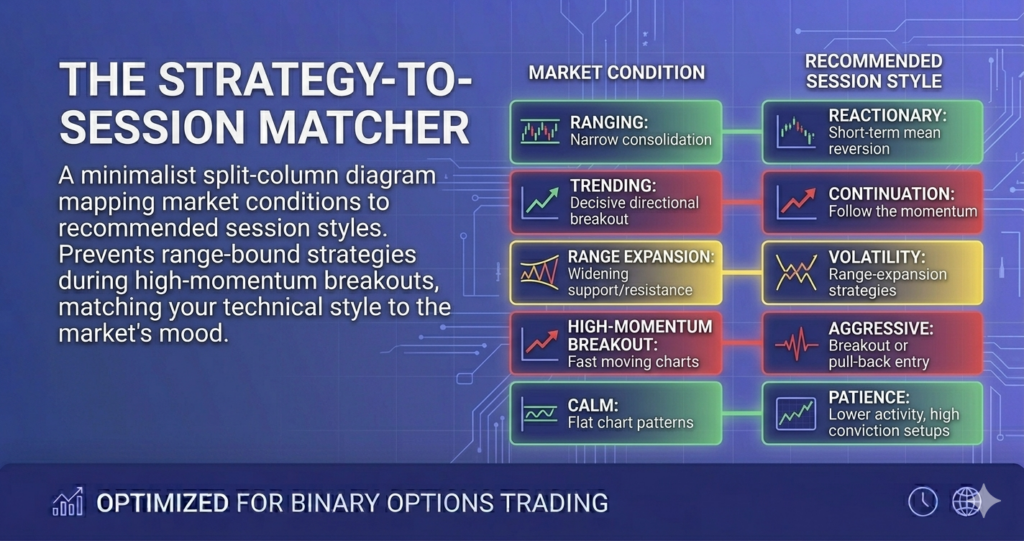
One of the biggest mistakes I see beginners make is trying to trade every single session with the exact same strategy. They will use an aggressive breakout strategy during the quiet Asian session, or a slow range-bound strategy during the explosive New York open. It never works.
Every market session has a completely unique personality, and your strategy must match that personality.
The Tokyo/Asian Open: This session is traditionally calmer, more deliberate, and prone to consolidation. It is a fantastic environment for mean-reversion strategies, where you trade the bounces off well-defined support and resistance ranges.
The London Open: This is the trendsetter. London loves to break out of the ranges established overnight during the Asian session. If you love trading explosive breakouts and high-momentum line breaks, this is your playground.
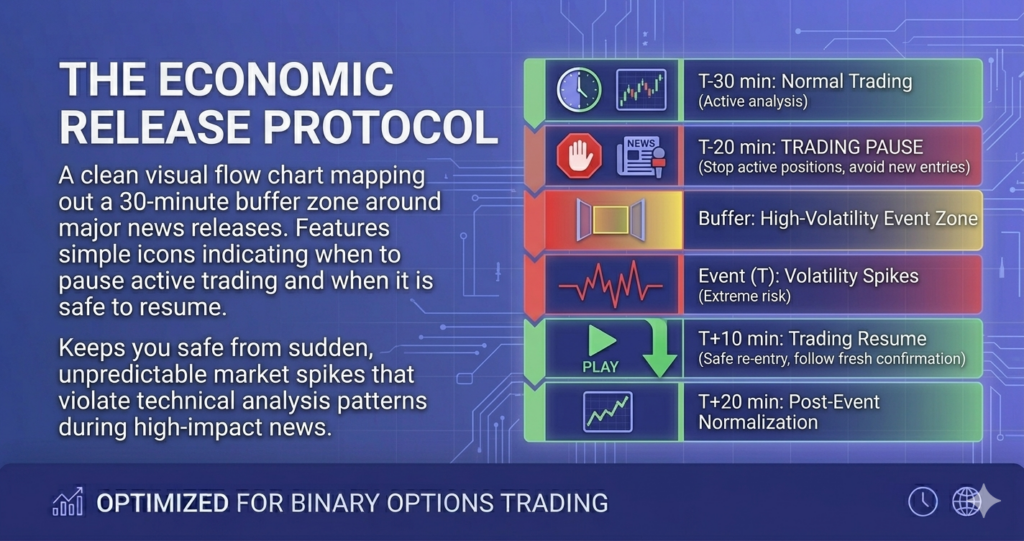
The New York Open: This is the wild card. It brings immense volume but is heavily influenced by macroeconomic news events, interest rate decisions, and employment data releases. It requires sharp risk management because reversals can be swift and violent.
To navigate these personality shifts, you need platforms that do not choke when the volume spikes. If you are operating with a smaller retail bankroll, choosing the right venue is critical. I highly recommend looking over the comprehensive analysis of Binomo vs IQ Option for small accounts to see which ecosystem provides the stability you need when a session kicks off.
The Dark Side of the Open: Managing the Chaos
I would be lying if I said the market open is an easy ticket to wealth. The same volatility that creates massive profit windows can wipe out an undisciplined account in seconds.
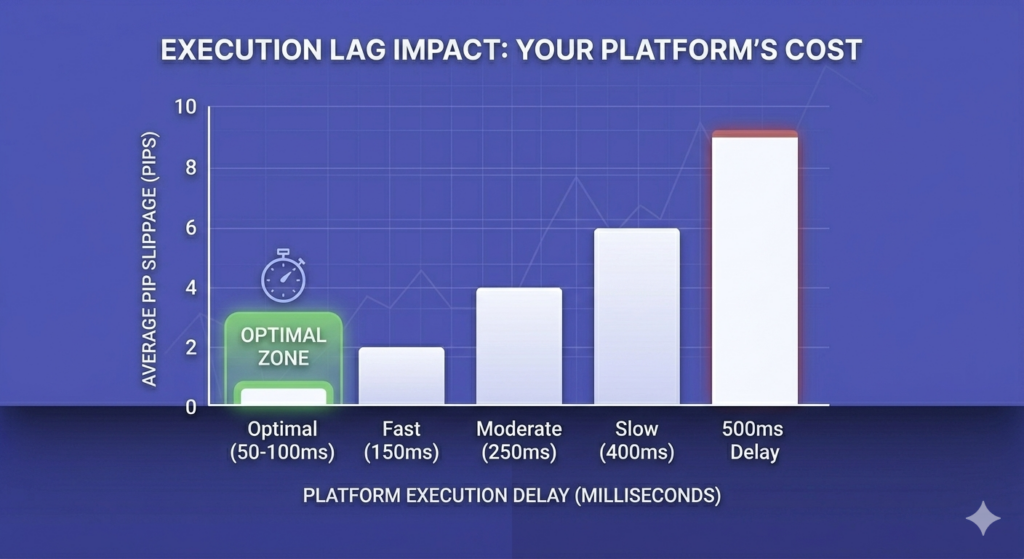
When the volume surges, slippage can happen. You might click to enter a trade at one price, but because the market is moving at terminal velocity, your order gets filled a few pips away. If your platform has poor charting tools or lagging execution, you are starting the race with a broken leg.
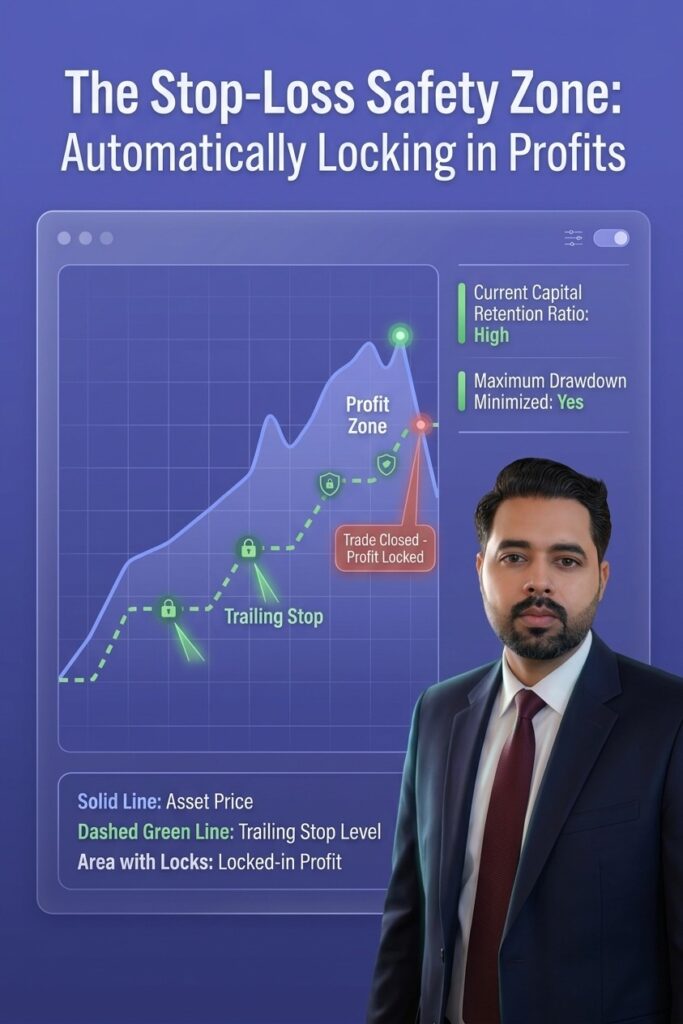
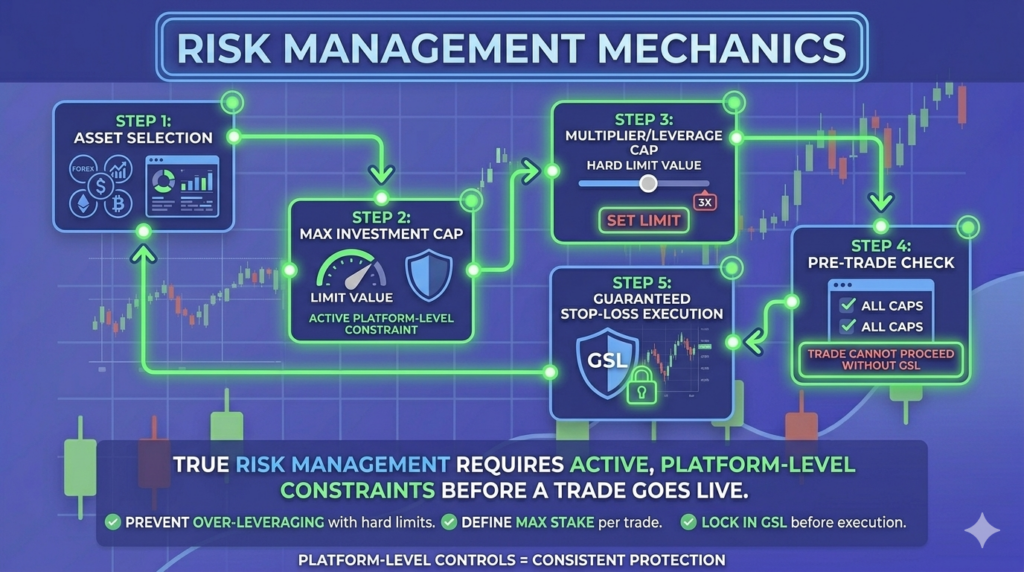
To survive the open, your risk management has to be completely automated and entirely unemotional. I never enter an opening bell trade without a hard stop-loss already calculated and plugged into the system. The market moves too fast for mental stop-losses; by the time your human brain processes that a trade has gone wrong, your balance could take a catastrophic hit.
Finding tools that allow you to manage this risk cleanly is a vital part of your development. For a deeper look at platforms built to protect your capital during high-velocity moves, take a look at the breakdown of which broker has better risk management tools.
The Real Cost of Forcing Trades in the Dead Zones
It took me years to realize that some of the highest-earning days I will ever have are the days where I simply choose not to trade.
When you try to trade outside of the market open hours, you are essentially gambling against the house edge. The lack of volume means the market is easily manipulated by single large orders. You will see a candle spike up, convince yourself a trend is starting, buy in, and then watch the price immediately collapse because there was no genuine institutional follow-through behind the move.
When I shifted my focus exclusively to the primary session opens, my stress levels plummeted. I no longer had to sit at my desk for twelve hours a day, frying my nervous system. Instead, I spend two to three highly focused hours trading the open, and then I close my laptop. I let the market do the heavy lifting while I go live my life.
If you are currently trapped in the loop of constant, exhausting overtrading, you are not alone. It is a phase almost every professional trader goes through before they learn the value of timing. You can read my candid personal reflection on the day I stopped trading and finally started making money to see exactly how stepping back can miraculously push your account forward.
Stepping Up to Professional Execution
If you are ready to stop treating the markets like a casino and start trading the sessions with institutional precision, you need to use platforms designed to handle high-volume opens without lagging or freezing.
For fast-paced binary and digital options strategies where every single second counts on the execution clock, I highly recommend opening an account with IQ Option. Their charting engine is highly intuitive and exceptionally fast. If you want a platform known for seamless navigation and smooth asset transitions during heavy volume shifts, take a look at Binomo to see how it fits your routine.
For traders who prefer exploring non-traditional assets, algorithmic setups, or unique market instruments during global session handoffs, checkout the specialized trading environments over at Deriv, experiment with the lightning-fast fills at Pocket Option, or test the sleek operational agility provided by Quotex. If you are looking for straightforward platforms tailored for crisp execution layouts, look into ExpertOption or explore the institutional-grade routing tools available at Capital Core.
Gain the Ultimate Edge with Becoin Premium
Understanding the clock is only the first step to financial independence. Knowing exactly what to do when that clock strikes the hour is what separates the top ten percent of traders from the ninety percent who consistently wash out their accounts.
You do not have to sit in front of the charts guessing where the big institutional money is moving next. By joining our inner circle, you get access to institutional-grade market depth, real-time volume analysis, and predictive session breakdowns before the opening bell even rings.
Stop fighting the tide alone. Give your strategy the professional structural backing it deserves. Join Becoin Premium today and start trading with an unfair analytical edge.
The Clock and the Cash: My Journey into the Hidden Rhythm of Session-Based Trading
There was a time when I thought the global financial market was a single, monstrous wave that never stopped moving. I believed that if I sat in front of my monitors long enough, clicking buttons whenever a pretty pattern appeared on my charts, the market would eventually reward my sheer endurance.
I was dead wrong.
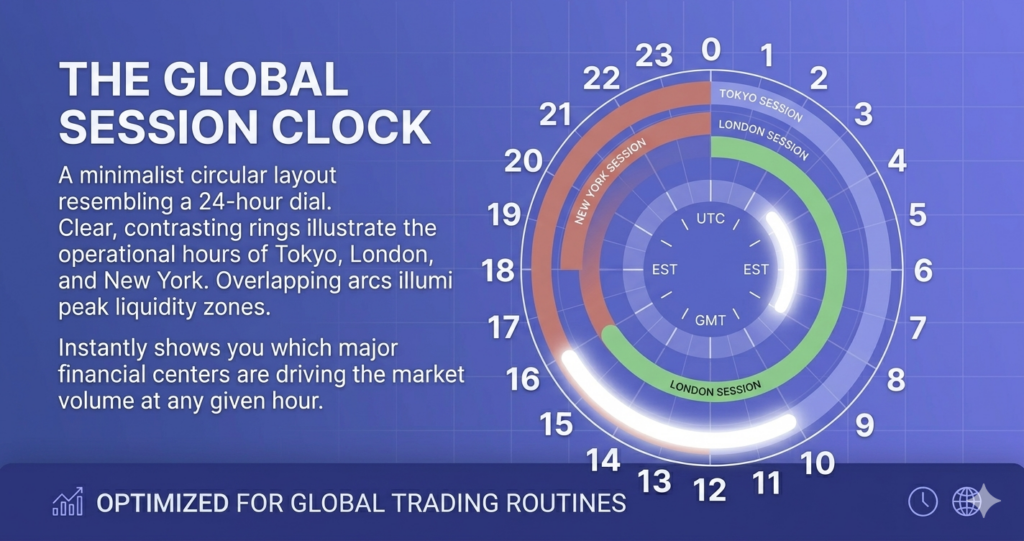
During my first year, I spent thousands of hours staring at candles, completely blind to the macro reality that the market is not a singular entity. Instead, it is a sequential passing of the torch from Tokyo to London, and finally to New York. Each region has its own personality, its own traps, and its own unique rhythm.
If you are currently struggling to find consistency, let me ask you a question that completely shifted my career: Are you trading a strategy that actually fits the specific hour on your clock?
When I finally stopped treating the market like a 24-hour casino and started adjusting my execution to match the Asian, London, and New York sessions, my results completely transformed. This is the raw story of how I learned to navigate the specific micro-climates of the trading day, and how you can use these rhythms to stop blowing accounts.
The Sleepless Traps of a 24-Hour Market
My journey into session-based trading started out of absolute desperation. I remember sitting at my desk at 2:00 AM, exhausted, watching the price of EUR/USD move by a mere three pips over the course of two hours. Frustrated by the lack of movement, I would artificially increase my position size just to make the trade “interesting.” Inevitably, the market would experience a tiny spike, hunt my over-leveraged stop loss, and leave me sitting in the dark with less money than I had at midnight.
That period of my life taught me a brutal lesson. If you do not understand who is controlling the order flow at any given minute, you are essentially trading with a blindfold on. I was falling directly into the traps that wipe out most newcomers. If you want to know more about those early structural errors, you should read about why 90 percent of traders lose money. It took me a long time to realize that success is not about trading more often; it is about trading when the odds are stacked in your favor.
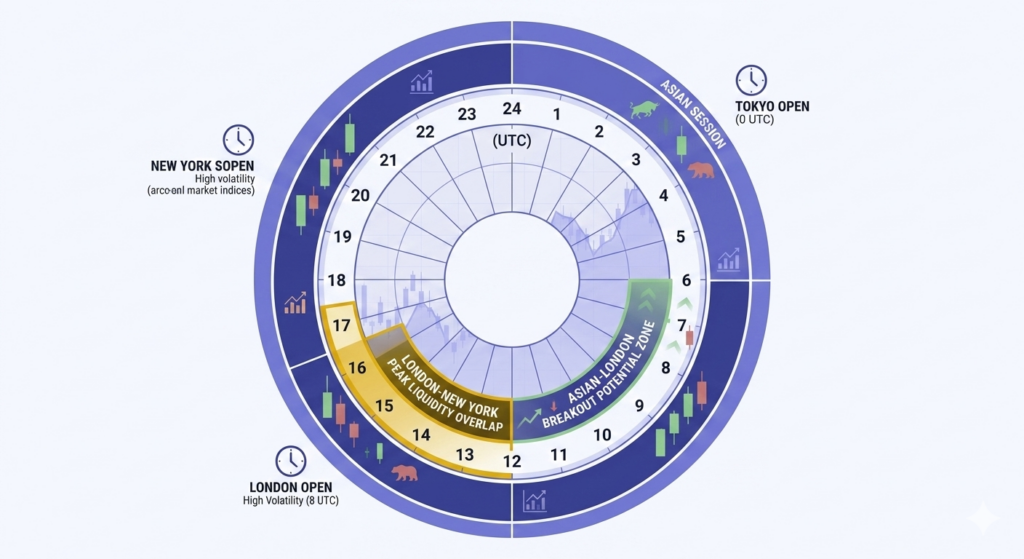
The global market runs on structural liquidity. Central banks, commercial conglomerates, and institutional hedge funds do not operate at random times. They follow standard business hours. When Tokyo opens, Asian corporations manage their capital. When London wakes up, the massive European institutions flood the market with volume. When New York enters the fray, the highest concentration of financial capital on earth collides with Europe.
Once I mapped out these specific transitions, my perspective changed completely. I stopped hunting for trades during dead hours and started waiting for the structural expansions that define the major shifts in the global clock.
The Silent Architect: Mastering the Asian Session
The Asian session is often treated as an afterthought by retail traders because it lacks the explosive, chaotic volume of the Western sessions. For the longest time, I completely ignored it. I assumed nothing of value happened while Europe and America slept.
I was missing the entire foundation of the trading day.
The Asian market, primarily anchored by Tokyo, Sydney, and Singapore, behaves like a consolidation machine. Because institutional volume is significantly lower during these hours, prices tend to stay contained within tight, predictable structural ranges. Instead of massive, sweeping trends, you see orderly support and resistance levels holding firm.
When I started practicing on clean setups, I realized that this specific time window is a fantastic environment for anyone focusing on highly disciplined, lower-vulnerability strategies. If you want to refine your execution without getting whipped out by sudden news events, it helps to use platforms designed for clean data delivery. For instance, you can test these steady ranges by starting a practice account on IQ Option or exploring the streamlined layout of Binomo.
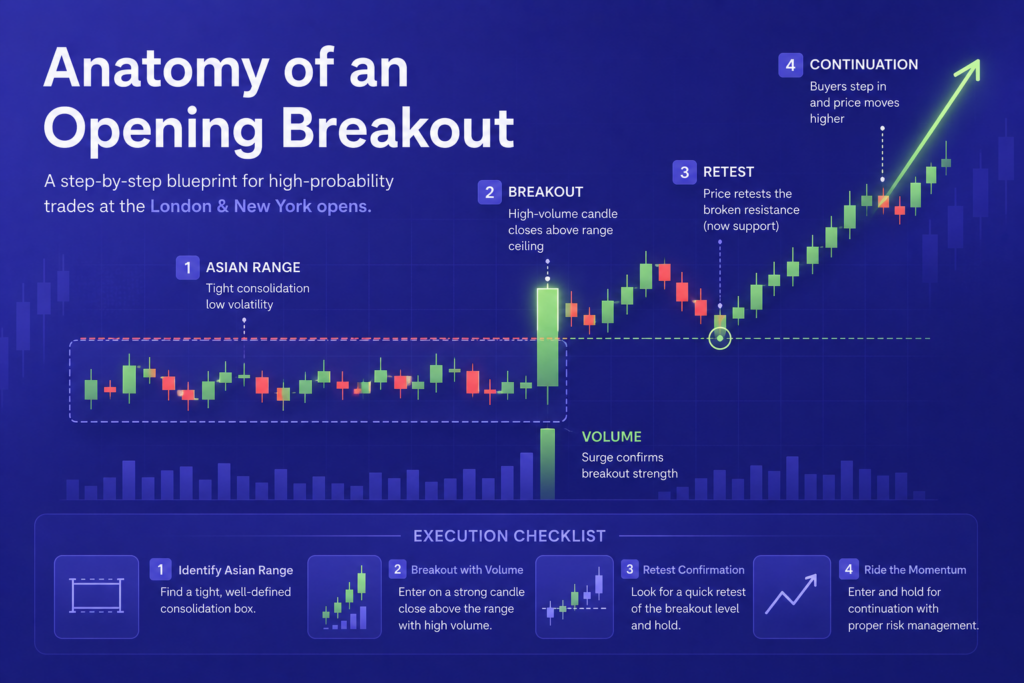
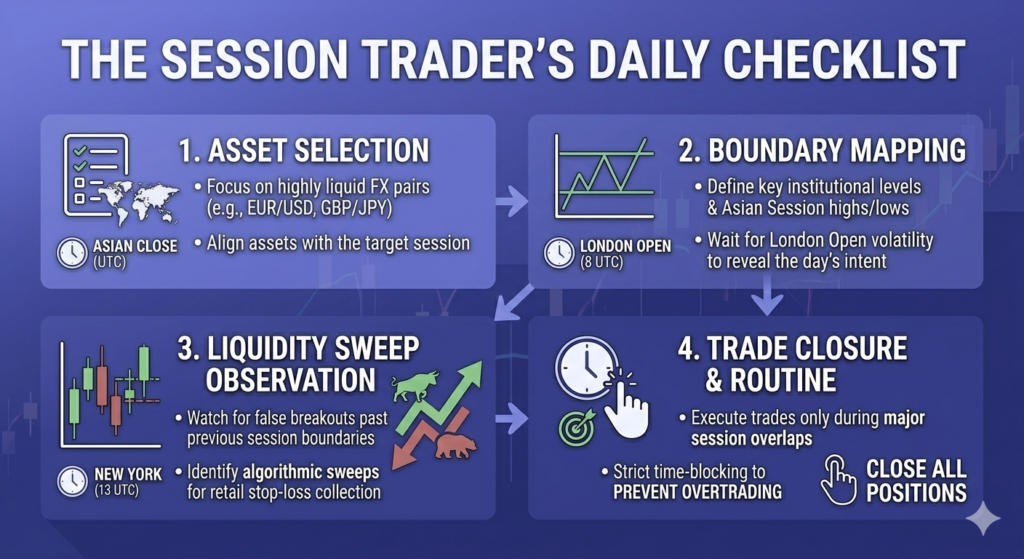
The real secret of the Asian session is not just about trading inside the range; it is about realizing that this range defines the landscape for the rest of the day. The highs and lows set during the Asian hours become massive targets for institutional algorithms when London opens. Institutional money loves to sweep the liquidity resting just outside the Asian boundaries. By observing how price behaves inside this initial block, I learned to anticipate exactly where the market would hunt for liquidity later in the morning.
The Volatility Explosion: Navigating the London Open
If the Asian session is the silent architect, the London open is the wrecking ball. The shift between these two periods was the hardest transition for me to learn, and it cost me a significant amount of capital before I finally understood its mechanics.
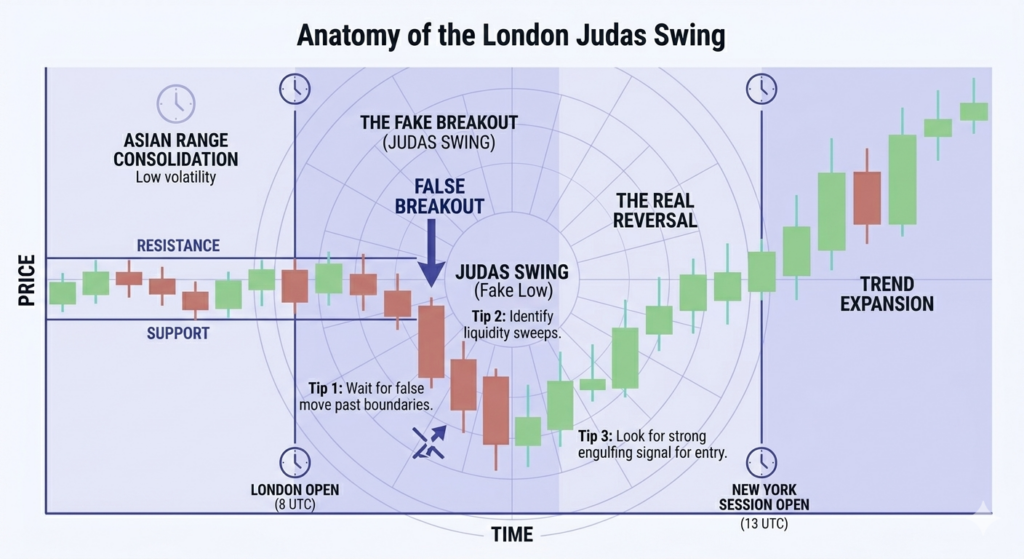
Picture this: London traders sit down at their desks, look at the tight range formed during the Asian hours, and immediately begin executing massive blocks of orders. Within minutes, volume surges exponentially. Price aggressively breaks out of the Asian range, making it look like a massive trend is forming.
Early in my career, I would eagerly jump onto these initial breakouts, convinced I was catching the wave of the day. Without fail, the price would violently reverse, clear out my stop, and accelerate in the completely opposite direction.
I was falling victim to the classic London Judgments Trap, frequently referred to as the “Judas Swing.” Institutional algorithms deliberately push price past the Asian highs or lows to trigger retail stop losses and collect liquidity. Once those stops are cleared, the true trend of the London session begins.
Once I understood this manipulation, my strategy flipped. I stopped buying the immediate breakout. Instead, I waited for London to sweep the Asian session boundaries, watched for a clear structural failure, and then entered the market alongside the real institutional flow.
This specific window requires split-second execution and deeply reliable order fills. When you are navigating that level of rapid price movement, having a platform with a seamless UI is non-negotiable. If you are analyzing these rapid breakouts, finding a setup with a highly responsive workspace is essential for your sanity. I spent a long time looking for the right fit, which I detailed in my personal journey toward finding my perfect trading workspace.
The Crossover Chaos: When London Meets New York
The absolute peak of the trading day occurs during the London and New York overlap. This window represents the highest concentration of financial liquidity on earth. For roughly four hours, the world’s two largest financial centers are operating simultaneously.
The market during the overlap is a different beast entirely. Volume skyrockets, trends become highly aggressive, and macroeconomic news releases out of Washington dump massive amounts of volatility into the charts within milliseconds.
During this phase, any structural weakness in your execution or your broker will be instantly exposed. Slippage can widen, spreads can fluctuate, and emotional decisions will destroy an account faster than you can blink. I quickly realized that attempting to trade the crossover without a concrete, tested strategy is financial suicide.
To survive this period, I had to develop absolute clarity on my risk limits. I learned to identify my key institutional levels before the overlap even started. If the market did not hit my specific entries, I simply stood aside.
Because the crossover moves so quickly, having an optimized technical environment is just as important as your analytical skills. If your charts lag or your platform hitches for even a second during a major New York data release, your trade is compromised. For high-volume environments, choosing a system built for low-latency data processing is critical. You can look into specialized options like Deriv for synthetic or underlying assets, or utilize reliable standard environments like Pocket Option and Quotex to manage your active trade execution.
Designing a Sustainable Daily Trading Routine
The ultimate goal of understanding session-based trading is to build a lifestyle that does not require you to sit in front of a computer screen for twelve hours a day. When I stopped trying to trade every single session and picked a single timezone to master, my profitability stabilized, and my mental health returned.
Today, my routine is highly structured. I wake up during the latter half of the Asian session to observe the established structural boundaries. I do not take trades here; I simply map out the sandbox. When the London session opens, I watch for the inevitable liquidity sweeps. If a clear price action model presents itself, I take my trade, manage my risk aggressively, and close my laptop.
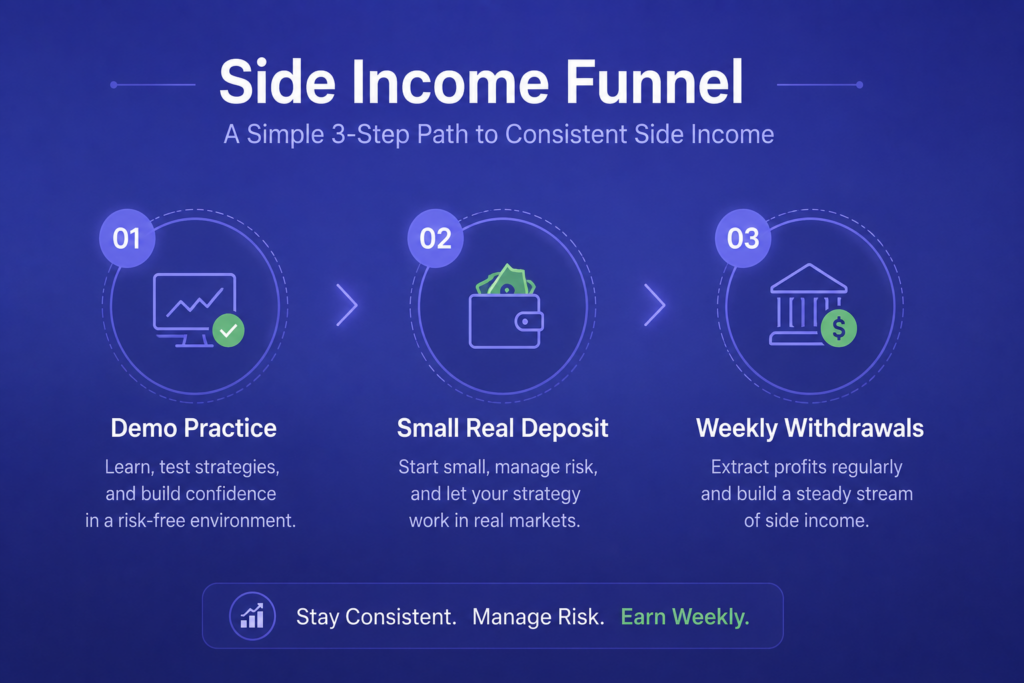
If you are a student or balancing a full-time corporate job, this session-based approach is the only way to trade without losing your mind. You do not need to watch the screen all day. You simply need to allocate one or two hours of focused attention during a major session open. For those trying to balance limited hours and capital, selecting a highly accessible partner is a great first step. You can read my breakdown on which broker is better for students to see how to align your lifestyle with your chosen market hours.
Your Next Steps in the Markets
Mastering the clock requires patience, intentional practice, and the right environment to execute your ideas without unnecessary friction. Do not try to conquer all three sessions tomorrow morning. Pick the one that naturally aligns with your waking hours, study its unique structural traps, and focus on mastering that single window of time.
If you are currently looking for a place to practice these session transitions with real-time data, you can set up a basic profile on ExpertOption or look into the alternative features provided by CapitalCore. Take the time to find an interface that keeps your analysis clean and clear.
The market will always be there, but your capital will not if you continue to trade at random hours without a structural plan. Stop treating the market like an unpredictable wall of noise. Respect the global clock, map out your sessions, and protect your capital at all costs.
If you are tired of guessing where the next institutional liquidity sweep will occur and want to fast-track your path to consistency, you need a deeper layer of market analysis. Join our private community at BeCoin Premium Tariff Plan to gain access to comprehensive daily session breakdowns, real-time institutional volume tracking, and advanced price action strategies that give you a definitive edge in the markets. Let’s stop guessing and start trading with professional precision.
The Clock and the Candle: How I Stopped Guessing the Best Time to Trade Binary Options
I still remember the night I blew my third trading account. It was 11:30 PM. The house was completely quiet, the market charts on my screen were barely crawling, and I was forcing trades out of pure impatience. I kept staring at a flatline asset, placing one-minute positions, convinced that the market owed me a breakout. It didn’t. The candles barely moved, my predictions expired out of the money by a fraction of a pip, and I was left staring at a zero balance.
That painful night taught me a fundamental truth that changed my entire approach: trading binary options isn’t just about predicting where the price will go. It is deeply about when you choose to look at the market.
When you are starting out, it is easy to assume that the market is a 24-hour machine that acts the same way all the time. But the truth is that the global financial markets have a rhythm, a heartbeat, and an ecosystem. If you trade when the market is asleep, your strategy will likely suffocate. If you trade when the market is too erratic, you get whipped out by sudden spikes. Finding your rhythm requires looking at how different market sessions function, and learning to time your entry points down to the hour.
The Realization That Changed My Trading Routine
Early in my journey, I used to wake up at random times, open my laptop, and expect the market to adapt to me. I thought that as long as I understood support and resistance, the time of day didn’t matter. I spent months failing because I was using a high-volatility strategy during dead market hours.
If you are currently trading whenever you find a free moment, you might be accidentally fighting the biggest players in the world. I learned this the hard way while reading about why 90 percent of traders lose money. A massive portion of those losses stems from a simple mismatch between a trader’s strategy and the current market environment.
Binary options require an asset to move decisively past your strike price within a strict, often short, window of time. To get that clean movement, you need liquidity, which means you need major global banks, institutional funds, and millions of retail traders actively buying and selling. That volume only happens when the big financial hubs around the world open their doors.
Mapping the Global Sessions Through My Own Eyes
To build a consistent routine, I had to stop looking at the market as a single entity and start viewing it as a relay race between four major financial capitals: Sydney, Tokyo, London, and New York. Each of these centers brings a completely different energy to the charts.
The Asian Session: Tokyo and Sydney
This session opens late in the evening for Western traders. My experience with the Asian session has always been one of patience, sometimes to a fault. Volume is generally lower, and major pairs like EUR/USD often consolidate into tight ranges.
When I was a beginner trying to find the best broker for a ten dollar deposit, I loved this session because it felt safer. The moves were predictable and slow. But I quickly realized that slow moves can be a trap for short-term binary options. If a currency pair moves only three pips over thirty minutes, your one-minute or five-minute trades are essentially a coin toss.
However, if you focus on the Japanese Yen (JPY) or the Australian Dollar (AUD), you can find beautiful, clean setups during these hours. It is an excellent environment for traders who prefer steady, range-bound strategies rather than aggressive breakout plays.
The London Session: The Floodgates Open
The true shift in my trading performance happened when I started setting my alarm for the London open. This session is where the real liquidity enters the game. London is the capital of foreign exchange trading, and the moment the morning bells ring there, the charts transform.
Volatilities skyrocket, trends establish themselves, and the price action becomes incredibly clean. If you use technical indicators or trade breakouts, this is a prime window. Pairs involving the Euro (EUR), the British Pound (GBP), and the Swiss Franc (CHF) wake up instantly. I found that my winning percentages scaled up simply because the market started respecting technical levels with massive volume pushing behind them.
The New York Session: High Velocity and Deep Volatility
A few hours after London gets moving, New York opens its doors. This period creates a massive overlap where both Europe and North America are actively trading simultaneously.
The market during this overlap is an absolute powerhouse. It is fast, highly fluid, and intensely reactive to economic data releases. If the US Federal Reserve makes an announcement or employment data drops, the charts can jump dozens of pips in a fraction of a second.
Personally, I had to learn to tread carefully here. The high velocity can work beautifully in your favor, but it requires split-second execution and an incredibly reliable platform. If your internet lag causes a delay, you can miss your entry entirely. This is why many experienced traders spend time searching for the best trading platform for slow internet to ensure their orders fill exactly when they click.
The Magic Window: Trading the Overlaps
If you want the absolute best time of day to trade binary options, you want to target the hours when two major sessions are running at the same time. These are the windows where volume peaks, spreads tighten, and directional trends are clearest.
The London / New York Overlap: This is the undisputed heavy hitter of the trading day. It occurs roughly during midday across global time zones. During this window, both the US Dollar and European currencies are moving with maximum force. It provides the ideal conditions for short-term expiration contracts because the momentum is strong enough to carry your trade far away from your entry price.
The Tokyo / London Overlap: This brief window happens early in the morning for European markets. While not as explosive as the New York overlap, it offers great, steady momentum for cross-market pairs like EUR/JPY and GBP/JPY.
When I adjusted my life to focus strictly on these premium windows, my chart analysis started making sense. I wasn’t fighting a stagnant market anymore. I was riding a wave created by institutional capital.
Finding Your Perfect Technical Ecosystem
Choosing the right time to trade means absolutely nothing if you are attempting to execute your trades on an unreliable platform. Your broker must have rock-solid uptime, zero chart manipulation, and lightning-fast execution speeds during peak session overlaps.
When I was refining my approach, I spent weeks comparing how different platforms handled high-volume hours. Two platforms consistently stood out during my live testing. I frequently switched back and forth between them to evaluate their feeds, which led me to document a detailed look at Binomo vs IQ Option for small accounts. Both options provide highly responsive, native charting tools that can keep up when the London and New York sessions go into overdrive.
If you are looking for an intuitive environment designed to execute trades smoothly during peak hours, you can explore the IQ Option Platform. Alternatively, if you want a clean interface that performs exceptionally well during fast-moving breakouts, you can check out the Binomo Interface. Testing platforms yourself helps clarify where your execution feels most natural.
Constructing Your Custom Daily Trading Routine
To transition from an emotional trader to a systematic one, you must build an explicit routine around these market hours. This shift requires mapping out your personal schedule to align with the market, ensuring you show up to your charts with full mental clarity.
I began by evaluating my own energy levels. If you are exhausted after a long day of primary work, trying to trade the fast-paced New York session can lead to disastrous, impulsive decisions. If you want a deep dive into how I structured my environment to protect my capital, take a moment to read through my journey of finding my perfect workspace.
Once you identify your optimal window, stick to it religiously for a minimum of thirty days. Turn off your monitors when that window closes. Treat trading like a professional business appointment with the market.
Moving Past the Basics to Build a Genuine Edge
Understanding the clock is your foundation, but mastering the underlying market mechanics is what creates sustainable profitability. To consistently extract money from binary options, you have to look deeper than basic indicators or simple chart patterns. You must learn how to interpret institutional order flow, read raw price action, and manage your risk with mathematical precision.
If you are tired of guessing your entries and want a massive competitive edge, you need institutional-grade data and expert market analysis. Joining the premium group provides you with real-time market breakdowns, deep algorithmic insights, and precision strategies designed by veteran market analysts.
Do not keep trading in the dark against sophisticated algorithms. Take complete control of your financial future, master the internal dynamics of the market, and gain an elite trading edge by upgrading your journey today at Becoin Premium Plans.
The Day I Stopped Trading and Finally Started Making Money
It was a rainy Tuesday morning, and I was staring at my screen with a familiar knot in my stomach. The previous three days had been a slow, agonizing slide into the red. I had given back two weeks of hard-earned profits in less than seventy-two hours. Every asset I clicked on looked like a jagged, broken mess.
Candles were leaping five pips in a millisecond, leaving long, ugly wicks that snapped through my support levels like dry twigs. Then, they would completely freeze, sitting flat and motionless for minutes at a time.
I was frustrated, exhausted, and desperately trying to find a pattern where none existed. My setup was clear: a simple price action bounce at a key historical level. I took the trade. Within three seconds, the market surged violently against me, paused, and expired out of the money.
I sat back, rubbed my eyes, and realized a painful truth. The problem wasn’t my strategy. The problem was that I was trying to force a valid strategy onto an invalid market.
That morning was the turning point in my trading career. It was the day I stopped looking for reasons to trade and started looking for reasons not to trade. Learning how to identify a no-trade day in binary options is the single most important risk management tool you will ever develop.
When you learn to walk away, you protect your capital so that you actually have money left to risk when the market returns to a clean, predictable state.
Why Chasing Bad Markets is a Guaranteed Way to Blow Your Account
When you start out, you assume that being a trader means trading every single day. We look at charts like a regular nine to five job where hours spent behind the desk must equal money earned. In binary options, that mentality is highly dangerous.
Binary options are fixed-risk, all-or-nothing instruments. Because your payout is always slightly less than your risk, you need a high win rate just to break even. If you choose an unreliable platform, your odds drop even lower.
When market conditions degrade, your edge evaporates. In a choppy, low-liquidity market, price action becomes random noise. Your technical analysis fails because the broader market participants aren’t respecting standard structural levels.
If you force trades during these periods, you are not trading; you are simply gambling with worse odds.
The Anatomy of a No-Trade Day: What the Charts Are Telling You
To protect your balance, you must read the structural health of the market within the first fifteen minutes of sitting down. Here are the three distinct warning signs that tell me it is time to close the laptop and walk away.
1. The Chaos of Violent Wicks and Unnatural Spikes
When a market is healthy, candles form smooth, rhythmic sequences. You can see the clear tug-of-war between buyers and sellers. On a no-trade day, that rhythm vanishes. Instead, you see small candle bodies surrounded by massive wicks on both the top and bottom.
These wicks mean the market is highly unstable. Orders are thinning out, and small volume injections are causing wild, erratic price jumps.
If you attempt to enter a position here, you will suffer from severe slippage, or the price will flip past your entry point in the last second of your expiration.
2. The Dead Zone of Flatline Volume
The exact opposite of violent volatility is a completely stagnant market. This usually happens during late Friday sessions, bank holidays, or the awkward gaps between major regional market sessions. The candles become tiny dots or flat dashes.
In this environment, price movement lacks any momentum. If you open a binary options position, the asset might sit exactly where you bought it for five minutes, only to tick against you by a fraction of a pip at the very last second.
Without momentum, technical indicators like Moving Averages or the Relative Strength Index become completely useless, flattening out across the center of your screen.
3. Major Economic Data Releases
High-impact news is the ultimate disruptor of retail trading strategies. If the Federal Reserve is scheduled to announce interest rate decisions, or if global employment data is dropping, the hours leading up to the announcement are highly dangerous.
Institutions pull their liquidity from the books, causing the market to behave erratically. The minutes following the release are pure chaos. Trying to predict a binary direction during a major news event is a coin toss.
How I Filters My Charts Before Risking a Single Dollar
Every morning, I follow a strict diagnostic routine to determine if the market deserves my money. I start by checking an economic calendar. If there are red-folder, high-impact news events scheduled within two hours of my trading window, I automatically flag the day as high-risk.
Next, I log into my charting software and look at my favorite pairs across multiple timeframes. I look for smooth, trending behavior or clear, well-defined horizontal trading ranges.
If I see overlapping ranges, constant false breakouts, or unpredictable price gaps, I know the market conditions are working against my edge.
Choosing the right workspace also changes how clearly you spot these warnings. I found that using platforms with cluttered, heavily manipulated interfaces often masks bad market conditions.
You need a clear view of pure price action to make accurate judgments. If you are struggling to read the charts cleanly, it is worth looking into which broker has the cleanest interface for beginners to keep your visual analysis objective.
The Psychology of Walking Away: Overcoming FOMO
The hardest part of identifying a no-trade day isn’t reading the charts. It is managing your own mind. Fear of Missing Out (FOMO) is a powerful force.
When you decide not to trade, your brain tricks you into thinking that you are missing out on easy money. You might close your charts, only to open them thirty minutes later on your phone, searching for an excuse to take a quick position.
You must reframe how you view success. In trading, a saved dollar is exactly the same as a earned dollar. When you identify a bad market and choose to sit on your hands, you have successfully executed a professional risk-free decision.
Setting Up Your Safest Environment for Trading Days
When the market is clean and behaving beautifully, you need to make sure you are executing your trades on reliable, fast infrastructure. A good strategy on a terrible platform will still lose money due to execution delays, unfair payouts, or hidden fees.
For standard, daily price action trading, I highly recommend using verified, established platforms. If you want to compare the two giants in the space regarding execution and usability, check out this guide on Binomo vs IQ Option for small accounts. Both offer stable environments when the market conditions align with your plan.
You can set up your official trading accounts using the links below to ensure you are on fully updated, verified versions of these platforms:
Professional trading is a game of patience, preservation, and precise execution. The amateur looks at the market and asks how much money they can make on every single wave. The professional looks at the market and asks how they can protect their capital from unnecessary exposure.
Start treating your no-trade days as victories. When you look at an ugly, chaotic chart and confidently close your terminal, you are acting like a fund manager. You are treating your capital with the respect it deserves. The market will always be there tomorrow, but your account balance will only be there if you protect it today.
If you are tired of guessing whether today is a safe day to trade, or if you want to stop analyzing complex market data entirely on your own, let us do the heavy lifting for you.
Get access to real-time, professional daily market structure breakdowns, algorithmic filters, and high-probability setups curated by institutional analysts. Join our community today and upgrade to the Becoin Premium Tariff Plan to give your retail trading account a true professional edge.
Finding the Best Trading Broker for Side Income: My Raw, First-Hand Journey to Consistent Daily Wins
Six months ago, I sat at my kitchen table staring at an accumulation of household bills, realizing my primary salary was no longer cutting it. I didn’t want a second job that required clocking into a physical location or taking endless boss mandates after hours. I needed a flexible, scalable side income. That night, I decided to venture into the world of digital trading.
I didn’t start with a massive bankroll or a degree in finance. In fact, I was terrified of risking what little savings I had. My initial quest was simple: find a reliable platform where I could log in for thirty minutes a day, risk a minimal amount of capital, and slowly build a secondary revenue stream.
If you are currently where I was back then, you already know the internet is flooded with conflicting reviews, complicated charts, and brokers promising overnight wealth. Here is the unfiltered truth about my search for the ultimate side income broker, the mistakes I made, and the platforms that actually helped me turn a profit.
The Reality Check: Why Most Side Income Seekers Fail Early
When I first opened a demo account, I fell into the classic beginner trap. I thought trading for side income meant chasing massive, volatile market swings to turn ten dollars into a thousand overnight. It took exactly one rough evening of losing my initial deposit to realize that trading for a sustainable side income requires a completely different mindset than trading for a living.
When you trade for secondary income, your primary goals are capital preservation, low entry barriers, and consistent, manageable wins. You cannot afford to spend eight hours a day staring at complex technical indicators. You need a clean interface, robust risk management tools, and a reliable withdrawal system that ensures your profits actually make it to your bank account.
Through trial, error, and meticulous tracking, I realized that understanding why 90 percent of traders lose money is the first step toward joining the profitable ten percent. Most beginners fail because they pick a platform designed for institutional professionals rather than everyday side-hustlers. They get overwhelmed by complex interfaces and high minimum deposit thresholds before they even place their first successful trade.
The First Contender: Exploring Low Barriers with Binomo
My journey truly began when I looked for a platform that wouldn’t force me to risk my grocery money just to get started. I needed to know exactly how much money you really need to start trading without stretching my personal budget. That search led me to check out platforms with low financial barriers.
I signed up on Binomo because it promised a streamlined experience for smaller accounts. The setup process was rapid, and the user interface felt intuitive right out of the box. For someone trying to fit trading into a tight daily routine, avoiding analysis paralysis is half the battle.
On this platform, the visual clutter is stripped away, allowing you to focus purely on asset price movements. I spent my first two weeks practicing simple support and resistance strategies on their demo account before transitioning to real funds. If you want a straightforward workspace to build your skills, you can explore Binomo today and test the environment for yourself.
What I appreciated most during my time on this platform was the sheer responsiveness of the charting tools. When you are squeezing a trading session between your day job and family obligations, you cannot afford to deal with lag or delayed executions. It serves as an excellent proving ground for anyone seeking to master the fundamentals without getting bogged down by hyper-advanced features.
The Analytical Pivot: Upgrading My Strategy on IQ Option
As my confidence grew, I realized that while a minimalist interface is incredible for a beginner, a growing side income demands deeper market analysis. I wanted to start exploring diverse asset classes and sharper technical indicators to refine my entry and exit points. This desire for broader tools led me to test IQ Option.
The difference was immediately noticeable. The platform features an incredibly sleek, highly customizable dashboard packed with multi-chart layouts, historical volatility metrics, and technical indicators like Bollinger Bands and Relative Strength Index (RSI). For a side income trader trying to make data-driven decisions in short windows of time, having these tools directly on the main screen is an absolute game-changer.
If you are looking for a platform that bridges the gap between beginner-friendly design and professional-grade charting, you can register on IQ Option here to see how its analytics compare.
During my testing phase, I spent hours looking at a direct IQ Option vs Deriv chart comparison to see which data feed felt more stable during volatile market hours. The visual clarity of the candles on this dashboard allowed me to spot micro-trends much faster, which is essential when you only have a few minutes to spare each evening.
Choosing Your Path: Binomo vs IQ Option for Side Income
If you are struggling to choose between these two major platforms, you are not alone. It is a common dilemma for part-time traders. I spent weeks weighing the pros and cons, specifically investigating which is easier for beginners, Binomo or IQ Option when you are managing limited capital.
To help you visualize how to structure your evaluation of these platforms, I have outlined four essential infographic structures that highlight the core differences in usability, risk, and speed.For those managing modest starting capital, evaluating Binomo vs IQ Option for small accounts is critical. If your primary goal is to avoid feeling overwhelmed and execute simple trades, Binomo is highly effective. However, if you enjoy diving into technical patterns and want access to multiple asset classes simultaneously, IQ Option provides the necessary depth.
Expanding the Horizon: Alternative Brokers to Consider
While my early success centered around those two platforms, my obsession with optimizing my side income routine pushed me to test several other verified brokers. Every trader has unique needs, and a broker that fits my schedule perfectly might not match yours.
If you are dealing with a heavily restricted household budget, your absolute priority should be finding a safest broker for small deposits that offers institutional-grade security for minor funds. Here are the alternative platforms I tested that offer unique advantages for side-income generation:
Deriv: This platform is widely celebrated for its stability, particularly if you are interested in asset flexibility. You can check out a detailed breakdown of Deriv vs IQ Option for beginners to see how its ecosystem operates. If you want to explore their proprietary synthetic indices, you can open an account on Deriv.
Quotex: For traders who prioritize a streamlined interface without any unnecessary widgets or complex pop-ups, this option stands out. It provides an uninterrupted charting environment. You can access Quotex here to see its lightning-fast execution speed in action.
ExpertOption: If your primary device is a smartphone and you intend to trade during a transit commute or lunch break, this platform offers one of the most stable mobile applications available. You can register on ExpertOption to test its mobile-first interface.
Olymp Trade: A highly reputable choice that excels in providing educational materials alongside a reliable execution engine. It is perfect for part-time traders who want to learn while they earn. You can get started with Olymp Trade to experience their structured trading environment.
Capital Core: If you want a platform built to handle institutional precision but scaled down for retail side-income earners, this broker provides great depth. You can sign up on Capital Core to explore their advanced order execution types.
My Daily Rules for Protecting and Growing Side Income
Finding the right broker is only half the battle. The real work happens between your ears. When I transitioned from a demo account to real money, I established a strict set of operating rules that kept me from wiping out my hard-earned profits.
First, I adopted a strict best broker for one trade a day strategy framework. When you trade for side income, overtrading is your absolute worst enemy. You do not have the emotional energy to recover from consecutive losses after working an eight-hour day. I log in, find one high-probability setup that aligns with my rules, execute it, and close the application regardless of the outcome.
Second, I had to ensure my capital was entirely safe. I spent days reading a comprehensive safest trading platforms risk breakdown before committing significant capital. I needed to know that if a platform experienced a sudden surge in traffic, my orders would still execute instantly at the exact price point I intended.
Third, I focused heavily on payment logistics. A side income is completely useless if your money is trapped in digital limbo. I deliberately sought out the fastest withdrawal brokers real test results to ensure that when I earned fifty dollars, I could transfer it to my local account by the weekend. I even compared Binomo vs IQ Option withdrawal speed to track exactly how many hours each platform took to process standard e-wallet requests.
Overcoming the Hidden Pitfalls of Part-Time Trading
As you design your own routine, you will quickly discover that trading part-time introduces unique challenges that full-time professionals rarely discuss. For instance, your internet connection might not always be perfect if you are trading outside a dedicated office space. Discovering the best trading platform for slow internet saved me from several costly execution delays when trading on public networks or mobile data.
Furthermore, you need to understand how your broker behaves when standard markets close. If you can only trade on Saturdays or Sundays, you must figure out which broker is better for weekend trading to avoid low-liquidity traps and artificial Over-The-Counter (OTC) price spreads that can disrupt your strategies.
Finally, do not undervalue simplicity. In my early days, I mistakenly believed that complex features equaled higher profitability. I eventually stripped my workspace down completely, seeking the best broker without complicated features so I could focus entirely on pure price action. The cleaner your screen, the clearer your decision-making process will be.
The Ultimate Edge: Moving Beyond Guesswork
Choosing between the minimalist design of Binomo or the analytical depth of IQ Option is a crucial first step. However, if you truly want to transform your trading from an uncertain evening hobby into a highly predictable, professional-grade side income stream, you cannot rely on intuition or free forum tips alone.
To achieve long-term profitability, you need institutional-grade data, real-time market sentiment analysis, and deep-dive technical insights that reveal where the smart money is moving before the candlestick prints on your dashboard.
This level of precision is exactly what we provide inside our exclusive community. If you are ready to stop guessing, eliminate emotional errors, and approach the charts with a definitive competitive advantage, explore our Becoin Premium Tariff Plans and secure your edge in the markets today.
The Rookie Dashboard: My Raw Hunt for the Best Beginner Broker in 2026
We have all been there. It is late at night, your morning coffee is hours away, and you are staring at a screen pulsing with bright green and red lines. You have twenty dollars burning a hole in your digital wallet and a sudden, burning desire to conquer the financial markets.
That was me exactly twelve months ago. I was determined to decode trading, but I was completely paralyzed by the sheer volume of platforms screaming for my attention. Every single broker claimed to be the gateway to financial freedom, the easiest layout for newcomers, or the fastest route to a funded account.
Spoiler alert: most of them are lying.
Navigating the markets as a newcomer is a minefield. If you are not careful, you can lose your capital before you even figure out where the “Buy” button is hidden. I spent the last year funding real accounts, testing execution speeds, messing up my charts, and waiting on withdrawal support lines. This is my honest, personal breakdown of the beginner broker landscape in 2026. No corporate jargon. No sugar-coating. Just the ground truth from someone who was in your shoes not too long ago.
The Night I Realized All Platforms Are Not Created Equal
When I first dipped my toes into the markets, I made the classic rookie mistake. I assumed that a price chart was just a price chart, no matter where it was hosted. I thought that as long as I could see the candlesticks moving up and down, the software underlying it did not matter.
That loss forced me to slow down and build a strict checklist. I realized that as a beginner, you do not need institutional-grade algorithmic pipelines or hundreds of confusing indicators that look like a flight simulator dashboard. You need a rock-solid foundation:
Low barriers to entry (because nobody should practice with rent money).
Clean visual feedback that does not cause eye strain during long sessions.
Reliable, transparent payout loops.
An environment that lets you fail cheaply while you learn.
With those parameters set, I systematically moved my capital across the most talked-about platforms in the industry to see how they actually stacked up under real market pressure.
The Heavyweights: IQ Option vs. Binomo
The first major fork in the road for most retail traders is choosing between the two titans of user-friendly design: IQ Option and Binomo. If you browse any trading community, you will see endless debates about which one takes the crown.
I started my trial run with IQ Option. The moment you open their multi-chart interface, it feels premium. The dark mode is sleek, the asset list is massive, and the graphical tools snap directly to the price action beautifully. For anyone trying to learn technical analysis without getting a headache, it is incredibly intuitive. I spent weeks using their platform to study market structures, and you can see my visual breakdown of their tech layout in our IQ Option vs Deriv chart comparison.
If you want to experience that layout firsthand, you can set up a practice account through the official IQ Option Registration Portal.
However, while I loved the visual polish, I noticed that the sheer amount of data streaming into the app can sometimes choke a weaker internet connection. That is when I pivoted to Binomo.
Binomo takes a radically different approach to user experience. Instead of packing the screen with features, they stripped away the noise. The interface is clean, hyper-focused, and incredibly fast. It answers a fundamental question that every busy newcomer eventually asks: which broker has the cleanest interface for beginners?
For students or people balancing a full-time job, Binomo removes the analytical paralysis that kills so many early accounts. To test their streamlined environment yourself, you can check out the Binomo Official Trading Link.
When choosing between these two, it really comes down to your personal learning style. If you want deep analytical tools, IQ Option wins. If you prefer a distraction-free space to execute your plan cleanly, Binomo is a fantastic starting point. For an even closer look at their day-to-day differences, check out my deep dive on which is easier for beginners: Binomo or IQ Option.
Shifting Gears: The Need for Advanced Flexibility with Deriv
After a few months of trading standard currencies, I hit a wall that almost every retail trader encounters: the weekend dead zone. Traditional markets close down on Friday night, leaving you stuck waiting until Monday morning to build your consistency.
That frustration led me straight to Deriv.
Deriv is a completely different beast because of its proprietary synthetic indices. These are crash and boom markets simulated by cryptographic random number generators, meaning they mimic real market behavior perfectly but run twenty-four hours a day, seven days a week. This unique setup completely transformed my weekend routine. For a direct comparison of how this alters your strategic approach, read my breakdown on Deriv vs IQ Option for synthetic indices.
Beyond the continuous uptime, Deriv opened my eyes to advanced risk control. While simple platforms offer an all-or-nothing payout, Deriv allows you to trade multipliers and traditional forex contracts where you can set tight stop-losses. This structural difference is critical for long-term survival, a concept I explored deeply while chasing safety in a high-stakes world and searching for low-risk platforms.
If you are ready to move past basic options and want to explore round-the-clock synthetic asset classes, you can open an account via the Deriv Professional Portal.
The Wildcards: Pocket Option, Quotex, and Capital Core
As my testing grew more exhaustive, I realized that the modern trading world has a few specialized platforms built for specific trading styles. You cannot have a complete overview without looking at the unique advantages offered by alternative systems.
For instance, if you are working with an incredibly tight budget, your primary concern is finding a platform that won’t lock you out with high minimum balance requirements. I spent an entire week funding alternative platforms with pocket change to see who treated small balances fairly, compiling the results in our guide to the safest broker for small deposits.
During this phase, I tested several distinct alternative platforms:
Pocket Option: Known for its massive global community and social trading features that let you observe real-time order flows. You can access their setup directly through the Pocket Option Onboarding Link.
Quotex: Offers a highly responsive, lag-free charting workspace that performs brilliantly even on older laptops. Explore their platform layout via the Quotex Quick Sign-Up Link.
ExpertOption: Features a highly optimized mobile environment tailored for traders who operate entirely from their phones. You can check their mobile integration at the ExpertOption Registration Hub.
Capital Core: A rising alternative providing distinct asset pairings and a straightforward portal for verifying accounts without typical institutional delays. Their access point is located at the Capital Core Account Portal.
Each of these platforms scratches a very specific itch. Whether you need an interface optimized for older hardware or a community-driven feed to copy experienced market participants, the options are out there if you know where to look.
Finding My Perfect Workspace: The Real Comparison
After a solid year of rotating funds, analyzing execution sheets, and dealing with customer support agents, I realized that there is no single perfect platform for every human being on earth. The right workspace depends entirely on your lifestyle, your internet speed, and your psychological relationship with risk.
To help you skip the expensive trial-and-error phase that I went through, I have organized my key findings into a concrete decision matrix.
Visualizing the Journey: Suggested Infographics Plan
To maximize your understanding of these environments, use this simple minimalist infographic layout to map out your progression before risking a single dollar.
The Missing Link: Why Software Alone Won’t Save Your Capital
Here is the uncomfortable truth that most brokers try to hide with flashy marketing: you can have the most advanced charting software on earth, lightning-fast fiber-optic execution speeds, and zero-fee accounts, but you will still lose money if you do not know how to read the underlying price action.
A platform is just an execution tool. It is a steering wheel. If you do not know how to drive, a more expensive steering wheel will not keep you from crashing into a wall.
When I first started, I thought my losses were the broker’s fault. I blamed slippage, I blamed bad luck, and I blamed platform bugs. It took me a long time to admit the real culprit: I was gambling based on emotion rather than trading based on systematic data. I did not understand liquidity, I did not track volume profiles, and I had no real framework for managing risk.
If you are tired of guessing which way the next candle will flip, you need to step out of the amateur sandbox. Finding a broker is only step zero. Step one is gaining a real informational edge.
To bypass the noise, stop relying on free online forums, and get access to institutional-grade asset analysis, professional market setups, and advanced educational tools, join our inner circle today at Becoin Premium Plans. Protect your capital, learn the mechanics of true price action, and start treating your trading like a business rather than a lottery ticket.
Which Broker Has Better Risk Management Tools?
The burning smell of my own account blowing up is a scent I will never forget.
It was a rainy Tuesday afternoon a few years back. I sat huddled over my laptop, watching a currency pair oscillate. Confident, arrogant, and entirely unprotected, I clicked buy. Minutes later, a sudden market spike completely wiped out my balance. I did not lose the money because my technical analysis was wrong; I lost it because I had no safety net. No limits, no controls, just pure exposure.
That painful day forced me onto a quest to find out which broker actually provides the best risk management tools. I spent years testing interfaces, configuring settings, and assessing how various platforms protect retail users.
If you are tired of learning lessons the hard way, let me break down what I discovered about the structural differences in how top-tier platforms handle your capital safety.
Why Platform Architecture Dictates Your Survival
When we talk about risk management, beginners usually think about basic discipline. But experienced market participants know that platform architecture plays a massive role. If a system freezes during a volatile news event or lacks precise execution tools, your strategy fails.
Most traders end up draining their balances because they use tools designed to keep them clicking rather than keeping them safe. You can explore the foundational reasons why this happens in this breakdown of why 90 percent of traders lose money.
To avoid this trap, you need to understand the tools at your disposal. Let us look at how the major brokers stack up when the market gets chaotic.
The Big Two: IQ Option vs. Binomo
For anyone trying to scale a small account safely, the choice often narrows down to two dominant ecosystems: IQ Option and Binomo. Having spent hundreds of hours trading on both, I noticed their approaches to capital protection are fundamentally different.
IQ Option: The Analytical Control Panel
IQ Option approaches risk management like an institutional trading terminal. If you are trading non-binary instruments like Forex, CFDs, or Crypto on their platform, you get an array of automated safety features:
Percent-Based Stop Loss and Take Profit: Instead of calculating manual pip values, you can tell the system to close your position automatically if it drops by exactly 10% of your allocated capital.
Trailing Stop: This tool dynamically adjusts your stop-loss level upward as your trade moves into profit, automatically locking in gains while protecting against sudden reversals.
Auto-Close Upgrades: You can set your positions to remain open even through overnight financing charges or force them to shut before the weekend gap risk hits.
The interface is built for deep control, allowing you to configure safety parameters directly on the chart before confirming an order. If you want to see a head-to-head breakdown of how these interfaces behave on a day-to-day basis, check out this guide on which broker has the cleanest interface.
Binomo: The Simplified Guardrail
Binomo takes a starkly different approach. You won’t find complex trailing stops or multi-layered pending order panels here. Instead, Binomo relies on minimalist operational design to prevent user errors:
Fixed-Risk Mechanics: Because the system focuses heavily on fixed-time transactions, your maximum loss is strictly capped at the exact amount you commit to that specific trade.
Stripped-Down Layout: By eliminating overwhelming visual clutter, the platform lowers the psychological temptation to panic-trade or double-down erratically when a position moves against you.
While this clean design helps beginners avoid accidental over-leveraging, it lacks the advanced precision tools found in competitive suites. If you are weighing these two platforms for a smaller bankroll, it helps to read this detailed look at Binomo vs IQ Option for small accounts.
Technical Visualizations for Capital Safety
To help you choose the right platform configuration for your specific style, I mapped out the core visual assets you should look for when evaluating your workspace layout.
Advanced Protection: Deriv and CapitalCore
If your strategy demands risk management tools that go beyond the standard retail options, you have to look at platforms engineered for specific market environments.
Deriv: The King of Synthetic Risk Isolation
Deriv is a powerhouse for structured protection, primarily because of how it handles synthetic indices. These are asset classes mirrored on cryptographic random walk algorithms that simulate real-world market volatility 24/7.
To manage this constant movement, Deriv offers unique risk mitigation features:
Stop-Loss on Synthetics: Unlike real forex markets where weekend gaps can skip right past your stop-loss order and cause massive slippage, Deriv’s synthetic environments execute your stops exactly where you set them.
Deal Cancellation: A proprietary feature that allows you to buy insurance on a trade. If the trade goes deeply into the negative within a specified time frame (like 30 or 60 minutes), you can cancel the contract and claw back your entire stake for a tiny premium fee.
This structural separation makes it a preferred choice for systematic risk mitigation. For an in-depth comparison of how this operates compared to traditional setups, read the analysis on Deriv vs IQ Option for synthetic indices.
CapitalCore: Margin Level Security
For traders moving into leveraged positions with traditional assets, CapitalCore provides exceptional ledger-level protection. They utilize a highly transparent margin monitoring system that shows your real-time liquidation price down to the fractional cent. This level of data transparency ensures you are never blindsided by an unexpected margin call during sudden market drawdowns.
Alternative Platforms and Niche Environments
Every trader has a unique style. If you don’t need highly complex algorithmic setups, other platforms offer specialized safety designs:
Pocket Option: Noted for its flexible order-canceling features and robust backup infrastructure. You can check out their layout by visiting Pocket Option.
Quotex: Offers an incredibly responsive execution engine that drastically reduces negative slippage during volatile fast-moving markets. Take a look at their platform terminal at Quotex.
ExpertOption: Excellent for individuals who prefer a simplified interface that keeps focus entirely on raw price action. You can see their layout at ExpertOption.
Olymp Trade: Known for integrated educational modules that warn users directly on the charting interface when market volatility spikes beyond safe parameters. Review their interface at Olymp Trade.
Setting Up Your Protective Infrastructure
Choosing a broker is only half the battle; you also have to configure it correctly. When I open a new trading terminal, I follow a strict setup routine to ensure my capital is protected before a single dollar is placed at risk.
Step 1: Establish Your Hard Capital Ceiling
Never let your account balance dictate your maximum risk on a single trade. Determine your total risk pool before funding your account. If you are wondering how much capital you actually need to protect yourself from early mistakes, take a look at this realistic guide on how much money do you need to start trading.
Step 2: Configure Platform Slippage Protections
In your platform’s settings menu, look for execution rules. Always select market protection options that automatically reject an order if the asset price slips by more than a specified fraction of a percent during high-volatility events.
Step 3: Map Out Your Operational Routine
Risk management isn’t just an automated setting; it’s a daily habit. If you enter trades without a structured routine, you are exposed to emotional mistakes. You can read about how I built my own daily framework in this article on finding my perfect workspace routine.
The Verdict: Which Broker Takes the Crown?
If you want absolute granular control over volatile positions, IQ Option offers the most complete suite of active retail risk management tools with its trailing stops and percentage-based exit configurations.
However, if your strategy focuses on isolating risk from market gaps and external global events, Deriv provides unmatched structural protection through its synthetic asset ecosystems and deal cancellation insurance.
No software feature can save a trader who refuses to respect the mathematics of leverage. Tools are just levers; you must be the anchor.
If you are ready to stop guessing and want to elevate your trading with institutional-grade data, mathematical risk modeling, and deeply comprehensive market analysis, join our community of disciplined market participants at Becoin Premium and secure a genuine analytical edge over the market.
Finding My Perfect Workspace: The Search for the Best Broker for My Daily Trading Routine
The alarm goes off at 6:00 AM. By 6:30 AM, I am sitting in front of my monitors with a steaming mug of black coffee. The house is completely quiet, the market is preparing its next major move, and my charts are completely bare. This is my daily sanctuary.
For a long time, this morning ritual felt more like a battle than a routine. I used to jump between clunky mobile apps, curse at delayed order executions, and manually calculate my position sizes on scrap paper while watching a trade move against me. It took losing a significant chunk of capital to realize that consistency is not just about having a profitable strategy. It is deeply connected to your environment, your tools, and your workflow.
Choosing a platform that meshes perfectly with how you think, react, and execute under pressure is the most important foundation for long-term growth. If you are trying to build a reliable career out of this, you need an interface that acts as an extension of your mind, not a technical hurdle you have to clear every single minute.
Why Your Daily Routine Living or Dying Depends on Your Platform Choice
When I first committed to a structured daily plan, I quickly noticed that small technical friction points compound into massive emotional mistakes. If a platform lags by even two seconds during a volatile breakout, your entries get skewed, your risk parameters disappear, and frustration takes over.
A reliable daily framework requires three core technical pillars:
Immediate Chart Responsiveness: The ability to switch timeframes instantly without waiting for candles to reload.
Uncluttered Spatial Awareness: Keeping indicators, open positions, and balance metrics clearly visible without blocking the price action.
Streamlined Order Processing: Moving from analysis to an active position with a single click or tap.
If your current setup forces you to fight through menus just to adjust a stop loss, you are burning valuable mental energy before the market even moves. I spent months reviewing popular platforms to find tools that actually respect a trader’s focus.
If you are just starting out with limited capital, protecting your mental clarity is just as vital as managing your balance. I recommend reviewing our detailed fast decision guide for beginners to understand how different layout styles impact early performance.
My First Major Test: Stripping Away the Chaos
My search for a clean workspace led me to look closely at platforms designed to remove unnecessary noise. I needed an environment where I could open a chart, apply clean support and resistance levels, and execute without dealing with complicated sub-menus.
During this journey, I decided to pitch two major platforms against each other to see how they handled fast-paced market sessions. I spent weeks tracking how they managed orders, handled sudden data spikes, and fit into a structured morning workflow.
For traders who prefer to manage their accounts entirely from a phone during a morning commute, the layout efficiency of your software makes a massive difference. You can read my complete breakdown on this dynamic in our comprehensive analysis of the Binomo vs IQ Option mobile app comparison.
The Micro-Account Strategy: Testing Binomo
I started my evaluation by opening an account with Binomo. My goal was simple: test how the engine performs under standard daily market conditions when utilizing a focused, low-capital strategy.
The interface is highly intuitive. It strips away complex corporate financial tools and leaves you with an ultra-clean canvas focused entirely on price action. For my personal setup, this meant I could quickly map out key liquidity pools and structural shifts without any visual distractions.
The charting engine is surprisingly smooth, and order tracking is embedded directly into the side panel. This allows you to monitor your open risk without losing sight of the active candle. If you want to see how this system behaves during active market hours, you can explore the platform features yourself by visiting the Binomo Official Registration Portal.
The Analytical Workflow: Testing IQ Option
Next, I moved over to IQ Option to see how it handled a completely different style of trading. If Binomo represents minimalism, IQ Option represents an analytical dashboard designed for data lovers.
The multi-chart management system within this interface is exceptional. During my mid-day sessions, I prefer to track correlated assets simultaneously, such as tracking major currency pairs alongside index movements. This system lets you split your screen into multiple independent windows, allowing you to monitor four distinct asset classes at the exact same moment without losing rendering speed.
The built-in technical toolset is dense, offering extensive historical data feeds and customizable moving averages that snap directly to the price bars. If your daily methodology relies heavily on multi-timeframe analysis and indicator confluences, you can test these charting capabilities directly via the IQ Option Affiliate Portal.
To see a direct head-to-head performance breakdown of these platforms when operating with smaller capital limits, check out our report on Binomo vs IQ Option for small accounts.
Moving Beyond the Basics: Adapting to Specialized Instruments
As my routine matured, my needs expanded past basic currency pairs. I began looking for platforms that could provide continuous market access without requiring me to completely rewrite my strategy every time the traditional market closed for the weekend.
This phase of my career led me to experiment with alternative asset classes, specifically synthetic indices. These instruments simulate real-world market movements using secure cryptographic algorithms, providing smooth price action around the clock.
For this specific workflow, Deriv stood out as a premier choice. The platform separates standard asset pairs from synthetic indices, allowing you to run completely automated backtests on custom assets while keeping your everyday chart views untouched. If you are eager to diversify your asset list, you can check out their setup options directly at the Deriv Tracking Portal.
Choosing between these advanced systems requires careful consideration of how they process information. If you are torn between data-heavy dashboards and specialized indices, our deep dive on Deriv vs IQ Option for synthetic indices explains exactly how to map out your selection.
Managing Risk on Small Balances
Regardless of which specific interface captures your attention, your long-term survival in this industry depends entirely on your capital preservation rules. When I started out, I used to think that turning a small account into something substantial required taking huge risks on every single position. That assumption is exactly how accounts get wiped out.
True consistency is built by treating a tiny fifty-dollar balance with the exact same discipline as a fifty-thousand-dollar fund. You must master the math of small percentages before you can ever manage larger figures effectively.
If you are currently trading with a modest account, you need to understand the precise mechanics of capital preservation. Take the time to study our guide on risk management for small accounts to learn how to lock in gains without risking your entire base.
Advanced Platforms for Experienced Scalpers
If your personal morning workflow is focused on hyper-fast, high-volume executions, you might find standard mainstream platforms a bit restrictive. When every fraction of a second counts, having specialized routing setups can be an absolute game-changer.
For advanced phases of my routine, I often look at alternative platforms that focus heavily on lightning-fast trade entries:
Quotex: Famous for its incredibly fast order routing engine and highly responsive short-term charts. You can check out their layout directly via the Quotex Quick Sign-Up Link.
ExpertOption: A great alternative for traders who like to run multi-asset screens simultaneously on a single monitor. You can review their engine at the ExpertOption Registration Page.
Olymp Trade: Known for its reliable data streams and steady server connections during peak news events. You can explore their tools on the Olymp Trade Portal.
CapitalCore: Built specifically for processing advanced institutional orders without manual intervention. You can view their portal at the CapitalCore Registration Engine.
If you are curious about how a real account handles these faster, high-execution environments day by day, take a look at our transparent Quotex live case study.
The Missing Link: Moving Past Software to Unlocked Mastery
Finding the right broker layout, clean chart rendering, and instant execution speeds is an absolute prerequisite for trading success. However, it is important to remember that even the most perfect platform is simply a tool. The tool still requires a trained mind to operate it effectively.
The reality of this business is that a software interface can display data beautifully, but it cannot stop you from over-leveraging your account, chasing a losing position out of anger, or misinterpreting a complex macroeconomic shift.
To bridge the gap between technical infrastructure and true daily profitability, you need deep market analysis, real-time context, and institutional-grade insights that show you what is actually happening behind the price action.
If you are ready to stop guessing at technical patterns and want to start building a data-backed edge in your morning sessions, join our community of elite market analysts. Upgrade your strategy today through the Becoin Premium Tariff Plan to secure institutional-grade market data, deep asset analysis, and advanced execution structures that will elevate your daily trading routine.
Chasing Safety in a High-Stakes World: My Quest for the Best Low-Risk Trading Platforms
I still remember the sinking feeling in my stomach when I lost my first tiny trading account. It wasn’t a massive fortune, but it was mine. That night, I realized a brutal truth about this industry: most beginners fail not because they lack passion, but because they dive into high-risk environments without a life jacket. If you are tired of the constant stress, you need a different approach. You need to focus on capital preservation and platforms engineered to support sustainable, controlled growth.
Finding the right home for your money is a personal journey. Over the past few months, I have treated my trading like a meticulous science experiment. I wanted to see which platforms genuinely offer features that mitigate risk for everyday retail traders. Here is my honest, first-person breakdown of the top low-risk options I tested, detailing what worked, what fell short, and how you can protect your hard-earned capital.
Why Platform Infrastructure Matters More Than Strategy
When I first started out, I mistakenly believed that a magical technical analysis strategy would save me. I spent endless hours drawing lines on charts, completely ignoring the structural reality of the broker I was using. The truth is that your platform choice sets the hard ceiling for your risk management potential.
If a platform suffers from high slippage, freezes during volatile news events, or forces you into massive minimum trade sizes, even the best strategy will lose money. I quickly learned that I needed to find environments with low financial barriers to entry, highly transparent pricing structures, and robust built-in risk controls.
Deriv: The King of Controlled Risk and Synthetic Flexibility
My journey led me to look deeply at platforms that handle market volatility differently. That is when I spent significant time analyzing Deriv. What makes this platform stand out for a risk-conscious trader is its unique structural offering, specifically its proprietary synthetic indices.
Synthetic indices mimic real-world market movements but are completely unaffected by sudden, unpredictable global news events or geopolitical shocks. For a beginner, this is a massive advantage. You do not have to worry about waking up to a massive market gap that blows past your stop-loss because an unexpected economic report dropped overnight.
When comparing how different environments treat small balances, looking at Deriv vs IQ Option for beginners in 2026 reveals distinct structural paths. Deriv allows you to trade with incredibly micro-lot sizes on their MT5 interface, giving you absolute control over your precise monetary risk per point. Furthermore, their multipliers feature functions beautifully as a safer alternative to traditional high-leverage trading. It gives you the upside potential of leverage while strictly capping your downside risk to your initial stake.
I found the platform interface highly reliable, even when testing it on mobile networks. If you want an environment where you can meticulously map out your risk variables before risking a single cent, you can start your journey by visiting the Deriv Official Registration Page.
IQ Option: The Standard for Precision Charting and Visual Clarity
Next, I moved my testing over to IQ Option. If you are visual, the way a chart presents information impacts your psychological comfort level while managing a live trade. When I first loaded the interface, I immediately noticed why it remains a massive favorite globally. The platform provides an incredibly clean, intuitive charting experience that makes identifying historical support and resistance levels straightforward.
For low-risk execution, identifying these precise structural areas on a chart is everything. It is the core foundation for anyone attempting to learn price action trading safely. If you cannot clearly see where institutional buyers have stepped in historically, you are essentially flying blind.
IQ Option makes it incredibly simple to set visible stop-loss and take-profit targets directly on the screen with a single click. Seeing exactly where your trade will automatically close if the market moves against you builds an immense amount of discipline. It removes the temptation to hold on to a losing position in the toxic hope that it will eventually turn around.
The entry barrier is also remarkably low, making it an excellent playground for testing strategies without risking significant capital. If you want to experience an incredibly refined visual ecosystem, you can set up an account through the IQ Option Premium Registration.
Binomo: Streamlined Simplicity for Fast Decision Making
After spending days analyzing complex charts, I wanted to test something on the opposite end of the spectrum: absolute simplicity. That search brought me to Binomo. For a long time, I struggled with analysis paralysis, a state where you have so many indicators and tools on your screen that you get completely terrified to take a trade.
Binomo solves this problem by paring down the trading experience to its absolute essentials. The interface is clean, uncluttered, and stripped of distracting noise. This simplified environment makes it an interesting option for individuals who find traditional trading dashboards overwhelming.
When evaluating these platforms for smaller accounts, I frequently look at how they manage basic usability and trading mechanics. Simplicity reduces execution mistakes, which are a massive, hidden driver of retail capital loss. For a highly detailed breakdown of how these two simple ecosystems face off across various small-account metrics, you can read my exhaustive comparison on Binomo vs IQ Option for small accounts.
Alternative Platforms I Evaluated During My Testing
While Deriv, IQ Option, and Binomo formed the core of my testing rotation, I also explored several other notable brokers in the space to see if they offered unique safety features or distinct advantages for risk management.
Pocket Option: Known for its extensive asset catalog and robust social trading features, it provides an interesting space for watching how experienced traders manage their risk profiles in real-time. You can explore their interface directly on the Pocket Option Sign-Up Portal.
Quotex: This broker has gained massive traction for its highly responsive, no-lag charting interface, which is vital for precise trade entries where a few seconds can change your risk exposure. You can take a closer look via the Quotex Fast Registration Link.
ExpertOption: Offers a highly streamlined mobile execution system and a great dedicated demo environment for practicing risk preservation strategies without financial pressure. Check out their setup at the ExpertOption Registration Page.
Olymp Trade: Provides a wealth of educational pathways and built-in analytical tools tailored toward slowly scaling small accounts with low minimum parameters. You can visit the Olymp Trade Portal to inspect their built-in tools.
Capital Core: An interesting emerging platform that offers crisp order execution speeds and transparent tracking metrics for analytical traders. You can register and review their operational parameters at the Capital Core Member Area.
My Tactical Blueprint for Keeping Risk Extensively Low
Choosing a platform is only the first half of the battle. The real magic happens in how you behave once you log into that platform. Over my years of making mistakes, I have developed a rigid internal framework that keeps my capital safe regardless of which platform I am using.
First, I treat my demo account as a sacred training ground, not a game. Most people use demo accounts to take massive, unrealistic risks because the money isn’t real. When they switch to a real account, they instantly blow it. You must trade on your demo account with the exact same dollar amounts and risk rules that you plan to use on your real account.
Second, I embraced the power of low minimum deposits to test platform integrity. I never deposit large sums of money into a platform until I have personally verified their deposit flow, execution speed, and withdrawal processing. Starting small allows you to verify the platform’s operational reality with practically zero financial stress.
Third, I stopped trying to catch every single market move. The safest traders I know follow a strict, minimalist routine. They log in, look for one highly specific market structure that matches their rules, take that single trade, and then close the laptop. They do not overtrade, they do not revenge trade, and they do not let emotions dictate their capital allocations.
Moving Beyond Guesswork: The Ultimate Edge
If there is one thing my journey has taught me, it is that low-risk trading is not about avoiding losses entirely. It is about making sure that when you do lose, it is a tiny, controlled scratch rather than a fatal wound. The brokers we looked at today provide the physical toolkits to keep you safe, but the ultimate risk management tool is your own knowledge base.
To truly transform your trading from a stressful guessing game into an institutional process, you need deep, structural data analysis that goes far beyond basic retail charting. You need to understand market liquidity, institutional order flow, and underlying macroeconomic structures.
If you are ready to stop trading on pure hope and start building a real, professional edge grounded in institutional analysis, join our community of serious market students. Elevate your approach right now by subscribing to our exclusive framework on the Becoin Premium Membership Portal. Let’s build a sustainable, low-risk career together.
Frequently Asked Questions
What is the absolute safest way to start trading on these platforms?
The safest approach is to utilize the platform’s demo account using the exact same trade sizes you plan to use with real money. Once you switch to live funds, start with a minimal deposit to verify execution and withdrawal speeds under real market conditions before committing significant capital.
Can I completely eliminate risk using built-in platform features?
No, you can never completely eliminate market risk, but you can strictly control it. Features like guaranteed stop-losses, fixed multipliers, and hard caps on your maximum trade stake ensure that your losses are contained to small, predictable amounts.
Why do separate platforms have different minimum trade sizes?
Platforms tailor their infrastructure to different types of traders. Some brokers optimize their systems for fractional contracts or micro-lot sizes to cater to retail beginners, while others keep minimum stakes slightly higher to offset their liquidity provider costs.
How does a clean platform interface reduce my trading risk?
A cluttered, overly complicated interface increases the likelihood of human error—such as mistyping a trade size, failing to see an active stop-loss, or entering a position by accident. Minimalist designs help keep your psychological stress low and your execution precise.
Final Thoughts
Stepping back and looking at the broader picture, the journey to becoming a consistently profitable trader isn’t about finding a shortcut to massive wealth overnight. It is an exercise in survival. The traders who are still standing years from now aren’t the ones who made the biggest single-day gains; they are the ones who protected their downside so fiercely that the market simply couldn’t kick them out.
Choosing a platform that matches your psychological tolerance for risk, keeping your position sizes remarkably small, and upgrading your market education are the most reliable pillars you can build upon. Treat your trading capital like rare fuel—spend it carefully, protect it constantly, and never let emotion dictate how you use it.
For a practical demonstration of these risk principles across top retail tools, check out this guide on 7 Best Investing Apps For Beginners In 2026. This video provides an overview of the cleanest app ecosystems available to new traders, helping you cross-reference features to minimize simple interface errors.
The Day I Lost My First Ten Dollars: My Hunt for the Best Mobile Trading App for Beginners
I still remember the exact shape of the cloud outside my window when my first live trade ended in the red. It was a crisp morning, and I was sitting on my couch with a lukewarm cup of coffee, staring at a flashing line on my smartphone screen. I had just deposited ten bucks, convinced that my intuition alone could predict the massive swings of global financial markets.
Two minutes later, my balance read zero.
It did not hurt because of the money. It hurt because of the sheer confusion. The screen was a chaotic jungle of red and green arrows, jagged lines, flashing buttons, and sudden pop-ups that felt like a casino floor. I felt completely overwhelmed, lost, and let’s be honest, pretty stupid.
That rough morning taught me a vital lesson: for a beginner, the interface you choose is your lifeline. If your software is too complicated, you will lose money simply by hitting the wrong button. I spent the next several months downloading, testing, and sometimes breaking every major financial app on the market to find the absolute best mobile trading app for beginners. I wanted to discover which tools actually hold your hand through the learning curve, and which ones just want to drain your wallet.
If you are staring at your phone wondering where to start, here is my raw, unfiltered journey through the landscape of retail market apps.
The Intimidation Wall and Why Software Choice Matters
When you are starting out, the learning curve is steep enough without bad design making it harder. You are trying to grasp price action, learn market hours, and master emotional discipline all at once. If your platform is a laggy mess or looks like a dashboard from a spaceship, you are setting yourself up to join a very painful statistic.
In fact, tracking data reveals the harsh reality of why ninety percent of traders lose money. Most of those losses do not happen because the market is rigged; they happen because beginners dive into volatile environments without a solid routine, proper risk management, or an understandable interface.
I learned the hard way that a clean screen is not just a cosmetic feature; it directly impacts your execution speed. A split-second lag or a hidden order cancellation button can be the difference between locking in a small profit or wiping out your daily balance. I realized I needed a platform that cut out the noise and let me focus purely on the movement of price.
Finding My Footing: The Low-Barrier Testing Phase
After my initial loss, I decided to pull back and set strict rules. I refused to deposit hundreds of dollars into untrusted systems. Instead, I searched specifically for networks that allowed me to dip my toes in the water with minimal financial risk.
I began seeking out platforms with low entry requirements to protect my capital while I built up my chart-reading confidence. If you are in that same boat, looking over a curated list of the safest trading platforms with real risk breakdowns will save you months of painful trial and error.
During this research phase, I discovered that some platforms let you start trading with pocket change. I documented my early progress by tracking a micro-account, which you can read about in my deep dive on starting with ten dollars on Quotex. Testing platforms with tiny balances helped me overcome the psychological fear of losing money without putting my rent budget at risk.
Through all this testing, two major mobile giants continually stood out from the crowd for absolute beginners: IQ Option and Binomo. Let’s look at exactly how they performed when I put them through their paces.
The Heavyweight Battle: IQ Option vs. Binomo
If you search your phone’s app store right now, these two platforms will inevitably dominate your recommendations. They look similar at a distance, but using them on a daily basis reveals two completely different trading experiences.
IQ Option: The Visual Standard
When I first opened the IQ Option Mobile Application, the immediate takeaway was the absolute beauty of the charts. For an app running on a five-inch phone screen, the level of smooth scaling is incredible.
I could pinch to zoom out through days of historical data or zoom in to watch individual second-by-second ticks without any stuttering. For a beginner trying to understand support lines, multi-chart layouts, and indicators, this app is a dream. It genuinely feels like a professional desktop suite squeezed into your pocket.
Binomo: The Streamlined Alternative
If IQ Option is a feature-rich sports car, Binomo is a rugged, reliable commuter vehicle. Opening the Binomo platform revealed a much simpler, highly focused layout. It strips away a lot of the advanced analytical tools that can confuse someone who does not even know what a moving average is yet.
The focus here is pure, uninterrupted execution. The buttons are massive, the call-to-action is clear, and the app runs flawlessly even when your cell service drops down to a couple of bars.
When I compared them head-to-head for daily use, the differences became glaringly obvious. If you want to see a side-by-side battle of these two giants on smaller accounts, check out my breakdown of Binomo vs IQ Option for small accounts.
For me, the winner came down to what I wanted out of my morning sessions. If you are still torn between the two, you can read my direct breakdown on which is easier for beginners, Binomo or IQ Option, to see which platform fits your personal learning style.
The Dark Horse Options: Deriv and Pocket Option
While the main battle usually rages between the big two, my search for the best mobile trading app for beginners led me to a few other fascinating alternatives that offer unique features for newcomers.
Deriv: The Risk-Management Champion
If you are terrified of sudden market gaps or extreme volatility, The Deriv Trading Suite is a breath of fresh air. What makes this platform unique is its proprietary synthetic indices. These are crash and boom markets simulated by secure algorithms, meaning they mimic real-world market movements but remain completely unaffected by sudden global news events or political announcements.
For a beginner, this is an incredible learning environment. You can practice technical setups on a weekend afternoon without worrying about a sudden central bank announcement blowing up your position overnight.
If you are caught between classic assets and these unique alternatives, check out my comprehensive guide on Deriv vs IQ Option for beginners. It will give you a clear look at how synthetic assets stack up against standard currency pairs.
Pocket Option: The Feature-Packed Powerhouse
Another platform that caught my attention during my live tests was the Pocket Option Interface. It bridges the gap between simplicity and functionality by offering a massive variety of deposit options, built-in social copy features, and rapid-fire contract durations. It is highly engaging and serves as an excellent sandbox for developing fast reflexes on shorter chart intervals.
What Every Beginner Should Look for in an App
After spending hundreds of hours tapping away on my screen, I realized that finding the best mobile trading app for beginners boils down to four non-negotiable pillars:
An Unrestricted Demo Account: If an app requires you to deposit real money before you can touch their chart simulator, delete it immediately. You need a safe space with replenished virtual funds to make mistakes, test strategies, and get familiar with the UI without any real financial consequences.
Low Initial Financial Barriers: When you feel ready to move to live funds, you should never risk substantial amounts of money. Look for platforms that allow a modest initial setup. You can explore this concept deeper in our manual on the best brokers for a ten-dollar deposit.
Glitch-Free Software Performance: A beautiful app is completely useless if it freezes right when you try to exit a volatile position. Prioritize platforms that maintain stability even during busy market hours.
Straightforward Features: Avoid apps stuffed with complex derivatives, high leverage options, or complicated margin rules. You want a clear screen that lets you study price action cleanly.
Building a Sustainable Strategy: Beyond the Software
Finding the right software is a massive first step, but it is only half the battle. The best tool in the world will not save you if you treat the markets like a weekend trip to a casino.
Once I settled on my favorite apps, I had to completely restructure my daily habits. I stopped taking random trades while waiting in line at the grocery store or sitting in traffic. I forced myself to establish a clean, structured environment. I designed a simple daily trading routine for consistency that turned my speculative hobby into a focused, business-like practice.
I also had to learn the strict math behind survival. When you are operating with limited funds, your absolute primary goal is preserving your balance, not hitting home runs. Mastering basic risk management for small accounts between ten and fifty dollars is what ultimately kept me in the game long enough to learn how to read a chart properly.
Real Data: App Architecture and Educational Visuals
To give you a structured look at how these platforms function across different mobile scenarios, I have put together an infographic design blueprint. This outline shows you exactly how to visually break down app performance based on my real-world testing data.
Mobile Platform Architecture Comparison
Graphic Goal
Key Visual Element
Minimalist Content Included
Target Beginner Value
Interface Speed
Side-by-side phone mockups showing frame latency during volatile market events.
Helps users choose the right app for their specific phone performance and cellular data speed.
Learning Curve
A simple progress bar comparing the time it takes to execute a basic trade setup.
“IQ Option: 3 Taps (Advanced Analytics) vs Binomo: 1 Tap (Pure Speed Execution)”
Identifies which platform offers the cleanest layout to avoid accidental clicks.
Capital Security
A clean lock icon branching out to visual processing timelines for payments.
“Verified Encrypted Regulated Vaults vs Unregulated Shady Balance Pools”
Directs beginners toward tested networks with proven track records of safety.
Anatomy of a Chart
A clean, minimalist candlestick chart with clear callouts pointing to key buttons.
“Green Line: Entry Position | Red Button: Put Order | Green Button: Call Order”
Demystifies the trading screen so beginners don’t make mistakes during their first sessions.
The Reality of Running a Trading Business from Your Phone
Let’s be completely transparent: mobile trading is incredibly convenient, but that convenience is a double-edged sword. It is easy to open an app, look at a chart for three seconds, and feel an overwhelming urge to place a trade out of pure boredom. That impulse is the easiest way to destroy your account.
The most successful periods of my journey occurred when I treated my mobile device like a strict business terminal. I used the clean interface of apps like IQ Option to monitor my positions, track major price levels, and execute trades based on strict pre-planned rules, rather than raw emotion.
If you want to survive your first year, pick a clean app, protect your capital like a hawk, and focus entirely on building consistent habits. The flashy profits will take care of themselves once you master the fundamentals of the chart.
Frequently Asked Questions
Can I actually start trading on a mobile app with just $10?
Yes. Many modern platforms allow you to start with minimal balances. You can read a full breakdown of my real-world results using this exact budget in our Quotex $10 live testing case study.
Which mobile app is better for an absolute beginner: Binomo or IQ Option?
IQ Option offers superior analytical tools and smoother charting features, while Binomo provides a simpler, streamlined interface that is ideal for older devices. For a deeper look at their differences, check out our Binomo vs IQ Option mobile app comparison guide.
Is trading on a mobile phone as accurate as trading on a desktop computer?
Modern platforms offer highly accurate, real-time data feeds on their mobile apps. However, desktop screens give you a wider view of historical data. If you want a deep look at how mobile layouts compare to advanced desktop versions, read our IQ Option vs Deriv chart comparison.
How do I avoid losing my entire account balance during my first week?
The most effective way to protect your account is to stick to a strict risk management strategy and never risk more than one to two percent of your balance on a single trade. You can learn how to implement these rules by reading our guide on the biggest beginner mistakes that kill trading accounts.
Which mobile platforms offer the fastest withdrawal processing times?
Withdrawal speeds vary based on your selected payment method, but top-tier platforms generally process e-wallet transactions within a few hours. To see our verified, real-world speed test results, read our detailed comparison on which broker has faster withdrawals.
Take the Guesswork Out of Your Trades
Staring at flashing charts all by yourself can feel incredibly isolating, and trying to decipher complex market movements on a tiny phone screen often leads to costly mistakes. If you want to skip the frustrating trial-and-error phase and start accessing Institutional-grade market insights, it is time to upgrade your approach.
Join Becoin Premium today to gain access to in-depth market analysis, high-probability setups, and expert guidance designed to keep you on the right side of price action.
Which Broker Is Better for Weekend Trading?
It was a chilly Saturday morning, and while the rest of the world was sleeping in or catching up on shows, I was staring at a completely frozen screen. My usual EUR/USD chart looked like a heart monitor flatlining. The traditional markets were closed. The banks were shut down.
For a long time, that was the end of the story for retail traders. If you wanted to trade, you had to wait for the Sunday night opening bell. But I have always been stubborn. My weekdays are chaotic, packed with meetings and endless to-do lists. The weekend is my only quiet pocket of time to focus, analyze, and build consistency.
So, I set out on a mission to answer a single question: Which broker is actually better for weekend trading?
I spent months opening accounts, funding them with my own cash, and sitting through long Sunday afternoons testing different platforms. I did not want marketing fluff. I wanted to know which broker offers real volume, fair pricing, and reliable execution when the traditional financial world goes dark.
The Saturday Shock: Traditional OTC vs. Synthetic Freedom
When you first log into a trading platform on a Saturday, you are usually greeted by three letters: OTC. Over-the-Counter markets are essentially assets simulated or managed by the brokers themselves since the central exchanges are closed.
My journey started with a harsh lesson in how different these weekend assets can be. On some platforms, trading OTC felt like playing against a loaded deck. The prices moved erratically, spreads widened to ridiculous margins, and gaps appeared out of nowhere. If you are not careful, these erratic movements can destroy your capital quickly. If you want to know how easy it is to slip up, check out my thoughts on the biggest beginner mistakes that kill trading accounts.
That is when I realized that weekend trading requires a very specific type of broker. You cannot just use your standard weekday setup and hope for the best. You need a platform that either provides highly regulated, smooth OTC feeds or bypasses the traditional market entirely using algorithmically generated assets that mimic real price action without human manipulation.
Testing the Contenders: My Honest Experience
To find the right fit, I systematically tested the major players in the digital and binary options space. I evaluated their execution speeds, asset availability, and overall reliability during the weekend lag.
Deriv: The King of Synthetic Consistency
My experience changed completely when I funded an account on Deriv. Instead of relying purely on standard OTC currency pairs, they focus heavily on what they call Synthetic Indices.
I was skeptical at first. An index generated by a computer algorithm sounded risky. But as I spent hours watching the Volatility 75 index on a Sunday morning, I noticed something remarkable: it behaved beautifully with price action. There were no sudden, artificial spikes designed to clear out stop-losses. It moved smoothly, continuously, 24 hours a day, 7 days a week.
Because these indices are audited for fairness by independent third parties, I did not feel like the broker was actively trading against me. The execution was instant. If you want a deeper look at how this platform handles risk management, read my guide on Deriv vs Binomo for low risk trading in 2026.
For weekend trading, having a market that does not close or lag because it is Saturday is a massive psychological relief. I could apply standard technical analysis, support and resistance lines, and moving averages, and the market respected them. You can get started and explore these unique weekend markets yourself by visiting the Deriv Official Registration.
IQ Option: The Visual Masterpiece with Real Crypto Volume
Next up was IQ Option. If you have spent any time in the trading world, you know their interface is beautiful. It is fluid, fast, and highly customizable.
On weekends, IQ Option shifts its focus to a mix of OTC currencies and highly active cryptocurrency pairs like Bitcoin and Ethereum. Trading crypto on a platform built for speed feels completely different than trading it on a standard spot exchange. The charts are highly responsive, which is vital when you are trying to catch sudden weekend crypto runs.
However, I noticed that their traditional forex OTC pairs can sometimes experience intense volatility during low-volume weekend windows. It requires a disciplined approach and a tight strategy. For a breakdown of how it stacks up against the competition on a visual level, take a look at the IQ Option vs Deriv chart comparison.
If you prefer a highly responsive visual interface and enjoy capitalizing on weekend crypto movements alongside standard OTC options, you can try their platform directly via the IQ Option Platform Link.
Quotex and Pocket Option: The OTC Heavyweights
I could not finish this evaluation without looking at Quotex and Pocket Option. Both platforms have gained a massive following because they keep things incredibly simple for retail users.
Quotex provides an incredibly clean, clutter-free environment. On Saturdays, they offer dozens of OTC pairs with very high payout percentages, sometimes exceeding 90 percent. While the high payouts are tempting, I had to remind myself that high rewards come with extreme volatility. I learned to strictly trade major pairs like EUR/USD OTC where the price action felt slightly more stable. If you want to see exactly how a small balance behaves on this platform, read about my journey where I started with 10 dollars on Quotex. You can check out their layout via the Quotex Fast Registration Link.
Pocket Option, on the other hand, is a feature-heavy powerhouse. They offer social trading, where you can watch other users take trades on the weekend in real-time. It is fascinating to watch, but it can be a double-edged sword if you start blindly copying people without a plan. Their weekend OTC selection is massive, covering everything from stocks to commodities. You can check out their platform features through the Pocket Option Portal.
ExpertOption and Olymp Trade: Smooth but Simplified
During my testing phase, I also spent a few Sundays navigating ExpertOption and Olymp Trade.
ExpertOption stands out for its incredibly fast execution speeds. The platform uses dedicated high-speed servers, meaning the time between pressing the button and your trade appearing on the chart is nearly nonexistent. This is incredibly helpful on weekends when a split-second delay can change your entry point entirely. You can explore their fast execution interface via the ExpertOption Signup Page.
Olymp Trade takes a more minimalist approach. It strips away the unnecessary data streams and provides a streamlined environment that does not lag, even if your connection is less than ideal. If you struggle with hardware limitations, you might find it useful to read about the best trading platform for slow internet in 2026. To see their clean weekend setup, check out the Olymp Trade Official Portal.
Lastly, for traders looking for advanced order types and alternative asset structures during non-traditional hours, Capital Core offers an interesting environment worth reviewing at the Capital Core Account Setup.
The Reality of Weekend Execution and Risk
Here is the truth that many marketing campaigns will not tell you: weekend trading requires a completely different mindset. You cannot trade with the same aggression that you use on a Tuesday morning when London and New York are actively moving billions of dollars through the banking sector.
When trading OTC pairs or synthetic markets, your risk management parameters must be absolute. Because the liquidity profiles are entirely different, price slippage can happen. If you are operating with a modest balance, I highly recommend reviewing the principles of risk management for small accounts to protect your capital from sudden weekend drawdowns.
Furthermore, you need to understand your own goals. Are you trading on the weekend because you have a clear, tested strategy that thrives in isolated, technical conditions? Or are you trading simply out of boredom because the main markets are closed? Identifying the psychological driver behind your weekend sessions is the single most important step toward building actual consistency. For a practical look at building a stable framework, consider reading about a simple daily trading routine for consistency.
The Verdict: Which Broker Earns the Weekend Slot?
After months of sacrificing my Saturday and Sunday mornings, my ultimate preference splits down two distinct paths based on asset types.
If you want a weekend market that mirrors true technical price action without the artificial anomalies sometimes found in standard retail OTC feeds, Deriv takes the crown. Their synthetic indices operate flawlessly through the weekend, providing a reliable canvas for pure price action trading. You can view the differences in asset handling in my guide on Deriv vs IQ Option for synthetic indices in 2026.
If you prefer trading standard currency structures with high payouts or want to ride weekend cryptocurrency trends on a visually brilliant, highly responsive interface, IQ Option remains an exceptional choice. The smooth data rendering makes tracking micro-movements incredibly straightforward. To compare how these platforms behave when you want to take your profits out, check out the Binomo vs IQ Option withdrawal speed comparison.
Whichever path you choose, remember that the broker is only the vehicle. The strategy, the risk control, and the emotional discipline belong entirely to you. Treat the weekend market with the respect it deserves, protect your capital, and never take a trade just to pass the time.
Ready to stop guessing and start trading with professional precision? The weekend markets hold massive opportunities, but only if you know how to read the hidden order flow. Join Becoin Premium today to unlock in-depth market analysis, real-time data deep dives, and expert strategies designed to give you a definitive edge every single day of the week.
It was three in the morning, the exact hour when the market looks either like a goldmine or a psychological hazard. I was sitting in front of two monitors, a lukewarm mug of coffee in hand, watching a critical support level on EUR/USD. On my left monitor, I had IQ Option open with its signature dark mode and sleek neon waves. On my right, Deriv was running its DTrader interface, clean, unbothered, and almost clinical.
Suddenly, a sudden burst of volume hit the market. On one screen, the price action felt like butter; on the other, a tiny, almost imperceptible micro-stutter cost me a precise entry. That was the exact moment I realized that choosing a platform isn’t just about finding the lowest fees or the fastest deposit methods. It comes down to the pixels, the data feeds, and how a charting engine handles under pressure.
Many new traders obsess over flashy marketing, but the truth is that your chart is your cockpit. If your cockpit instruments are lagging, even by fifty milliseconds, you are flying blind. Over my years of active trading, I have used almost every major platform out there. I have done deep deep-dives into various options, including testing alternative environments like Quotex and trying out platforms like Pocket Option. However, the classic face-off for technical chart enthusiasts always circles back to the battle of the giants: IQ Option versus Deriv.
If you are trying to figure out where to risk your hard-earned capital, you need an honest, unfiltered look at how these two chart interfaces perform in real-world scenarios. Let me take you through my personal experience of breaking down their layouts, their analytical tools, and how they actually behave when you press the button.
First Impressions and Visual Ergonomics
When you first log into IQ Option, it feels like stepping into a high-tech trading arcade. The interface is visually stunning, and there is no denying that their design team deserves a massive bonus. The curves of the moving averages are perfectly smoothed, the color-coded buy and sell zones are highly intuitive, and everything feels immediate. For an absolute novice, this setup reduces the intimidating nature of financial markets. It is highly engaging, and it explains why many look at this platform when researching which is easier for beginners, Binomo or IQ Option.
On the other hand, Deriv takes a completely different philosophical approach. Their charting layout, especially on the SmartTrader and DTrader portals, is minimalist and utilitarian. There are no distracting animations, no celebratory confetti when you hit a winning trade, and no heavy graphical overhead. It is a workspace designed for traders who find peace in minimalism.
When evaluating which broker has the cleanest interface, Deriv consistently ranks near the top because it stays out of your way. IQ Option tries to keep you highly entertained, whereas Deriv assumes you are there to do a specific job and get out.
For me, the heavy visuals of IQ Option can sometimes become a double-edged sword. If you are a trader who relies heavily on multiple monitors or if you happen to be operating on a budget laptop, those gorgeous graphics require substantial system resources. I remember traveling a few months ago and being forced to trade from a hotel room with an ancient Wi-Fi connection. In that specific environment, running heavy scripts was impossible. I quickly realized that finding the best trading platform for slow internet in 2026 means prioritizing lightweight performance over visual flare, giving Deriv a definitive edge in raw efficiency.
Technical Tools and the Charting Engine Showdown
Let us get into the core mechanics of technical analysis. If you are trying to practice price action, draw clean trendlines, or spot subtle divergences on the Relative Strength Index, the actual implementation of drawing tools matters immensely.
IQ Option offers an incredibly fluid drawing experience. You can snap lines to candle highs and lows easily, clone lines for parallel channels with two clicks, and change colors instantly. For anyone trying to master market structures, it serves as an excellent sandbox. It is highly responsive, which is why it remains a top choice when traders seek out the best broker for learning price action in 2026. The platform allows you to split your screen into up to four independent charts within a single browser window, a massive benefit for monitoring correlated asset pairs simultaneously.
Deriv approaches technical analysis through multiple interfaces. If you use DTrader, your drawing capabilities are basic but completely functional. However, Deriv holds a massive ace up its sleeve: its native integration with MetaTrader 5 (DMT5) and their specialized TradingView integration. By giving users access to a fully integrated TradingView charting engine, Deriv bypasses the limitations of proprietary software. You get access to thousands of custom community indicators, advanced fibonacci tools, and historical data depths that IQ Option simply cannot match.
Furthermore, Deriv dominates a highly specific niche of the market: non-stop trading via synthetic indices. If you look at the comparison of Deriv vs IQ Option for synthetic indices, you will find that Deriv uses a cryptographically secure, audit-verified random number generator to simulate real-world market movements. These indices run twenty-four hours a day, seven days a week, completely unaffected by real-world news events or weekend bank closures. If you are a student or someone working a demanding nine-to-five job, having access to an active, highly technical chart at eleven o’clock on a Saturday night is a massive advantage. This round-the-clock availability is a major reason why many analyze which broker is better for students in 2026 to build consistency outside of normal school hours.
Visual Concepts for Platform Selection
To help you quickly conceptualize how these charting ecosystems stack up against each other, I have designed four minimalist infographic concepts that break down the core practical trade-offs.
Infographic Focus
Visual Layout Concept
Core Takeaway Message
Interface Resource Weight
Side-by-side comparison of a CPU meter. Left shows IQ Option with high visual animations; right shows Deriv with an ultra-light, minimalist data stream.
Choose Deriv for low-spec devices or unstable internet connections; choose IQ Option for premium, high-resolution screens.
Technical Analysis Depth
A graphic showing IQ Option’s maximum four-screen split-screen capability contrasted against Deriv’s infinite TradingView/MT5 charting integration.
IQ Option rules in-browser native simplicity, while Deriv scales perfectly for advanced algorithmic and indicator users.
Market Availability Timelines
A 24/7 continuous circle representing Deriv Synthetic Indices compared against a broken timeline representing IQ Option’s standard currency market hours.
Deriv allows uninterrupted technical trading over weekends, completely free from real-world macroeconomic disruptions.
The Execution Lag Factor
A microsecond timeline tracking a single candlestick click, highlighting the visual path from user input to server confirmation on both platforms.
Clean interfaces cut execution latency, turning interface speed into an essential component of proper risk management.
Execution Realities and Platform Transition
A beautiful chart means absolutely nothing if your order execution suffers from slippage. In my trading routine, I often employ a highly disciplined, best broker for one-trade-a-day strategy in 2026 approach. When you only take one high-probability setup per day, your entry point needs to be mathematically perfect.
On IQ Option, the buy/sell buttons are massive and placed perfectly on the right side of the screen. The platform features an instantaneous one-click trading mode that bypasses confirmation windows. When the market is moving smoothly, the execution feels instantaneous. However, during high-impact news events, the heavy traffic on their servers can occasionally introduce a slight delay. This delay can mean the difference between entering at the absolute bottom of a retracement or getting caught at a disadvantageous price level.
Deriv’s DTrader execution engine feels far more industrial. Because the interface is stripped of aesthetic extras, the data packet transmission between your local browser and their execution servers is incredibly fast. This high performance explains why traders move from binomo to deriv in 2026. They find that when they transition away from gamified, brightly colored platforms to a more sterile trading environment, their execution speed improves, and their emotional over-trading decreases significantly.
If you want to read a comprehensive breakdown of how these platforms behave across all metrics for a novice user, check out my deep dive into Deriv vs IQ Option for beginners in 2026. It is a fantastic starting point for building a solid foundational setup.
Risk Management Within Your Control Panel
Let us speak candidly about capital safety and account sizes. Most beginners enter the trading world with unrealistic expectations, completely failing to realize why 90% of traders lose money. They treat the platform like a lottery ticket rather than an exercise in statistical probability. If you want to survive long enough to become profitable, your interface must make it incredibly easy to manage your risk parameters.
Both platforms are highly accessible, allowing you to get your feet wet without sacrificing your savings. If you are operating on a tight budget, you should check out the options for the best broker for $10 deposit to see how to start safely. IQ Option allows you to open an account with a mere ten dollars, and you can place trades for as little as one dollar. This structure makes it an incredibly safe testing ground for practicing risk management for small accounts. It allows you to make your inevitable rookie mistakes without blowing a massive hole through your bank account.
Deriv matches this accessibility while giving you far finer control over contract durations and payout structures. On Deriv, you can customize your contract lengths down to the exact number of ticks, ranging from five to ten ticks, or scale them up to several days. This granularity means you can perfectly tailor the chart to your mathematical strategy rather than forcing your strategy to fit a rigid platform template.
No matter which layout you prefer, ignoring these structural rules leads straight to the biggest beginner mistakes that kill trading accounts. Always treat a ten-dollar account with the exact same discipline you would apply to a ten-thousand-dollar portfolio.
Financial Logistics, Security, and Verification
Eventually, your time spent analyzing charts will translate into realized profits, which brings us to the operational reality of withdrawals. A platform can have the most advanced charts in the world, but if your funds are tied up in endless bureaucracy, the experience falls apart completely.
In my tracking of the industry, looking across options like Olymp Trade and newer entries like CapitalCore, payout speed remains the ultimate metric of a broker’s integrity. When analyzing which broker has faster withdrawals, both IQ Option and Deriv perform phenomenally well compared to the broader market, though they handle the logistics differently.
IQ Option has spent years optimizing their internal processing pipelines. For most verified accounts utilizing e-wallets, withdrawals are processed within a few hours. If you want a direct head-to-head comparison of their operational speeds against other leading platforms, take a look at the comprehensive Binomo vs IQ Option withdrawal speed.
Deriv utilizes an innovative peer-to-peer (DP2P) system alongside traditional payment channels. This setup allows traders in regions with restrictive banking laws to deposit and withdraw local currency directly with other verified traders safely. This peer-to-peer system makes it a highly rated choice for international users, frequently recognized as an exceptional best broker for Pakistani traders in 2026.
However, you must remember that both platforms operate under strict regulatory frameworks. If you are trying to find the best broker without KYC in 2026, you must understand that skipping identity verification always comes with massive risks to your capital. True security means using a regulated entity that protects your deposit through segregated bank accounts.
Final Verdict: Designing Your Ideal Trading Workspace
Ultimately, choosing between IQ Option and Deriv isn’t about finding a single winner. It is about understanding your personal trading style and your psychological relationship with the charts.
If you are a visually oriented trader who wants a beautifully streamlined, all-in-one desktop experience with a clean layout, IQ Option provides an inspiring workspace. It makes the act of analysis highly engaging. If that aligns with your style, you can set up your workspace by registering directly with IQ Option.
Conversely, if you see yourself as a financial mechanic who wants zero distractions, maximum data processing speed, continuous weekend access via synthetic indices, and deep TradingView or MT5 integration, Deriv is your ideal match. You can build your minimalist, high-speed trading station by creating an account with Deriv.
Once your platform choice is locked in, the real work begins. To build true consistency, you must step away from erratic trading behaviors and establish a highly disciplined, simple daily trading routine.
If you want to stop guessing, stop fighting your tools, and finally gain an unfair analytical edge in today’s highly competitive markets, come join our community of professional market strategists. Upgrade your trading journey and unlock our institutional-grade market data breakdowns by joining BeCoin Premium today. Let us turn those chart patterns into real, repeatable consistency together.
Frequently Asked Questions
Which platform offers the most accurate price charts for technical analysis?
Both platforms utilize highly reliable, institutional-grade price feeds for their traditional financial markets like forex and commodities. IQ Option sources its data from premium liquidity providers, ensuring that the candles you see match global spot market averages. Deriv provides identical accuracy for traditional assets, but its true differentiator is its proprietary synthetic indices feed. Because these synthetic charts are generated by a secure, cryptographically verifiable algorithm, their price action is entirely internal, highly consistent, and completely free from external market gaps or unexpected liquidity freezes.
Can I run advanced TradingView indicators inside these charting panels?
You cannot natively import external custom TradingView scripts directly into the standard IQ Option trading room; you are limited to their built-in, albeit extensive, library of indicators. Deriv handles this completely differently. By utilizing their native TradingView integration interface or connecting your account to the DMT5 platform, you gain full access to advanced charting tools, custom community scripts, and deeply specialized indicators that proprietary browsers simply cannot run.
Do these charting engines experience latency or freeze during major economic news?
High-impact macroeconomic data releases like the Non-Farm Payrolls cause massive surges in global trading volume, which can stress any platform. IQ Option features a highly detailed, visually intense user interface, meaning that during moments of extreme market volatility, your local hardware might experience minor visual stuttering as it struggles to render rapid price fluctuations. Deriv uses a stripped-down, lightweight charting framework that requires significantly less processing power, allowing it to maintain stable, responsive data updates even when server traffic peaks.
How do the charting interfaces compare when trading on a mobile device?
The design philosophies of both brokers carry over directly into their mobile applications. The IQ Option mobile app is widely considered one of the most immersive and visually responsive apps in the industry, packing multi-chart views and smooth drawing elements onto smaller touchscreens. The Deriv mobile application prioritizes screen real estate and execution speed. It cuts out heavy asset animations to ensure that your charts load instantly, making it the preferred choice if you regularly trade on the move using variable mobile data connections.
The Best Broker Without Complicated Features (And Why Simplicity Wins)
Most traders don’t fail because they lack knowledge. They fail because their platform buries them in noise before they even place their first trade. Here’s what actually works.
It Started With a Confession From a $10 Trader
A reader messaged us a few months back. He had been trying to trade for three weeks, had a small $10 deposit, and had not placed a single trade yet. Not because he lacked money or confidence, but because every time he opened his broker’s platform, he stared at a wall of indicators, tabs, alerts, margin warnings, and toggle switches he didn’t understand, and quietly closed the window again.
This is not an unusual story. It might be yours right now.
The trading industry has a strange habit of equating complexity with credibility. The more buttons a platform has, the more “professional” it feels. The more charts stacked on charts, the more “serious” the broker seems. But here’s what years of watching beginners burn out has taught the team at BeCoin: complexity is not sophistication. It is friction. And friction kills accounts before a single bad trade ever does.
This article is for the trader who wants to focus on learning price action, building a routine, and growing a small account, not for the hedge fund manager running algorithmic strategies across twenty asset classes simultaneously. If you want depth and market analysis without the platform overwhelm, we’ve covered the real reasons traders lose money, and spoiler: over-complicated platforms rank in the top three.
So let us walk you through what simplicity actually looks like in practice, which brokers genuinely deliver it, and why choosing the right platform is the single most underrated decision you’ll make as a beginner.
What “Simple” Actually Means in 2026 (It’s Not What You Think)
Simple doesn’t mean stripped-down to the point of uselessness. A simple broker still gives you charts, indicators, asset options, and account controls. But it presents all of this without making you feel like you need a certification course before your first click.
Here’s what genuinely simple looks like when you’re evaluating a platform:
The deposit-to-trade path takes under five minutes. You land on the platform. You deposit. You pick an asset. You trade. If any step in that chain requires more than a minute of hunting through menus, the broker has already failed you.
The default chart view is readable, not overwhelming. Many brokers open with six indicator panels turned on by default. A good platform opens with a clean candlestick chart and lets you add complexity only when you want it.
Withdrawals are transparent and fast. Nothing makes a platform feel complicated faster than a withdrawal process with mystery delays, unknown verification hoops, and unclear timelines. We’ve done real testing here; read our fastest withdrawal broker results if that’s a concern for you.
Mobile and desktop feel identical. Switching devices should not mean relearning the platform. If the app feels like a different product from the desktop version, it adds mental load you don’t need.
Understanding what you’re actually looking for is half the battle. The other half is knowing which brokers have nailed this in the real world. And that’s where we go next.
The best platform is the one you’re confident enough to open every morning. If you dread looking at your broker, no strategy in the world will save you.
Four principles of a simple trading broker: fast onboarding, clean default chart, transparent withdrawals, consistent mobile app.
Framework · Simplicity
What makes a broker “simple”?
Four things that separate a platform that helps from one that hinders.
01
Fast onboarding
Deposit to first trade in under 5 minutes — no guesswork, no hidden steps, no friction before you begin.
02
Clean default view
The chart opens uncluttered. You add complexity when ready. The platform never imposes it on you.
03
Transparent withdrawals
A clear timeline, no mystery fees, no verification surprises when you try to access your own money.
04
Consistent across devices
Mobile app and desktop are the same experience. Switching devices shouldn’t mean relearning everything.
How We Actually Tested These Platforms
Before listing names, here’s what you should know about our methodology. The BeCoin team opened real accounts, deposited real money (starting from $10 where possible), and spent at least two weeks trading on each platform. We measured time from first page load to first placed trade, counted how many clicks it took to reach essential features, tested withdrawals personally, and rated mobile consistency against the desktop experience.
We did not take sponsored rankings or “best broker” lists at face value. We also looked at how these platforms handle slow internet conditions, which matters enormously if you’re trading from regions with inconsistent connectivity. Our best platform for slow internet breakdown covers that angle in full.
What we found surprised us in a few ways. Some platforms that are known for “advanced features” are actually quite clean when you ignore the extra toolbars. And some platforms marketed as beginner-friendly have hidden complications once you try to do anything beyond a basic trade.
The two platforms that consistently topped our simplicity rankings while still being fully functional for real trading were Binomo and IQ Option. Let’s go through both honestly.
Binomo: The Quiet Room in a Noisy Industry
There’s something almost meditative about opening Binomo for the first time. The interface is not minimal in a stripped-bare way; it’s minimal in a purposeful way. Every element you see is there because you need it. Everything else has been tucked away until you ask for it.
The chart is the first thing you see when you log in. Not a menu. Not a pop-up offering you leverage. Not a modal asking you to verify your account before you’ve even looked around. Just a chart, an asset selector, and a trade panel. It takes most new users under three minutes to place their first demo trade.
What Binomo does better than almost anyone is maintain that cleanliness consistently. The mobile app mirrors the desktop in a way that feels intentional rather than cobbled together. The asset list is curated rather than exhaustive, which sounds like a limitation until you realize that a trader who doesn’t know what to trade yet does not need access to 400 assets simultaneously.
For anyone starting with a small deposit, Binomo allows accounts from as low as $10 and trades from $1. We’ve done a tested comparison of $10 deposit platforms if you want that level of detail. Binomo holds up well in that context. And if you want a direct comparison with IQ Option for small accounts, our Binomo vs IQ Option deep dive breaks it down trade by trade.
The one area where Binomo shows its simplicity trade-off is asset variety. If you ever want to trade synthetic indices, currency pairs beyond the major twelve, or commodities beyond gold and oil, you will eventually outgrow it. But for the first six months of serious learning? It’s close to ideal.
Start Trading on Binomo
Beginner-friendly platform with a $10 minimum deposit, clean charts, and demo account. No clutter, no overwhelm. Just trade.
IQ Option: The Clean Platform That Grew Up Without Getting Complicated
IQ Option has been around long enough that you might expect it to have become bloated with features accumulated over the years. What’s remarkable is that it hasn’t. The team behind IQ Option clearly made a deliberate decision to keep the interface navigable even as they added depth underneath it.
Open IQ Option and you’ll notice the layout prioritizes the trade panel and chart above all else. The indicators are there if you want them. The asset variety is genuinely broad, covering forex, stocks, commodities, and options. But none of that variety forces itself on you. The default state of the platform is clean. The complexity is opt-in, which is exactly how a good platform should work.
IQ Option also handles withdrawals better than most at this tier. Our personal tests showed processing times that were consistently faster than the stated timelines, and the verification process, while present, is clearly communicated from day one so you’re not blindsided by it when you try to withdraw for the first time. For more on withdrawal performance, our real 2026 withdrawal comparison puts numbers to these observations.
Where IQ Option genuinely stands out against Binomo is its charting tools. When you’re ready to start learning candlestick patterns and basic price action, IQ Option’s chart gives you more room to grow without forcing you to migrate to a new platform. We’ve written extensively on which platform is best for learning price action, and IQ Option ranks at the top for that specific purpose.
The minimum deposit is $10, trade sizes start from $1, and the mobile app on both iOS and Android is arguably the best-designed trading app at this price point. We compared it directly with Binomo’s app in our mobile app comparison for 2026, and IQ Option edges ahead on navigation and charting responsiveness.
Recommended | Best Balance of Simplicity and Depth
Try IQ Option Free
Start with a free demo, upgrade when you’re ready. Clean interface, fast withdrawals, and room to grow without platform-switching.
Composite of onboarding speed, default UI cleanliness, mobile consistency, and withdrawal clarity.
Binomo
93%
Top pick
IQ Option
89%
Top pick
Pocket Option
84%
Strong
Quotex
81%
Strong
Expert Option
78%
Strong
Olymp Trade
76%
Strong
Deriv
71%
Advanced
Source: BeCoin internal testing, June 2026. Score = composite of 4 weighted criteria across real accounts with real deposits.
Other Platforms Worth Knowing About
Binomo and IQ Option lead our simplicity rankings, but they’re not the only options worth discussing. Depending on your specific needs, these other platforms may actually serve you better in certain scenarios.
Comparison table of 8 trading brokers covering minimum deposit, minimum trade size, simplicity rating out of 5, and each platform’s standout feature.
Comparison · 8 platforms
Platform quick comparison
Every broker tested with a real account and real money. Data current as of June 2026.
Broker
Min. deposit
Min. trade
Simplicity
Standout feature
BinomoTop pick
$10
$1
Cleanest default UI tested
IQ OptionTop pick
$10
$1
Best-in-class mobile app
Pocket Option
$50
$1
Social trading layer
Quotex
$10
$1
Fast, honest execution
Expert Option
$10
$1
Built-in education flow
Olymp Trade
$10
$1
Consistent UI over years
CapitalCore
$100
$0.01
Clean forex access
Deriv
$5
$0.35
Synthetic indices depth
Ratings reflect UI simplicity only — not overall broker quality. BeCoin internal testing, June 2026.
Pocket Option: Social and Fast
Pocket Option brought something genuinely interesting to the market: social trading features that don’t complicate the interface. You can watch what other traders are doing and copy positions, all within a platform that still opens cleanly and loads fast. If you’re someone who learns by observing before doing, this social layer is genuinely useful rather than gimmicky. Minimum deposit is $50, and the asset list is solid without being intimidating. You can try Pocket Option here.
Quotex: Fast Execution, Honest Interface
Quotex is relatively newer to the market but has built a reputation for honest trade execution and a clean design philosophy. The default chart is readable, the payouts are competitive, and the overall experience doesn’t fight you. It’s particularly popular among traders who tried other platforms first and felt overloaded. Our real case study of starting with $10 on Quotex walks through the first-day experience in detail. Open a Quotex account if you want to test it yourself.
Expert Option: Clean and Committed to Education
Expert Option stands out for pairing a simple interface with a genuinely useful built-in education layer. If you’re the kind of learner who wants to understand what you’re doing before placing trades, the way Expert Option integrates tutorials into the platform flow rather than hiding them in a separate “Learn” tab is a meaningful design decision. Explore it through the Expert Option registration page.
Olymp Trade: Stable and Consistent
Olymp Trade has maintained a remarkably consistent experience over the years. It doesn’t chase trends or add features just to stay relevant. The platform opens the same way it did two years ago, which is actually a compliment in an industry where unnecessary redesigns are constant. If stability and consistency in the UI matter to you, Olymp Trade delivers. Check Olymp Trade here.
CapitalCore: For Traders Ready for Forex Without the Noise
CapitalCore sits at a slightly different tier. It’s built for forex trading and offers more asset depth than the binary-focused platforms above, but the design team has clearly thought about the new trader experience. If you’re transitioning from fixed-time trades toward spot forex and want a platform that doesn’t immediately drown you in leverage warnings and margin calls, CapitalCore is worth exploring.
Deriv: The Advanced Option That Rewards Patient Learning
Deriv is the one platform on this list that earns a caveat. The interface is clean on its standard trading products, but the sheer breadth of what Deriv offers, from synthetic indices to multipliers to accumulators, means it does carry more complexity than the others. That said, if you know what you want to trade and stick to it, Deriv is highly functional. We’ve done a head-to-head Deriv vs IQ Option comparison for beginners and a separate look at Deriv vs Binomo for low-risk trading if you want to understand where Deriv fits in your journey.
Broker
Min. Deposit
Min. Trade
Simplicity
Standout Feature
Binomo
$10
$1
★★★★★
Cleanest default UI
IQ Option
$10
$1
★★★★★
Best mobile app
Pocket Option
$50
$1
★★★★☆
Social trading layer
Quotex
$10
$1
★★★★☆
Fast execution
Expert Option
$10
$1
★★★★☆
Built-in education
Olymp Trade
$10
$1
★★★★☆
UI consistency
CapitalCore
$100
$0.01
★★★☆☆
Clean forex access
Deriv
$5
$0.35
★★★☆☆
Synthetic indices
The Hidden Cost of a Complicated Platform
Let’s be direct about something the industry doesn’t like to say out loud. Complex platforms benefit brokers more than they benefit you. More features means more time spent on the platform. More time on the platform means more trades. More trades, especially unfocused ones driven by confusion or curiosity, means more commissions for the broker and more exposure for you.
Decision tree: choose Binomo for simplest start, IQ Option for room to grow, Pocket Option for social learning, Quotex for fastest execution, Expert Option for built-in education.
Decision guide · Beginners
Which simple broker is right for you?
Pick your biggest concern right now. The answer follows.
What matters most to you right now?
I want
Simplest start
Clean interface, $10 deposit, first trade in under 5 minutes.
Binomo
I want
Room to grow
Start simple, add depth later without switching platforms.
IQ Option
I want
Learn by watching
Copy traders, observe before executing — social layer built in.
Pocket Option
I want
Speed above all
Fast execution, no delays on trade confirmation.
Quotex
I want
Built-in education
Tutorials woven into the trading flow, not hidden away.
Expert Option
All platforms above have a $10 minimum deposit except Pocket Option ($50). BeCoin recommendation based on internal testing, June 2026.
The business model of complexity is to keep you clicking. A clean platform, one that shows you what you need and nothing more, makes it harder to overtrade. It makes it easier to stick to a simple daily routine, execute a defined strategy, and walk away when your plan says to. We’ve built an entire guide around this concept in our simple daily trading routine for consistency, and the foundation of it assumes you’re on a platform that doesn’t fight your discipline.
There’s also the psychological angle. When a new trader opens a complicated platform and feels confused, the most common response is not to seek education. It’s to feel inadequate. That inadequacy leads to poor decisions, chasing trades, and the beginner mistakes that kill accounts. Platform simplicity is not just a UX preference. It’s a psychological protection mechanism.
Related Read: If you’re deciding between just Binomo and IQ Option and want a direct answer on which is easier to start with, our article on which platform is easier for beginners gives you that comparison without the fluff.
What Simplicity Looks Like for Specific Trader Types
Not all traders are starting from the same place or with the same goals. Here’s how simplicity plays out across a few specific situations we see often in the BeCoin community.
Students and Young Traders
If you’re trading with limited capital and limited time, platform clarity is everything. A complicated interface that takes 20 minutes to get comfortable with is 20 minutes you don’t have. Binomo and IQ Option both work well here. We’ve looked specifically at which broker is better for students in 2026 if this is your situation.
Pakistani Traders
Platform access, deposit methods, and withdrawal options vary significantly by region. Our team has specifically tested which platforms work best locally, covered in our best broker for Pakistani traders guide. IQ Option and Binomo both rank well here, with solid local payment method support.
One-Trade-a-Day Traders
If your strategy is intentionally minimal, you need a platform that matches that discipline. Getting on a complex platform and seeing twenty potential assets flashing live prices is a temptation to overtrade. Our best broker for one-trade-a-day strategy guide picks specifically for this use case.
Traders With Small Accounts ($10 to $50)
Risk management with a small account is a skill in itself. The right platform makes it easier, not harder, to stick to position sizing rules. We’ve covered risk management for small accounts in detail, and the platform sections of that guide reference IQ Option and Binomo specifically for their small-trade flexibility.
Traders Without KYC Appetite
Some traders want to start quickly without the verification paperwork. There are real trade-offs to this approach. Our best broker without KYC guide walks through the truth and risks before you decide.
One Thing Simplicity Cannot Give You
Here’s where we want to be completely honest with you, because this is a guide that respects your time and your money.
A simple platform removes friction. It lowers the learning curve. It protects you from overtrading and interface overwhelm. But it cannot give you edge. Edge, that thing that actually makes trades profitable over time, comes from analysis. It comes from understanding what the market is doing, why it’s doing it, and what it’s likely to do next. No broker, no matter how clean its interface, provides that. They provide the vehicle. You need the navigation.
This is exactly why BeCoin Premium exists. While you trade on a clean, simple platform, BeCoin Premium gives you the depth of analysis running underneath your trades. In-depth signal reviews, pattern identification, market context, and a community of traders who are having real conversations about what’s happening in the market right now, not just theory.
Think of it this way: the best broker without complicated features handles the execution. BeCoin Premium handles the thinking behind it. Together, they form a setup that actually gives a small-account trader a real shot.
If you’re serious about building that edge and not just hoping the market goes in your favor, what comes next is the most important section of this article.
Join BeCoin Premium
Stop trading blind. BeCoin Premium brings you in-depth market analysis, real trade setups, and a community of traders who take this seriously. Your simple platform does the execution. We do the thinking with you.
The best broker without complicated features is not a compromise. It’s a choice. It’s the choice to trade with clarity, to focus on what actually matters which is your strategy, your analysis, and your discipline, and to stop wasting mental energy on a platform that was never designed with you in mind.
In 2026, Binomo and IQ Option remain the two cleanest options for traders who want to get started and stay focused. Pocket Option, Quotex, Expert Option, and Olymp Trade all have strong cases depending on your specific priorities. CapitalCore and Deriv are worth knowing about once you’ve outgrown the basics.
But every single one of those platforms becomes significantly more powerful when paired with real analysis and a trading routine that’s built on knowledge rather than guesswork. That’s the gap BeCoin Premium fills. We’ve spent years covering the platforms that actually pay, how much money you actually need to start, and which brokers are safest for small deposits. Every conclusion points back to the same truth: your platform is a tool. Your edge is everything else.
Pick a clean platform. Build real edge. Trade with intention.
Deriv vs Binomo Deposit Methods: My 2026 Real Money Comparison Guide
I sat in the corner of a crowded coffee shop, my eyes fixed on my phone screen. After months of testing strategies on a demo account, I had finally saved up a small pocket of risk capital. I felt ready to trade live. A high-probability setup was forming on my charts, and my heart rate began to climb. I opened my browser, loaded the cashier dashboards, and came face-to-face with the ultimate hurdle for every retail trader: getting real money into the platform safely and instantly.
I opened my Binomo account first. The interface was modern and immediately presented me with a 25% welcome bonus promotion on my first deposit. Binomo leans heavily into accessibility, marketing itself as a premier destination for those seeking the best broker for $10 deposit tested platforms 2026.
Looking through the Binomo deposit options, I found a familiar selection:
Standard credit and debit cards like Visa and Mastercard
Popular e-wallets including Skrill, JetonCash, and Perfect Money
Localized internet banking options tailored to specific regions
Major cryptocurrency networks such as Bitcoin, Ethereum, and USDT
The absolute minimum deposit required to unlock a live Binomo Standard account was a clean $10.
Next, I logged into my official Deriv trading portal. Deriv handles its cashier from a completely different strategic perspective. Instead of flashing promotional deposit bonuses, it features a highly secure framework built around specialized “Deriv Wallets.”
I discovered that if I used specific e-wallets, the minimum deposit requirement dropped to just $5. This micro-budget flexibility appealed to me because I wanted to strictly practice risk management for small accounts $10 to $50 without exposing too much initial capital.
Inside the Binomo Deposit Engine: Bonuses and Account Tiers
While assessing Binomo, I noticed that its payment ecosystem acts as a ladder to unlock better platform features. If I deposited $500, my account would automatically upgrade to the Gold tier, which offers accelerated withdrawal processing and a dedicated account manager. Bumping my deposit to $1,000 would place me in the VIP bracket, unlocking deposit bonuses up to 200%, access to exclusive tournaments, and a 10% weekly loss cashback mechanism.
The Deriv Alternative: Peer-to-Peer Networks and Unified Wallets
When I attempted to make a direct card payment on Binomo, I hit a major obstacle. My local bank automatically declined the transaction due to cross-border merchant restrictions on international speculation. This is a frustrating moment that stops many new traders in their tracks.
I switched back to my Deriv terminal and found their native peer-to-peer exchange network, known as Deriv P2P. This tool solved my problem instantly.
Instead of dealing with an international payment processor that my bank might block, Deriv P2P matched me directly with verified traders in my own geographic region. I could send local currency to a fellow trader using a domestic mobile wallet or a local bank transfer. Once they confirmed receipt, Deriv released the equivalent USD escrow balance directly into my live account.
If your regional payment networks require you to look beyond these two brokers, several major alternative platforms offer highly reliable payment pipelines:
The Final Verdict: Which Platform Earned My Trading Capital?
Ultimately, I chose to deposit my money using the Deriv unified cashier system. The native Deriv P2P system gave me a reliable way to completely bypass local bank restrictions and fund my account without friction. I decided to walk away from Binomo’s deposit bonuses because I preferred absolute financial flexibility and clean, unencumbered withdrawal routes over a promotional balance tied to trading turnover rules.
I confirmed my P2P transfer, refreshed my screen, and watched my live balance update in real time. Crossing the cashier gateway was an important first step, but I knew the real challenge lay ahead on the live charts.
Surviving the live markets requires more than just choosing a good deposit method. To stay ahead of the curve, you need institutional-grade chart analysis, structural market data, and tested execution playbooks. Build a lasting analytical advantage and sharpen your execution by joining the Becoin Premium Inner Circle today.
We use cookies to store and access device data. Consent lets us process browsing behavior or unique IDs. Without it, some features may not work properly.
Functional
Always active
The technical storage or access is strictly necessary for the legitimate purpose of enabling the use of a specific service explicitly requested by the subscriber or user, or for the sole purpose of carrying out the transmission of a communication over an electronic communications network.
Preferences
The technical storage or access is necessary for the legitimate purpose of storing preferences that are not requested by the subscriber or user.
Statistics
The technical storage or access that is used exclusively for statistical purposes.The technical storage or access that is used exclusively for anonymous statistical purposes. Without a subpoena, voluntary compliance on the part of your Internet Service Provider, or additional records from a third party, information stored or retrieved for this purpose alone cannot usually be used to identify you.
Marketing
The technical storage or access is required to create user profiles to send advertising, or to track the user on a website or across several websites for similar marketing purposes.