Why Some Assets Are Easier to Predict Than Others
I still remember the night I realized I was fighting a losing battle against a ghost. It was 2AM, my coffee had gone cold, and I was staring at a 1-minute chart of an exotic currency pair. Every technical indicator I threw at it failed. Support levels shattered like glass. Resistance lines vanished into thin air. I was applying textbook price action, yet the market was behaving like a toddler on a sugar rush.
The next morning, out of pure frustration, I switched over to a highly liquid asset during the peak of the London session. To my absolute shock, the candles moved with an almost poetic rhythm. They hit a level, paused, retested, and bounced exactly as the books predicted.
That was the day I stopped trading and finally started making money. It dawned on me that the problem wasn’t necessarily my strategy. The problem was that I expected every asset to play by the same rules. The truth is, some financial assets are hardwired to be more predictable than others. Understanding why this happens is the closest thing to a cheat code you will ever find in this game.
The Illusion of Uniform Markets
When you first step into the trading world, you are flooded with promises of universal strategies. The gurus tell you that if you master a head-and-shoulders pattern or a moving average crossover, you can apply it to anything from Bitcoin to soybeans and print money.
They are wrong.
Markets are not uniform entities. They are collections of human behavior, institutional algorithms, and structural rules. An asset’s predictability is determined by the invisible forces humming beneath the surface: liquidity, participant intent, and market structure. When I finally sat down to figure out how much money you really need to start trading, I realized that allocating capital to the wrong asset is the fastest way to turn a healthy account into a zero balance.
Let’s pull back the curtain on why some charts look like beautiful geometric steps, while others look like a heart monitor in an emergency room.
Liquidity and the Law of Large Numbers
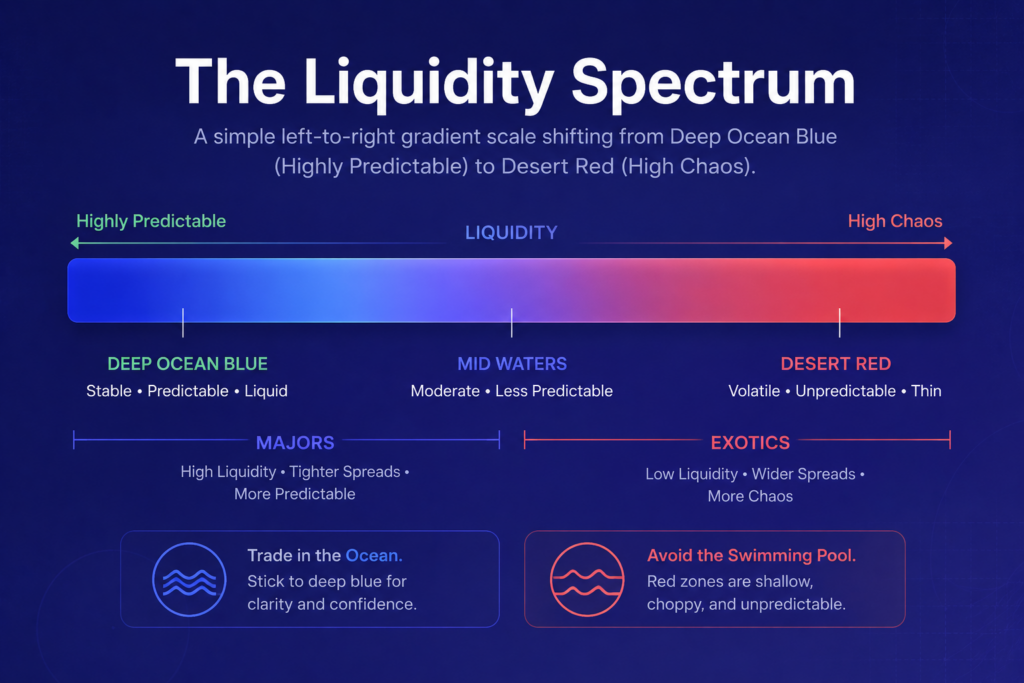
To understand predictability, we have to talk about liquidity. Think of liquidity as a deep, massive ocean. If you throw a giant boulder into the Pacific Ocean, the water absorbs the impact, and the overall sea level barely moves. But if you throw that same boulder into a backyard swimming pool, you create a tidal wave that empties half the pool.
In trading, the boulder is an institutional order.
Major currency pairs like EUR/USD or heavily traded assets are the Pacific Ocean. Millions of traders, central banks, and algorithms are constantly buying and selling. Because there are so many participants, it takes an astronomical amount of capital to shift the price drastically. This creates a smoothing effect. Price action follows established trends because no single player can easily manipulate the market.
Conversely, when you trade illiquid assets or exotic pairs, you are trading in a swimming pool. A single hedge fund or an aggressive whale can step in, execute a relatively small order, and completely ruin your technical analysis. If you have ever wondered why 90 percent of traders lose money, it is often because they try to trade chaotic, illiquid environments where technical analysis breaks down completely.
For beginners trying to find their footing without drowning in noise, starting on platforms designed for clear execution is crucial. I spent months analyzing how different environments handle these structural shifts, documenting my observations in a breakdown of the safest trading platforms, which highlights how risk changes across various brokers.
The DNA of Predictable Assets
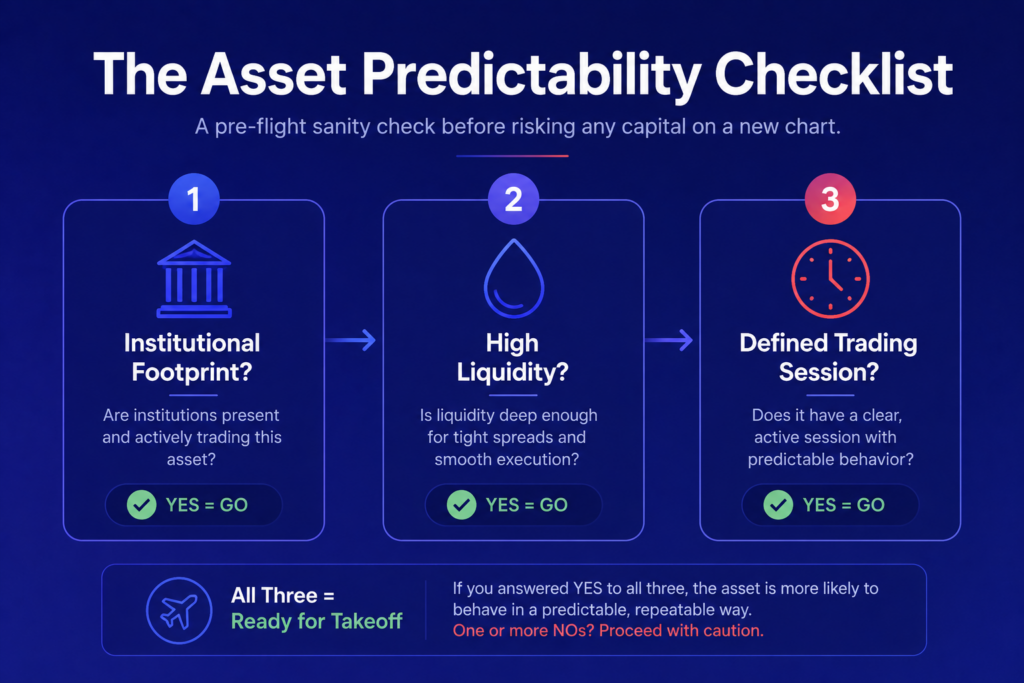
What makes an asset actually comply with your indicators? Through years of trial and error, I found that predictable assets share three core traits.
Clear Institutional Footprints
Institutions do not trade on gut feelings or 1-minute candle color changes. They buy and sell in zones, leaving massive footprints known as order blocks or support and recovery areas. Predictable assets have highly visible institutional interest. When the price retraces to a major daily level on a liquid asset, you can almost guarantee a reaction because major banks have automated buy orders waiting at those exact coordinates. Learning how to spot these zones completely changed my results when I was searching for the best broker for learning price action.
Session-Driven Rhythms
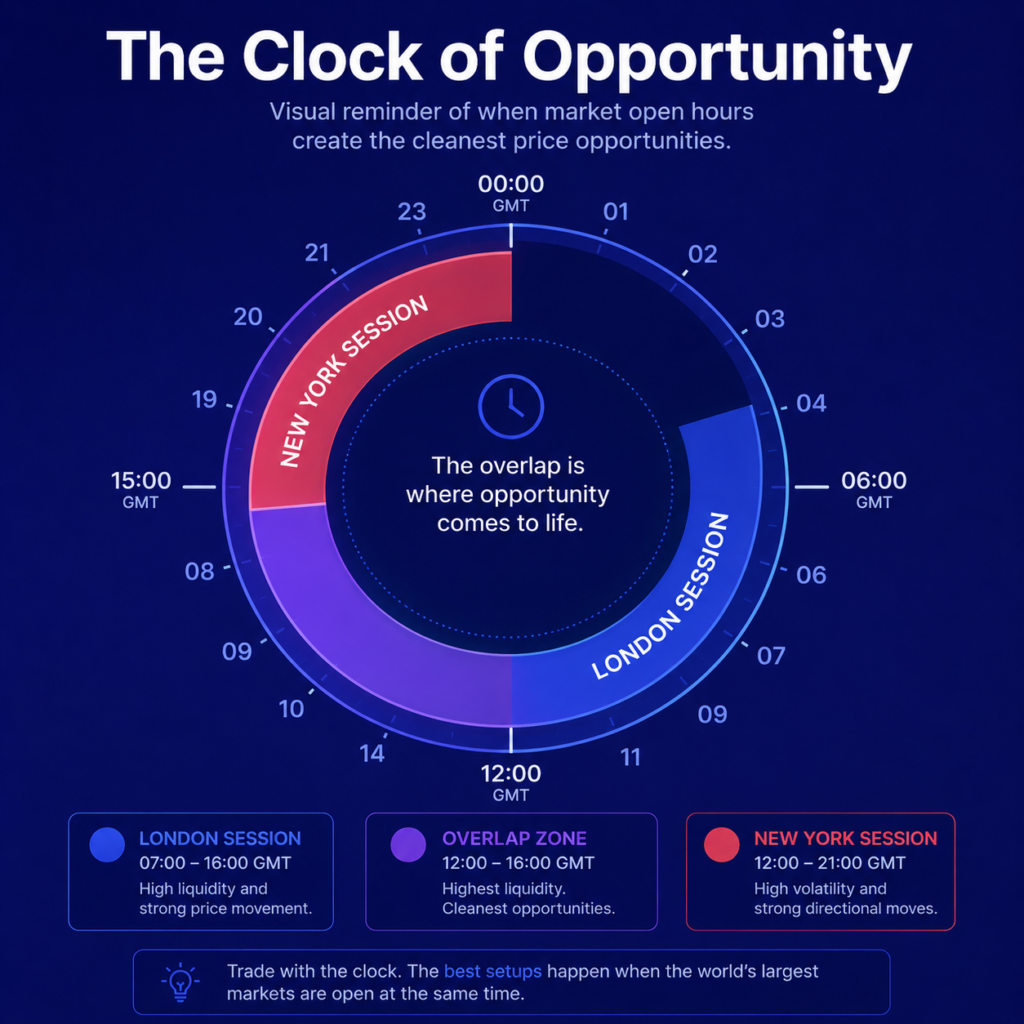
The most predictable assets adhere strictly to time. They possess a natural biological clock. If you track the major currency pairs, you will notice they come alive during specific hours and go completely flat during others. My entire perspective shifted when I stopped forcing trades at random times and leaned into the hidden rhythm of session-based trading. When a market has a defined open and close, volume pours in predictably, creating clean trends rather than choppy sideways traps.
Macroeconomic Alignment
A predictable asset moves based on visible fundamental realities, not just speculative hype. If the Federal Reserve raises interest rates, the US dollar strengthens. It is a logical, causal relationship. When an asset reacts logically to news, you can form a reliable hypothesis. When an asset moves purely based on social media tweets or speculative manipulation, predictability drops to zero.
The Wild West of Unpredictability
On the other end of the spectrum live the unpredictable assets. These are the charts that make you want to throw your laptop through a window.
Think about certain digital tokens, penny stocks, or exotic currency crosses. Why are they so volatile? It comes down to a lack of structural maturity. There are no massive central banks keeping the price stable. The order books are thin, meaning there is a massive gap between the buying price and the selling price.
In these environments, a chart pattern is practically useless. You might see a perfect bull flag forming, but because the market lacks depth, a single large market order can trigger a cascade of stop-losses, wiping out your position in milliseconds. I used to think I could tame these wild markets until I learned to sit on my hands during choppy conditions, accepting that survival matters more than being right in a chaotic environment.
Tailoring Your Strategy to the Asset
Once you accept that some assets are naturally easier to read, your job as a trader changes. You stop trying to force your favorite strategy onto an incompatible market. Instead, you hunt for the specific environment where your strategy has an unfair advantage.
If your strategy relies heavily on clean trends, Fibonacci retracements, and classic chart patterns, you belong in highly liquid, major macro markets. If you prefer rapid, short-term scalp trades based on pure volatility, you might look for faster-moving environments.
Finding this alignment is a deeply personal journey. I remember documenting my own struggles trying to find the right balance, which I wrote about in a personal account of chasing safety in a high-stakes world, where I detail how finding the right platform and asset class salvaged my career.
To help visualize how these factors stack up against each other, here is a quick breakdown of how predictability scales across different asset characteristics:
| Asset Characteristic | Predictability Level | Primary Driving Force | Recommended Strategy |
| High Liquidity / Major Volume | High | Institutional Order Flow | Trend following, Price Action |
| Low Liquidity / Exotic Crosses | Low | Retail Speculation / Whales | Breakout trading with tight stops |
| Clear Session-Based Hours | High | Global Corporate & Bank Activity | Session-open momentum trading |
| Continuous 24/7 Speculative | Medium-Low | News Sentiment & Hype | Mean reversion, Risk-off scalping |
For those just beginning to navigate these waters, selecting the right gateway is half the battle. If you want to see how the major entry-level choices stack up in real-world scenarios, check out my hands-on comparison between Binomo and IQ Option to see which one fits your daily operational routine best.
Navigating the Broker Landscape
Choosing what to trade is only part of the equation; where you trade it matters just as much. Different brokers cater to different styles of asset predictability.
For instance, if you are looking for an intuitive, smooth interface to practice reading clean asset movements, the IQ Option Registration provides an incredibly responsive charting engine that makes spotting price action fluid. On the flip side, if you value alternative market structures like synthetic indices, which emulate pure market mechanics without unexpected fundamental disruptions, checking out the Deriv Platform can offer an entirely different edge.
If you are exploring alternative brokers with highly competitive environments, you can look into the Pocket Option Sign-up or check the streamlined trading features available via the Quotex Portal. For those who prioritize rapid execution speeds during fast-moving news events, options like the ExpertOption Registration, the classic interface at Olymp Trade, or the institutional feel of Capital Core provide diverse environments to test your theories on asset predictability.
Moving Beyond Guesswork
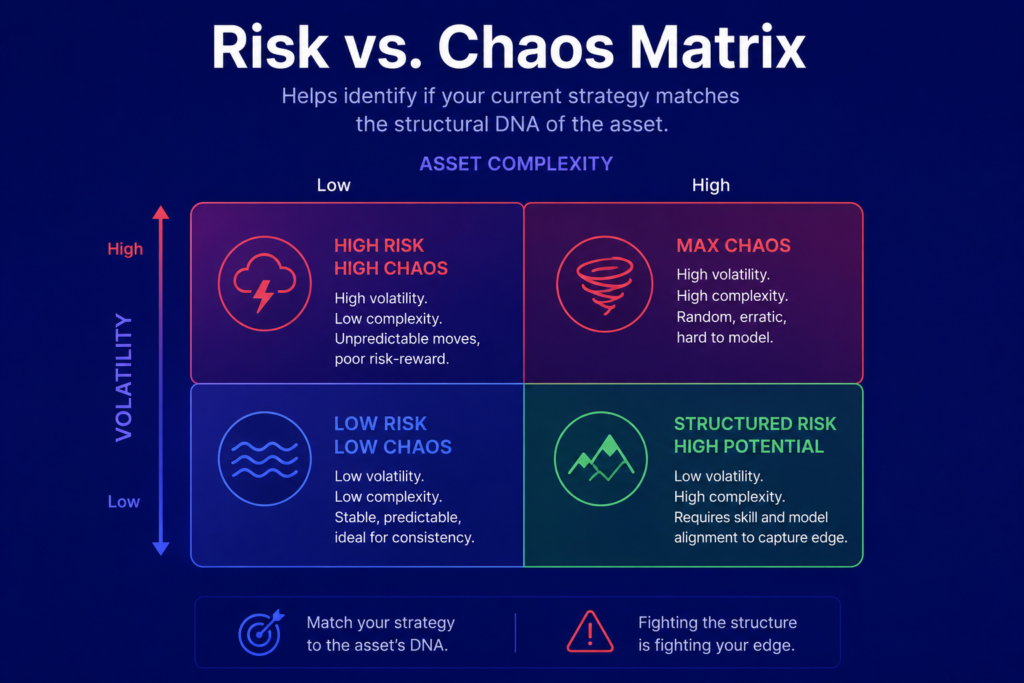
At the end of the day, trading shouldn’t feel like a trip to Las Vegas. If you feel like you are guessing, you are likely trading an asset that lacks the structural integrity required for predictability. By aligning your strategy with highly liquid, session-driven assets, you remove a massive layer of randomness from your trading business.
But even with the best assets, navigating the markets alone can be an uphill battle. The real shifts happen when you stop guessing and start utilizing deep, institutional-grade analysis.
If you want to stop reacting to the market and start anticipating it with precision data, join the elite inner circle at the Becoin Tariff Plan and gain instant access to institutional-grade insights. For real-time updates and professional market direction breakdowns, bookmark the Becoin Forecast Hub to secure your unfair edge in the markets today.