The Clock and the Candle: How I Stopped Guessing the Best Time to Trade Binary Options
I still remember the night I blew my third trading account. It was 11:30 PM. The house was completely quiet, the market charts on my screen were barely crawling, and I was forcing trades out of pure impatience. I kept staring at a flatline asset, placing one-minute positions, convinced that the market owed me a breakout. It didn’t. The candles barely moved, my predictions expired out of the money by a fraction of a pip, and I was left staring at a zero balance.
That painful night taught me a fundamental truth that changed my entire approach: trading binary options isn’t just about predicting where the price will go. It is deeply about when you choose to look at the market.
When you are starting out, it is easy to assume that the market is a 24-hour machine that acts the same way all the time. But the truth is that the global financial markets have a rhythm, a heartbeat, and an ecosystem. If you trade when the market is asleep, your strategy will likely suffocate. If you trade when the market is too erratic, you get whipped out by sudden spikes. Finding your rhythm requires looking at how different market sessions function, and learning to time your entry points down to the hour.
The Realization That Changed My Trading Routine
Early in my journey, I used to wake up at random times, open my laptop, and expect the market to adapt to me. I thought that as long as I understood support and resistance, the time of day didn’t matter. I spent months failing because I was using a high-volatility strategy during dead market hours.
If you are currently trading whenever you find a free moment, you might be accidentally fighting the biggest players in the world. I learned this the hard way while reading about why 90 percent of traders lose money. A massive portion of those losses stems from a simple mismatch between a trader’s strategy and the current market environment.
Binary options require an asset to move decisively past your strike price within a strict, often short, window of time. To get that clean movement, you need liquidity, which means you need major global banks, institutional funds, and millions of retail traders actively buying and selling. That volume only happens when the big financial hubs around the world open their doors.
Mapping the Global Sessions Through My Own Eyes
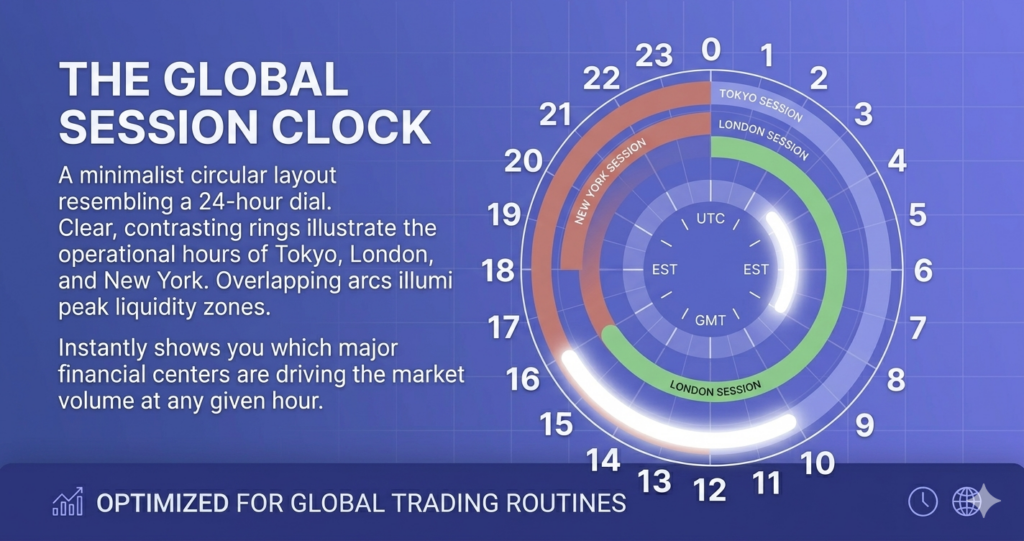
To build a consistent routine, I had to stop looking at the market as a single entity and start viewing it as a relay race between four major financial capitals: Sydney, Tokyo, London, and New York. Each of these centers brings a completely different energy to the charts.
The Asian Session: Tokyo and Sydney
This session opens late in the evening for Western traders. My experience with the Asian session has always been one of patience, sometimes to a fault. Volume is generally lower, and major pairs like EUR/USD often consolidate into tight ranges.
When I was a beginner trying to find the best broker for a ten dollar deposit, I loved this session because it felt safer. The moves were predictable and slow. But I quickly realized that slow moves can be a trap for short-term binary options. If a currency pair moves only three pips over thirty minutes, your one-minute or five-minute trades are essentially a coin toss.
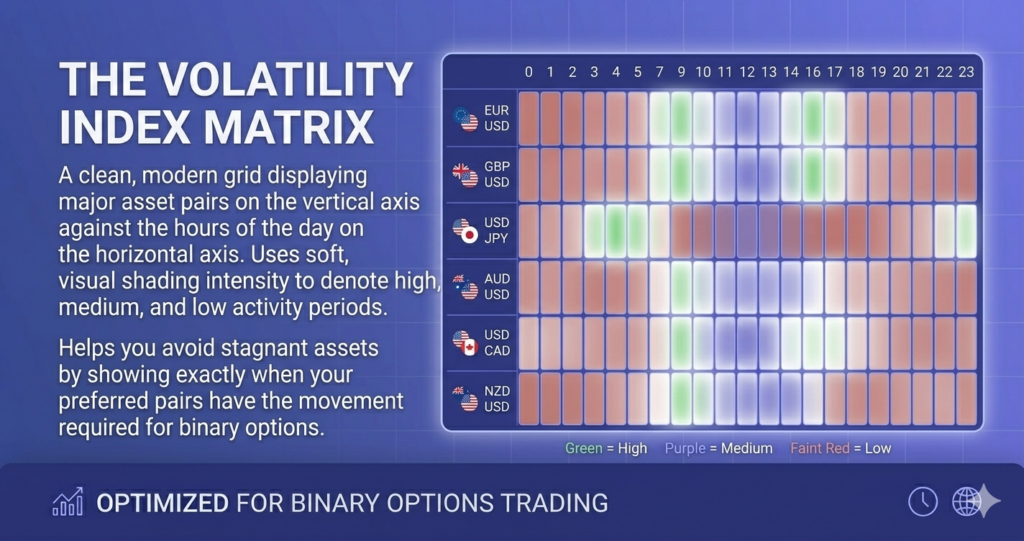
However, if you focus on the Japanese Yen (JPY) or the Australian Dollar (AUD), you can find beautiful, clean setups during these hours. It is an excellent environment for traders who prefer steady, range-bound strategies rather than aggressive breakout plays.
The London Session: The Floodgates Open
The true shift in my trading performance happened when I started setting my alarm for the London open. This session is where the real liquidity enters the game. London is the capital of foreign exchange trading, and the moment the morning bells ring there, the charts transform.
Volatilities skyrocket, trends establish themselves, and the price action becomes incredibly clean. If you use technical indicators or trade breakouts, this is a prime window. Pairs involving the Euro (EUR), the British Pound (GBP), and the Swiss Franc (CHF) wake up instantly. I found that my winning percentages scaled up simply because the market started respecting technical levels with massive volume pushing behind them.
The New York Session: High Velocity and Deep Volatility
A few hours after London gets moving, New York opens its doors. This period creates a massive overlap where both Europe and North America are actively trading simultaneously.
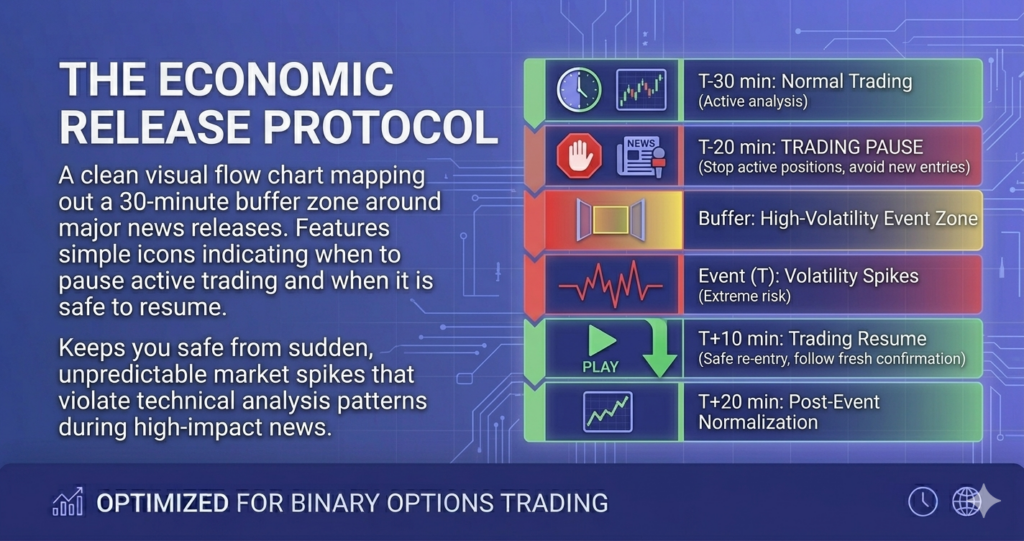
The market during this overlap is an absolute powerhouse. It is fast, highly fluid, and intensely reactive to economic data releases. If the US Federal Reserve makes an announcement or employment data drops, the charts can jump dozens of pips in a fraction of a second.
Personally, I had to learn to tread carefully here. The high velocity can work beautifully in your favor, but it requires split-second execution and an incredibly reliable platform. If your internet lag causes a delay, you can miss your entry entirely. This is why many experienced traders spend time searching for the best trading platform for slow internet to ensure their orders fill exactly when they click.
The Magic Window: Trading the Overlaps
If you want the absolute best time of day to trade binary options, you want to target the hours when two major sessions are running at the same time. These are the windows where volume peaks, spreads tighten, and directional trends are clearest.
- The London / New York Overlap: This is the undisputed heavy hitter of the trading day. It occurs roughly during midday across global time zones. During this window, both the US Dollar and European currencies are moving with maximum force. It provides the ideal conditions for short-term expiration contracts because the momentum is strong enough to carry your trade far away from your entry price.
- The Tokyo / London Overlap: This brief window happens early in the morning for European markets. While not as explosive as the New York overlap, it offers great, steady momentum for cross-market pairs like EUR/JPY and GBP/JPY.
When I adjusted my life to focus strictly on these premium windows, my chart analysis started making sense. I wasn’t fighting a stagnant market anymore. I was riding a wave created by institutional capital.
Finding Your Perfect Technical Ecosystem
Choosing the right time to trade means absolutely nothing if you are attempting to execute your trades on an unreliable platform. Your broker must have rock-solid uptime, zero chart manipulation, and lightning-fast execution speeds during peak session overlaps.
When I was refining my approach, I spent weeks comparing how different platforms handled high-volume hours. Two platforms consistently stood out during my live testing. I frequently switched back and forth between them to evaluate their feeds, which led me to document a detailed look at Binomo vs IQ Option for small accounts. Both options provide highly responsive, native charting tools that can keep up when the London and New York sessions go into overdrive.
If you are looking for an intuitive environment designed to execute trades smoothly during peak hours, you can explore the IQ Option Platform. Alternatively, if you want a clean interface that performs exceptionally well during fast-moving breakouts, you can check out the Binomo Interface. Testing platforms yourself helps clarify where your execution feels most natural.
Constructing Your Custom Daily Trading Routine
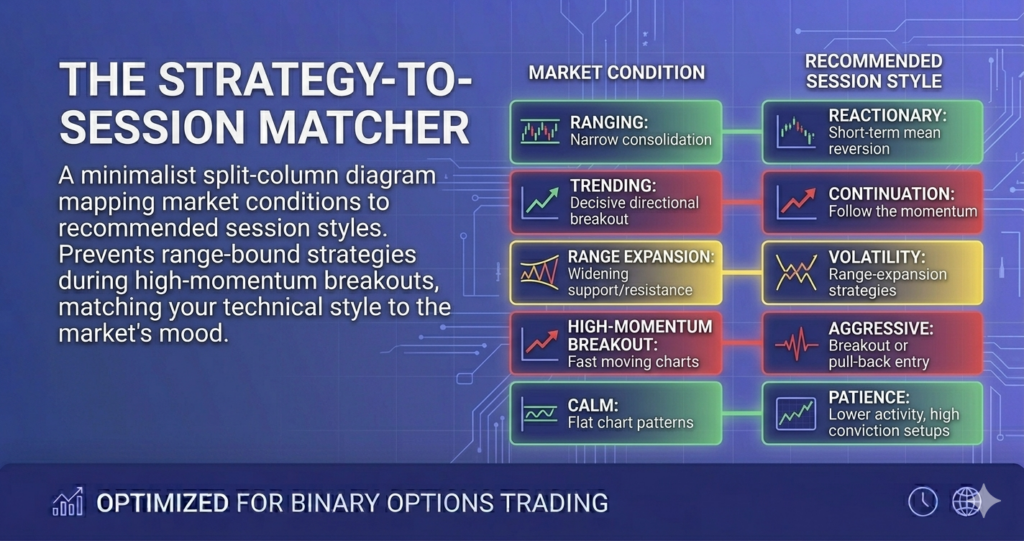
To transition from an emotional trader to a systematic one, you must build an explicit routine around these market hours. This shift requires mapping out your personal schedule to align with the market, ensuring you show up to your charts with full mental clarity.
I began by evaluating my own energy levels. If you are exhausted after a long day of primary work, trying to trade the fast-paced New York session can lead to disastrous, impulsive decisions. If you want a deep dive into how I structured my environment to protect my capital, take a moment to read through my journey of finding my perfect workspace.
Once you identify your optimal window, stick to it religiously for a minimum of thirty days. Turn off your monitors when that window closes. Treat trading like a professional business appointment with the market.
Moving Past the Basics to Build a Genuine Edge
Understanding the clock is your foundation, but mastering the underlying market mechanics is what creates sustainable profitability. To consistently extract money from binary options, you have to look deeper than basic indicators or simple chart patterns. You must learn how to interpret institutional order flow, read raw price action, and manage your risk with mathematical precision.
If you are tired of guessing your entries and want a massive competitive edge, you need institutional-grade data and expert market analysis. Joining the premium group provides you with real-time market breakdowns, deep algorithmic insights, and precision strategies designed by veteran market analysts.
Do not keep trading in the dark against sophisticated algorithms. Take complete control of your financial future, master the internal dynamics of the market, and gain an elite trading edge by upgrading your journey today at Becoin Premium Plans.