Pocket Option Trend Trading Strategy: Best Indicators, Entries & Real Examples

Facts Checked by Shahwaiz Khan
I’ve blown a few accounts before I realized something important: the market doesn’t care how smart I think I am. Once I stopped trying to predict every reversal and started following the trend, my results became far more consistent.
After hundreds of trend trades on Pocket Option across EUR/USD, GBP/USD, and Gold, I found that the highest-probability setups all shared the same characteristics. They followed the market’s direction instead of fighting it.
In this guide, I’ll show you my personal Pocket Option trend trading strategy, the indicators I use to identify strong trends, real trade examples, and the mistakes that cost me money before I learned to trade with the trend.
Whether you’re a beginner or an experienced trader looking for a more disciplined approach, this strategy can help you filter out low-quality setups and focus on trades with higher probability.
Ready to follow the market instead of fighting it? Open your free Pocket Option account and start applying trend strategies with the indicators covered below.
What is a Trend Trading Strategy on Pocket Option?
A trend trading strategy is simple in theory. You identify the direction the market is moving—up, down, or sideways and trade in that direction. On Pocket Option, it means entering call options in an uptrend and put options in a downtrend. The goal is to ride the wave, not swim against it.
But here’s what most blogs don’t tell you: the real challenge isn’t spotting the trend—it’s trusting it. You see a strong upward move, your gut says “buy,” but your fear says, “what if it reverses?” That internal battle ruins more trades than bad signals.
So, let’s cut through the fluff. I’ll show you the exact indicators and setups I use, how I confirm a real trend, and when I stay out entirely.
How to Identify a Trend on Pocket Option
Before using any trend trading strategy, you need to determine whether the market is actually trending. Many traders mistake short-term price movements for trends and end up entering low-quality trades.
Here are the signs I look for:
Uptrend
- Higher highs and higher lows
- Price trading above the 50 EMA and 200 EMA
- RSI consistently above 50
- ADX above 25
Downtrend
- Lower highs and lower lows
- Price trading below the 50 EMA and 200 EMA
- RSI consistently below 50
- ADX above 25
Sideways Market
- Price trapped between support and resistance
- Flat moving averages
- RSI hovering around 50
- ADX below 20
If I cannot clearly identify one of these conditions within a few seconds, I simply skip the trade and wait for a better setup.
What Is the Best Pocket Option Trend Trading Strategy?
The best Pocket Option trend trading strategy is to trade in the direction of the prevailing trend using the 50 EMA, 200 EMA, MACD, RSI, and ADX for confirmation. High-probability entries typically occur after pullbacks, breakouts, or retests, while ranging markets and major news events should generally be avoided.
Best Trend Indicators for Pocket Option
I’ve tested dozens of indicators. Some are flashy but useless. Others are boring but powerful. Here are the few that consistently work for me on Pocket Option:
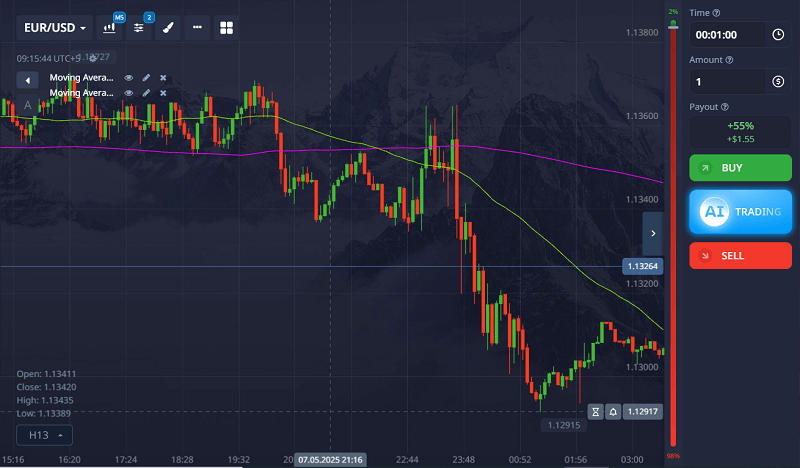
1. Moving Averages (EMA/SMA)
I use:
- 50 EMA to spot the medium-term trend
- 200 EMA for the long-term trend
If price is above both, I look for call options. If it’s below, I go for puts.
The crossover strategy (when the 50 EMA crosses the 200 EMA) also works as a confirmation signal, especially on M5 and M15 charts.
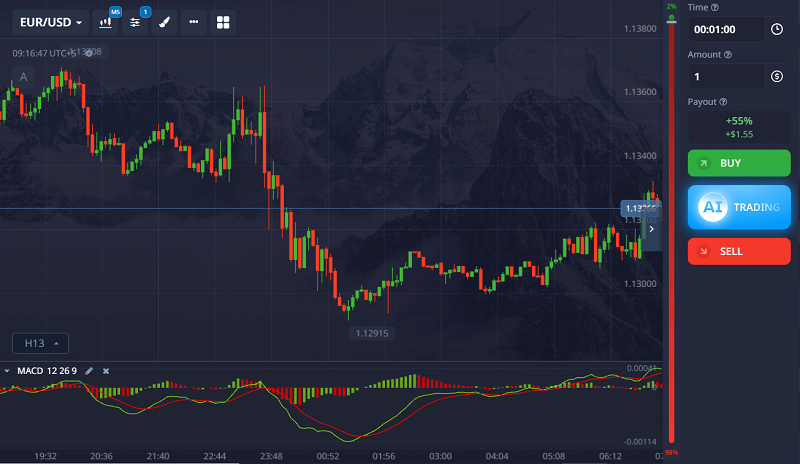
2. MACD (Moving Average Convergence Divergence)
MACD helps confirm the momentum behind the trend. When the MACD line crosses above the signal line and both are above zero, it supports a bullish trend.
For puts, the opposite: MACD crosses below the signal line and both are under zero.
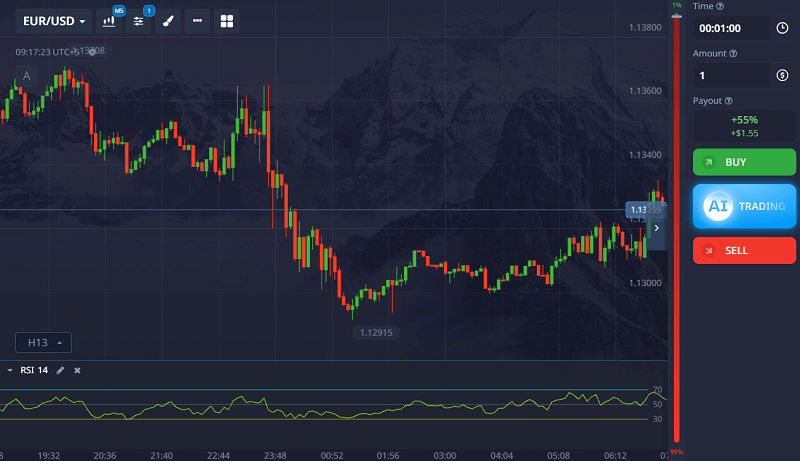
3. RSI (Relative Strength Index)
RSI is not just for spotting overbought or oversold. I use it to confirm trend strength.
In an uptrend, RSI should stay above 50. In a downtrend, below 50. If RSI keeps bouncing around 50, it’s a sign the trend is weak or changing.
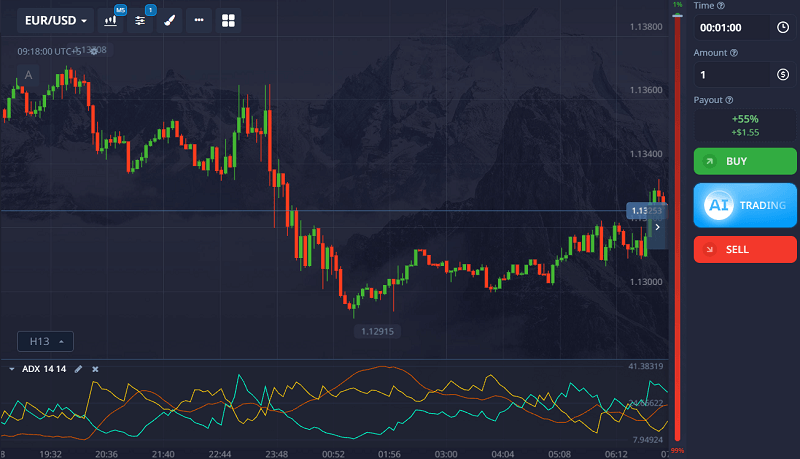
4. ADX (Average Directional Index)
ADX doesn’t tell direction—it tells strength.
- ADX above 25 means a strong trend (I trade)
- ADX below 20 means a weak or choppy market (I stay out)
Combining ADX with EMA gives me confidence to enter.
5. Trendlines (Drawn Manually)
Don’t ignore the basics. Drawing trendlines gives me a clear view of market structure.
If price respects an upward trendline with multiple touches, I trust the uptrend. Breaks in the trendline tell me something is changing.
My Actual Pocket Option Trend Trading Example
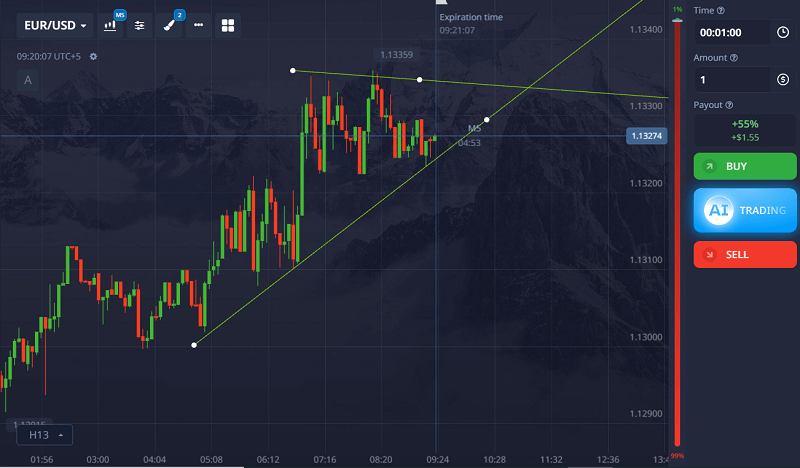
One of my favorite trend trades happened on EUR/USD using the 5-minute chart.
Trade Setup
Before entering, I checked the following conditions:
- Price was above both the 50 EMA and 200 EMA
- MACD lines were above zero with a fresh bullish crossover
- RSI was holding around 60, showing bullish strength
- ADX was reading 28, confirming a strong trend
- Price respected an upward trendline that had already produced three successful bounces
With all trend conditions aligned, I waited patiently for an entry signal.
Entry
A bullish engulfing candle formed directly on the trendline support and near the 50 EMA. This provided confirmation that buyers were still in control.
I entered a Call option with a 3-minute expiry immediately after the candle closed.
Result
The trade finished in the money (ITM), and price continued higher for several additional candles.
The reason this trade worked wasn’t luck. Every major trend indicator pointed in the same direction. There was no major news event, no resistance level overhead, and no conflicting signals.
This is exactly the type of trade I look for when trend trading on Pocket Option.
Learn more about Pocket Option trading hacks.
Want to test this strategy in real time? Sign up on Pocket Option and try trend trading with live charts, custom indicators, and 1-minute execution speed.
Risk Management for Trend Trading
Even the best trend trading strategy will produce losing trades. The difference between successful traders and struggling traders is how they manage risk.
These are the rules I personally follow:
Never Risk Too Much on One Trade
I avoid risking more than 1-3% of my account balance on a single trade. This allows me to survive losing streaks without damaging my account.
Set a Daily Loss Limit
If I lose three consecutive trades or reach my daily loss limit, I stop trading for the day.
Avoid Revenge Trading
After a loss, it’s tempting to immediately enter another trade. This emotional reaction usually creates even bigger losses.
Practice on a Demo Account First
Before using any new trend trading setup with real money, I test it extensively on a demo account to ensure it performs consistently.
Protecting your capital is more important than finding the perfect entry signal.
When Not to Use a Trend Strategy on Pocket Option
Here’s what rarely gets mentioned in other guides: the trend strategy does not work in all conditions.
I’ve learned to avoid these situations like the plague:
1. Ranging or Sideways Market
You’ll see this when price stays stuck between support and resistance with no clear direction. Moving averages flatten, RSI hugs 50, and ADX drops under 20.
If you try to trade trends here, you’ll lose more than you win.
2. Just After Big News Releases
Volatility spikes after events like NFP or interest rate decisions. Even if the trend looks strong, price can reverse suddenly. I avoid trend trades during news unless I understand the macro context (which, honestly, I usually don’t).
3. At the End of a Trend (Overextended)
If a trend has already run far without a decent pullback, I wait. It’s tempting to enter late, but that’s when trends usually reverse or stall.
Use RSI or look for bearish divergence on MACD to spot exhaustion.
4. During Market Open or Close
The first 15–30 minutes after a market opens (especially US and London sessions) can be wild. Price fakes out a lot. I wait for structure to settle before looking for a trend.
How I Confirm a Real Trend (Checklist)
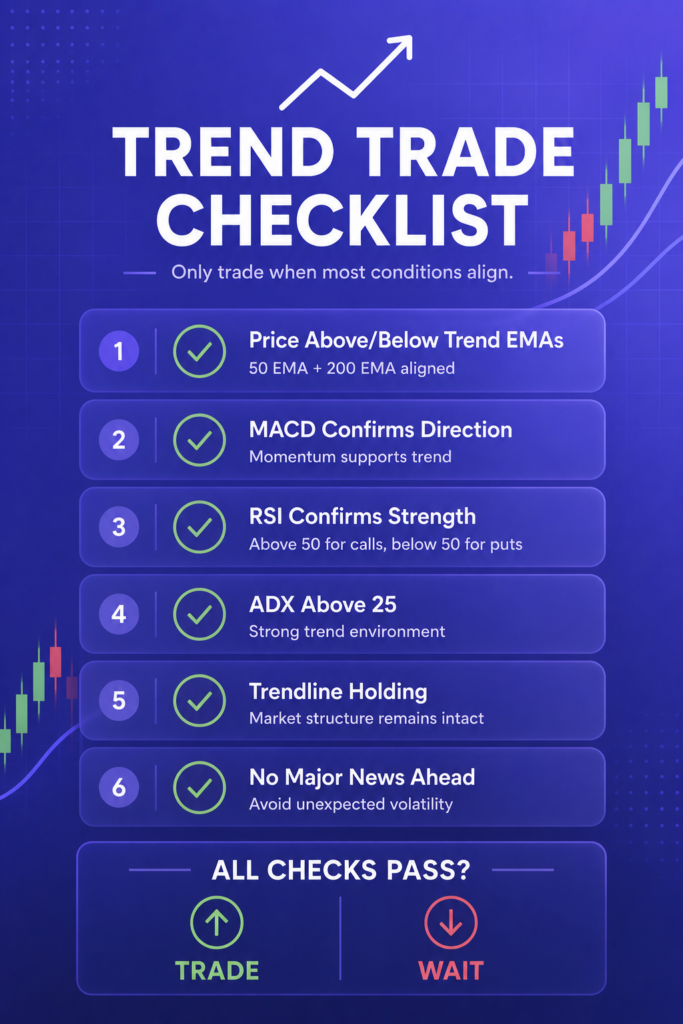
This is my personal checklist before entering a trend trade:
- Price is above/below both 50 and 200 EMA
- MACD supports the direction
- RSI is above 50 (for calls) or below 50 (for puts)
- ADX is above 25
- Trendline support/resistance is respected
- No major news events in next 30 minutes
- I’m not entering at an obvious support/resistance zone
If any of these fail, I don’t trade.
Trend Entry Tactics I Use
Once I confirm the trend, I look for these setups to enter:
Pullback Entry
I wait for the price to pull back to the 50 EMA or trendline. Then I look for a bullish or bearish candlestick pattern (engulfing, pin bar, inside bar) before entering.
Breakout Entry
If price breaks a consolidation or resistance zone in the direction of the trend, I enter after the breakout candle closes. I don’t chase breakouts during low volume times.
Retest Entry
After a breakout, price often returns to test the broken level. This retest is a great entry if the trend continues. I use confirmation from MACD and RSI before entering.
Best Assets for Trend Trading on Pocket Option
Not every market trends equally well. These are the assets I find most suitable for trend-following strategies.
Forex Pairs
- EUR/USD
- GBP/USD
- USD/JPY
- AUD/USD
Commodities
- Gold
- Silver
Cryptocurrencies
- Bitcoin
- Ethereum
I generally focus on assets with strong liquidity and consistent price movement because they tend to produce cleaner trend signals.
You can find detailed analysis and forecast for different assets at Forecast Hub.
Pocket Option Timeframes for Trend Trading
I mostly use:
- M5 (5-minute) for scalping
- M15 or M30 for more stable signals
I check H1 for the overall trend direction. If H1 is trending and M5 agrees, that’s a high-conviction trade.
Learn more about the best time to trade.
Trend Trading vs Reversal Trading on Pocket Option
Many traders wonder whether trend trading or reversal trading is better. Both approaches can work, but they require different skill levels.
| Trend Trading | Reversal Trading |
|---|---|
| Trades with momentum | Trades against momentum |
| Easier for beginners | More difficult to master |
| Higher probability setups | Higher risk setups |
| More consistent entries | Requires precise timing |
| Less emotional stress | More emotional pressure |
Personally, I prefer trend trading because it allows me to trade alongside the dominant market direction instead of trying to predict turning points.
FAQs from Real Traders
How do I know if a trend is strong enough to trade?
Use ADX above 25, clear price movement in one direction, and confirmation from at least two indicators (like EMA and MACD).
Can I trade trends on Pocket Option using just price action?
Yes, if you’re skilled at reading market structure and trendlines. But combining it with at least one indicator increases your accuracy.
What is the best expiry time for trend trading on Pocket Option?
For M5 charts, I use 3-5 minute expiry. For M15, I go for 5-10 minutes. Always backtest to see what works best for your style.
Do trends reverse suddenly or give signs?
Most trends show signs before reversing—divergence on MACD/RSI, slowing momentum, or failed highs/lows. Watch for those.
Is trend trading better than reversal trading?
It depends on the trader. I find trend trading more consistent. Reversals are riskier and harder to time.
Can I use Bollinger Bands for trend confirmation?
Yes. In a trend, price often rides the outer band. A break and close beyond the band with volume can confirm continuation.
What is the success rate of trend trading on Pocket Option?
Personally, I get around 65-70% win rate with trend trades. The key is avoiding bad entries, not overtrading, and being patient.
Can beginners use a trend trading strategy on Pocket Option?
Yes. Trend trading is generally considered one of the easiest trading approaches for beginners because it follows the dominant market direction instead of attempting to predict reversals.
Which indicator is best for trend trading on Pocket Option?
No single indicator is perfect, but the combination of the 50 EMA, 200 EMA, MACD, RSI, and ADX provides a strong framework for identifying and confirming trends.
How do I avoid false trend signals?
Use multiple confirmations before entering a trade. I typically require agreement between price action, moving averages, RSI, MACD, and ADX before risking capital.
Is trend trading profitable on Pocket Option?
Trend trading can be profitable when combined with proper risk management, disciplined entries, and consistent execution. Results vary by trader and market conditions.
Final Thoughts
The Pocket Option trend trading strategy described in this guide is not about predicting the future. It’s about identifying the market’s direction and trading with it.
By combining the 50 EMA, 200 EMA, MACD, RSI, ADX, and basic trendline analysis, you can significantly improve your ability to spot high-quality opportunities while avoiding many low-probability trades.
The biggest lesson I’ve learned is that patience matters more than indicators. Most losses happen because traders force trades when the market isn’t trending or enter too late after a move is already exhausted.
Start by practicing on a demo account, follow a strict risk management plan, and focus on executing the same process repeatedly rather than chasing quick profits.
Trend trading will never be perfect, but with discipline and consistency, it can become one of the most reliable approaches for trading on Pocket Option.
Ready to ride the trend with confidence? Join Pocket Option now and use trend-friendly tools like EMA, RSI, and MACD, perfect for the strategies in this guide.
Join BeCoin Premium
Stop trading blind. BeCoin Premium brings you in-depth market analysis, real trade setups, and a community of traders who take this seriously. Your simple platform does the execution. We do the thinking with you.