Why IQ Option Blocked My Account & How I Got It Back
It Started Like Any Other Trading Day
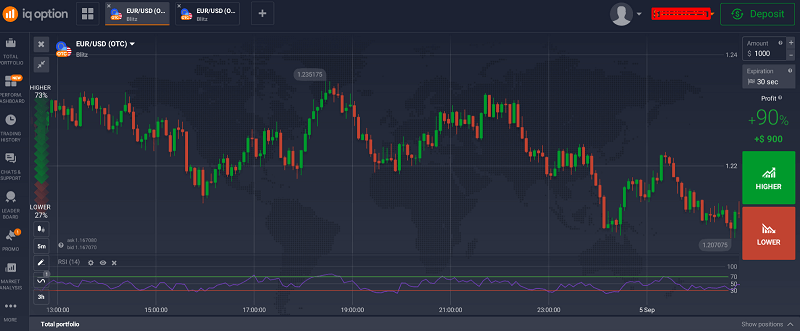
At first, everything felt normal. I logged into IQ Option in the morning, checked the EUR/USD chart, adjusted my indicators, and placed two trades like I always do. Both hit profit. I was on a roll that week, up around $120 on a $200 balance.
Then I got logged out.
At first, I assumed it was a bug. I tried logging back in. My password was correct, but the message popped up: “Account blocked. Contact support.”
My stomach dropped.
I wasn’t even doing anything shady. Or so I thought.
This article isn’t just a vent. I’m sharing exactly what caused my IQ Option account to be blocked, the steps I took to fix it, and how you can avoid the same nightmare because if you’re trading without understanding the rules behind the scenes, you’re one small mistake away from getting locked out too.
I’d read about IQ Option block issues before, usually in Reddit threads or Facebook groups, but I always assumed those people did something wrong. Used fake documents, opened duplicate accounts, tried to abuse bonuses.
That wasn’t me.
I had one account. My own funds. Real documents. I hadn’t even taken any bonus.
So I contacted support via the app’s live chat. They responded in less than two minutes. That was the first good sign.
The response was polite but vague. They said my account had triggered “irregular activity flags” and was under temporary review.
I asked for more details. They couldn’t share specifics, only that my case was forwarded to the verification and compliance department.
For the next 24 hours, I couldn’t trade, withdraw, or even access my trade history. I felt helpless. My money was just… frozen.
What I Learned From Digging Through Community Forums
While waiting, I went deep into research mode. I joined Telegram groups, scanned through Quora answers, even went back two years on Reddit’s /r/options and /r/binarytrading.
I found hundreds of people with the same issue. Some had their accounts restored. Others didn’t.
The patterns started to emerge. IQ Option blocks or restricts accounts for a few recurring reasons:
Submitting fake or edited documents during verification
Using payment methods that don’t match the account holder’s name
Trading from restricted countries via VPN
Violating bonus conditions (for example, withdrawing early before volume targets)
Abnormal trading patterns that look like bot or multi-account activity
In my case, I had done none of those things or so I thought.
But one little thing stood out in a comment: “Even mismatched email addresses between Skrill and IQ Option triggered my review.”
That’s when I had a realisation.
The Mistake I Didn’t Know I Made
A week earlier, I had deposited funds using my Skrill account. I didn’t think twice about it. The deposit went through instantly. But I’d used a secondary Skrill account that I had originally created under a different email address than my IQ Option login.
The name was mine. The card was mine. But the email didn’t match.
That alone might not cause an issue… until I also logged into my IQ Option account on a friend’s Wi-Fi while visiting. That IP was from a different country. Combine the email mismatch with a new IP login, and boom, the system flagged me as “high risk.”
IQ Option’s fraud detection is automated at first. Once your activity is flagged, your account goes under review by the compliance team. No trades. No access. No withdrawal.
That was exactly what happened to me.
The Process of Getting My Account Back
Once I connected the dots, I sent a second message to support explaining everything. I was honest and detailed. I mentioned the Skrill email mismatch, the change in IP, and my temporary login from another device.
They appreciated the explanation and forwarded it to the compliance team.
Then I waited.
Sixteen hours later, I received an email.
Subject: Your IQ Option Account Has Been Unblocked
They confirmed that my documents were in order, and that the review was complete. My account was now fully active. My balance was intact. No penalties.
The total downtime was just over 48 hours but the anxiety lasted a lot longer.
Why IQ Option Blocks Accounts in the First Place
Once everything was resolved, I got curious. I went deeper into the platform’s terms and risk disclosures. I even spoke to a support agent and asked what traders commonly do that triggers blocks.
Here’s what they told me (summarised, not quoted):
IQ Option uses automated systems that scan for suspicious activity. This includes logging in from multiple IPs, depositing from different name wallets, bots or copy-trading apps, and submitting unverifiable documents.
It’s not always about fraud. Sometimes it’s just unusual behaviour that gets flagged.
That’s why it’s so important to keep your account details consistent and communicate quickly when issues arise.
What to Do If Your IQ Option Account Gets Blocked
This is the part I wish I had when I was locked out. Here’s what worked for me, and what I’d recommend to anyone else going through it.
Don’t panic. Stay calm and avoid spamming support. Their system is structured. Follow it.
Contact live chat first. Explain that your account is blocked and request details.
Follow up with email. Be clear, honest, and transparent. If you used a VPN or different payment method, tell them.
Resubmit any required documents properly. Use original scanned files. Never edit or crop them manually.
Wait patiently. Most reviews are done within 24–72 hours unless something serious is flagged.
Avoid using multiple accounts or sharing devices. These are common triggers for blocks, especially if bonuses are involved.
Support isn’t your enemy; they’re just trying to protect the platform from fraud. Treat them with respect and professionalism, and they’ll usually respond in kind.
How to Avoid Getting Blocked in the First Place
I now treat my IQ Option account the same way I treat my bank account carefully.
Here’s how I avoid red flags:
I use only one payment method, linked to my personal email
I log in only from one device
I avoid public Wi-Fi or VPNs while trading
I verify my documents in advance, even before trying to withdraw
I never open another account, even if it’s “just to try a strategy”
Since following these rules, I’ve had zero issues.
IQ Option has a solid platform. Their system is strict, but fair. Once you learn how to work within their rules, everything runs smoothly. Learn more about whether the platform is safe for large deposits or not.
Should You Worry About IQ Option Blocking Your Account?
If you’re using IQ Option responsibly, honestly, and with the right documentation, you have nothing to fear.
The horror stories you see online are often the result of mistakes; many of them avoidable. But the people who stay disciplined rarely have problems.
The key is transparency. If you make a mistake, admit it. If your email or address changes, update your profile. If you used someone else’s payment method, stop and fix it.
Most importantly, read the terms of service. Know what you’re agreeing to.
If you haven’t yet created your account, start here with the official link and verify everything properly from the start. It’ll save you from headaches later.
Final Thoughts: What I Learned from the Block
I used to think account blocks only happened to scammers or people trying to game the system. But the truth is, even honest traders can get caught in the net, especially when they overlook small details.
My block came from a mismatch. Not malicious intent. Not fraud. Just a simple oversight. But it cost me time, stress, and nearly my trading confidence.
What saved me was acting fast, staying honest, and communicating clearly with support. And now, I take every login, document, and trade seriously.
IQ Option is a powerful platform. If you treat it like a toy, it’ll slap you. But if you treat it like a real trading environment, it’ll reward you.
I got my account back. And I’m still trading smarter than ever.
If you’re just starting your journey, do it the right way → Open your IQ Option account now and verify your profile before your first deposit.
FAQs
Why did IQ Option block my account?
Common reasons include inconsistent document details, using someone else’s payment method, logging in from restricted locations, or attempting to abuse promotions.
Can I get my account back if it’s blocked?
Yes—if you didn’t break major rules and can verify your identity. Contact support, explain your situation honestly, and submit the required documents.
How long does IQ Option take to unblock an account?
Anywhere between 24 and 72 hours, depending on the complexity of the issue and how quickly you respond with complete documentation.
Can I open a second IQ Option account?
No. Having multiple accounts is against their terms and is one of the most common reasons for account suspension.
Does IQ Option block users from certain countries?
Yes. Some regions are restricted due to local laws. Check their terms or ask support if you’re unsure.
Will I lose my funds if my account is blocked?
Not usually. If your account is blocked temporarily and you verify your identity, your funds are returned once the issue is resolved.
RSI Pullback Strategy for $738.60 Profit in 8 Minutes (Full Pocket Option Tutorial)
Peabody Energy (BTU): Strategic Bridge in the AI Power Surge
Executive Summary
Peabody Energy Corporation (BTU) offers a compelling contrarian play in the challenged coal sector. The investment case rests on BTU’s dual strategy: stabilizing the strained U.S. power grid amid surging AI-driven data center demand, and expanding into high-margin metallurgical coal for long-term diversification. This approach mitigates both commodity cyclicality and energy transition risks.
In Q2 2025, BTU delivered $93.3 million in Adjusted EBITDA despite weak global coal demand, reflecting strong operational discipline. The company expects a $15–20 million boost in H2 2025 from federal royalty relief¹, supported by continued cost reductions across key segments.
Key Catalysts and Drivers
AI-Induced Thermal Demand: Unforeseen stress on the U.S. electric grid from concentrated data center load growth is driving a resurgence in demand for reliable, dispatchable power. The confirmed 15 percent increase in U.S. coal-fired generation in the first half of 2025 validates the immediate, stabilizing role of BTU’s low-cost Powder River Basin (PRB) assets.
Centurion Project Execution: The redevelopment of the Centurion Mine in Australia, with longwall operations scheduled to commence by February 2026 2, represents the critical long-term growth catalyst. This project will structurally re-weight the company’s portfolio toward premium hard-coking coal (HCC), providing a high-quality, long-duration earnings stream.
Balance Sheet Strength: BTU maintains a strong financial buffer, with liquidity totaling $585.9 million in cash against $343.8 million in long-term debt. This positive net cash position affords the financial flexibility required to fund the Centurion growth pipeline, navigate market cycles, and sustain shareholder capital returns.
Growth Catalysts
Strategic Drivers for Long-Term Value
1
AI Thermal Demand
Data center growth drives +15% U.S. coal generation increase, validating PRB assets as reliable baseload power
2
Centurion Project
Longwall operations begin Feb 2026, shifting portfolio toward premium hard-coking coal with long-duration earnings
3
Balance Sheet Strength
$586M liquidity vs $344M debt provides flexibility for growth and shareholder returns
+15%
Coal Generation Growth
Feb ’26
Centurion Launch
$586M
Liquidity Position
Valuation Note (Q4 2025)
As of October 8, 2025, BTU trades at an elevated trailing Price-to-Earnings (P/E) ratio of 31.01.3 While historically high for the sector, this multiple reflects strong market conviction in the company’s unique strategic positioning.
The premium valuation is justified by the quantifiable, near-term operational and policy catalysts (royalty relief, cost reductions) and the anticipation of future, higher-quality earnings derived from the Centurion metallurgical pivot beginning in 2026.
The market appears to be assigning a scarcity premium to BTU as one of the few producers successfully navigating the intersection of traditional resource supply and next-generation energy infrastructure requirements.
Macro Context: The AI Energy Surge
The Power Deficit Hypothesis: Stress on the U.S. Grid
The global deployment of Artificial Intelligence (AI) and large language models is driving an unprecedented expansion of data center infrastructure. This expansion rapidly translates into exponential electricity demand, severely stressing established electricity grids. U.S. per-capita data center consumption, already the highest in the world at approximately 540 kWh in 2024, is projected to surge to over 1,200 kWh per capita by the decade’s end.4
This projected increase alone is roughly equivalent to 10 percent of the annual electricity consumption of an average American household, and critically, this demand is concentrated geographically, requiring immediate, reliable capacity solutions.
The scale of modern AI necessitates specialized energy provision. High-penetration renewable grids, while growing, inherently introduce intermittency challenges due to their dependence on weather conditions. Grid operators are consequently struggling to maintain system stability, which requires the ability to dispatch resources rapidly to meet demand spikes and maintain stable voltage and frequency.5
The specialized requirement for continuous, highly reliable capacity factor demanded by data centers elevates the necessity for stable, dispatchable baseload power.5 This is where thermal generation, particularly coal in key U.S. regions, finds renewed strategic relevance.
The Limits of Efficiency Offsets
Historically, data center energy growth projections included assumptions that efficiency gains in IT equipment and hardware optimization would offset the impact of increased utilization, potentially plateauing energy demand growth.4
However, the extreme power density and computational intensity required by advanced AI models—which rely on massive GPU clusters for training and inference—are demonstrably overcoming these historical efficiency offsets.
The consequence of AI demand growth outpacing efficiency improvements is an intensified reliance on physical capacity additions from high-capacity, dispatchable generators, such as coal or natural gas.
This structural shift validates the market movement observed in the first half 2025, where U.S. coal-fired generation increased by 15 percent. BTU’s thermal assets become strategically essential in established U.S. regions, where low-cost Powder River Basin (PRB) coal often represents the lowest marginal cost dispatchable source.
This unforeseen structural shift in U.S. energy requirements caused by AI provides an extended lifespan and crucial relevance for BTU’s core U.S. thermal business.
Peabody Energy’s Position and Operational Performance
Segmented Business Model Resilience (Q2 2025)
Peabody’s operational success stems from its ability to manage a diversified portfolio effectively, allowing it to sustain resilience against commodity volatility. The Q2 2025 Adjusted EBITDA of $93.3 million reflected strong segmental performance driven by meticulous cost control across key operating regions.
U.S. Thermal (PRB): Maximizing Margin through Policy and Discipline
The U.S. thermal segment, centered in the low-cost PRB, is crucial for current cash generation. BTU is actively managing this segment to maximize margin in alignment with the sudden resurgence in domestic demand.
BTU raised its full-year volume targets for PRB while lowering its per-ton cost targets, a testament to management’s focus on operating leverage and efficiency.
Crucially, the segment is set to receive a material financial benefit from supportive federal policy. The company estimates a $15 to $20 million benefit in the second half of 2025 related to federal royalty reduction provisions stemming from the “One Big Beautiful Bill Act” signed into law in July.1 Relative to the Q2 2025 EBITDA run rate, this represents a significant non-operational margin enhancement that directly strengthens the competitive position and profitability of PRB coal.1
This policy relief effectively reduces the cost of production, improving the economics of PRB coal relative to competing fuels like natural gas, making BTU the preferred choice for utilities urgently seeking to expand dispatchable capacity for data centers. The weighted average quality for the PRB segment volume is approximately 8,700 BTU 1, positioning it as a consistent, low-cost fuel critical for grid stability.
Seaborne Thermal and Metallurgical: Global Price Optionality
BTU also raised its full-year volume guidance for Seaborne Thermal, leveraging its Australian asset base. This segment utilizes a sophisticated pricing strategy: approximately 48 percent of unpriced export volumes are benchmarked against the Globalcoal “NEWC” index (front contracts recently near $106–$109 per tonne) 7. In comparison, the remaining 52 percent are structured to price at 80 to 95 percent of API 5 price levels, which provides favorable exposure to higher-ash markets and maximizes overall realization rates.1
For the Seaborne Metallurgical segment, representing the company’s future growth engine, volume guidance remained steady in the run-up to the Centurion longwall commencement. Even before the Centurion ramp-up, the segment saw Q2 2025 sales volumes of 1.8 million tons at a realized revenue of $125.15 per ton.1
The Centurion Project: Defining the Long-Term Value Proposition
BTU’s long-term value creation story is fundamentally tied to the Centurion Mine redevelopment in Queensland, Australia. This capital allocation decision represents a deliberate, proactive step to align BTU with enduring material demand rather than relying solely on the temporary thermal reprieve afforded by the AI surge.
The Centurion project is on track to commence longwall operations by February 2026.2 This transition to a modern longwall system, which benefits from substantial utilization of existing infrastructure, is designed to increase operational efficiency and drive economies of scale significantly, justifying the company’s lowered Seaborne Met cost guidance.1 Once fully operational, Centurion is expected to structurally re-weight BTU’s long-term production and revenue towards high-quality metallurgical (coking) coal.2
Metallurgical coal demand is intrinsically linked to necessary global infrastructure development and steel production, a market generally less sensitive to ESG divestment pressures than thermal coal. By leveraging Centurion, BTU structurally hedges against the eventual global decline in thermal demand. Revenue generation shifts from an increasingly regulated and constrained U.S. power market (PRB cash flow) to a globally growing industrial market, providing long-term insulation and potentially warranting a higher equity multiple.
BTU anticipates its metallurgical sales realization rate will average 70 to 75 percent of the premium hard-coking coal (HCC) index price (FOB Australia).1 Given that Coking Coal prices were approximately 193.50 CNY/T (Chinese benchmark) on October 14, 2025 9, this project’s strong gross margins are typically far superior to those achieved in the high-volume thermal segment.
Funded by the company’s strong liquidity, the strategic deployment of capital into Centurion is a foundational element in BTU’s strategy to capture higher-growth Asian demand and create superior value for shareholders.8
BTU Segment Guidance and Pricing Assumptions (H2 2025 Outlook)
The table below summarizes Peabody’s current guidance, demonstrating the operational discipline and strategic pricing mechanisms employed across its diverse portfolio segments.
BTU Segment Guidance and Pricing Assumptions (H2 2025 Outlook)
Segment
Volume Guidance
Cost Guidance
Pricing Benchmark/Target
U.S. PRB Thermal
Raised (Full-Year)
Lowered 1
8,700 BTU Quality, benefited by Royalty Relief 1
Seaborne Thermal
Raised (Full-Year)
Lowered 1
NEWC (~$106/t) and 80-95% of API 5 1
Seaborne Metallurgical
Unchanged (Pre-Centurion Ramp)
Lowered 1
70-75% of Premium HCC Index (~$193.50/t) 1
Financial Overview and Key Metrics
Balance Sheet Strength and Liquidity Profile
Peabody Energy’s financial posture is characterized by robust liquidity and a conservative debt profile, which are critical attributes in the highly cyclical commodity sector. The company maintains liquidity of $585.9 million in cash reserves against a manageable long-term debt load of $343.8 million.
This favorable net cash position serves three crucial purposes: it secures the necessary capital for funding the Centurion ramp-up; it provides a significant financial buffer against inevitable cyclical downturns in global coal pricing; and it supports the company’s capital allocation strategy, which includes returning cash to shareholders, evidenced by the $0.075 per share dividend declared on July 31, 2025.1 Maintaining financial strength is an explicit core component of Peabody’s mission.8
Valuation Context and P/E Anomaly
BTU’s stock performance reflects heightened investor interest in 2025, with the stock price rising to $28.28 as of October 1, 2025, up significantly from $20.86 at the start of the year.3 As noted, the trailing P/E ratio stands at 31.01 as of October 8, 2025.3
Peabody Energy (BTU) Key Valuation Metrics (Q4 2025)
Metric
Value (Date)
Trailing P/E Ratio
31.01 (Oct 8, 2025) 3
Stock Price
$28.28 (Oct 1, 2025) 3
Stock Price
$20.86 (Jan 2, 2025) 3
This elevated P/E multiple is highly anomalous for the coal sector, which traditionally trades at low multiples reflecting structural decline risk. The current valuation suggests the market has moved beyond valuing BTU solely on existing thermal coal cash flow. Investors are clearly pricing in two key structural improvements: first, the future earnings potential driven by the higher-quality, higher-margin Centurion project, and second, the immediate, increased value proposition of its thermal assets as an essential grid stability provider amid the AI-driven electricity shortage. This pricing dynamic indicates that the market views BTU as a critical, strategic industrial supplier rather than a generic commodity producer.
However, the high P/E implies commensurately high growth expectations, which inherently increases stock volatility. For analysts, closely monitoring the successful conversion of guidance into realized earnings is paramount, especially regarding the execution success of Centurion and the realization rates relative to the premium hard-coking coal index.1 Failure to successfully execute this pivotal project could trigger rapid multiple compression, potentially reverting BTU toward the low cash flow valuations (P/E ratios in the single digits) observed earlier in 2025.3 The growth thesis depends on robust execution and sustained high commodity pricing.
Comparative Analysis: Peabody vs. Peers
The Restructured Competitive Landscape
The North American coal competitive environment underwent a significant transformation with the successful merger between Arch Resources and Consol Energy, which resulted in the formation of Core Natural Resources (CNR), effective January 14, 2025.11 This merger created a formidable new entity, concentrated mainly in the high-Btu bituminous thermal and metallurgical coal markets of the Northern Appalachian Basin, supported by major mining and marine terminal facilities.10
BTU’s Operational Differentiation
Peabody’s operational footprint provides definitive insulation against this consolidated competition. BTU’s unique strength lies in its highly diversified platform across three distinct categories 8:
Global Seaborne Thermal: Offers exposure to Asian thermal markets via Australian mines.
Premium Metallurgical Coal (HCC): Focused on high-margin steelmaking input through assets like Centurion.2
While the new entity, CNR, may exhibit superior scale in the short term (legacy CONSOL Energy reported Q3 2024 Adjusted EBITDA of $179.2 million 10 versus BTU’s Q2 2025 EBITDA of $93.3 million), BTU’s strategic shift toward Centurion promises a structurally higher-quality, less cyclical earnings profile over the medium term due to its focused access to premium HCC.
Competitive Snapshot: Peabody vs. Core Natural Resources (CNR)
Consolidating competitors into CNR increases competitive pressure on BTU’s domestic Eastern assets. This market dynamic simultaneously enhances the value of BTU’s strategically isolated PRB operations and its globally distinct Australian export segments. BTU’s capacity to successfully compete with CNR is now heavily reliant on the operational success of Centurion and the maintenance of its PRB cost advantage, which is currently aided materially by the federal royalty relief.1 This diversification is key to managing regional supply pressures and maintaining global relevance.
Investment Outlook and Risk Factors
Investment Thesis Refined
The investment case for Peabody Energy is securely defined by its capacity to strategically capitalize on two distinct, non-correlated market forces: utilizing its thermal assets as a necessary defensive hedge against current grid instability, and employing its metallurgical pivot as an offensive long-term growth driver.
Valuation Scenario Modeling
Base Case: This assumes the Centurion ramp-up proceeds smoothly and achieves full operational capacity by the second half of 2026. It further assumes sustained thermal pricing and volume delivery, supported by urgent AI-driven power demand and continued policy support (royalty relief). Under this scenario, the current premium P/E (31.01) is justified, leading to potential stock appreciation driven by post-2026 earnings growth and successful portfolio re-weighting.
Bear Case: Key assumptions include a substantial operational delay or cost overrun at the Centurion project, concurrent with a sharp global recession that depresses HCC demand and pricing. Additionally, a future rollback of U.S. federal royalty relief would compress PRB margins. This scenario would lead to sharp multiple contraction, likely reverting the P/E ratio toward the single-digit cash flow multiples observed earlier in 2025.3
Bull Case: This scenario posits Centurion ramping up ahead of schedule and exceeding internal cost targets. Globally, structural underinvestment in metallurgical coal supply drives HCC prices significantly above the current $193.50 per tonne 9, while the acceleration of AI expansion locks in high-margin cash flows for the PRB segment through 2030. This confluence would lead to strong free cash flow generation, significant dividend increases, and stock appreciation toward valuations typical of more diversified industrial mining companies.
Key Investment Risk Factors
Execution Risk for Centurion: The Centurion longwall project 2 is complex, and successful execution by the February 2026 deadline is not guaranteed. Any operational difficulties, safety incidents, or unexpected regulatory/permitting delays could materially postpone the structural pivot, resulting in earnings misses and a profound loss of investor confidence in the growth trajectory.
ESG and Stranded Asset Risk: Despite the proactive pivot toward metallurgical coal, thermal coal remains the primary source of current cash flow. Escalated environmental, social, and governance (ESG) pressures, or new legislative carbon taxation mandates globally, represent a significant structural headwind that could accelerate thermal power plant retirements faster than expected.
Commodity Pricing Volatility: The profitability of the Seaborne segments is highly exposed to global market volatility. Pricing benchmarks for Newcastle thermal coal and HCC are inherently unstable, driven by external factors such as Chinese and Indian industrial output and geopolitical trade restrictions. Although BTU’s cost management is robust, severe price collapse remains an overriding risk to profitability.
Forward-Looking Conclusion: Positioning for 2030
Peabody Energy is strategically positioned to leverage immediate-term stability requirements created by the AI energy surge while building a defensible long-term revenue profile. The company’s ability to secure U.S. grid stability through its thermal portfolio provides operating cash flow and financial stability in the current environment. This cash flow is being actively deployed to finance the transformative shift embodied by the Centurion project.
By 2030, the projected surge in U.S. AI power demand 4 is expected to be fully realized, requiring persistent, reliable baseload power capacity and ensuring the viability of BTU’s PRB segment longer than traditional forecasts might suggest. Concurrently, the successful ramp-up of Centurion post-2026 will have matured, transforming BTU’s revenue mix toward durable, high-margin metallurgical coal. This dual approach ensures that BTU is less vulnerable to the eventual structural decline of the thermal market.
Management is effectively navigating the complex risks of the energy transition by proactively using its current cash flow advantage to invest in a superior, diversified future portfolio. The current elevated valuation (P/E 31.01) 3 is aggressive, yet defensible, reflecting the market’s recognition that BTU functions not merely as a relic of the past coal industry, but as a strategic and necessary provider of foundational energy required to support today’s grid-strained, AI-powered industrial world.
Seaborne Metallurgical sales volume and revenue per ton (Q2 2025).
10
Nasdaq (Consol Energy Q3 2024 Results)
Legacy CONSOL (CEIX) Q3 2024 EBITDA and operational focus.
3
Public.com (P/E Ratio Historic Data)
BTU stock price and P/E ratio for various dates in 2025.
11
Core Natural Resources News Release
Completing the Arch Resources/Consol Energy merger (Jan 2025) and leadership.
Disclaimer: This report is for informational purposes only and does not constitute investment advice. All views, estimates, and forecasts presented herein reflect our assessment as of the report date and are subject to change without notice. Performance data is derived from publicly available sources and Peabody Energy corporate disclosures.
Is Pocket Option a Scam? Uncovering the Bot Reviews
Top 4 Trading Indicators for a 70% Winrate in 2026 (Pocket Option Strategy)
Momentum Scalping: Accidentally Making $400 in Pocket Option Trading
The latest earnings season reveals extreme sector concentration masking broader market risks
The S&P 500 delivered 11.8%-12% earnings growth in Q2 2025, more than doubling initial forecasts of 4%-5%. However, this strength was driven almost entirely by mega-cap technology companies, creating unprecedented concentration risk.
Above historical averages (long-run avg. closer to 60%)
4
EPS Surprise Magnitude
+7.0%¹ to +8.5%³
Well above 2011-2019 average of +3.3%¹
1
Market Reaction: Asymmetric and Predictable
The market’s response revealed stark asymmetries, with misses punished far more severely than beats rewarded:
Table 2: Asymmetric Market Reactions to Earnings Surprises (Q2 2025)
Reaction Type
Average Price Change
Historical Context
Source
Beat
+1.5%⁴
In line with historical average⁴
4
Miss
-10%⁴
More than double the historical decline⁴
4
This reflects Post-Earnings Announcement Drift (PEAD) mechanics, where stocks continue to drift in the direction of earnings surprises due to investor underreaction. The “Great 8” mega-cap tech companies dominated performance:
Asymmetric Market Reactions to Earnings Surprises
+1.5%
Earnings Beat
Historical Average
-10%
Earnings Miss
Double Historical Decline
Extreme Sector Concentration
Table 3: Sectoral Year-over-Year Growth (Q2 2025)
Sector
EPS Growth (y/y)
Sales Growth (y/y)
EPS Surprise (%)
Source
Communication Services
+48%¹
+8.2%¹
+12.18%³
1
Technology
+23%¹
+16%¹
+7.76%³
1
Financials
+12%¹
-2.7%¹
+10.42%³
1
Health Care
+8.3%¹
+11%¹
+8.90%³
1
Industrials
+1.04%³
+5.7%¹
+2.45%³
1
Real Estate
+1.2%¹
+7.2%¹
+2.80%³
1
Utilities
-1.9%¹
+7.4%¹
+5.53%³
1
Materials
-0.8%¹
+5.7%¹
-0.78%³
1
Consumer Staples
0.0%¹
+0.6%¹
+4.93%³
1
Energy
-19%¹
-5.9%¹
+8.12%³
1
The Tech sector’s market cap share (32%+) significantly exceeds its net income share (23%), indicating stretched valuations dependent on future growth rather than current earnings.
Sector-Specific Impacts
Industrials faced direct policy headwinds, with earnings growth falling to 1% from Q1’s 8.2%. General Motors reported $1.1 billion in tariff impacts.
Industrials
1.04% ▼
Faced direct policy headwinds, falling from Q1’s 8.2%. GM reported $1.1B in tariff impacts.
Financials
12-13% ▲
Surprised with strong growth from insurance rebounds and 22% capital markets growth.
Financials surprised with 12%-13% growth, driven by insurance rebounds and 22% capital markets growth from elevated M&A and trading activity.
Looking Ahead: Promise and Peril
The forward outlook remains cautiously optimistic, with analysts projecting continued growth across multiple quarters:
Table 5: S&P 500 Future Earnings Projections
Period
Projected EPS Growth (y/y)
Source
Q3 2025
7.3%⁵, 7.7%⁵
3
Q4 2025
7.2%³, 7.3%⁵
3
CY 2025
10.5%³, 10.7%⁵
3
Q1 2026
11.6%⁵
5
Q2 2026
12.6%⁵, 13.2%³
3
CY 2026
13.2%³
3
However, these projections come with significant caveats. The market’s heavy reliance on a small cohort of mega-cap technology companies creates unprecedented concentration risk. Should these companies fail to meet their elevated growth expectations, the broader market could face substantial downside pressure.
S&P 500 Future Earnings Projections
Q3 2025
7.3%
Q4 2025
7.2%
CY 2025
10.5%
Q1 2026
11.6%
Q2 2026
12.6%
CY 2026
13.2%
The Investment Implications
The Q2 2025 earnings season has revealed a market in transition—one where traditional diversification benefits may be diminished by extreme sector concentration. The consumer picture remains mixed, with general confidence declining while spending stays solid, though early signs of stress are visible in sectors like restaurants and airlines, particularly among lower-income consumers.
For investors, this environment suggests that passive, broad-market strategies may carry greater concentration risk than in previous cycles. The pronounced divergence between sectors and the outsized influence of a handful of companies calls for more selective, active approaches to portfolio construction.
The earnings season of Q2 2025 will likely be remembered as a inflection point—one where exceptional aggregate performance masked growing structural imbalances that could define market dynamics for quarters to come. While the immediate outlook appears positive, the underlying concentration risk and sectoral divergence warrant careful attention from investors navigating this evolving landscape.
Citations
Raymond James. (2025). Weekly Investment Strategy.
Peregrine. (2025). US Earnings Season.
BlackRock. (2025). Q2 Earnings: Evidence of Stock Strength.
AI Forex Forecasts: Top Movers for Next Week, Month, & Year
AI Stock Predictions: Top Movers for Weekly, Monthly, and Yearly
1 Minute Scalps on Pocket Option | Making ~$500 with Becoin.net Signals
Retail Bets on AI Before Fed Rate Decisions: A Research-Based Outlook
Introduction: A Pattern Worth Researching
Throughout my own trading experience, I noticed retail traders clustering around AI stocks before major Fed announcements. Data confirms this: retail inflows into NVIDIA, Microsoft, and Palantir surged around policy meetings (Vanda Research, 2024).
This prompted the research question: Are retail traders developing a repeatable Fed-cycle strategy centered on AI?
Methodology: How This Research Was Conducted
To ensure transparency, this research followed a mixed-method approach:
Timeframe: January 2022 – September 2024, covering multiple Fed rate cycles.
Assets Studied: AI-focused equities (NVIDIA, Microsoft, Palantir) with Tesla as a retail benchmark outside AI.
Sentiment Data: Google Trends index values for U.S. searches of “AI stock” matched with Yahoo Finance closing prices.
Comparative Framework: Sector-level averages built from publicly reported retail flow coverage.
Limitations: Proprietary brokerage-level data was unavailable. Google Trends was used as a sentiment proxy, supported by Pew Research (2023) and Statista (2024) findings that online search correlates strongly with market interest.
This is behavioral research, not price forecasting. The goal is to understand retail investor psychology within Fed-driven cycles.
Researching Retail Behavior Across Fed Cycles
Table 1: Retail Net Flows Into Key Stocks (USD Millions)
The June 2023 Fed pause coincided with NVIDIA’s blowout earnings and an 88/100 search score, highlighting how retail bets peak when macro events and narratives overlap.
AI clearly dominates retail flows, far surpassing EVs or financials.
2026 Research Outlook
Looking ahead, three scenarios appear plausible:
Table 5: Retail AI Bets in 2026 — Scenario Research
Fed Action
Retail AI Behavior
Example Outcome
Rate Hikes
Smaller inflows, faster exits
Modest AI rallies
Rate Cuts
Heavy inflows into mid-cap AI
Short-lived surges
Extended Pause
Consistent NVDA flows
Gradual accumulation
If patterns persist, AI will remain the speculative Fed-cycle vehicle, but over-crowding could reduce profitability — a common pattern in behavioral finance (Kahneman & Tversky, 1979).
Conclusion
This research shows that retail investors have built a repeatable Fed-cycle trade centered on AI. NVIDIA leads, Microsoft and Palantir benefit secondarily, while Tesla has lost its retail magnet status. As 2026 approaches, the challenge will be whether this strategy remains profitable once the crowd fully recognizes it.
Gold vs. Bitcoin: The Behavioral Divide That’s Reshaping Modern Investment Strategy
New research reveals stark behavioral differences between gold and Bitcoin investors, challenging conventional wisdom about these inflation hedges and their roles in modern portfolios.
The post-pandemic economic landscape has fundamentally altered how investors think about protecting wealth against inflation. While gold has served as humanity’s premier store of value for millennia, Bitcoin has emerged as its digital challenger, promising mathematical scarcity in an age of unprecedented monetary expansion¹. But new behavioral research suggests these assets serve radically different psychological and strategic purposes—a finding that could reshape portfolio construction for the modern investor.
⚖️ Gold vs Bitcoin: Investor Behavior
How Investors React to Price Changes
🥇
Gold Investors
Sell into strength 📉 1% ↑ in price → -38.1% portfolio share
₿
Bitcoin Investors
Buy into momentum 🚀 1% ↑ in price → +0.67% portfolio share
The Great Divergence: How Investors Actually Behave
A groundbreaking analysis of over 200,000 retail trading accounts has uncovered a profound behavioral split that challenges everything we thought we know about gold and Bitcoin as comparable assets¹⁹.
Gold investors are contrarians. When gold prices rise, they systematically rebalance by selling portions of their holdings. The data shows a 1% increase in gold prices correlates with a 38.1% decrease in portfolio share due to active rebalancing—a disciplined approach to profit-taking that reflects traditional value investing principles¹⁹.
Bitcoin investors are momentum traders. They exhibit the opposite behavior entirely. When cryptocurrency prices surge, Bitcoin holders don’t just hold—they often buy more. A 1% price increase corresponds to a 0.67% increase in total portfolio share, as investors interpret rising prices as validation of their growth thesis rather than a signal to take profits¹⁹.
This behavioral divergence isn’t merely academic—it reveals these assets serve fundamentally different psychological needs and investment strategies, making direct comparisons misleading at best.
Gold: The Misunderstood Hedge
Gold’s reputation as an inflation hedge rests largely on its spectacular 1970s performance, when prices soared over 2,100% while consumer prices increased just 112%⁵. But this cherry-picked period obscures a more complex reality.
From 1984 through 2024, gold generated a modest 1.5% inflation-adjusted return—far behind the S&P 500’s 8.6%¹¹. More tellingly, gold showed little response to the 2021-2022 inflation surge that dominated headlines and portfolios¹¹.
📊 Gold vs S&P 500
Annualized Returns (1984–2024)
Gold
+1.5%
Inflation-adjusted
S&P 500
+8.6%
Inflation-adjusted
The key insight: gold doesn’t react to average inflation but exhibits a “threshold effect,” responding to unexpected shocks and inflation expectations rather than realized price increases¹². Research shows changes in 5-year inflation expectations can impact gold prices by up to 12% annually—explaining why gold often seems disconnected from current inflation data¹².
Table 1: Gold’s Historical Performance Relative to Other Asset Classes
Timeframe
Gold (Annualized Return)
S&P 500 (Annualized Return)
10-Year Treasury Notes (Annualized Return)
Inflation-Adjusted Gold Return
1971-1980
+40% (peak)¹¹
+20% (peak)¹⁰
N/A
Significantly outperformed inflation (+1,500% in 1970s)⁵
1984-2024
+4.3%¹¹
+11.6%¹¹
+5.1%¹¹
+1.5%¹¹
1994-2024
+5.7%¹¹
+10.6%¹¹
+3.7%¹¹
+3.1%¹¹
2004-2024
+8.4%¹¹
+10.6%¹¹
+2.4%¹¹
+5.6%¹¹
Sources: Kiplinger analysis of historical performance data¹¹; U.S. Money Reserve historical data¹⁰; Quantified Strategies research⁵
Bitcoin: Digital Gold or Digital Risk?
Bitcoin’s core value proposition—a mathematically capped supply of 21 million coins—faces a fundamental challenge that gold advocates are quick to highlight⁷. While Bitcoin’s total supply is fixed, each coin can be divided into 100 million satoshis, creating what critics call “virtual limitless” functional supply¹⁷.
This divisibility debate strikes at the heart of Bitcoin’s scarcity narrative. Unlike gold, whose physical divisibility has practical limits on its utility, a single satoshi retains all of Bitcoin’s properties¹⁷. The implication: Bitcoin’s scarcity may be more theoretical than practical, dependent on collective belief rather than physical constraints¹⁷.
Performance data during the 2021-2022 inflation period supports the skeptics. Bitcoin “performed very poorly” during this high-inflation environment, falling significantly from its November 2021 peak and demonstrating high correlation with risk assets rather than serving as a safe haven⁴.
The Demographics Tell a Story
The investor bases for these assets couldn’t be more different. The retail crypto investor is disproportionately a younger male with higher income, though these gaps have narrowed over time²³.
Percentage of Active Checking Account Users with Crypto Investments (Jan 2017-May 2025)²³
Total Population
17%²³
Age Group
Gen Z & Millennials
>20%²³
Gen X
13%²³
Baby Boomers
6%²³
Gender
Men
Approx. 2x more likely than women²³
Income Quintiles
Bottom Quintile
7%²³
Top Quintile
24%²³
Source: JPMorgan Chase Institute analysis of retail investor behavior²³
Meanwhile, retail gold sales have hit 16-year lows even as institutional buying accelerates¹⁶—suggesting gold has become an institutional hedge while Bitcoin remains a retail speculation.
👥 Who Owns Bitcoin?
Retail Investor Demographics (2025)
Age
👶 Gen Z & Millennials: >20% 👨 Gen X: 13% 👴 Boomers: 6%
Income
💰 Top Quintile: 24% 📉 Bottom Quintile: 7%
The Performance Paradox
Despite Bitcoin’s extreme volatility, its risk-adjusted returns over longer periods have been compelling. From January 2017 to May 2024, a traditional 60/40 portfolio delivered 9.1% annualized returns. Adding just a 4% quarterly-rebalanced Bitcoin allocation boosted returns to 16.2%—a significant improvement in the Sharpe ratio³⁵.
Table 3: Portfolio Performance with Bitcoin Integration (Jan 2017-May 2024)
Portfolio Composition
Annualized Return (Jan 2017-May 2024)³⁵
Traditional 60/40 Portfolio
9.1%
60/40 Portfolio with 4% Bitcoin Allocation
16.2%
Source: ETF Trends analysis³⁵
Over the past five years, Bitcoin averaged 155% annual returns compared to gold’s 7%³⁰—but this came with the price of admission being extreme daily volatility exceeding 10%²².
Asset Comparison: A Head-to-Head Analysis
A comprehensive comparison reveals the stark differences between gold and Bitcoin across key investment characteristics that matter to retail investors.
Highly liquid, mature market through ETFs, futures, and physical ownership³¹
Highly liquid, 24/7 markets through exchanges and ETFs¹
Divisibility
Limited practical divisibility¹⁷
Infinitely divisible into 100 million satoshis¹⁷
Storage & Custody
Cumbersome, expensive, and subject to physical security risks³¹
Digital, portable, and easily stored in wallets or on exchanges¹
Sources: Long Term Trends analysis²²; iShares research³¹; Medium analysis¹⁷; 21Shares research¹
The Correlation Reality Check
Perhaps the most important finding is the “near-zero correlation” between gold and Bitcoin prices²¹. This lack of relationship suggests they’re not competing substitutes but potentially complementary portfolio components serving different functions:
Gold: Macro-driven hedge against geopolitical uncertainty and extreme inflation shocks²⁰
Bitcoin: Speculative, high-growth potential driven by network effects and adoption narratives²¹
The ETP Revolution
The launch of exchange-traded products has democratized access to both assets, with significant capital flows demonstrating institutional acceptance.
Table 5: ETP Capital Flows (Year-to-Date as of June 2025)
Asset
Net ETP Flows (Year-to-Date as of June 2025)³¹
Gold
$19.2 billion
Bitcoin
$13.6 billion
Source: iShares flow analysis³¹
This development suggests both assets are moving from niche holdings to mainstream portfolio considerations.
Strategic Implications for Modern Portfolios
The research points toward a nuanced allocation strategy that recognizes each asset’s distinct characteristics:
Gold (5-10% allocation): Functions as a long-term stability anchor and counter-cyclical hedge during financial stress and geopolitical uncertainty⁵. Best suited for investors seeking wealth preservation rather than growth.
Bitcoin (1-5% allocation): Serves as a high-growth, high-risk allocation for potential outsized returns²⁰. Requires disciplined dollar-cost averaging to manage volatility and avoid market timing pitfalls²⁰.
Combined Strategy: The near-zero correlation suggests gold and Bitcoin can work together rather than compete—gold providing stability while Bitcoin offers speculative upside in a sophisticated diversification approach²⁰.
📈 Bitcoin in a 60/40 Portfolio
Jan 2017 – May 2024
Traditional 60/40
+9.1%
60/40 + 4% BTC
+16.2%
The Future of Inflation Hedging
Bitcoin’s ultimate success as an inflation hedge will depend on its evolution from a speculative retail favorite to a mature institutional asset. Meanwhile, gold’s role as a timeless store of value continues to be validated by central bank accumulation and macroeconomic uncertainty⁵.
The behavioral divide revealed in this research—contrarian gold investors versus momentum-driven Bitcoin buyers¹⁹—may be the most important factor for individual investors to understand. Your natural investing temperament may determine which asset better serves your portfolio goals.
As regulatory frameworks evolve and institutional adoption grows²⁶, both assets are likely to remain relevant but serve increasingly distinct purposes in modern portfolio construction. The question isn’t whether to choose gold or Bitcoin—it’s understanding how each fits your specific investment psychology and strategic objectives.
Parabolic SAR + SuperTrend for a 70% Win Rate on Pocket Option
AI Trading Predictions to Make Hundreds in 5 Minutes | Pocket Option & Quotex Test
OTC vs Normal Pairs in Binary Options: What Every Trader Should Know
Testing AI Trading Strategies on Commodities | 70%+ Win Rate with Oil, Gold & Silver?
AI Trading AppleStock 28 08 KYR
How to Verify Your IQ Option Account Without Getting Rejected
Why Account Verification Matters More Than You Think
If you’ve ever used IQ Option for more than a few demo trades, you’ll eventually hit a wall: the verification process. And if you’re anything like me when I started, you’ll probably think: “How hard can it be?”
That was my mindset too until I got a rejection email. Then another. Then silence.
I’d deposited $150, made some decent trades, and decided to withdraw. But without verification, IQ Option won’t process withdrawals. No ID, no cash. That’s when things got messy.
This article isn’t just a tutorial; it’s a story of what went wrong, what I fixed, and how I finally got my account verified without getting rejected again.
When I first opened my account, IQ Option didn’t ask for anything. Just email, password, and boom, I was inside, trading on demo.
Even after switching to a real account and depositing money, I still hadn’t undergone a KYC check. That made me assume it wasn’t necessary until later.
Then I hit “Withdraw.”
A pop-up asked me to upload documents: ID, address proof, and payment method proof. No problem, I thought. I uploaded a phone bill and a photo of my national ID card taken with my phone.
That’s when the waiting started.
After 36 hours, I received an email stating: Rejected – Image unclear. Resubmit.
No detailed explanation. Just rejection.
I re-uploaded a scanned copy, but it was another rejection. I was stuck with money in my account, but I had no access to it. Panic mode kicked in.
I contacted support. They were polite but firm: “Please ensure your documents are high quality, readable, and meet the platform’s requirements.”
That’s when I decided to do a proper deep dive into what IQ Option wants, rather than just guessing.
Understanding the IQ Option Verification Process
The IQ Option verification process consists of three parts, each of which must be completed in order.
1. Identity Verification
They need to confirm you are who you say you are. Accepted documents include:
Passport (preferred)
National ID card (both sides)
Driver’s licence
The document must be:
Government-issued
Valid and not expired
Clear, readable, and not cropped
Matching the name you registered with
2. Address Verification
You need to prove your address. Acceptable documents include:
Utility bills (electricity, water, gas, etc.)
Bank statements
Government-issued letters
Rental agreements (in some cases)
The document must:
Be dated within the last 3–6 months
Show your full name and address
Match the name on your ID
Be a scanned original (not screenshots from apps unless accepted)
3. Payment Method Verification
IQ Option wants to ensure you’re using your payment method. What they need depends on what you used:
Credit/Debit Card: A photo of the card, showing the first six and last four digits (rest hidden)
E-wallets (Skrill, Neteller): Screenshot of your account with your name and email visible
Crypto Wallets: Screenshot or TXID from your wallet that matches your IQ Option email
How I Finally Got Verified (Step-by-Step)
After messing it up twice, I took the process seriously. Here’s how I did it correctly the third time:
Step 1: I Used My Passport Instead of My National ID
My previous uploads were rejected because the ID photo was slightly blurry and had cropped corners. This time, I used my passport, scanned using a proper flatbed scanner, not a phone camera.
The scan was 300 DPI, full page, with no cuts.
Step 2: I Chose a Utility Bill with a Matching Name and Address
I used my electricity bill, which showed:
My full name (matching the passport)
My home address (same as account registration)
The billing date (from the last 30 days)
I converted it to PDF and submitted it as-is. No cropping, no editing.
Important tip: I didn’t use mobile banking screenshots or delivery receipts. Stick to official statements or bills.
Step 3: I Verified My Payment Method (Skrill)
Since I deposited using Skrill, I logged into my Skrill account, took a screenshot showing:
My name
My email (same as IQ Option login)
The recent transaction with IQ Option
That screenshot sealed the deal.
Timeline of My Verification Process (Final Attempt)
Here’s how things moved once I followed the steps properly:
Step
Action Taken
Response Time
Status
Identity Document Upload
Uploaded scanned passport
5 hours
Approved
Address Verification
Uploaded utility bill (PDF)
12 hours
Approved
Payment Method Proof (Skrill)
Uploaded screenshot
6 hours
Approved
Total time to verification
—
23 hours total
Fully Verified
Once I was verified, I initiated a withdrawal, and funds landed in my Skrill account the same day.
Common Reasons People Get Rejected
After going through forums and asking support agents, here are the most frequent reasons accounts get rejected:
Cropped documents (especially IDs where corners or barcodes are cut off)
Screenshots of PDFs or scanned images (use original files when possible)
Unclear images taken with low-quality cameras
Using someone else’s card or wallet
Mismatched names between documents and accounts
Documents older than 3–6 months
Most of these are avoidable. You just need to treat the process like a bank KYC, not a casual upload.
FAQs
How long does it take to verify an IQ Option account?
It usually takes between 1 and 3 business days. Mine was approved in under 24 hours after submitting clean documents.
Can I trade without verifying my account?
Yes, but you can’t withdraw until you verify. And after some time, trading access might be limited too.
Can I use someone else’s card or account to deposit?
No. IQ Option requires you to use accounts or cards in your name. Otherwise, your account may get blocked.
What should I do if my verification keeps getting rejected?
Contact support via live chat. Ask for specific reasons and resubmit with corrected documents. Don’t rush it.
Can I use a digital bank statement as address proof?
Yes, if it’s an official PDF statement showing your name and address. Mobile app screenshots are often rejected.
What Happens If You Don’t Verify?
This is something most beginners overlook.
If you keep using a non-verified account, you risk:
Withdrawal delays: You won’t be able to cash out
Account limits: IQ Option might restrict trading volume
Account freeze: If your activity looks suspicious, your account may be blocked until verification is completed
I’ve seen dozens of complaints in forums from users saying “IQ Option blocked my account,” and in many cases, it’s because they never submitted proper verification documents.
By the third attempt, I learned a few things that I wish someone had told me earlier:
Always use a passport if you have one. It gets accepted faster than national IDs.
Don’t use app screenshots or cropped pictures. They almost always get rejected.
Scan everything using a real scanner, or take high-resolution photos in daylight with all four corners visible.
Double-check your address on every document; it must match exactly.
Use the same email on your wallet or payment account as you did for IQ Option.
Don’t fake or edit documents. They can tell. You’ll get rejected or worse, blocked.
Final Thoughts: Verification is Easy If You Respect the Process
It’s tempting to rush the verification just to start trading. I get it. I did the same. But that approach cost me time, stress, and almost all my funds.
Once I slowed down and treated it seriously, it was surprisingly smooth.
IQ Option isn’t trying to make your life difficult. They just follow global KYC regulations to protect both you and their platform. It’s not personal, it’s policy.
If you haven’t signed up yet, you can do it right now and get verified the smart way → Open your IQ Option account.
Trading vs Gaming on IQ Option: Are You Treating It as a Casino?
When Trading Felt Like a Mobile Game…..
The first time I used IQ Option, I didn’t think I was doing anything wrong. I just opened the platform, clicked “Call” on EUR/USD, and watched the timer tick down. Thirty seconds later, I won. That rush, it hit like a dopamine shot.
I kept going. No chart analysis. No plan. Just button-pushing instinct. It felt exciting, like I was playing a strategy game on my phone. Fast, fun, and profitable… at first.
But that feeling didn’t last.
One evening, I opened a few trades back to back, lost them all, and doubled my trade size in frustration. Two more losses, and my $100 deposit was gone.
That’s when I realised: I wasn’t trading. I was gambling.
How the Line Between Trading and Gaming Gets Blurry
IQ Option is beautifully designed. That’s part of the problem. With its fast interface, smooth graphics, and one-click trades, it doesn’t feel like a traditional broker. You can go from signup to live trading in under five minutes. No friction.
There’s no complexity at the start; just assets, direction, amount, and boom, you’re in.
That simplicity is what pulls people in. But without a strategy, it’s easy to turn every trade into a coin toss.
After blowing my second deposit chasing losses, I decided to pause. Not quit, just step back and figure out what I was doing wrong.
I opened a blank Google Sheet and started tracking my trades. For each one, I wrote down the asset, time, direction, expiry, result, and most importantly why I took it.
By the end of the week, the truth was staring back at me.
I didn’t want to give up on IQ Option. The platform itself wasn’t the issue. The issue was me.
So I started fresh. This time, I treated it like a trading business.
First, I limited myself to one session a day, just 30 minutes during the London/New York overlap. I picked only two assets to focus on: EUR/USD and BTC/USD. I switched to 3-minute expiries instead of 60 seconds. And I only placed a trade when I had at least two reasons based on the chart like RSI divergence plus a support bounce.
I still lost trades. But now, they were controlled. Each loss was part of a system not a reaction.
Most importantly, I no longer felt triggered to “win it back.”
So… Are You Trading or Gaming?
Here’s the difference I started to see.
When I was gaming, I traded emotionally. I looked for excitement. Every click was a bet, not a decision. When I was trading, I slowed down. I waited for setups. I accepted losses calmly. And my results showed it.
You don’t need a dozen indicators to make this shift. You just need awareness.
Are you making decisions… or guesses?
Are you trading based on analysis… or boredom?
Are you reacting… or responding?
What Helped Me Stay Disciplined
After that reset, I followed three simple rules:
Don’t trade without a reason I can explain in one sentence.
Those three things made more difference than any fancy strategy I’ve ever tried.
If you’re just starting out or feel like your trades are getting emotional, maybe it’s time for your own reset too. You can test your discipline on IQ Option’s demo account or start small here: Open your IQ Option account →
What IQ Option Does Right (And Why It’s Up to You)
I want to be clear, I never felt IQ Option was a scam. Every deposit and withdrawal worked. Support responded within 24 hours. The platform is well-made and fast.
But like any powerful tool, it can hurt if you don’t use it carefully.
IQ Option won’t stop you from overtrading. It won’t warn you when you’re being impulsive. That’s your job.
Treat it like a game, and it’ll behave like one. Treat it like a trading platform, and it’ll start rewarding you like one.
Final Thoughts
I started on IQ Option looking for quick profits. What I found was a mirror. Every bad habit, every emotional decision, it showed me exactly where I needed to grow.
Once I stopped gaming and started trading, everything changed.
If you’re using IQ Option, take a moment today. Ask yourself:
Are you trading with intention or are you just hoping to get lucky?
Can you treat IQ Option as a serious trading platform?
Absolutely. But only if you have a system and manage your risk. Without that, it becomes emotional and reactive, more like gambling.
Why do people compare binary options to gambling?
Because the fast outcomes and fixed payouts make it feel like betting. But with strategy and control, it becomes a legitimate way to trade short-term price movements.
What’s the biggest difference between a trader and a gambler?
A trader accepts risk and plans around it. A gambler ignores risk and chases results.
How can I tell if I’m gambling on IQ Option?
If you’re trading based on gut, increasing trade size after losses, and can’t explain your entries, you’re likely gambling.
We use cookies to store and access device data. Consent lets us process browsing behavior or unique IDs. Without it, some features may not work properly.
Functional
Always active
The technical storage or access is strictly necessary for the legitimate purpose of enabling the use of a specific service explicitly requested by the subscriber or user, or for the sole purpose of carrying out the transmission of a communication over an electronic communications network.
Preferences
The technical storage or access is necessary for the legitimate purpose of storing preferences that are not requested by the subscriber or user.
Statistics
The technical storage or access that is used exclusively for statistical purposes.The technical storage or access that is used exclusively for anonymous statistical purposes. Without a subpoena, voluntary compliance on the part of your Internet Service Provider, or additional records from a third party, information stored or retrieved for this purpose alone cannot usually be used to identify you.
Marketing
The technical storage or access is required to create user profiles to send advertising, or to track the user on a website or across several websites for similar marketing purposes.