Pocket Option Trading Psychology: 7 Mindset Mistakes That Destroy Profits
When I first started trading on Pocket Option, I thought the biggest challenge would be finding the right indicators or mastering price action. I was wrong. The hardest part was mastering my mind.
If you are serious about making consistent profits, you must understand that your mindset is the real weapon. Technical skills are important, but psychology separates winners from those who blow their accounts.
In this guide, I’ll share real trader stories, practical exercises, and insights you won’t find just by searching “how to control emotions in trading.”
Let’s dive deep into the real side of Pocket Option trading psychology.
Why Trading Psychology Matters More Than Strategy
Most beginners believe profitability comes from finding the perfect indicator or secret strategy. I thought the same thing when I started trading on Pocket Option.
The reality is different.
Give two traders the exact same strategy and they can still produce completely different results. One follows the rules, manages risk, and accepts losses. The other trades emotionally, increases position sizes after losses, and jumps into random setups.
After 100 trades, their results won’t even look similar.
The strategy didn’t fail. The trader did.
That’s why professional traders spend as much time developing discipline and emotional control as they do studying charts.
Emotional Trader vs Disciplined Trader
| Emotional Trader | Disciplined Trader |
|---|---|
| Chases every opportunity | Waits for high-quality setups |
| Tries to recover losses quickly | Accepts losses as part of trading |
| Changes strategy frequently | Follows a tested system |
| Focuses on money | Focuses on process |
| Trades when emotional | Trades according to rules |
| Ignores journals | Tracks every trade |
The Invisible Enemies: Psychological Mistakes I Learned the Hard Way
You must know what’s wrong before you can fix your mindset. Here are the psychological mistakes that almost every trader falls into, including me at one point.
Overtrading:
Feeling like you must always be in a trade. Even when there’s no good setup.
Revenge trading:
Losing a trade and immediately trying to “win it back” with another impulsive trade.
Fear of missing out (FOMO):
Jumping into trades because you see a big candle or someone else posted profits.
Greed:
You should not close trades when you’re ahead; you should be hoping for just a little more.
Fear:
Being too scared to take a trade, even when the setup is perfect.
Lack of discipline:
Ignoring your strategy because you “feel” like the market is different today.
Confirmation bias:
Only see the signs that agree with your trade and ignore the warnings.
I made all these mistakes—not once, but over and over—until I realized that I wasn’t losing because of the market—I was losing because of myself.
Pro tip: You can try a demo account before going with the real money. Test waters, then dive deeper.
My Turning Point: How I Rebuilt My Pocket Option Mindset
After blowing my third account, I took a step back. I spent weeks not trading. Instead, I studied trader psychology, journaled my thoughts, and created exercises to fix my discipline.
Here’s what helped me.
Take a look at the detailed article on using Pocket Option step by step.
Exercises to Build Discipline and Focus
Trading psychology isn’t something you fix by reading a motivational quote. It’s something you train like a muscle. Here are the exercises that changed my trading life.
My Daily Pocket Option Mindset Checklist
Before every trading session, I ask myself:
✓ Did I sleep well and feel focused?
✓ Am I following my trading plan?
✓ Have I accepted today’s maximum risk?
✓ Am I trying to recover previous losses?
✓ Would I take this trade on a demo account?
✓ Am I trading because I see a setup or because I’m bored?
✓ If this trade loses, will I still feel comfortable?
If any answer raises doubts, I pause and reassess before placing a trade.
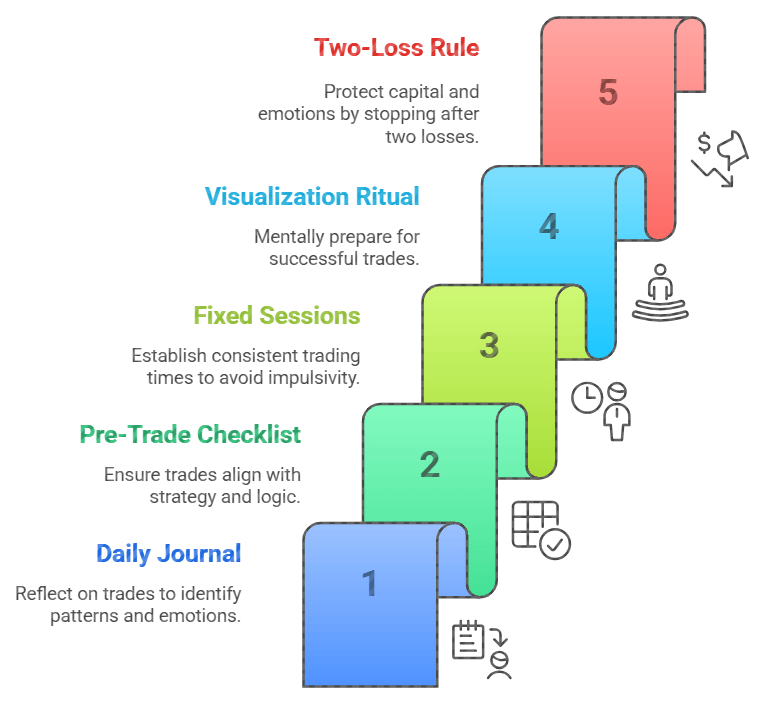
1. Daily Trading Journal
Every trade I take, I write:
- Why I took it
- How I felt before and after
- Did I follow my plan?
At first, it felt tedious. But within two weeks, I started seeing patterns. I realized I was trading best when I felt bored, and worst when I felt excited. The journal became my mirror.
2. Pre-Trade Checklist
Before entering any trade, I must answer these:
- Is this trade based on my tested strategy?
- Is the risk-reward ratio acceptable?
- Am I acting emotionally or logically?
If I can’t answer YES to all three, I don’t trade. Simple but powerful.
3. Fixed Trading Sessions
I set a fixed time to trade: 2 hours max. There were no random late-night sessions, and there was no revenge trading after dinner. This alone saved me from so many impulsive losses.
4. Visualization Ritual
Before I open Pocket Option, I spend 3 minutes closing my eyes and visualizing:
- Seeing a perfect setup
- Feeling calm when entering
- Closing trades exactly according to my plan
Sounds silly? Maybe. But it primes your brain for success.
Want to build emotional discipline without risking real money? Open a Pocket Option demo account and start training your mindset today, no deposit needed.
5. Two-Loss Rule
I stop for the day if I lose two trades in a row. No exceptions. It protects my capital and my emotions.
Here, you can find how to avoid getting banned with Pocket Option.
What Trading Psychology Research Reveals
Psychologists have studied decision-making under risk for decades, and many of their findings explain why traders struggle.
Loss Aversion
People naturally feel the pain of losing more strongly than the pleasure of winning. This often leads to revenge trading and refusing to accept losses.
Overconfidence Bias
After a few successful trades, many traders begin believing they can predict the market. This often results in larger position sizes and unnecessary risks.
Confirmation Bias
Once traders form an opinion, they tend to look only for evidence that supports it while ignoring warning signs.
Understanding these biases won’t eliminate them, but it helps you recognize them before they damage your account.
Real Trader Stories: Lessons That Hurt But Healed
I’m not the only one who struggled. Here are some real stories from traders I met in forums and coaching groups.
Jason’s Revenge Trading Nightmare
Jason once lost $300 in a single trade. Furious, he opened another bigger trade without thinking, and then another. By the end of the day, he was down $2,000.
He said, “I thought I was fighting the market. Really, I was fighting myself.”
Jason recovered only after adopting a strict “cooling-off” rule: after any loss, he must step away from the screen for at least 30 minutes.
Linda’s Overtrading Addiction
Linda loved action. She felt uncomfortable sitting out. She traded every small signal she saw.
Her win rate wasn’t bad, but fees and small losses ate her account slowly.
Her breakthrough? Limiting herself to a maximum of two trades a day. If she didn’t find good setups, she stayed out completely.
Arman’s Discipline Contract
Arman backtested a solid scalping method but kept breaking his rules live. Fear made him skip good entries.
One day, he printed a “Discipline Contract” and signed it:
“I will follow my system 100% for 30 days without adjustments. If I break the rules once, I restart.”
He said sticking to that contract gave him the first profitable month he ever had.
Every winning trader has a turning point, make this yours. Upgrade to a Pro or VIP Pocket Option account and unlock smarter tools for strategy discipline and trade control.
Ahmed’s Winning-Streak Trap
Ahmed started the week with five consecutive winning trades. Feeling unstoppable, he doubled his trade size on the sixth position.
The trade lost.
Frustrated, he increased his size again.
By the end of the day, he had given back every profit from the week.
His lesson was simple:
“Success became more dangerous than failure because it made me stop respecting risk.”
Many traders fear losses but underestimate how damaging overconfidence can be.
Advanced Insights: What Most People Don’t Tell You About Trading Mindset
Most articles say “control your emotions” or “be disciplined.” That’s useless advice without showing how.
Here’s what rarely gets discussed:
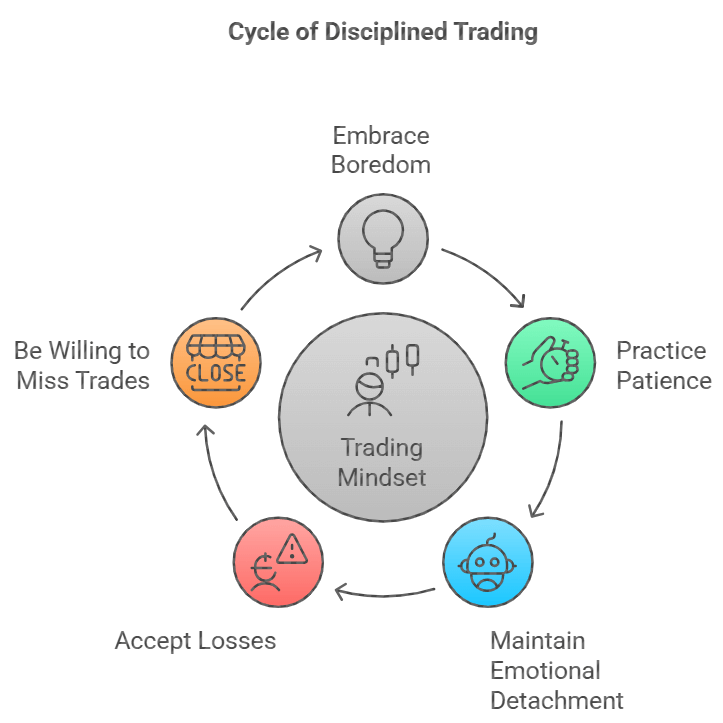
1. Boredom Is Your Friend
When you feel bored, it often means you are thinking properly. No impulsive clicks. No chasing. Real trading is waiting.
2. The Real Skill Is Sitting Out
Anyone can click BUY or SELL. Very few can sit on their hands for 2 hours because no setup appeared. That’s professional behavior.
3. Good Trading Feels Anti-Emotional
Your best trades won’t feel exciting. They’ll feel almost mechanical. When a trade feels thrilling, it’s probably wrong.
4. Your Brain Hates Losses
Studies show that losing $100 hurts twice as much as the pleasure of winning $100. Your brain is wired to act irrationally after a loss. Accept that. Prepare for it.
5. You Must Be Willing to Miss Trades
Missing a good trade hurts. But it’s better than taking a bad one. Pocket Option is open almost 24/7. Opportunities are endless. Missing one doesn’t matter.
6. Winning Streaks Can Be More Dangerous Than Losing Streaks
Most traders become cautious after losses. Ironically, they become reckless after a series of wins.
Success creates overconfidence, which often leads to larger positions and weaker discipline.
7. Confidence and Overconfidence Are Not the Same
Confidence comes from following a tested strategy.
Overconfidence comes from believing you can’t be wrong.
One protects your account.
The other destroys it.
My 10-Minute Pocket Option Mindset Routine
Before every trading session, I spend 10 minutes preparing mentally.
Step 1: Review My Trading Plan (2 Minutes)
I remind myself of the setups I’m allowed to trade.
Step 2: Review Recent Trades (2 Minutes)
I look for emotional mistakes and recurring patterns.
Step 3: Visualize Discipline (3 Minutes)
I imagine myself following my rules regardless of the outcome.
Step 4: Complete My Checklist (3 Minutes)
Only after completing my checklist do I open Pocket Option.
This routine helps me approach the market calmly rather than emotionally.
FAQs on Pocket Option Trading Mindset and Emotional Trading
What is the best mindset for trading on Pocket Option?
The best mindset is calm, detached, and disciplined. Focus on executing your plan perfectly, not on making money fast.
How do I stop emotional trading on Pocket Option?
Use pre-trade checklists, daily journals, and a two-loss daily limit. Also, practice visualization and set clear trading hours.
How can I control greed when trading?
Set take-profit targets before entering the trade and stick to them. Remind yourself that “small profits consistently” beats “one big win rarely.”
Is trading on Pocket Option stressful?
It can happen if you trade without a plan or discipline. With proper risk management and a strong mindset, trading becomes boring—and that’s a good thing.
How do professional traders manage losses?
They expect losses. They control their risk size so no trade damages their account or emotions.
Why do I always lose after a winning trade?
This usually happens after a win because of overconfidence or greed. Stick to your plan and treat every trade independently.
How many trades should I take per day on Pocket Option?
Quality over quantity. One to three high-quality trades a day are enough. More trades usually mean more emotional mistakes.
What is revenge trading, and how do I avoid it?
Revenge trading involves trying to regain losses immediately. To avoid this, establish a two-loss rule: stop trading for the day if you lose two trades.
Can a Trading Journal Improve Pocket Option Results?
Yes. Journaling helps identify emotional mistakes, recurring patterns, and weaknesses that may not be obvious during live trading.
How Do I Know If I Am Overtrading?
If you’re entering trades without clear setups, trading out of boredom, or exceeding your daily trade limit, you’re likely overtrading.
Can Trading Psychology Be Learned?
Absolutely. Like technical analysis, psychological discipline improves through repetition, self-awareness, and structured routines.
Why Do Traders Break Their Own Rules?
Most rule-breaking occurs because of fear, greed, impatience, or overconfidence. The goal is not to eliminate emotions but to prevent them from controlling decisions.
Final Thoughts: Trading Success Starts in Your Mind
Pocket Option trading is not about outsmarting the market. It’s about outsmarting your emotional brain.
I learned that discipline, patience, and self-control matter more than any indicator or strategy.
The truth is, anyone can master these psychological skills. But most won’t because it’s not glamorous. It feels boring and slow.
Your trading results will transform if you can embrace that boring, patient, disciplined mindset.
- Start today
- Track your emotions
- Use your checklist
- Accept boredom
- Control yourself before trying to control the market.
That’s the real Pocket Option trading mindset. And that’s how you stay profitable.
Ready to master your mindset and start trading like a pro? Open your Pocket Option account now, get up to 50% bonus and apply what you’ve learned today with full control.
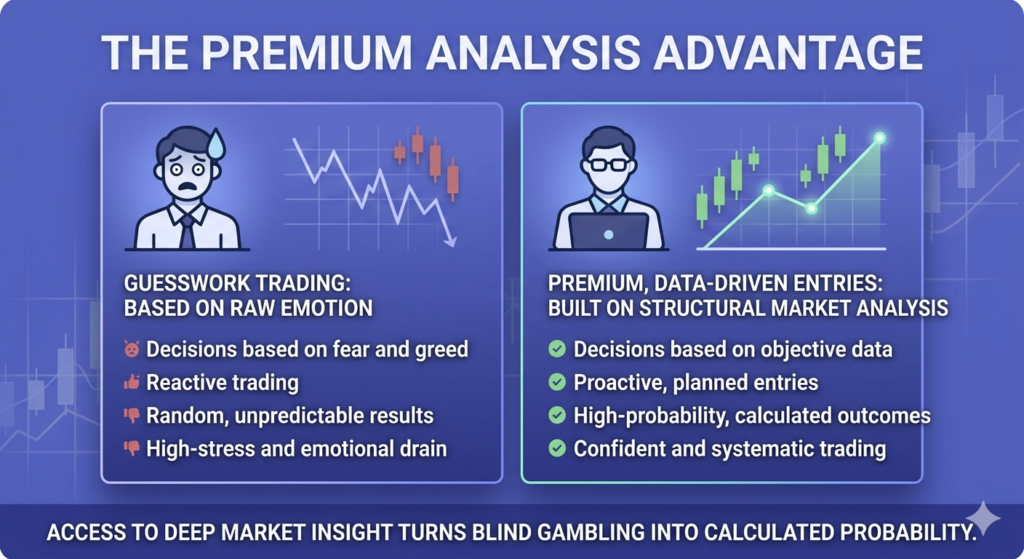
Moving Beyond Guesswork: The Ultimate Edge
If there is one thing my journey has taught me, it is that low-risk trading is not about avoiding losses entirely. It is about making sure that when you do lose, it is a tiny, controlled scratch rather than a fatal wound. The brokers we looked at today provide the physical toolkits to keep you safe, but the ultimate risk management tool is your own knowledge base.
To truly transform your trading from a stressful guessing game into an institutional process, you need deep, structural data analysis that goes far beyond basic retail charting. You need to understand market liquidity, institutional order flow, and underlying macroeconomic structures.
If you are ready to stop trading on pure hope and start building a real, professional edge grounded in institutional analysis, join our community of serious market students. Elevate your approach right now by subscribing to our exclusive framework on the Becoin Premium Membership Portal. Let’s build a sustainable, low-risk career together.