Trading Strategy So Good It Feels Like You’re Stealing Money! 80% Win Rate Scalping on Pocket Option
IQ Option vs Pocket Option: Which Is Better for Beginners?

When I first started trading, choosing a platform felt harder than analysing candlestick charts. Everyone in trading groups kept comparing IQ Option vs Pocket Option, each side confident their choice was superior. Some praised IQ Option for its polished interface, while others swore Pocket Option offered better payouts and faster crypto withdrawals.
I didn’t want to rely on hearsay. To find out for myself, I decided to open accounts with both brokers, deposit the same amount, and trade them side by side for one month. That way, I could see which one truly felt more beginner-friendly in practice. If you’re also considering your first step, you can create an IQ Option account here and follow along with my journey.
Before deciding between IQ Option and Pocket Option, it’s worth checking whether IQ Option is actually legit.
Setting Up My Trading Accounts
To keep the comparison fair, I deposited $300 into IQ Option using Skrill and $300 into Pocket Option using USDT. I chose these funding methods based on what was most convenient in my region.
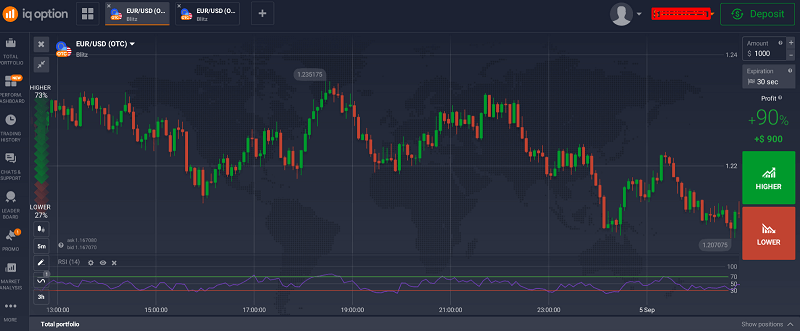
On IQ Option, the setup was straightforward. The dashboard loaded quickly, the charts felt clean, and it reminded me of when I first tested the IQ Option 1-minute strategy, everything was structured and beginner-friendly. I selected EUR/USD and gold as my main assets, set up candlestick charts on the five-minute timeframe, and added RSI along with a moving average.
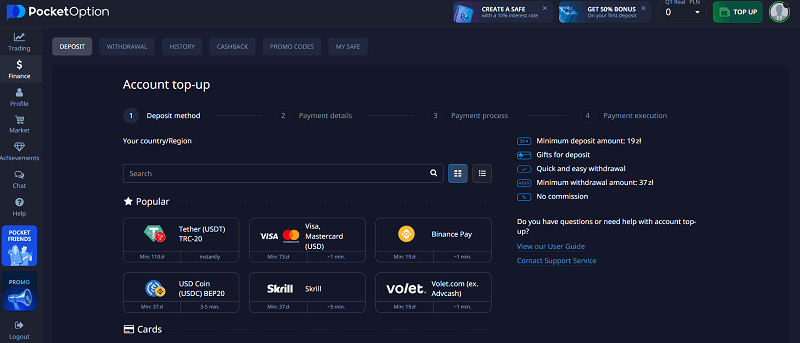
Pocket Option gave me a different first impression. The interface was packed with features, like social trading, tournaments, payout percentages flashing at the top. I chose to keep things simple by setting up the same five-minute candlestick charts on EUR/USD. For indicators, I used RSI and MACD. My expectation was that Pocket Option might offer higher payouts, but I wasn’t sure how smooth execution would be.
If you start with IQ Option, check these beginner-friendly 1-minute strategies.
First Week of Live Trading Results
I started cautiously, risking between $5 and $10 per trade. On IQ Option, my first 12 trades went fairly well. I had seven winners and five losers, finishing the week with a profit of $46. The clean layout really helped me focus on reading candlestick setups, something I had already studied in depth in my guide on IQ Option candlestick patterns.
Pocket Option, during the same week, saw me take 14 trades. Eight won and six lost, giving me a net gain of $38. The payouts were slightly higher on average compared to IQ Option, but I noticed that I was tempted to trade more often because the interface kept showing me attractive setups from social traders.
Shifts in Performance During the Second Week
The following week was a reminder that trading is never a straight line. On IQ Option, I placed 10 trades and ended up with only four winners. My account dipped by -$32, wiping out part of the first week’s profit. I realised I had over-relied on RSI signals without confirming them against broader candlestick structures.
Pocket Option performed a bit better that week. Out of 11 trades, six were winners, and I closed the week with a modest gain of +$15. Still, I noticed execution lagged slightly during a big news release, with one order filling at a less favourable price.
End of Month Results: Side-by-Side Comparison
By the end of four weeks, I had enough data to compare both platforms. Here’s how they looked in my trading journal:
| Platform | Trades Taken | Win Rate | Net Result | Withdrawal Speed |
| IQ Option | 42 | 52% | +$58 | Skrill, under 24 hrs |
| Pocket Option | 48 | 54% | +$72 | USDT, around 12 hrs |
Both were profitable overall, though the journey to those results felt quite different.
What I Liked About IQ Option
The biggest advantage of IQ Option was its clean and uncluttered interface. As a beginner, I didn’t feel overwhelmed. Withdrawals through Skrill were smooth, I requested two during the month, both processed within a day.
IQ Option’s platform has more built-in tools; here’s how real traders use them.
The platform also made it easier to stay disciplined. There were no flashy pop-ups or leaderboards distracting me, just my charts and indicators. It reminded me of when I experimented with multi-chart layouts in IQ Option, where structure and organisation improved my performance.
The downside, however, was that payouts on certain assets dropped during off-peak hours. A trade that would pay 85% in the morning sometimes dropped to 70% at night, which limited my profit potential if I wanted to trade outside peak sessions.
For those planning to deposit more than a few hundred dollars, you’ll want to understand how IQ Option handles large accounts.
What I Liked About Pocket Option
Pocket Option gave me more flexibility. The range of assets was wider, payouts were often above 90%, and crypto withdrawals were lightning fast. My USDT hit my wallet in half a day, which was impressive compared to the traditional e-wallet route.
The social trading feature was also interesting. Watching how others traded gave me fresh ideas, although it also encouraged me to copy setups I didn’t fully understand, which led to mistakes.
The main challenge with Pocket Option was the busy interface. It was easy to feel pulled in too many directions, especially with tournaments and high-payout alerts popping up. For a beginner, this could easily lead to overtrading.
Balanced Insights: IQ Option vs Pocket Option
After a month of live testing, I didn’t come away with a single “winner.” Instead, both platforms revealed strengths and weaknesses.
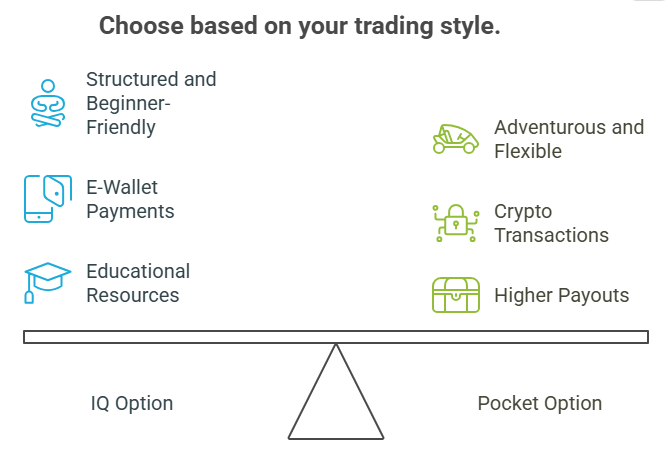
- IQ Option felt more structured and beginner-friendly, especially for traders who prefer e-wallet payments and educational resources.
- Pocket Option felt more adventurous, better suited to those who like variety, higher payouts, and crypto transactions.
In short, it depends on what you value more, discipline and simplicity, or variety and flexibility.
Account verification can be tricky; here’s how to get verified on IQ Option safely.
Practical Tips If You’re Testing Both
From my experience, here are a few things I’d suggest:
- Start with small deposits on each platform and see which one feels more natural.
- Withdraw small amounts early to test payout reliability.
- Stick to one or two assets while comparing results, so you’re evaluating the platform and not your asset choices.
- Don’t get carried away by payout percentages alone, execution speed and discipline matter just as much.
If you want to try it yourself, you can open an IQ Option account here and put these insights into practice with your own trades.
Bottom line: What I Learned From This Experiment
Trading both brokers side by side was eye-opening. IQ Option kept me grounded with its simplicity, while Pocket Option kept me curious with its broader features. Both made me profit in the end, but the way I got there taught me more about my own trading psychology than anything else.
That’s why I’ve decided to keep both accounts active. Some days I’ll log into IQ Option for a focused candlestick session; other times I’ll use Pocket Option when I want exposure to more assets and higher payouts.
If you’re just starting out, don’t get stuck on the debate of IQ Option vs Pocket Option. Try both, test withdrawals, and see how they align with your style. For me, the experiment wasn’t about finding the perfect broker, it was about finding the right fit for my trading journey.
And if you’re ready to start your own test, create your IQ Option account today and begin exploring in real trades, just like I did.
IQ Option in Pakistan, India, and Nigeria: My Real Experience With Legal Status, Payments, and Support

When I first heard about IQ Option, I wasn’t sure if it even worked in Pakistan. Forums were full of mixed opinions: some said the platform was banned, others claimed they had been trading successfully for years. I decided to find out for myself.
Opening an account was surprisingly straightforward. I registered with my email, verified my identity, and set up a demo balance. But the real questions came later, would I be able to deposit funds safely, withdraw profits, and get reliable support from my region?
Before we even talk about legal status in each country, here’s my full hands-on IQ Option legitimacy test.
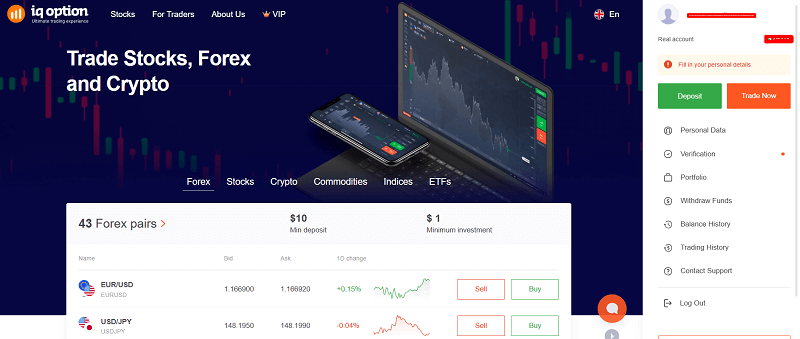
That curiosity led me into a month-long experiment, testing IQ Option from Pakistan while also comparing notes with friends trading from India and Nigeria. If you haven’t tried the platform yet, you can sign up with IQ Option here and see how it works in your own country.
Testing Process: Setting Up IQ Option in Pakistan, India, and Nigeria
The first thing I checked was the legal status. IQ Option doesn’t have local regulation in South Asia or Africa, it’s registered in Cyprus and operates under international licenses. In practice, though, the platform is accessible in Pakistan, India, and Nigeria. Banks and regulators don’t directly block it, but traders have to be careful about payment methods.
I tested three parts of the setup:
1. Deposits
- Used Skrill and Neteller for funding. Both worked instantly from Pakistan.
- A friend in India preferred UPI via Neteller since card deposits sometimes failed.
- A colleague in Nigeria used bank cards directly but switched to Perfect Money for smoother withdrawals.
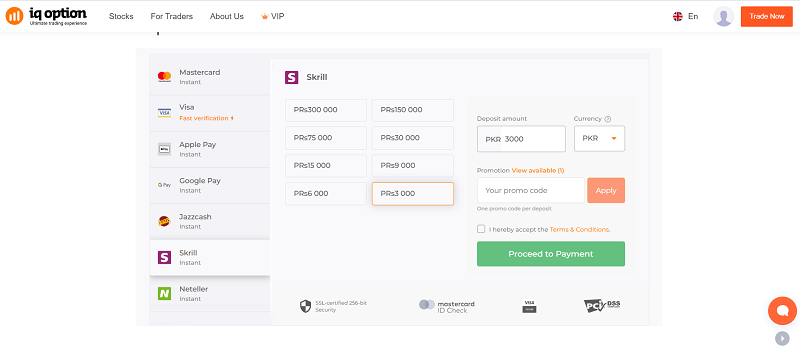
2. Withdrawals
- My first withdrawal of $50 via Skrill hit my account in under 24 hours.
- In India, my friend waited 2 days for a $100 Neteller withdrawal.
- In Nigeria, my colleague’s $75 withdrawal to Perfect Money cleared within 36 hours.
If your deposits or withdrawals ever hang, check these common platform glitches and how to report them.
3. Support
- I tested live chat during Asian market hours. Response time was 2–3 minutes.
- Support didn’t always have local knowledge, but they solved technical issues like card verification quickly.
Here’s a snapshot of what worked for us:
| Country | Best Deposit Method | Withdrawal Speed | Support Notes |
| Pakistan | Skrill / Neteller | <24 hrs | Smooth, no card issues |
| India | Neteller via UPI | 1–2 days | Some card rejections |
| Nigeria | Perfect Money / Cards | 24–36 hrs | Localised payment tips lacking |
At this stage, I felt reassured: the platform was functional, but I still needed to test it with actual trades.
Real Trade Examples Using IQ Option From My Region
With $300 funded through Skrill, I started trading EUR/USD and gold. My strategy was simple: use the IQ Option RSI Divergence I had written about before.
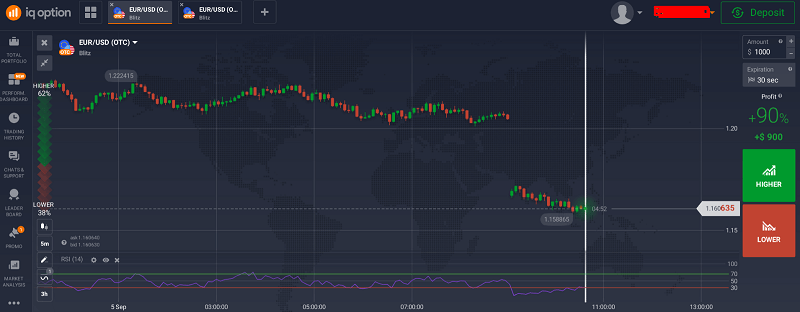
- On day one, I placed 5 trades. Three won, two lost. Profit: +$24.
- By the end of week one, I had taken 18 trades. Win rate: 55%, profit +$62.
- My first withdrawal of $50 cleared in under 24 hours, this was the moment I knew IQ Option worked in Pakistan.
Don’t fall for high-risk systems, learn why I avoid the Martingale trap.
My friend in India, using the same candlestick approach, had mixed results. Out of 20 trades, his win rate was 50%, ending roughly break-even. He also complained about slippage during high-volatility moments, especially around news events.
Meanwhile, my Nigerian colleague tested the IQ Option 1-minute strategy I had tried earlier. In his case, 30 trades gave a win rate of 58%, though he noted Perfect Money withdrawals were smoother than card ones.
In numbers:
| Trader | Location | Trades | Win Rate | Weekly Result | Withdrawal Proof |
| Me | Pakistan | 18 | 55% | +$62 | Skrill, <24 hrs |
| Friend A | India | 20 | 50% | Break-even | Neteller, 2 days |
| Friend B | Nigeria | 30 | 58% | +$85 | Perfect Money, 36 hrs |
Analysing What Worked and What Didn’t
Looking back, I realised the biggest advantage was the flexibility of payment methods. Skrill and Neteller acted like a bridge, making deposits and withdrawals seamless even in regions without direct broker integration.
What didn’t work well was the lack of localised support. For example, when I asked whether Pakistani bank transfers could be used directly, support couldn’t provide clear answers. Similarly, my friend in India had to learn through trial and error which cards worked.
Trading-wise, the platform itself was stable. Execution speed in Pakistan and Nigeria was fine, but Indian trades sometimes had minor delays during peak hours. This reminded me of the lessons I had when testing multi-chart layouts in IQ Option, smooth setups reduce stress, while lag or confusion eats into performance.
For new traders, it’s easy to treat the app like a game, this mindset breakdown can help you stay disciplined.
Practical Tips for Trading IQ Option in Pakistan, India, and Nigeria
If you’re based in these regions, here are my takeaways to save you time:
For Deposits & Withdrawals
- Use Skrill or Neteller in Pakistan.
- In India, link Neteller with UPI for reliability.
- Nigerians should prefer Perfect Money over cards for consistency.
For Verification
- Upload clear ID scans and proof of address early. Don’t wait until withdrawal.
- Local documents like utility bills work fine as long as they’re in English.
For Trading
- Stick to familiar strategies (candlestick setups, breakouts).
- Avoid overtrading during news events to reduce slippage.
- Start small, test withdrawals before scaling deposits.
For Support
- Use live chat for urgent issues.
- Save screenshots of your payment history in case of disputes.
- Don’t expect region-specific advice, most reps work with general guidelines.
If you haven’t yet, you can create your IQ Option account here and try these steps on a demo before going live.
If you ever face restrictions, here’s how I recovered my blocked account.
Final Thoughts: IQ Option in My Broader Journey
Trading IQ Option from Pakistan showed me that accessibility doesn’t equal simplicity. Yes, the platform is legal to use, deposits and withdrawals work, and support is available—but you need to know the right methods for your region.
The key takeaway is this: success isn’t just about strategy. It’s also about knowing how to move money in and out smoothly. Once I figured that out, my focus returned to the actual trades, not the logistics.
For me, IQ Option has become a consistent part of my trading toolkit. My next step is to test higher withdrawals ($500+) to see if processing times remain as fast.
If you want to experience IQ Option in your country, sign up here and run your own test. Just like me, you’ll discover that with the right setup, the platform can fit smoothly into your trading journey.
IQ Option Keyboard Shortcuts & Interface Hacks That Changed My Trading
How I Discovered IQ Option Shortcuts by Accident
The first time I realised IQ Option had keyboard shortcuts was during a frantic EUR/USD trade. I was fumbling with the mouse, trying to close a position before it reversed, when I accidentally hit the space bar and suddenly, the trade confirmation window popped up faster than I’d ever managed with clicks. That tiny accident made me pause.
I had been using IQ Option for months, but I never thought about digging deeper into how the interface itself could affect my trading. Everyone talks about candlestick setups, risk management, or even the IQ Option 1-minute strategy, but almost no one talks about the speed factor, how efficiently you move inside the platform can change results.
That night, I decided to dedicate a week purely to testing IQ Option keyboard shortcuts and interface hacks. If you haven’t opened an account yet, you can sign up with IQ Option here and follow my exact setup as you read this.
Testing Process: Setting Up IQ Option Keyboard Shortcuts and Interface Hacks
I started simple. My plan was to map out the shortcuts available, test them during live trading, and then layer in interface customisations like chart layouts and asset tabs.
The core shortcuts I experimented with were:
| Shortcut | Function | Use Case in My Trading |
| Spacebar | Open/close trade window | Quicker execution when price hits my level |
| Arrow Keys | Switch between assets | Avoided wasting clicks moving across tabs |
| Ctrl + W | Close current chart | Faster cleanup after setups |
| + / – Keys | Zoom chart in/out | Adjust candle view without breaking focus |
| Ctrl + 2 / 4 | Switch chart type (candlestick/line) | Helpful for quick confirmations |
I also reorganised my interface:
- Grouped assets into tabs (EUR/USD, GBP/USD, Gold, BTC)
- Used a dark theme for better visibility
- Set chart defaults to candlestick with 1-minute intervals
The expectation was simple; save seconds, reduce distractions, and maybe capture trades I’d otherwise miss.
Real Trade Examples Using IQ Option Shortcuts and Hacks
The first test was on EUR/USD, trading a breakout. Instead of dragging the mouse to hit “Buy,” I used the spacebar. The trade executed instantly. That single action probably saved me half a second, but when you’re trading fast setups, half a second matters. The breakout gave me 1.2R profit before retracing.
Switching between assets with arrow keys was another eye-opener. I caught a clean candlestick reversal on gold within seconds of closing a EUR/USD trade. Normally, I would’ve been late. This time, the shortcut gave me the speed to enter at the right candle.
Not every test was smooth, though. Once, I zoomed in too far using the “+” key, misjudged the candle size, and entered too early on GBP/USD. That trade hit stop loss in 6 minutes. Mistakes like that reminded me that tools don’t replace discipline, they just speed up your actions.
Here’s a breakdown of my week’s test results:
| Asset | Trades Taken | Wins | Losses | Win % | Notes |
| EUR/USD | 7 | 4 | 3 | 57% | Faster entries helped, but execution discipline still key |
| Gold | 5 | 3 | 2 | 60% | Switching tabs quickly made a real difference |
| GBP/USD | 4 | 2 | 2 | 50% | Misuse of zoom shortcut cost one trade |
| BTC/USD | 3 | 2 | 1 | 66% | Alerts + quick execution worked well |
Overall win rate: 58%. That’s not extraordinary, but it matched the results I had using more complex setups like IQ Option RSI divergence. The difference was that the shortcuts reduced hesitation and improved reaction time.
Analysing the Results of IQ Option Strategy with Shortcuts
The biggest improvement came from execution speed. I wasn’t relying on new indicators or an unfamiliar IQ Option strategy; I was simply cutting down the time between seeing a setup and placing a trade. That turned out to be worth at least 1–2 extra winning trades that week.
What went wrong was over-reliance. I got overconfident with the zoom shortcut, misreading context. That showed me that while shortcuts enhance speed, they don’t replace proper analysis.
Another lesson: customising the interface mattered more than I expected. Having assets grouped and charts pre-set to my style reduced the “mental clutter.” It reminded me of the clarity I gained when testing multi-chart layouts in IQ Option, structure on the platform translates into structure in my mind.
Practical Takeaways: How to Use IQ Option Shortcuts in Your Own Trading
Here are the steps I’d recommend if you want to try IQ Option shortcuts and hacks yourself:
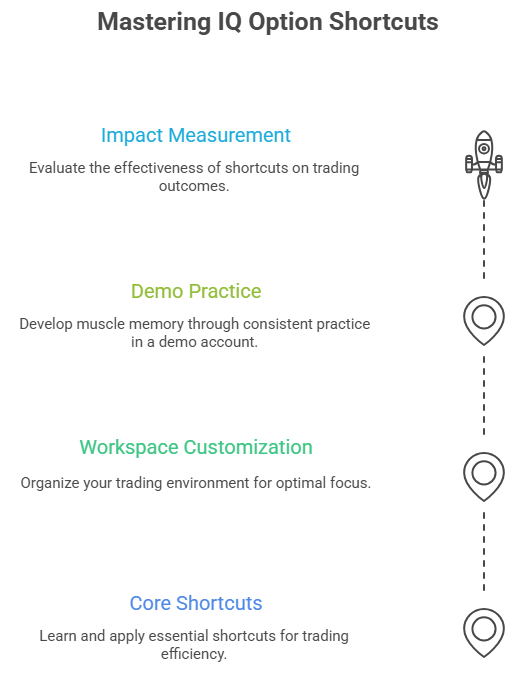
Start with 3–4 core shortcuts
- Spacebar for order windows
- Arrow keys to switch assets
- Ctrl + W to close charts
Customise your workspace
- Group favourite assets into tabs
- Stick to one chart type (candlesticks work best)
- Use dark theme for less eye strain
Practice in demo first
- Muscle memory takes time, practice shortcuts on demo until natural
- Avoid overusing zoom; focus on clear chart reading
Measure impact
- Track whether speed improvements lead to better entries
- Compare with your normal execution style
If you want to try this out, you can create an IQ Option account here and begin experimenting risk-free with the demo before using real funds.
Final Thoughts: How Shortcuts Fit Into My Broader IQ Option Journey
What I learned from this experiment is that IQ Option isn’t just about strategies, patterns, or signals. It’s also about how you interact with the platform. Keyboard shortcuts and interface hacks may seem small, but over dozens of trades, they add up.
They won’t magically turn a losing strategy into a winning one. But they do reduce friction, cut hesitation, and give me cleaner focus. For me, that’s worth just as much as learning a new technical setup.
Next, I plan to combine these shortcuts with risk management tweaks, like scaling in and partial exits to see if I can build an even smoother workflow.
If you’re ready to explore IQ Option beyond the surface level, sign up here and test these shortcuts for yourself. Just like me, you might find that the “hidden edges” are not always in the charts, but in the way you use the platform.
Underrated IQ Option Tools No One Talks About
How I Discovered Hidden IQ Option Tools in My Trading Journey?
I still remember the night I stumbled on one of IQ Option’s lesser-known features. I wasn’t looking for a new setup, I was simply frustrated. My main strategy had just delivered three losing trades in a row, and instead of logging off, I started exploring the platform menus out of curiosity. That’s when I noticed tools like “Market Analysis” tabs, “Pending Orders” with unusual conditions, and even asset volatility filters. None of these were part of the typical discussions around the platform, yet they sat there quietly, waiting to be tested.
At that moment, I thought: if I’ve been ignoring these, most traders probably have too. So I decided to document my experience, testing each underrated IQ Option tool in live conditions. Before diving in, if you haven’t opened an account yet, you can sign up with IQ Option here and explore the tools as you follow along with my story.
Step-by-Step Setup: Testing IQ Option Tools and Features in Real Conditions
To make the test structured, I listed the features I wanted to try. The three that stood out were:
- Pending Orders with Expiration – Letting me pre-set trades with conditions, not just price levels.
- Market Analysis Calendar – An integrated news feed and sentiment indicator I had never used seriously.
- Volatility Alerts – Price notifications tied to specific thresholds.
I set aside a $500 test balance just for these experiments. My idea was to trade small ($5–$10 per position), so the focus stayed on learning, not profits.
Here’s how I structured my tests:
| IQ Option Tool | Setup | Expectation |
| Pending Orders | Pre-set EUR/USD buy at 1.0950 with expiry 2 hours | Trade triggers only if market respects level |
| Market Analysis | Used economic calendar to trade USD events | Catch short bursts of volatility |
| Volatility Alerts | Alerts for BTC and gold when 1%+ moves occur | React faster, avoid staring at charts |
I went in with low expectations, assuming most of these would be gimmicks.
Real Trade Examples Using IQ Option Tools and Strategies
The first surprise came with pending orders. I placed a buy order on EUR/USD, 5 pips above a resistance level, with a two-hour expiry. Price tapped that level 90 minutes later, triggering the trade. Within 12 minutes, I hit my 1.5x risk target. Out of five similar setups across different pairs, three worked perfectly, one scratched at break-even, and one hit stop loss. Win rate: 60%.
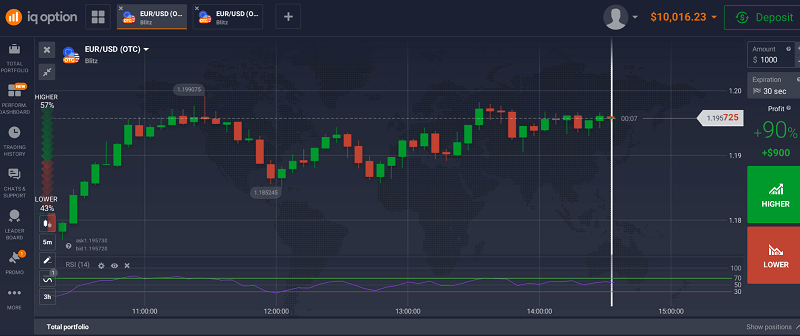
The market analysis calendar was less smooth. I decided to trade the Non-Farm Payrolls release. Using IQ Option’s news tab, I positioned short on USD/JPY minutes before the release. The initial spike went my way, but spreads widened, and my entry slipped. I still closed green, but out of four event-driven trades, two were messy losses. Win rate: 50%.
The volatility alerts worked better than I expected. One afternoon, I was away from the desk when I got an alert that gold had surged 1.2%. I rushed in, spotted a pullback, and shorted. That trade alone netted 2R. Over two weeks, I took eight trades triggered by alerts, with five winners and three losers. Freelancers rely on hidden tools that most traders miss.
In numbers:
| IQ Option Tool | Trades | Wins | Losses | Win % | Notes |
| Pending Orders | 5 | 3 | 2 | 60% | Clear rules, less stress |
| Market Analysis | 4 | 2 | 2 | 50% | Slippage a big issue |
| Volatility Alerts | 8 | 5 | 3 | 62.5% | Great for intraday setups |
Analysing IQ Option Trade Results: Wins, Losses, and Lessons Learned
Looking back, pending orders were the biggest revelation. They gave me structure, forcing me to define entries before emotion kicked in. I compared this with the IQ Option 1-minute strategy I tested earlier, and realised pending orders added discipline that short-term setups lacked.
The market analysis tool, though informative, showed me the risk of trading purely off economic events. Slippage, spreads, and unpredictable reactions cut into profitability. It reminded me of lessons I noted when studying IQ Option technical indicators, price action often gives cleaner signals than news-driven chaos.
Volatility alerts, however, gave me flexibility. Instead of staring at charts for hours, I let the platform ping me when action began. It made me more selective, much like when I used multi-chart layouts in IQ Option to avoid overtrading by spreading my focus.
Practical IQ Option Trading Tips From My Testing Experience
If you want to test these underrated IQ Option tools yourself, here’s what I recommend:
Pending Orders
- Define entry levels well in advance.
- Always set expiry to avoid accidental overnight triggers.
- Works best with support/resistance zones.
Market Analysis Calendar
- Avoid trading right at the news release; wait for 2–5 minutes of reaction.
- Use it as confirmation, not your only signal.
- Expect slippage, size positions smaller.
Volatility Alerts
- Pick 1–2 assets you know well.
- Set % thresholds, not random prices.
- Use alerts to catch reversals, not chase spikes.
These small shifts can make a real difference. If you haven’t yet, create an IQ Option account here and try one of these setups with a demo balance before risking real funds.
Final Thoughts: How These IQ Option Tools Fit Into My Strategy Going Forward
What I learned is that the most valuable IQ Option tools are often the ones no one talks about. They don’t get flashy mentions in YouTube tutorials, yet they can quietly reshape how you trade. Pending orders taught me discipline, volatility alerts saved me time, and even the market calendar, though unreliable, gave me context I hadn’t been using. You can also boost your efficiency with shortcut combinations.
I don’t see these tools as a magic IQ Option strategy, but as small edges that, combined with experience, tilt the game slightly in my favour. Next on my radar is testing custom risk management rules within the platform, documenting whether scaling in and partial exits are worth the effort.
If you’re curious to see what IQ Option can really offer beyond the basics, sign up here and start experimenting. Just like me, you might find your best trades come from the tools hidden in plain sight.
Candlestick Patterns Every Binary Options Trader Should Know: My Trading Journal from 2025

I still remember one quiet evening in late 2024 when I entered what looked like a perfect hammer setup on EUR/USD. I placed a five-minute Call, convinced I had spotted a textbook reversal. Two minutes later, the price plunged and the trade expired out of the money. That single moment changed how I viewed candlestick patterns for binary options.
It wasn’t the pattern that failed me, it was my lack of context. From that loss, I began to document every trade and analyze why certain patterns work better than others in short expiry markets. By mid-2025, I had built a small collection of setups that consistently delivered clarity and control.
If you want to follow along with real setups as I describe them, you can open your Pocket Option account today and get a 50% deposit bonus. It’s where I test every pattern you’ll read about here.
Why Most Candlestick Guides Don’t Help Binary Traders
When I first searched online for reliable candlestick strategies, I found countless lists and diagrams, morning stars, haramis, three crows, and more. They looked useful, but they ignored the reality of short expiries.
In binary trading, timing is ruthless. Candles form and vanish in minutes. Patterns that work on daily charts often collapse when reduced to five-minute frames. That’s the gap I’m addressing here. Every pattern you’ll see is one I’ve actually traded live, tested repeatedly, and filtered by results rather than reputation.
How I Analyze Candlestick Patterns in Binary Options
Candlestick patterns are only reliable when they fit into a larger story of price movement. Over the years, I developed a few habits that help me filter good setups from noise.
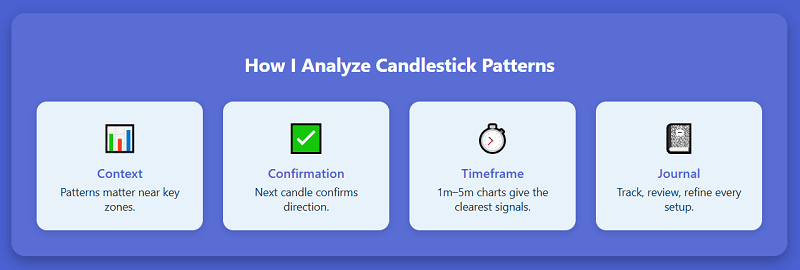
Context Is Everything
A hammer near a strong support line carries weight. A hammer floating in the middle of a random range means nothing.
Wait for Confirmation
I always require the next candle to confirm direction either by closing beyond a key level or aligning with volume momentum.
Timeframe Precision
My focus is on one-minute and five-minute charts. These are where I’ve found candlestick signals most responsive for binaries.
Keep a Trading Journal
After every trade, I log the pattern, entry time, expiry result, and notes about context. Patterns that repeatedly fail get cut from my list.
5 Candlestick Patterns That Still Work for Me in 2025
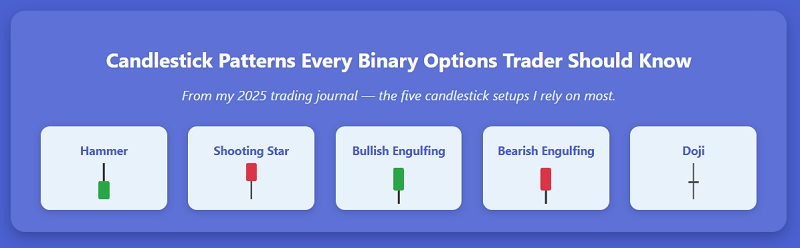
After hundreds of trades, I narrowed my list to five candlestick patterns that remain consistent in binary conditions. Each one tells a story and comes with a lesson I learned the hard way.
Hammer and Inverted Hammer
A hammer suggests that sellers pushed prices down, but buyers managed to recover by the close. I treat this as a potential reversal signal. In April 2025, I spotted a hammer on USD/JPY sitting directly on a strong support line. I waited for the next candle to confirm upward momentum and entered a Call. The trade expired profitably.
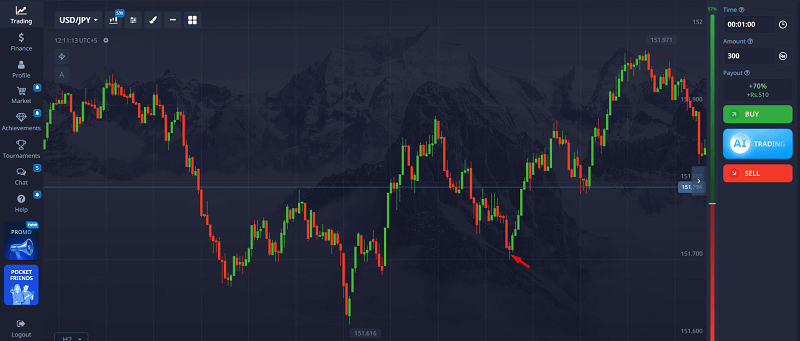
I’ve also lost trades when I entered too early, especially when the hammer formed mid-range with no support nearby. My rule now is simple: only act when the lower wick is at least twice the body and context supports a bounce.
Engulfing Pattern
The engulfing candle remains one of the strongest candlestick patterns for binary options. It shows a complete takeover of momentum from one side of the market to the other.
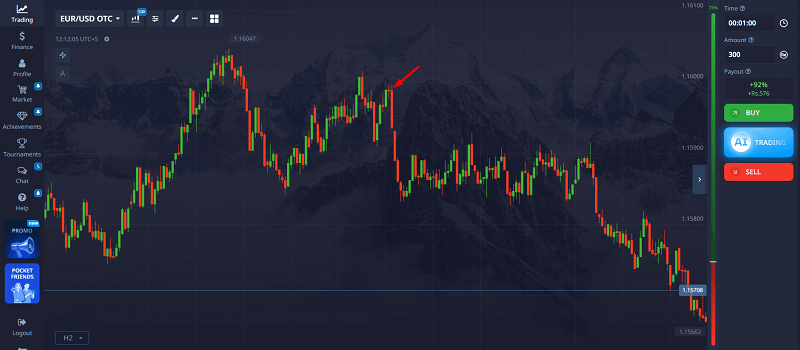
One afternoon on EUR/USD, I saw a bearish engulfing pattern right after a small pullback. The next candle confirmed weakness, and I entered a Put. It worked. But on another day, a weak engulfing near resistance failed within seconds. I’ve since learned to only trust full engulfings that align with the broader trend.
Doji and Spinning Top
Doji candles fascinated me early on, but they caused as many losses as wins. A doji represents indecision, which means I treat it as a warning, not an entry signal.
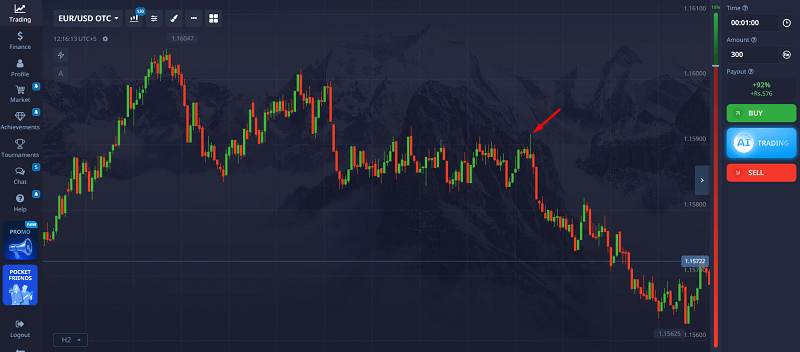
I now use it as a potential turning point marker. For example, a doji near strong resistance after a long uptrend often hints at reversal potential. Once a confirming bearish candle forms, I’ll enter a Put. But I completely ignore dojis that appear mid-trend or in flat markets.
Three Inside Up and Three Inside Down
This pattern combines a smaller inside candle followed by a strong confirmation candle. I like it because it forces patience.
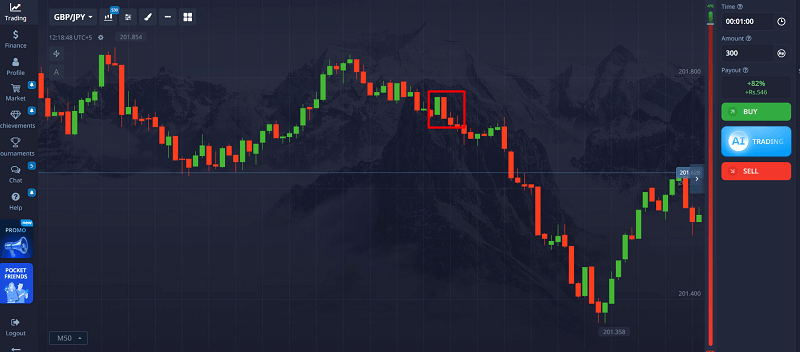
During a GBP/JPY session, I spotted a bullish three inside up pattern after a steep decline. When the third candle closed above the first, I took a Call and won the trade. The multi-candle structure gives this setup built-in confirmation, making it more dependable in fast-moving binary conditions.
Tweezer Top and Bottom
Tweezer setups appear as twin candles with matching highs or lows. They’re subtle but powerful around clear price levels. In March 2025, I noticed a tweezer bottom at a tested support zone on gold. After the second candle confirmed strength, I took a Call and the trade succeeded.
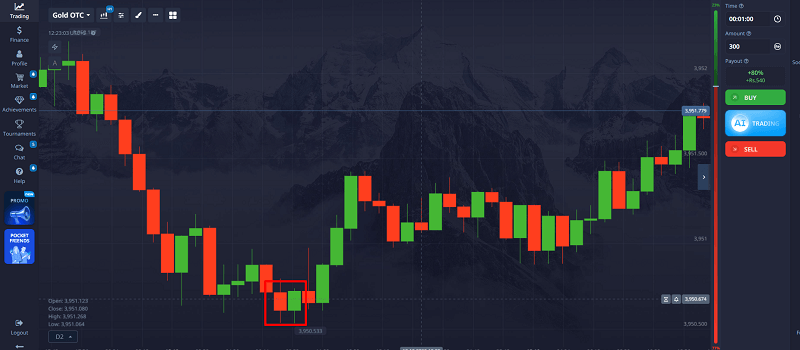
However, I’ve also been trapped by false tweezers during volatile sessions. Now I only trust them when both candle wicks align neatly and volume suggests genuine rejection.
Patterns I’ve Stopped Using
Over time, I eliminated several classic candlestick formations from my binary toolkit.
Morning and Evening Stars
These patterns look great on daily charts but rarely form clearly on shorter timeframes. By the time they confirm, the move is already over.
Harami Without Confirmation
A standalone harami is too weak to trade. Unless it appears as part of a Three Inside pattern, I ignore it.
Rare or Complex Setups
Patterns like the Abandoned Baby or Kicker appear so infrequently that they’re not worth monitoring in binaries.
How I Execute Pattern-Based Binary Trades
Whenever I spot a potential pattern, I move through a clear decision path. First, I check whether it aligns with support or resistance. Then I wait for confirmation and confirm that market momentum matches the signal. Only then do I take a position with a defined stake and expiry.
After each trade, I review the outcome and note what worked or failed. This habit has improved my consistency more than any new strategy ever could.
If you want to build your own structured testing process, create your Pocket Option account today and use the 50% bonus to practice these same setups in real market conditions.
A Trade From My Journal: June 12, 2025
Asset: EUR/USD
Timeframe: 5-minute expiry
Pattern: Bullish Engulfing
Context: Short-term uptrend, pattern at local support
Entry: After confirming candle close
Outcome: Trade expired in profit
That trade reminded me of the power of patience. Just an hour earlier, I skipped a weak hammer setup that looked tempting. Price collapsed moments later. Discipline, not prediction, saved that session.
Lessons From My Wins and Losses
Trading candlestick patterns taught me lessons that go far beyond charts.
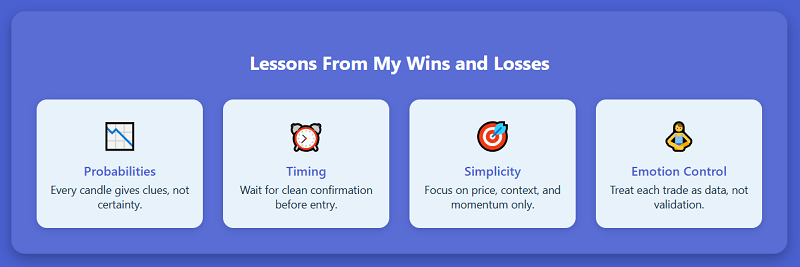
Patterns Are Probabilities, Not Promises
Every candle offers information, not certainty. Accepting this mindset helped me trade more calmly.
Timing Is Crucial
Even a perfect pattern can fail if entered too early. Waiting for proper confirmation improved my win rate dramatically.
Less Is More
I used to clutter my charts with indicators and filters. Simplicity works better. Now I focus only on price, context, and momentum.
Avoid Emotional Trading
Losing trades used to make me chase revenge setups. I now treat every trade as a data point, not a test of confidence.
Practicing and Refining Your Own Method
Here’s what worked best for me when developing consistency with candlestick patterns for binary options.
- Backtest visually and take screenshots of patterns that succeed or fail
- Start in demo mode until you have data-backed confidence
- Limit yourself to three to five patterns at a time
- Keep a trading journal to measure long-term performance
Once you’re ready to move from demo to live, open your Pocket Option account and claim your 50% welcome bonus. It gives you a comfortable margin to test small, controlled trades under live pressure.
Final Thoughts
Candlestick trading in binary options isn’t about memorizing shapes, it’s about understanding the story behind each one. These five core setups have earned their place in my playbook through years of testing, mistakes, and adjustments.
If you treat them as clues rather than predictions, combine them with structure, and document everything, you’ll eventually build a personal system that fits your style.
When you’re ready to see these patterns in action, start on Pocket Option and claim your 50% deposit bonus to explore real setups under live market pressure. That’s exactly how my trading confidence grew—one candle at a time.
Top 5 Binary Options Indicators That Still Work in 2025: My Real Trading Notes

I still remember the first time I lost on a binary options trade. It was back in 2023. I had just opened a demo account, clicked “Call,” watched the timer tick down, and the price moved the wrong way. The trade expired out of the money. That sting stayed with me longer than I expected. But it was also my first real lesson: not every indicator survives real market pressure.
Over the next two years I tested, refined, and abandoned dozens of tools. Some worked beautifully in backtests but failed miserably in live conditions. By 2025, I found myself trusting only a handful. These five indicators still hold their ground for me, not because they’re perfect, but because they help me make more structured, less emotional decisions.
If you want to trade alongside similar setups in real time, you can open a live account here and apply these methods on real charts.
How I Filter Indicators in Live Trading
Before I share the five, it’s important to explain how I separated theory from reality. I wasn’t interested in what worked in hindsight. I wanted proof that it worked under stress, with real price swings and slippage.
In my testing, I focused on five criteria:
- Signal clarity and low lag. For short expiry trades like 1–5 minutes, delayed signals kill accuracy.
- Non-overlapping purpose. Indicators should complement each other, not repeat the same story.
- Ease of interpretation. In fast markets, I need instant recognition, not mental math.
- Consistency across assets. If a tool works only on one pair or index, I drop it.
- Statistical edge. After at least 100 trades, the net outcome must lean positive.
I tracked every trade manually in a spreadsheet. Many promising setups collapsed after 50 or 100 trades. Only a few indicators survived that kind of scrutiny. Those are the ones below.
The 5 Binary Options Indicators That Still Work in 2025
| # | Indicator | What It Does | How I Use It | Common Pitfall |
| 1 | Adaptive Moving Average (AMA or KAMA) | Defines market trend and filters noise | Determines trade direction; I trade only with the slope | Whipsaws in tight ranges |
| 2 | MACD (tuned for short expiry) | Captures momentum shifts | Confirms entries along trend direction | Lags in sudden reversals |
| 3 | RSI with dynamic bounds | Detects exhaustion or reversal zones | Identifies fading momentum | Can mislead in strong trends |
| 4 | Bollinger Bands | Measures volatility and mean reversion | Reveals squeezes and rejections | False breakouts during volatility |
| 5 | Volume-weighted or order flow filter | Confirms strength of move | Validates signals with volume alignment | Inaccurate on weak tick data |
Adaptive Moving Average – My Early Truth Filter
When I first used standard moving averages, I constantly got trapped by fake signals. In mid-2023, during an EUR/USD session, I entered a Call because the 20 EMA turned up. Seconds later, the price reversed and wiped me out. That frustration pushed me to test Kaufman’s Adaptive Moving Average (KAMA), which adjusts its sensitivity based on volatility. Suddenly, I started filtering out a lot of false moves.
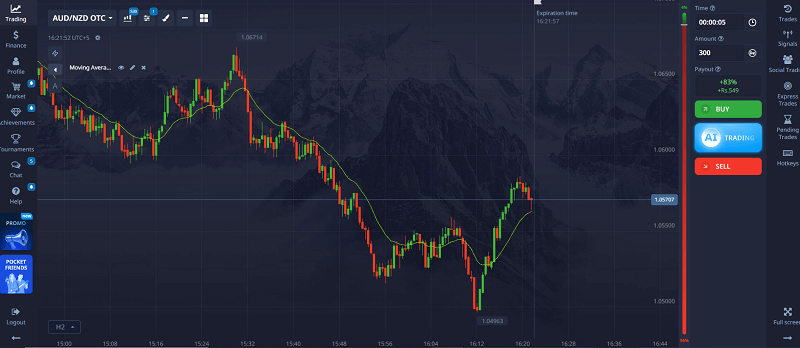
By early 2024, I noticed a pattern: whenever I ignored trades that went against the adaptive slope, my results improved. Over 50 live trades across major indices, my losing rate dropped by around 17%. Now, when the slope is up, I take only Calls. When it’s down, only Puts. No exceptions unless other confirmations are exceptionally strong.
MACD – The Momentum Engine
MACD isn’t new, but it’s still one of the few indicators that holds up if tuned correctly. The standard settings are too slow for short binaries, so I adapted them: fast = 6, slow = 16, signal = 9. These values sync with 3–5 minute expiry trades.
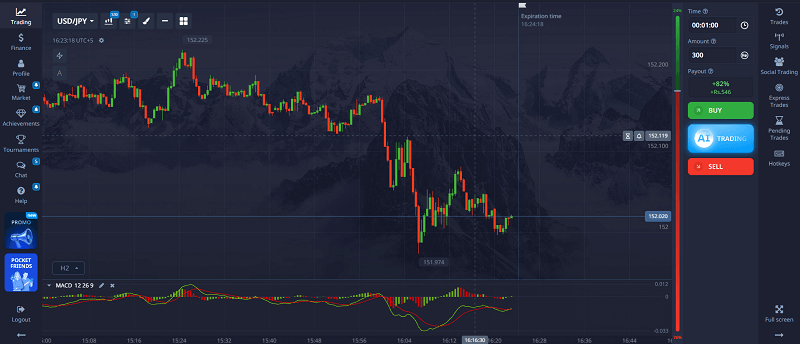
In a 2024 USD/JPY session, MACD crossed bullish right as the adaptive MA slope turned positive. I entered a Call and it hit easily. Out of 80 similar trades that year, the win rate hovered around 62%. Not magic, but enough to justify keeping it in my toolkit.
I rarely take a MACD cross that disagrees with the main trend. The alignment matters more than the signal itself.
RSI with Dynamic Bounds – The Exhaustion Detector
The RSI was one of my first tools, but at first, it betrayed me often. A static 30/70 setup looked clean in backtests yet failed during strong trends. I learned to adapt it dynamically—sometimes 20/80, sometimes even 25/75, depending on volatility.
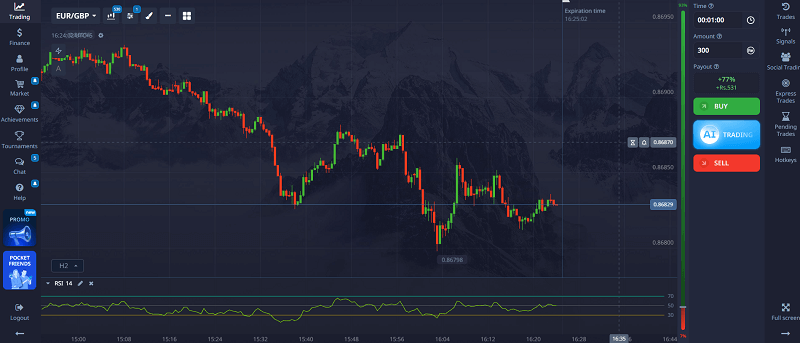
One trade in March 2025 made this clear. EUR/GBP had been trending steadily. RSI stayed above 75 for several candles. Then it started to slope down slightly while the Bollinger upper band showed rejection wicks. I entered a Put and finished in the money. That setup only appeared when I adjusted RSI to match volatility instead of sticking to textbook thresholds.
I now use RSI mainly to confirm when momentum is fading, not to predict exact tops or bottoms.
Bollinger Bands – My Volatility Compass
No matter how advanced my setup gets, I still use Bollinger Bands to read volatility. They reveal when the market is compressing or expanding. During a Gold trading session in May 2025, I noticed a squeeze forming. When price briefly broke above the upper band but closed back inside with a long upper wick, I interpreted it as exhaustion. With MACD turning down and RSI reversing, I took a Put and won.
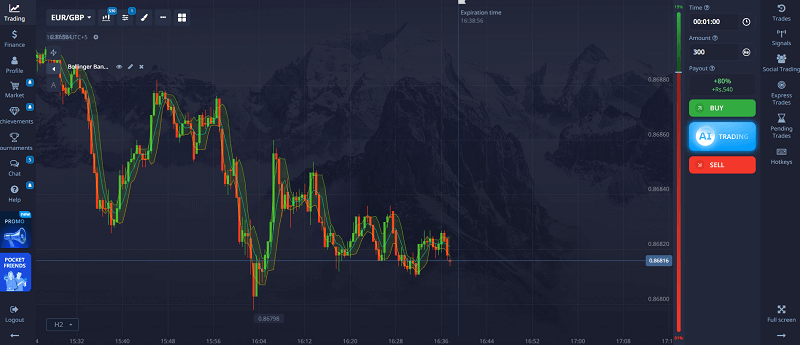
When the bands widen, I often wait instead of chasing breakouts. Narrow bands often lead to sharp moves, but wide ones tell me the trend is already stretched. Bollinger remains my visual cue for timing, not a direct trigger.
Vortex Indicator – The Hidden Filter
Vortex is underrated in binary options because not every broker provides reliable data. But where available, it’s gold. I use tick volume as a proxy. It doesn’t need to be perfect; it just needs to show relative participation.
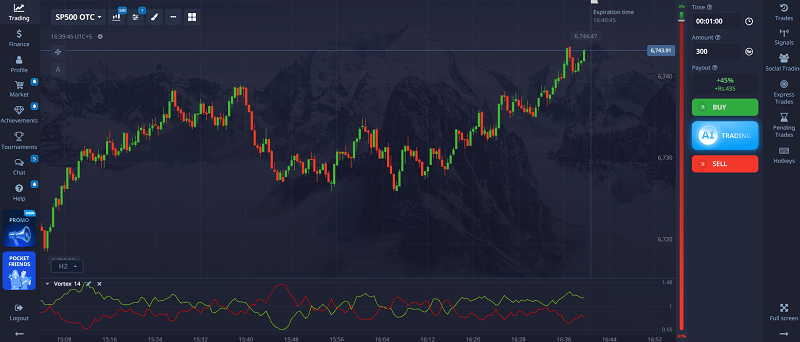
In a 2025 S&P 500 trade, price broke above the adaptive MA with bullish MACD confirmation. But the vortex was weak. I skipped the trade, and moments later the price collapsed. That one decision protected me from a clear loss. Later, I took a similar setup with strong volume confirmation, and it played out perfectly.
Volume filters don’t generate entries, but they keep me out of low-probability situations.
My Combined Trading Flow
Over time, I developed a mental checklist that runs in seconds:
- Is the adaptive MA trending clearly?
- Does volume confirm direction?
- Is MACD aligned with trend?
- Is RSI near exhaustion or confirming momentum?
- Is price behavior around Bollinger Bands giving context?
If all five conditions agree, I act. If one feels weak, I pass. Across 500 live trades in 2025, this framework gives me roughly a 56–58% win rate after costs. It’s not spectacular, but it’s consistent and repeatable.
Why Most “Top 10” Lists Miss the Point
When you search online for binary options indicators, most lists recycle the same five names and call it a day. They rarely explain how to use them together, when to ignore them, or how to filter false signals. Many articles even promise win rates above 80%, which is pure fiction.
The gap I noticed and what I’m addressing here, is context. I show where these tools fail, how to tune them for short expiries, and how to measure actual expectancy. That’s what’s missing in most SEO-optimized content.
A Real Trade Example from My Journal
On July 18, 2025, I took a 5-minute binary trade on EUR/USD. The adaptive MA was rising, volume slightly above average, and MACD confirmed a bullish cross. RSI was near overbought but steady, and price had just rejected the lower Bollinger band. I took a Call. The price dipped briefly, then rallied, closing in the money.
Later, a similar setup appeared but with weak volume. I skipped it. That time, the price reversed hard, which reinforced how critical that last filter was.
Lessons Learned Along the Way
I made every mistake possible before I became consistent. I over-optimized indicators, jumped into trades without waiting for confirmations, and ignored data latency. I even traded during major news events when indicators go completely blind. Over time, I learned that patience beats prediction.
The biggest realization was that indicators don’t make money—discipline does. The tools simply guide you toward higher-quality decisions.
How to Apply These Insights
If you want to use these indicators effectively, start small. Test them in a demo account before going live. Focus on how they behave during different volatility phases. Keep a record of trades and review them weekly. Most of all, don’t overload your chart. Fewer, well-chosen indicators are more valuable than a crowded screen.
When you feel comfortable with the flow, you can open a live account here and begin applying these setups in real conditions.
If you’re looking to go deeper, you might enjoy my detailed notes on price action in binary options and binary expiry optimization, both available on my site. They build on what I’ve shared here.
Final Thoughts
The Top 5 Binary Options Indicators That Still Work in 2025 are not magic formulas. They’re filters, sharpened by trial and error. They help me trade with structure, measure risk, and stay emotionally grounded. Each trade still carries uncertainty, but these tools give me a framework to navigate it.
If you treat trading as a craft, not a gamble, these indicators can serve you well. And if you’re ready to see how they behave in live conditions, now’s the time to open your trading account and put your own observations to the test.
Common Demo Account Mistakes That Cost You Later on Live
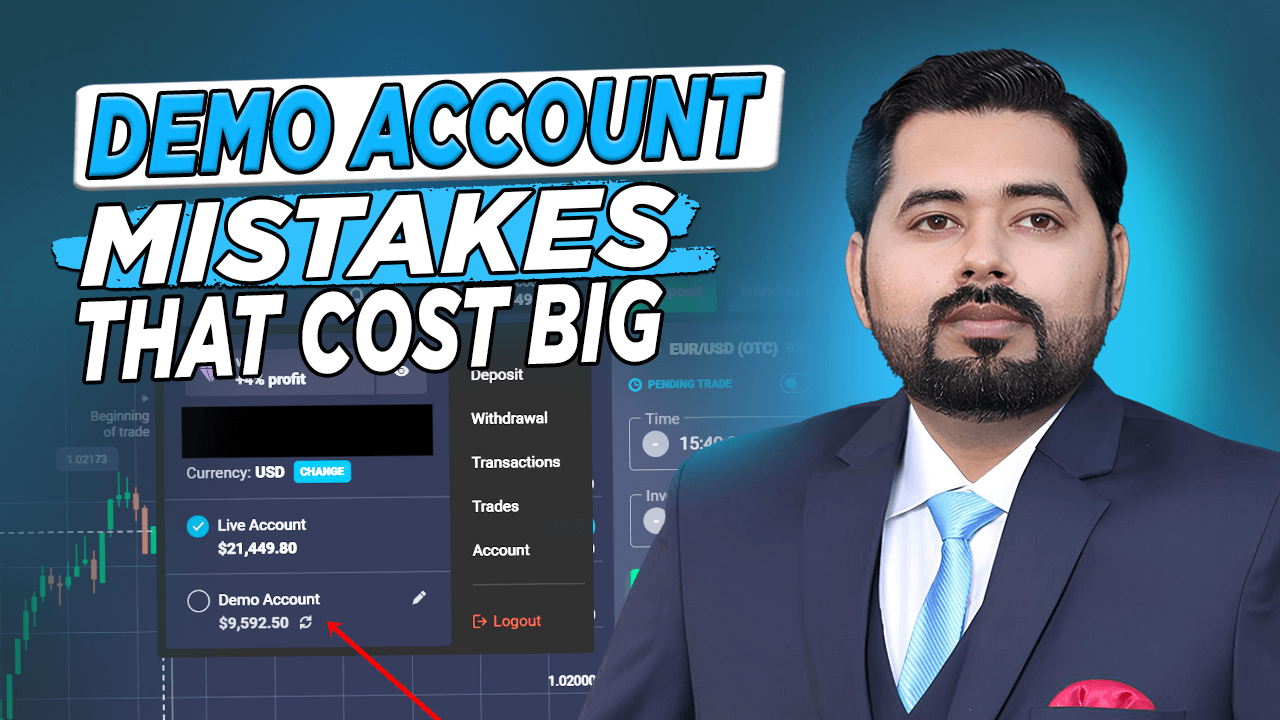
I still remember the first time I opened a demo account. The charts moved exactly like the real market, the buttons clicked just the same, and after my first few trades in profit, I started believing I had cracked trading. But the truth was, I wasn’t really trading at all. I was practicing without consequence, and that lack of consequence came back to haunt me when I eventually went live.
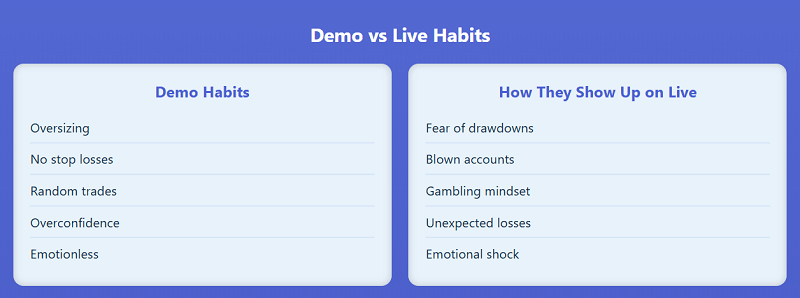
If you are in your demo phase right now, understand this: the mistakes you overlook in practice don’t disappear later. They resurface when real money is at stake, and that’s when they become expensive. I learned that lesson through trial, error, and a painful first live account. You must treat your demo account as real from the start to avoid my mistakes. Open your account here and give yourself the discipline edge early. Remember, it’s not about the safety of the demo, but the sense of control and discipline it can instill in your trading.
The Comfort Trap of Unrealistic Sizing
In the beginning, I didn’t think about position size. Why would I? On demo, I could open a massive trade, and if it went against me, nothing happened. I could reset the account with a few clicks and start again. That habit built a false sense of confidence because there was always an escape button in the back of my mind.
When I finally switched to a live account, I took the same casual sizing approach. Suddenly, a move of just 20 or 30 pips wasn’t a number on a screen—it was a noticeable dent in my balance. The stress of watching half a paycheck evaporate in minutes made me realize how unrealistic my demo sizing had been.
The lesson was simple but critical: always practice with the size you’ll realistically trade live. If your future live account will be $5,000, don’t demo with $100,000. The behavior you build with larger virtual numbers doesn’t translate well when every dollar becomes real. This caution and mindfulness in your trading decisions can significantly impact your trading journey.
Ignoring Stop Losses Because “It’s Just Demo”
Another mistake was ignoring stop losses. On demo, why bother closing early? Trades usually “come back,” and if they didn’t, no harm done. That thinking made me feel patient, even disciplined.
But when I went live, that habit backfired instantly. I remember holding a EUR/USD trade that went 60 pips against me. Instead of cutting it, I kept waiting, telling myself the same story: “It will recover.” It didn’t. A week’s worth of careful small wins was gone in a single position.
After that, I rewired my process. Today, a trade isn’t valid until I know exactly where my stop goes. The stop loss isn’t just protection—it’s part of the entry itself.
Treating Demo Like a Casino
Some of my demo sessions looked more like roulette nights than trading practice. I would chase sudden spikes, jump into random pairs, and celebrate when I guessed correctly. It felt exciting, and because no money was on the line, I convinced myself I was “learning.”
The problem is that this behavior taught me to mistake luck for skill. I realized how fragile it was when I started keeping a trading journal. After reviewing 30 demo trades, I saw no strategy, no repeatable setup—just random bets. That realization stung, but it saved me before I threw away more live capital.
Once I started journaling, I began to see patterns in my behavior. The trades I labeled as “guesses” had no consistency. The ones I placed with a defined entry and stop actually had logic behind them. That awareness shifted how I practiced.
The Hidden Danger of Overconfidence
Demo wins gave me a dangerous kind of confidence. Seeing thousands of dollars of profit in a virtual account felt like proof that I was ready. I even told a friend, “This is easy, I’ll be profitable immediately.”
But live trading humbled me fast. In my first month, I gave back nearly everything I had made on demo—because the confidence wasn’t built on discipline. It was built on conditions where failure didn’t cost anything. What I should have been measuring wasn’t the size of my demo profits, but the quality of my decisions.
Emotional Detachment vs. Emotional Reality
One of the most deceptive parts of the demo is how emotionless it feels. Losses don’t sting, wins don’t thrill you much, and it’s easy to believe you’re disciplined. I thought I had mastered my psychology because demo losses didn’t bother me.
Then I went live. Suddenly, a $50 drawdown made my heart race. Every tick mattered, every candle felt personal. The emotional gap between demo and live was massive, hitting me harder than expected.
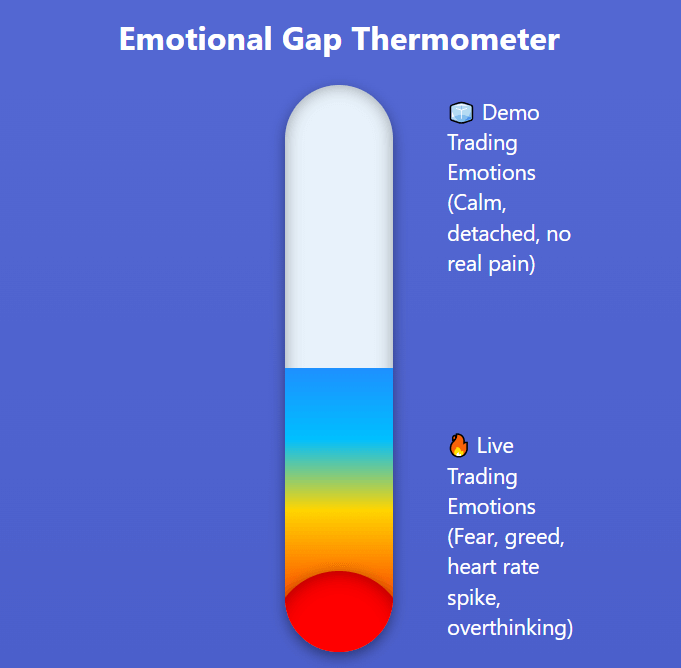
The mistake wasn’t practicing on a demo but failing to simulate the emotional weight of real trades. To fix that, I started treating demo trades as if money was truly on the line: I tracked them in detail, reviewed them, and gave myself consequences for breaking rules.
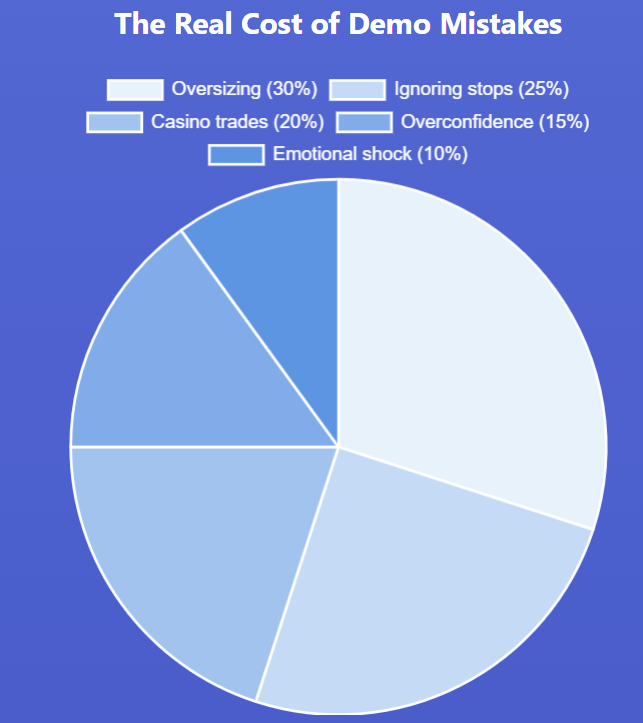
The Core Demo Account Mistakes in Perspective
When I look back, the biggest issues can be summed up like this:
- Oversizing trades created panic when real drawdowns happened.
- Skipping stop losses taught me to hope instead of act.
- Random entries turned trading into gambling.
- Overconfidence from fake profits blinded me to risk.
- Emotional detachment left me unprepared for real pressure.
Each might seem harmless in practice, but they form habits that can wreck your first live account.
My Midway Wake-Up Call
Halfway through my journey, I realized the demo wasn’t preparing me—it was sabotaging me. That’s when I changed my approach. I gave myself rules that mirrored live conditions:
- A fixed balance equal to my intended live account.
- A 2% risk cap on every trade.
- A journal that measured discipline, not profit.
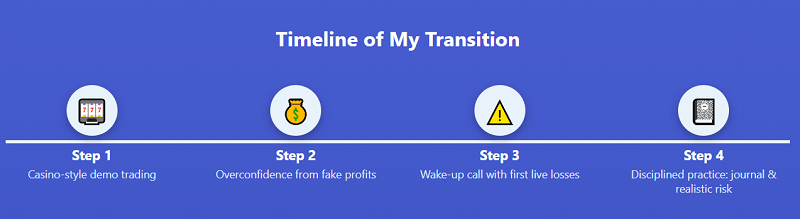
That structure changed the way I treated practice. When I went live again, losses still hurt, but they didn’t shock me. I was prepared because I had trained realistically. If you’re in the demo right now, don’t wait for losses to teach you the lesson. Start with a real account now and practice discipline early. Remember, it’s not about the profit, but the discipline in your trading that can make the difference.
Journaling: The Habit That Made the Difference
The single practice that bridged the gap between demo and live for me was journaling. My notes weren’t polished, but they were honest: why I entered, where I stopped, how I felt, and what I did after.
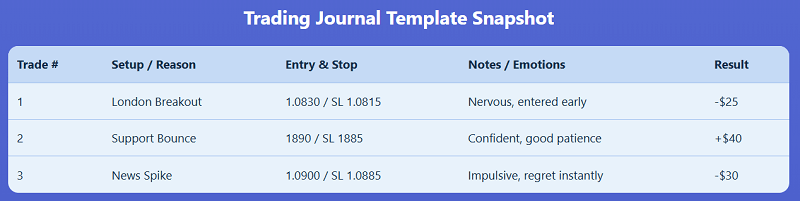
Looking back, I could see precisely where my habits were reckless. That reflection shortened my learning curve because I could correct myself before money was at risk. Without the journal, I would still be repeating old mistakes on autopilot.
Why Many Traders Stay Stuck in Demo
I’ve met plenty of traders who spend years in demo, convinced they are “practicing.” They’re avoiding the real test: handling emotions when money is at risk. Demo is excellent for learning mechanics—how to use the platform and place orders—but it doesn’t prepare you for the psychological side.
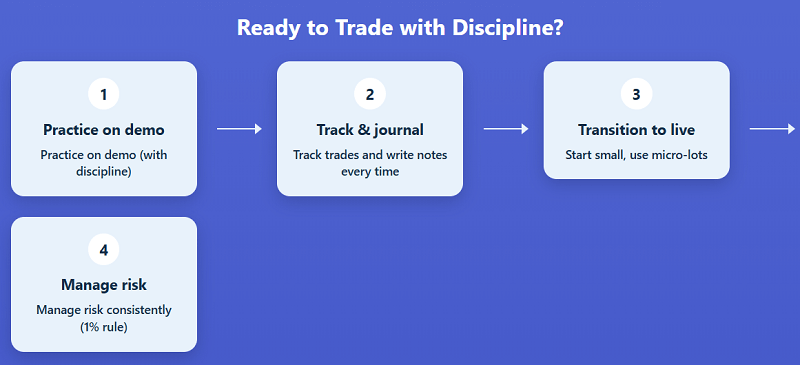
The solution isn’t to skip the demo. The solution is to respect it. Use it as a training ground for discipline, not entertainment. If you use it right, the leap to live will be smoother, and your habits will already be in place.
Final Reflection: How Demo Cost Me More Than I Realized
I don’t blame the market when I calculate the money I lost in my first live account. I blame myself for wasting my demo time by treating it like a game. The habits I built there made the live experience harder than it had to be.
If I could give you one piece of advice: Don’t waste your demo. Trade it like it’s live, or don’t trade it at all. The shortcuts you take now will cost you later, and the sooner you respect that, the sooner you’ll give yourself a real chance at consistency.
I’m sharing this so you don’t repeat my path. If you’re ready to avoid these common demo account mistakes and build discipline from day one, open your live account here and take the step with intention.
Related Reads You Might Find Useful
30-Day Progression Plan: From Demo to First Live Account

When I first opened a demo account, it felt exciting. I could take huge positions, double down when I was wrong, and even reset my balance after blowing up. It was entertaining but it didn’t prepare me for live trading. I realized I was learning nothing about discipline, risk, or patience.
This is the 30-day progression plan I followed to move from a messy demo account to placing my first live trades with real money. I’ve written it in a journal style, day by day, with the trades I took, the lessons I learned, and the shifts that made the difference.
If you’re already considering starting your own trading journey, you can begin today with a small live account through our trusted partner broker.
Why I Needed a 30-Day Plan
The biggest trap in demo trading is comfort. You can lose thousands of “virtual dollars” without any emotional sting. You can wipe out your balance and hit the reset button as if nothing happened. This cycle destroys discipline.
I needed to create a window where I could stop treating the demo like a game and start simulating the emotional weight of real trading. Thirty days gave me just enough time to build habits without losing focus.
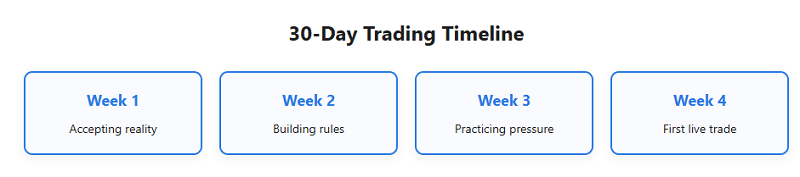
Week 1: Accepting Reality and Starting a Journal
Day 1–2: Facing the Mess
When I logged in, my demo balance was already down by 20%. In the past, I would have reset. This time, I refused. Watching a damaged account forced me to confront the fact that my decisions mattered.
Day 3–4: Building a Trade Journal
I created a simple spreadsheet with the following columns:
| Date | Asset | Direction | Entry | Exit | Size | P/L | Notes |
| Jan 3 | EUR/USD | Long | 1.0820 | 1.0860 | 0.1 lot | +$40 | Breakout trade, London open |
| Jan 4 | Gold | Short | 1898 | 1901 | 0.1 lot | -$30 | Chased move, bad entry |
Writing “bad entry” in the notes stung. But that sting was the point. It made me pause before placing the next trade.
Day 5–7: Learning from Early Pain
That first week, I lost more than I won. The old me would have reset and pretended it never happened. Instead, I stared at my equity curve dipping lower. By the weekend, I understood something powerful: the pain was teaching me discipline.
Lesson from Week 1: Stop hiding behind resets. Track trades, learn from mistakes, and accept the balance as it is.
Week 2: Building Rules and Focusing on One Strategy
Defining My Risk Boundaries
On Day 8, I gave myself a strict rule: never risk more than 1% on a single trade. That meant smaller lot sizes and tighter calculations. Overnight, my trading looked less chaotic.
Day 9–10: Sticking to One Setup
I picked a single strategy to test—London session breakouts on EUR/USD. For two days, I waited for that one signal instead of chasing everything.
Day 11–14: Results Start to Show
Across four days, I had:
- 2 wins (+2.5% total)
- 1 loss (-1%)
- 1 breakeven
It wasn’t spectacular, but it was structured. For the first time, I was trading like I had a system.
Lesson from Week 2: Rules give structure, and structure removes guesswork. The journal started to show patterns that I could refine.
If you’re following along, this is the perfect time to test under real conditions. Open a micro live account here and start small.
Week 3: Practicing With Realistic Pressure
Day 15–16: Identifying Bad Habits
I noticed most of my losses came late in the New York session. By recognizing this, I cut those hours from my trading plan. That single change stopped a string of impulsive trades.
Day 17–18: Trusting My Stop-Loss
I had always dragged stops wider when I felt uncomfortable. Now, I forced myself to leave them untouched. The first time a stop got hit, I felt frustrated. The second time, I accepted it as part of the process. By the third, I felt lighter—it was proof of discipline.
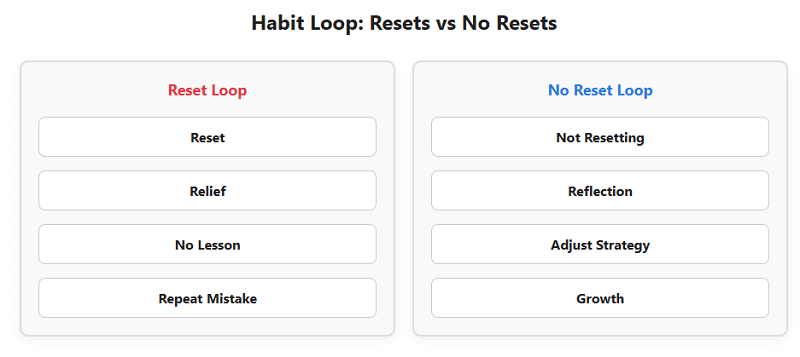
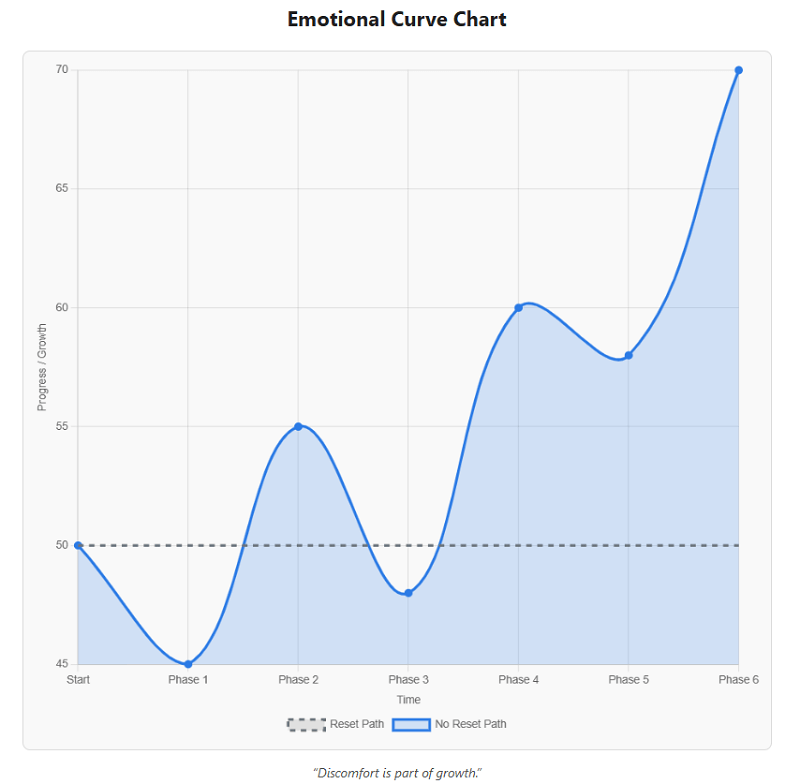
Day 19–21: The “No Reset” Breakthrough
Three full weeks had passed and I still hadn’t reset my demo account. My balance wasn’t high, but my equity curve showed a story: steep drawdowns at first, then gradual stability. That chart meant more to me than any profit number.
Lesson from Week 3: Treat demo like live. If you wouldn’t reset a live account, don’t reset your demo. The discipline carries over.
Week 4: Moving Into Live Trading
Day 22: Funding a Small Account
I deposited $100 into a live account. Small enough to accept losses, but large enough to feel real. My very first trade lost $2.80, and it hit me harder than any demo loss ever had. That emotion was the real difference.
Day 23–24: Parallel Journaling
I traded both demo and live at the same time. In the demo, I felt freer and sometimes sloppy. On live, I tightened my discipline. The trades weren’t better because of the setup—they were better because money was real.
Day 25–27: Adjusting Strategy Under Pressure
I realized I was cutting winners too early in live trades. Fear of losing profit made me exit before my target. I started forcing myself to let winners breathe. When I watched one trade hit my full take-profit instead of bailing early, it felt like growth.
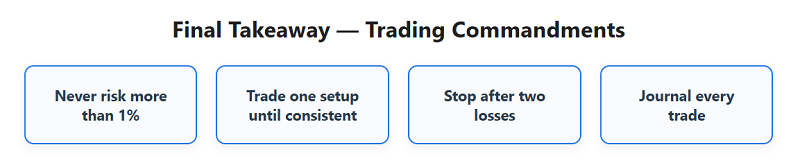
Day 28–30: Writing My Commandments
Before finishing the 30 days, I wrote down my rules:
- Never risk more than 1% on a trade
- Trade only one proven setup until consistent
- No trading after two consecutive losses in a day
- Journal every trade without exception
Those rules became my bridge from demo practice to live trading discipline.
Lesson from Week 4: The transition isn’t about profit. It’s about proving that you can respect your own rules when money is real.
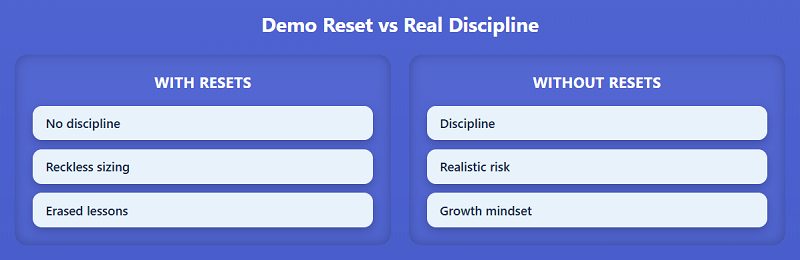
Demo Resets vs Real Discipline
I compared the two paths I had lived:
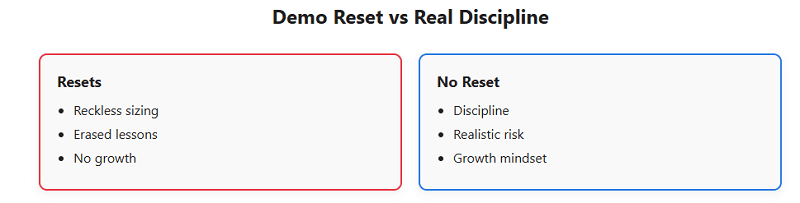
The contrast was clear. Resets felt comfortable but taught me nothing. Sticking with losses and learning from them built real habits.
My Biggest Takeaways From 30 Days
- The first step is painful: watching your balance drop without resetting.
- Journaling every trade is the single most valuable habit.
- One strategy, tested consistently, teaches you more than chasing many.
- Live trading changes everything. Even a $3 loss feels real.
- Discipline matters more than strategy.
Why This Journey Changed My Trading
This 30-day plan didn’t turn me into a professional trader, but it gave me a foundation. I no longer saw the demo as a game. I understood the difference between reckless resets and real discipline. And when I opened my first live account, I wasn’t shocked by the emotions—I was ready for them.
If you’re ready to take the same step, don’t wait for the “perfect” moment. Start your own 30-day progression today with our partner broker.
Related Articles on My Journey
Why Resetting Your Demo Balance Can Hurt Real Discipline
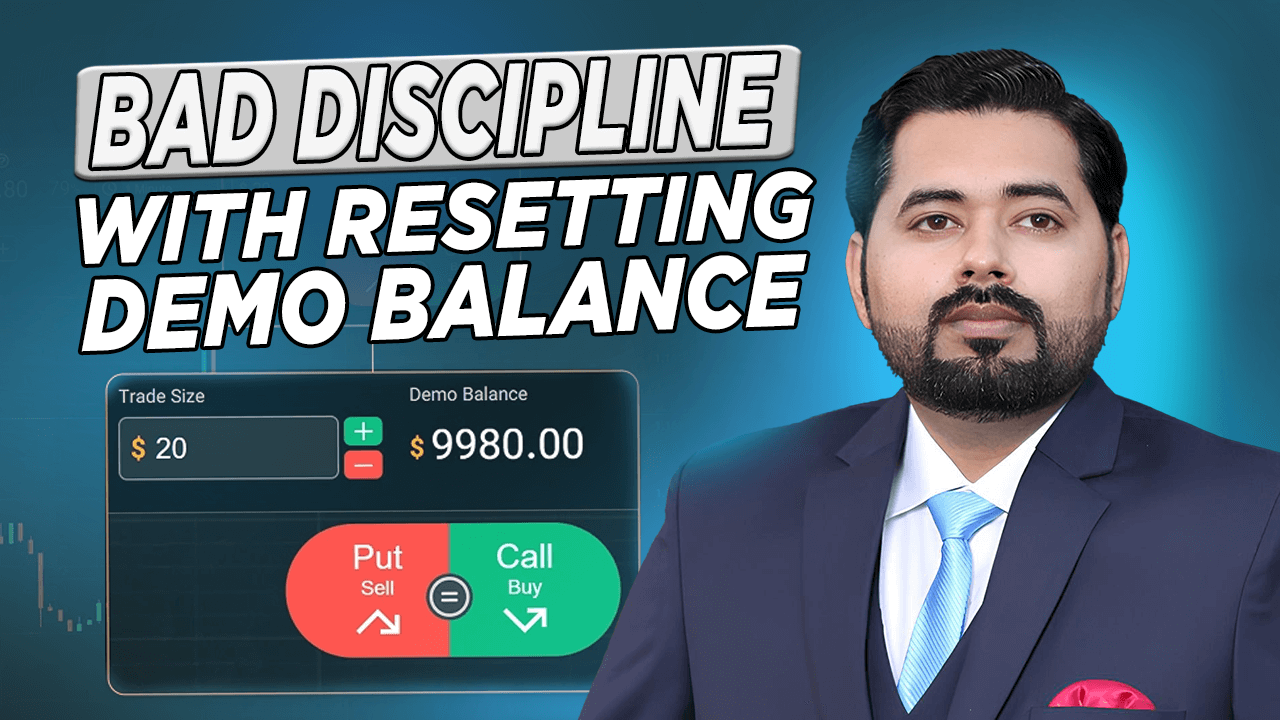
When I first started trading binary options, the reset button on my demo account felt like a gift. I could blow up my balance in the morning and be back at ten thousand dollars by the afternoon. No consequences, no scars.
At the time, I thought it was just practice. But later, when I went live, I realized something harsh: resetting my demo balance had trained me to ignore loss. It taught me the exact opposite of what real trading demands discipline.
👉 If you’re looking for a broker that offers both demo and live accounts to practice responsibly, check out this platform here.
The Hidden Illusion Behind the Reset Button
The first time I blew up my demo balance, I felt nothing. I clicked reset, watched the screen refresh, and there it was: a fresh ten thousand. That moment shaped my psychology. Instead of analyzing why I had lost, I skipped to the comfort of a clean slate. Over time, I realized that this habit built a dangerous mindset: mistakes could simply be erased.
In live trading, nothing erases your mistakes. A hundred-dollar loss is gone forever. Treating a demo like a video game only made the transition harder.
The Turning Point When I Stopped Resetting
One particular week, I blew up my demo balance three times. Each time, I hit reset. By Friday, it hit me. If that had been real money, I would have lost a thousand dollars. Instead of laughing it off, I decided to test myself: no more resets.
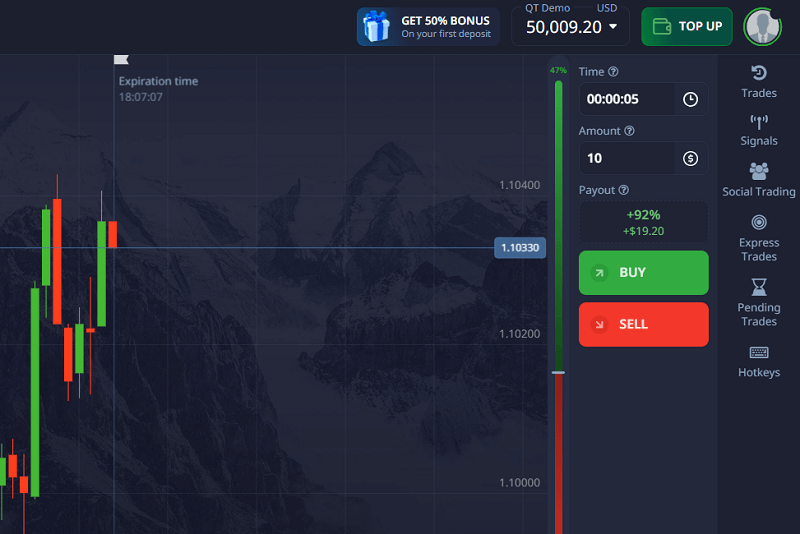
I lowered my demo balance to $500 to match what I could realistically deposit live. If I lost it, I had to sit with the loss. No magic button. That one small change completely transformed the way I treated every trade.
Suddenly, the numbers on the screen mattered.
How Real Losses Started Teaching Me Valuable Lessons
Here’s a snapshot of what my trading looked like when I stopped resetting:
| Date | Asset | Direction | Expiry | Stake | Entry | Exit | Result | Balance After | Notes |
| 10/05/2025 | EUR/USD | Call | 1 min | $10 | 1.0650 | 1.0648 | Loss | $490 | Entered too early, ignored candle close |
| 10/05/2025 | GBP/USD | Put | 3 min | $10 | 1.2275 | 1.2266 | Win | $500 | Waited for confirmation, patient entry |
| 10/06/2025 | USD/JPY | Call | 2 min | $20 | 148.20 | 148.12 | Loss | $480 | News volatility killed the trade |
| 10/06/2025 | AUD/USD | Put | 5 min | $10 | 0.6430 | 0.6422 | Win | $490 | Better timing, slow move in favor |
| 10/07/2025 | EUR/USD | Call | 1 min | $10 | 1.0680 | 1.0686 | Win | $500 | Clean bounce, trusted my setup |
Before, I would have erased this entire streak. But forcing myself to look at these numbers, I saw patterns: rushing into trades, ignoring news, winning when I waited. Without the reset button, each mistake became a note in my diary rather than a forgotten click.
Why Emotional Discipline Matters More Than Technical Skill
People think the demo is about testing strategies. In truth, it is just as much about testing emotions. Resetting the account numbs you to loss. And once you are numb to loss, you carry that same recklessness into live trading.
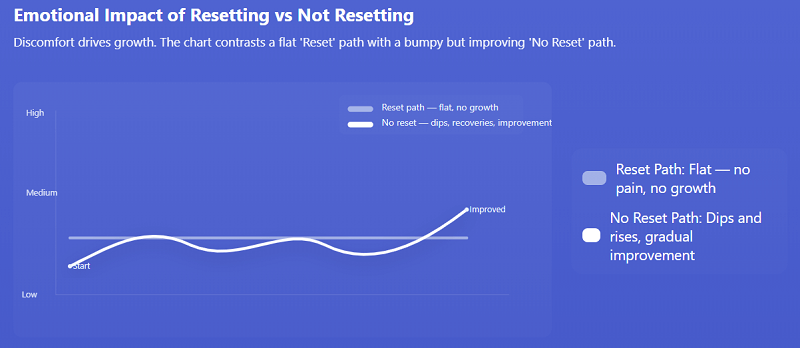
The weeks I refused to reset, I noticed my trading sessions felt heavier, almost like I had real money at stake. That tension was valuable. It forced me to double-check setups and avoid trading out of boredom.
👉 If you want to test your emotional discipline, start with a small live account alongside your demo with this broker. That was my bridge between fake and real.
How Constant Resets Quietly Build the Wrong Habits
Looking back, here is how constant resets quietly hurt me:
- They taught me that losses did not matter.
- They encouraged reckless trade sizes since I knew I could start over.
- They erased valuable data. Journals only work if you let the numbers accumulate, not restart every time you feel uncomfortable.
- They made the transition to live a shock. Suddenly, I could not press a button to fix my mistakes.
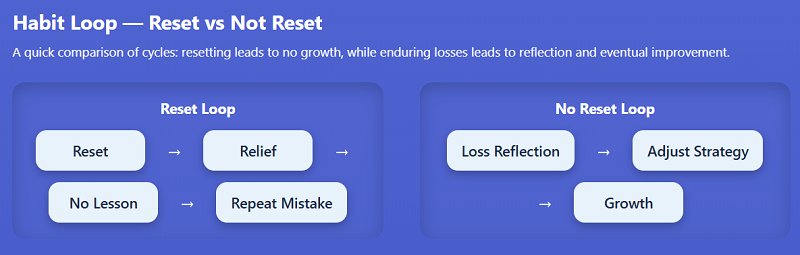
This was a content gap I noticed online. Many guides mention using demo accounts, but few talk about the psychological trap of resets. It is not just wasted time. It is training the wrong reflexes.
The Simple Rules I Created to Avoid Reset Addiction
I set personal ground rules:
- Once the demo balance was gone, I had to take a 48-hour break and review my journal.
- I could only reset after writing down the exact mistakes that led to the blow-up.
- Each reset required stricter conditions the next time, such as smaller stakes and fewer trades.
These were not glamorous rules, but they turned demos into training, not entertainment.
The Week That Tested My Resolve to Its Limit
There was one week I went on a terrible streak. I lost six trades in two days and watched my demo balance sink. Normally I would have hit reset. Instead, I let it ride. By the end of the week, I had clawed back only half the losses. My balance was still lower, but my journal was full of lessons about overtrading, fatigue, and ignoring market sessions.
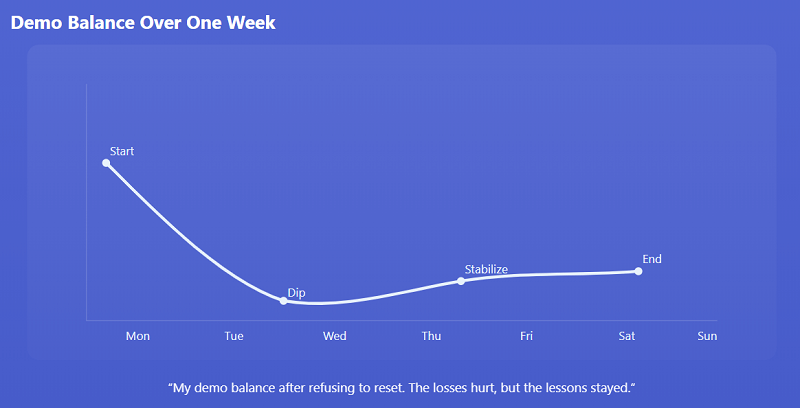
That week did more for my trading discipline than any reset ever could.
The Difference I Felt When Moving Back to Live Trading
When I finally switched to live with $100, I felt different. Losses stung, but they did not paralyze me. The habit of sitting with discomfort had prepared me. The reset button was gone, but I did not miss it anymore.
Final Thoughts: Why Resetting Your Demo Balance Hurts Real Discipline
If I could sum up the lesson, it is this: the reset button is not your friend. It trains your brain to erase mistakes instead of learning from them. Real trading is about carrying those scars, adjusting your behavior, and growing discipline with each setback.
👉 Ready to start practicing without bad habits? Open your demo and live account with this broker.
Related Reads for Deeper Learning
You might also like:
Best Way to Use Binary Options Demo Accounts Without Wasting Time

When I opened my first binary options demo account, I felt like I was doing everything right. The broker gave me $10,000 in virtual funds, and I went wild with it. Within a week, I doubled the account. That gave me the illusion of being ready. So when I switched to live with $250 of my own money, I expected the same magic. Instead, I lost it all in less than a month. That’s when I realized something important. I hadn’t actually learned how to trade. I had only learned how to play with demo money.
👉 If you’re curious to practice the right way, you can open a free demo account with this trusted broker.
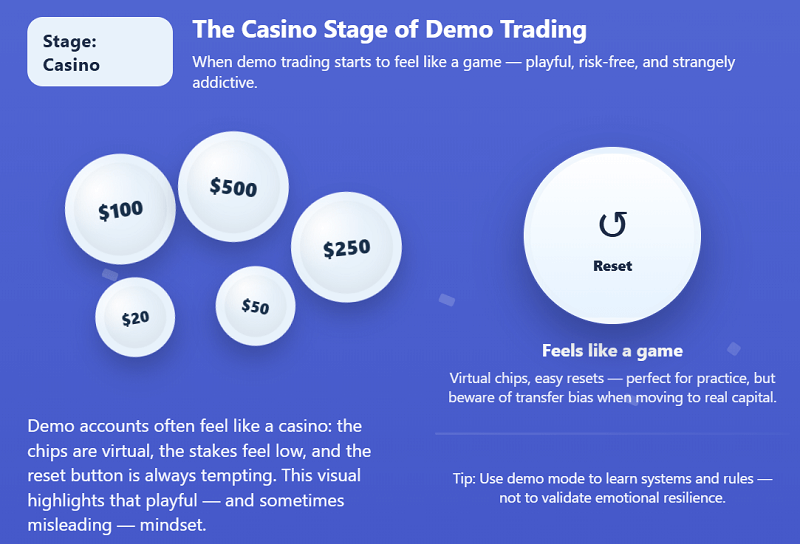
The Casino Stage of Demo Trading
In the beginning, I treated the demo like a game. I clicked trades without thinking, sometimes on 30-second expiries just to test my reflexes. I piled on every indicator the platform offered, even if I didn’t understand them. And since the balance was so large, I sometimes bet $500 per trade without hesitation.
Of course, I won more than I lost. My demo balance skyrocketed. But that didn’t mean I was a trader. What I had really learned was that with fake money and an unlimited reset button, there are no consequences. And without consequences, there is no growth.
It hit me that if I wanted a demo to prepare me for live trading, I had to make it mirror reality as closely as possible.
The First Change: Making Demo Feel Real
The very first change I made was shrinking the demo balance. Instead of $10,000, I gave myself just $1,000. That number felt closer to the deposits I could realistically make. Suddenly, each $20 trade mattered.
The second shift was in how I sized my trades. I decided that no single trade would ever be more than 2 percent of my account. It wasn’t about money. It was about discipline. With that rule, the numbers on the screen finally carried weight.
I also cut down on the number of trades. Instead of clicking endlessly out of boredom, I gave myself three trades per session. If I wanted more, I had to write down my reasons first. That pause between impulse and action changed everything.
And when I blew up a demo balance, I didn’t hit reset right away. I forced myself to sit with the loss, analyze where I went wrong, and only restart after I had a clearer plan. Those pauses hurt, but they stopped me from treating the demo like a free arcade game.
My Trade Journal: The Turning Point
I realized I couldn’t rely on memory alone. I needed a record of every trade — the good, the bad, and especially the careless ones. So I started keeping a journal. It didn’t just track results. It tracked my state of mind, my reasons, and my mistakes.
Here’s an example of how one week looked in my journal. Notice that I didn’t hide losses. Losses were the entries that actually taught me something.
| Date | Asset | Direction | Expiry | Stake | Entry Price | Exit Price | Result | Balance After Trade | Notes |
| 02/10/2025 | EUR/USD | Call | 1 min | $20 | 1.0650 | 1.0658 | Win | $1,020 | Clean bounce off support |
| 02/10/2025 | GBP/USD | Put | 2 min | $20 | 1.2270 | 1.2276 | Loss | $1,000 | Entered too early, ignored confirmation |
| 03/10/2025 | USD/JPY | Call | 5 min | $20 | 148.20 | 148.33 | Win | $1,020 | Breakout worked, RSI confirmed |
| 04/10/2025 | AUD/USD | Put | 1 min | $20 | 0.6425 | 0.6429 | Loss | $1,000 | Traded during news spike, poor timing |
| 05/10/2025 | EUR/USD | Call | 3 min | $20 | 1.0685 | 1.0695 | Win | $1,020 | Nice moving average bounce |
| 06/10/2025 | GBP/USD | Put | 2 min | $20 | 1.2250 | 1.2259 | Loss | $1,000 | Chased trade after previous loss |
Looking back at this table, it’s easy to see where my weak spots were. Twice I entered too early. Once I ignored upcoming news. Another time I chased a loss. Writing these down forced me to face my habits.
The journal became my mirror. Without it, I would have fooled myself into thinking I was improving.
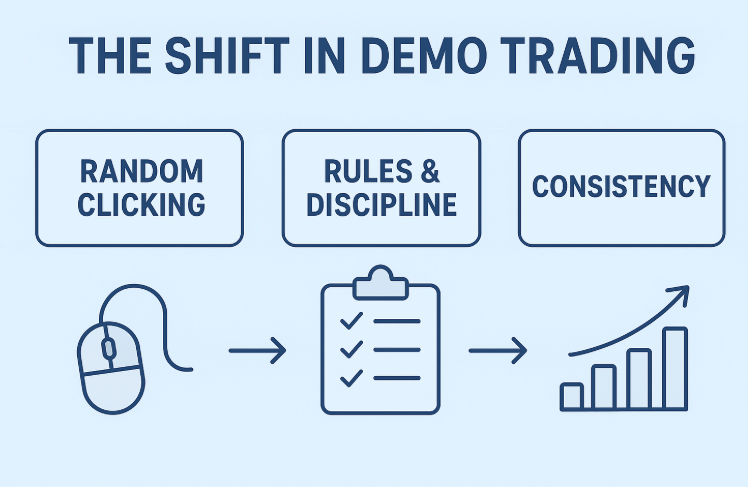
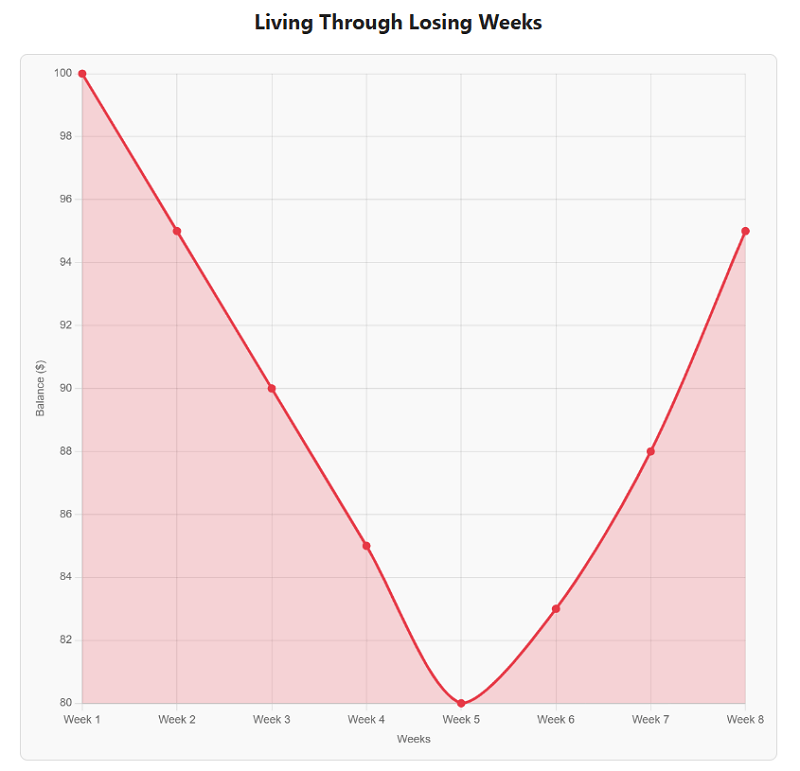
Living Through Losing Weeks
Some of the hardest but most important lessons came from weeks where I couldn’t catch a break.
There was one stretch where I lost three trades in a row. On demo, it was only sixty dollars gone. On live, that same streak would have hurt deeply. I forced myself to stop trading that day, write down exactly what went wrong, and review my charts. I realized I was entering trades right before news events. That single discovery saved me from repeating the same mistake later with real money.
Another time, I had a week of slow, grinding results: win one, lose one, win another, lose two. The balance barely moved. But by the end of that week, I had proved something to myself — I could keep my head steady even without big wins. That steadiness was more valuable than any single profitable trade.
The Problem of Overconfidence
Even with these lessons, a demo can trick you. A few good weeks can make you feel invincible. I fell into that trap too. After a streak of wins, I thought I had cracked the code and was ready to live again.
That’s why I set a rule: thirty disciplined demo sessions in a row before I would go live. No exceptions. And “disciplined” didn’t mean profitable. It meant following my own rules — trade sizing, journaling, patience.
👉 If you want to bridge that same gap, try running a small live account alongside demo with this broker. That’s what helped me transition without shock.
My Way of Resetting
Whenever I caught myself slipping back into bad habits, I had a personal reset system. If I traded recklessly, I shut down for a full day. If I blew the balance, I wasn’t allowed to restart until I wrote down the exact reasons why. If I won too easily, I made my rules stricter.
The reset wasn’t punishment. It was training. It taught me that careless trading had consequences, even on demo.
What Demo Finally Taught Me
By the time I had spent months on demo with discipline, here’s what I discovered:
- Patience made all the difference. The trades I waited for were the ones that worked.
- Risk management stopped being a rule and became instinct. Capping stakes on demo made it natural when I went live.
- Losing streaks carried the best lessons. Every loss showed me a habit I needed to fix.
- Market conditions mattered more than I thought. Practicing in ranging and trending markets gave me confidence later.
- Consistency became the true measure. A steady upward line was more important than occasional big wins.
Moving Back to Live
When I finally deposited $100 again, the difference was night and day. Losses still stung, but they didn’t throw me into panic. I traded with calm focus. The habits I had built on demo carried over. That time, I didn’t blow up my account in weeks. I grew it slowly instead.
Why Demo Still Has a Place in My Trading
Even now, I still use demos, but with a very different purpose. I use it as a lab. Whenever I want to test a new idea or when the market feels strange, I go back to demo. It’s not a playground anymore. It’s my practice field.
👉 If you want to turn demo into a real training tool, open your demo and live account with this broker.
Related Reads
You might also like:
- Binary Options Risk Management Strategies That Actually Work
- Top Candlestick Patterns Every Beginner Should Master
- Copy Trading in Binary Options: Shortcut or Trap?
Final Thoughts
Demo trading almost fooled me into thinking I was already a good trader. I kept doubling my account, but it was meaningless because I wasn’t trading realistically. The best way to use binary options demo accounts without wasting time is to treat them like they’re real from the start, keep a journal, respect the numbers, and know when to move on.
Demo is a stepping stone. Not a hiding place. Use it to prepare for the real challenge, not to pretend you’ve already mastered it.
Demo vs Live Binary Options: What Really Changes for Traders
When I first discovered binary options, I was instantly drawn to the simplicity: predicting whether the market would move up or down in a set time frame. The demo account felt like the perfect playground with no risk, no pressure, just pure practice. But the day I switched to live trading, I realized something I wasn’t prepared for. The rules didn’t change, but I did.
If you’re still trading on demo or thinking of jumping to live, let me take you inside my own journey. This isn’t theory. It’s the raw difference between demo vs live binary options, what truly shifts, and how I built a progression plan to bridge the gap.
👉 If you’re ready to test your own limits, open a free demo and live account with this trusted broker.
My First Steps with a Demo Account
Like most beginners, I opened a demo account on a popular binary broker. It gave me $50,000 in virtual balance, and at first, it felt like monopoly money. I was testing everything:
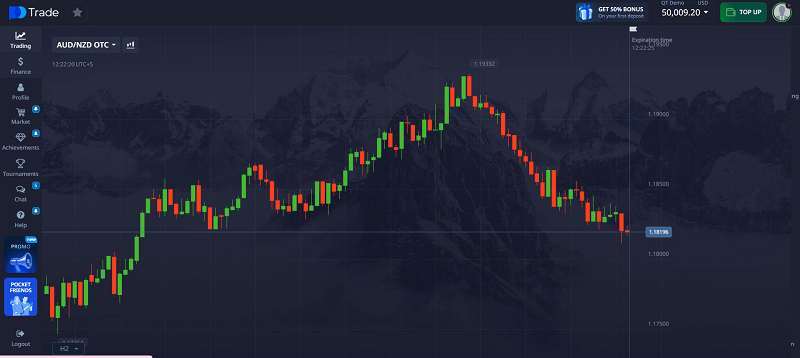
- I opened turbo trades with just five-second expiries, just to see if I could guess the next candle correctly. It felt thrilling, almost like playing a video game.
- I experimented with every indicator on the platform, even the ones I didn’t fully understand, because there was no financial risk.
- I placed trades at random hours, sometimes in the middle of the night, relying purely on gut feeling and luck.
To my surprise, I was winning a lot. In just one week, my balance had doubled. I felt unstoppable, as if I had cracked the code of the markets. But deep down, I knew something was missing. That missing piece was fear.
On demo, I could reset the balance whenever I blew up. That reset button was my safety net. It created an illusion of security that doesn’t exist in live trading.
Transitioning to Live: The Reality Check
The day I deposited my first $250 into a live account, everything felt different. My hands literally shook before placing the first trade. Suddenly, this wasn’t practice. It was my money on the line.
Here’s what I noticed right away in the switch from demo vs live binary options:
| Demo Account | Live Account |
| Virtual funds | Real capital at risk |
| Emotional detachment | Strong fear and greed |
| Unlimited resets | Every loss hurts |
| Overconfidence from easy wins | Humbling reality of mistakes |
In demo, I clicked trades carelessly. In live, I overanalyzed every move. My first live trade was a $10 “safe bet” on EUR/USD rising in the next minute. I lost. The sting wasn’t about the $10 itself, but about realizing how different real money felt.
My First Trading Diary Entries
I started keeping notes to understand my emotions better. Here are a few early snippets:
Day 1 – Deposit $250
- Trade 1: EUR/USD up, $10 stake. Lost. Felt nervous.
- Trade 2: GBP/USD down, $10 stake. Won. Relief washed over me instantly.
- Balance: $250 → $250 (break-even after two trades).
- Notes: My hands were shaking both times. Winning live felt ten times more satisfying than winning on demo.
Day 3 – Balance $230
- Took five trades today. Lost three, won two.
- Kept doubling trade size after each loss. I wanted to recover fast, but it backfired.
- Lesson: Chasing losses is emotional suicide. I need rules.
Day 7 – Balance $180
- I noticed that I hesitate before clicking now. On demo, I never thought twice. Live makes me second-guess even clear signals.
- The fear is real, and it’s slowing me down.
These diary notes became my reality check. They showed me how much my psychology was controlling my results.
Emotional Pressure: The Hidden Difference
No one talks enough about this, but trading live exposes emotions you didn’t even know you had. On demo, I could place 20 trades in an hour with calm focus. On live, one bad trade could ruin my mood for the entire day.
I realized that the hardest transition isn’t technical. It’s emotional.
- Greed pushed me to increase my trade size after a win. I thought, “If I can double $10, why not try $50?” That mindset wiped me out faster than any bad strategy.
- Fear made me skip trades I should have taken. I’d see a perfect setup, but the memory of a past loss would freeze me. By the time I acted, the chance was gone.
- Anxiety made me close trades too early. Even when the trade was moving in my favor, I hovered over the close button, terrified of watching it reverse.
This is why so many traders win on demo but fail live. The strategy stays the same, but the psychology is entirely different.
👉 If you want to experience this shift safely, open a small live account alongside your demo here. Start small. It’s the only way to train your emotions.
My Reset and Progression Plan
After blowing my first live deposit in just three weeks, I knew I had to create a system. I called it my Reset and Progression Plan.
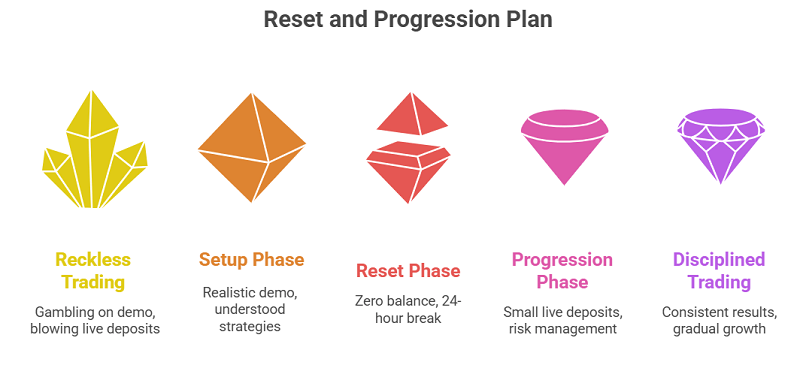
1. Setup Phase
- I limited my demo balance to just $1,000 instead of the huge $10,000 most brokers give. This made the numbers feel closer to what I’d realistically deposit.
- I committed to trade only strategies I understood, like basic support and resistance levels, instead of stacking multiple indicators randomly.
- I treated every demo trade as if it were real money. If I wouldn’t risk $20 live, I wouldn’t risk $20 on demo either.
2. Reset Phase
- Whenever I caught myself gambling on demo trades, I reset my account balance to zero.
- I forced myself to stop trading for at least 24 hours. This wasn’t about punishment. It was about breaking the habit of careless clicking.
- Each reset reminded me that recklessness in demo would easily carry over to live.
3. Progression Phase
- I started small on live with just $50 to $100 deposits. Enough to feel the weight of real money, but not enough to devastate me emotionally if I lost it.
- I never risked more than 1–2% of my balance on a single trade. This meant that even five losses in a row wouldn’t destroy me.
- Only after one month of consistent results did I allow myself to add more funds. It was a slow climb, but it gave me discipline.
This plan created a bridge between demo vs live binary options, making the transition gradual instead of a shock.
Key Lessons I Learned
Over time, here are the deeper lessons that stuck with me:
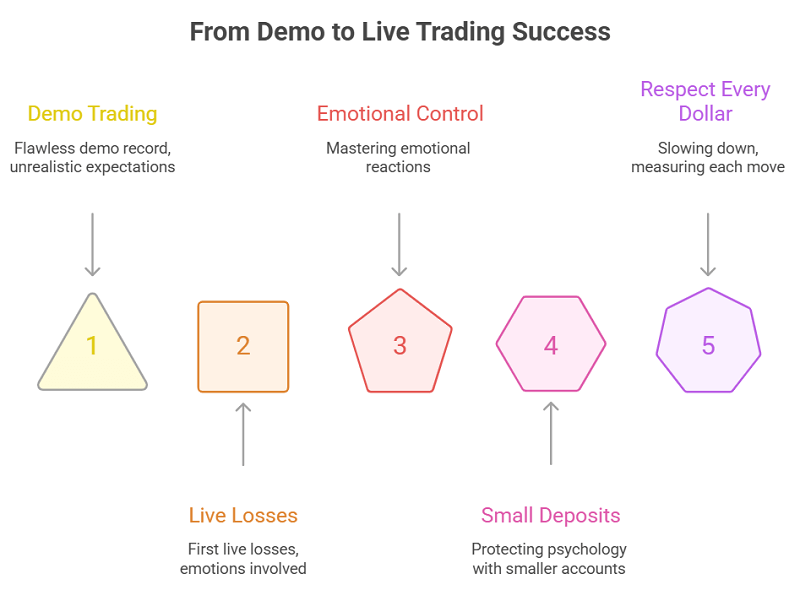
- Winning a demo means nothing until you prove it live. My demo record was flawless, but the first live losses taught me that real success only counts when emotions are involved.
- Emotional control is the real skill in binary trading. Charts can be analyzed, but your reactions cannot be coded. That’s the battlefield most traders lose.
- Small deposits protect your psychology better than starting big. With a smaller account, every trade feels important without being life-changing. This balance keeps emotions in check.
- Reset buttons don’t exist in real trading, so respect every dollar. Demo gave me a false sense of safety, but live forced me to slow down and measure each move carefully.
- A progression plan is more powerful than endless demo practice. You can practice for months, but you’ll never know how you react until money is real. Progression builds that resilience step by step.
Where Demo Still Helps Me Today
Even after years of trading, I still use demo accounts but with a purpose.
- I test new strategies on demo before risking real money. This way I can experiment freely and fine-tune without burning capital.
- I use the demo as a training ground for discipline. For example, I practice sticking to a three-trade-per-day rule until it becomes second nature.
- I simulate different market conditions, like ranging vs trending markets, so I don’t panic when I face them live.
The difference now is that the demo isn’t my playground anymore. It’s my lab. Live trading is where the real growth happens.
👉 If you’re serious about bridging demo vs live binary options, create your practice and live account with this broker today. The sooner you face emotions, the faster you’ll grow.
Related Reads
If this resonated with you, you might also like:
- Binary Options Risk Management Strategies That Actually Work
- Top Candlestick Patterns Every Beginner Should Master
- Copy Trading in Binary Options: Shortcut or Trap?
Final Thoughts
The biggest surprise in my journey was that nothing technical changed between demo vs live binary options, but everything inside me did. Demo taught me the mechanics. Live taught me who I really was as a trader.
Looking back, I don’t regret losing that first deposit. It was my tuition fee into the reality of trading. And if I had to give one piece of advice, it’s this. Don’t wait until you feel perfect on demo. You’ll never feel ready. Start live small, make mistakes, and build discipline.
Because in the end, binary options are less about predicting markets and more about mastering yourself.
IQ Option vs Pocket Option (2026 Review): The Truth About Which Platform Wins
Top 3 Indicators for IQ Option in 2026 | RSI, MACD & AI Signals Explained
IQ Option Trading Strategy with a 75% Winrate and $1800 Profits | RSI Overbought & Oversold Setup
What is IQ Option? Everything You Need to Know for 2026 (Full Guide + Demo Tutorial)
MACD Crossover Strategy on Pocket Option | 65% Winrate Tested Live
Cryptocurrency Market Forecast 2025 | Biggest Movers and Smart Strategies for the Next Year
Olymp Trade Verification & Source of Funds: A Full Walkthrough
I still remember the first time I opened an account on Olymp Trade. At that moment, I was more focused on learning strategies and making trades than on the technical side of account setup. But as I soon discovered, verification and providing a source of funds were not just formalities—they were crucial steps that shaped my entire trading journey.
If you’re planning to get serious with trading on Olymp Trade, you’ll need to complete the verification process sooner or later. And trust me, it’s far better to prepare for it before you’re stuck waiting on a delayed withdrawal. I’ve been through that cycle myself, and in this guide, I’ll walk you through exactly how I handled Olymp Trade verification & source of funds, along with the issues I faced like bank delays and regional restrictions.
👉 Start your trading journey today with my recommended Olymp Trade signup link.
My First Steps on Olymp Trade
I signed up casually, almost on impulse, after seeing a friend place short-term trades using the platform’s forecast tool. It looked simple enough. I deposited a small amount through my bank card and started experimenting with demo-to-real transitions.
The trades were straightforward, and I was actually enjoying the learning curve. But then reality kicked in. When I tried to withdraw my first profit, I hit the verification wall. My withdrawal request went on hold, pending account verification. That’s when I realized how critical the process of Olymp Trade verification & source of funds really was.
Why Verification Is Not Optional
Olymp Trade, like most regulated brokers, follows strict financial compliance rules. They need to make sure every trader:
- Is a real person, not a bot or duplicate account
- Owns the funds they are depositing
- Can prove where the money is coming from
This protects both the platform and us, the traders, from fraud and money-laundering risks. For me, it meant gathering documents I hadn’t thought about beforehand.
The Documents I Had to Provide
When Olymp Trade asked for verification, here’s what they needed from me:
| Requirement | What I Submitted | Notes |
| Identity Proof | Passport | Make sure it’s not expired. Clear photo required. |
| Address Proof | Utility Bill (electricity) | Bank statements also work if recent. |
| Payment Proof | Screenshot of bank card statement | Had to show the same card used for deposits. |
| Source of Funds | Employment payslip and bank salary credit | One of the trickiest parts. |
This last step—source of funds—was the one that caught me off guard. Until then, I didn’t know trading platforms could ask me to prove how I earn my money.
Facing the Source of Funds Requirement
The first time Olymp Trade requested my source of funds, I was skeptical. Why would they care where my salary comes from, as long as I’m depositing legally? But then I realized it’s about compliance. Regulations in many countries demand brokers verify that money circulating through their systems is clean.
For me, the process looked like this:
- I sent my monthly payslip from my employer.
- I attached a screenshot of my bank account showing my salary deposit.
- I wrote a short note explaining that trading was just a personal side activity.
After a couple of days, the documents were accepted.
👉 Don’t wait until you need a withdrawal—verify your Olymp Trade account now.
Issues I Faced During Verification
The process wasn’t always smooth. Let me share a few roadblocks I hit.
1. Bank Delays
When I uploaded my card statement, the document had to match the deposit method. Since my bank took a while to update online statements, I ended up re-submitting multiple times. Once, a withdrawal even bounced back due to outdated statement data. My advice: always download the latest monthly statement before submitting.
2. Regional Restrictions
Being based in a region where some banks treat trading deposits as “high-risk,” I noticed delays both in deposits and withdrawals. Olymp Trade accepted my documents, but my local bank was the bottleneck. For example:
- A deposit I made on Friday evening only reflected Monday afternoon.
- Withdrawals sometimes took 3–5 business days despite Olymp Trade’s side being cleared.
3. Rejections Due to Clarity
I initially submitted photos of documents taken with my phone. The glare made them unreadable, so they were rejected. Eventually, I scanned everything properly.
Lessons Learned from My Experience
Looking back, here are the biggest lessons I took from my Olymp Trade verification & source of funds process:
- Always use the same card or wallet for both deposit and withdrawal.
- Keep documents up to date (within 3 months for proof of address).
- Scan instead of taking unclear photos.
- Prepare a basic income proof even if not requested immediately.
Here’s a quick table that summarizes what worked best for me:
| Step | Mistake I Made | What Finally Worked |
| Proof of Address | Submitted old bill | Submitted recent utility bill |
| Bank Statement | Used screenshot with cropped edges | Uploaded full PDF |
| ID Proof | Blurry photo | Scanned passport copy |
| Source of Funds | Hesitated too long | Shared payslip + bank credit |
How Verification Changed My Trading
Once my account was fully verified, the difference was night and day. Withdrawals processed much faster. My account had higher trust, and I felt more at ease investing larger amounts. It also gave me confidence that I was operating on a regulated, transparent platform.
Verification didn’t guarantee profits—trading itself remained challenging, with wins and losses—but at least I knew the financial side was secure.
Would I Recommend Going Through the Process Early?
Absolutely. Waiting until your first withdrawal can be stressful, especially if you need the funds urgently. Getting verified early is like setting up your foundation—you won’t notice the benefit immediately, but you’ll appreciate it later.
👉 Take your first step today—open your Olymp Trade account and verify it early.
Final Thoughts
My Olymp Trade journey wasn’t just about charts, candles, or strategies. A big part of it was learning the importance of compliance, patience, and preparation. The verification process, including the source of funds check, might feel like extra work, but it builds trust and ensures smooth withdrawals when you need them most.
If you’re new, don’t repeat my mistakes. Prepare your documents, scan them properly, and complete Olymp Trade verification & source of funds before diving deep into trading. That one step can save you days of waiting and endless frustration later.