Pocket Option Risk Management: How to Protect Your Capital
Fact-checked by Shahwaiz Khan
I didn’t learn risk management the easy way. My first week on Pocket Option, I turned $50 into $120, then lost it all by Friday. I had no strategy or plan, just blind confidence and a lot of guessing. I thought winning a few trades made me a genius. I was wrong, painfully wrong.
Fast-forward a few months, and I started approaching trading differently. I stopped thinking like a gambler and started thinking like a risk manager. That’s when I saw real, consistent results.
This guide will walk you through how I protect my capital while trading on Pocket Option. I’ll explain simple but powerful techniques like stop-loss, bankroll management, and ideal risk-reward setups. Plus, I’ll share real examples of trades where I followed (and broke) these rules, so you can see the difference they make.
Don’t wait for a painful lesson like I did. Before you place another live trade, open a free Pocket Option demo account and practice your strategy with real risk rules in place. It’s the fastest way to learn without burning your bankroll.
Why Most Pocket Option Traders Lose Money
Many traders focus entirely on entries and ignore risk.
A typical losing cycle looks like this:
- Open Pocket Option
- Find a setup that “looks good”
- Place a trade
- Lose
- Increase trade size to recover losses
- Lose again
- Blow the account
The issue isn’t usually the strategy. It’s the lack of rules.
The traders who survive long term aren’t necessarily better at predicting market direction. They’re better at protecting their capital during losing periods.
Here, you can find how to avoid getting banned with Pocket Option.
What is Risk Management on Pocket Option?
Risk management means having rules that stop you from making emotional, reckless trades. It’s the foundation of safe trading on Pocket Option. It involves:
- Managing how much you risk per trade
- Setting daily loss limits
- Avoiding overtrading
- Using proper trade sizing
- Knowing when to stop
This isn’t about avoiding risk; all trading has risk. It’s about controlling it so one bad day doesn’t wipe out your whole account.
My Pocket Option Risk Management Framework
After hundreds of trades, I settled on a simple framework.
Rule #1: Risk a Small Percentage Per Trade
I never risk more than 5% of my total account balance on a single trade.
Many conservative traders prefer 1–3%.
Examples:
| Account Balance | 1% Risk | 3% Risk | 5% Risk |
|---|---|---|---|
| $100 | $1 | $3 | $5 |
| $500 | $5 | $15 | $25 |
| $1,000 | $10 | $30 | $50 |
Smaller risk means you can survive losing streaks that inevitably happen.
Rule #2: Separate Trading Capital from Reserve Capital
I divide funds into:
- Active Trading Capital
- Reserve Capital
For example:
- Total funds: $500
- Trading balance: $350
- Reserve funds: $150
The reserve acts as protection against unexpected drawdowns.
Rule #3: Use Daily Limits
My personal limits are:
- Daily loss limit: 15%
- Daily profit target: 20%
Once either number is reached, I stop trading.
This prevents both emotional revenge trading and overconfidence after winning sessions.
My Bankroll Management System
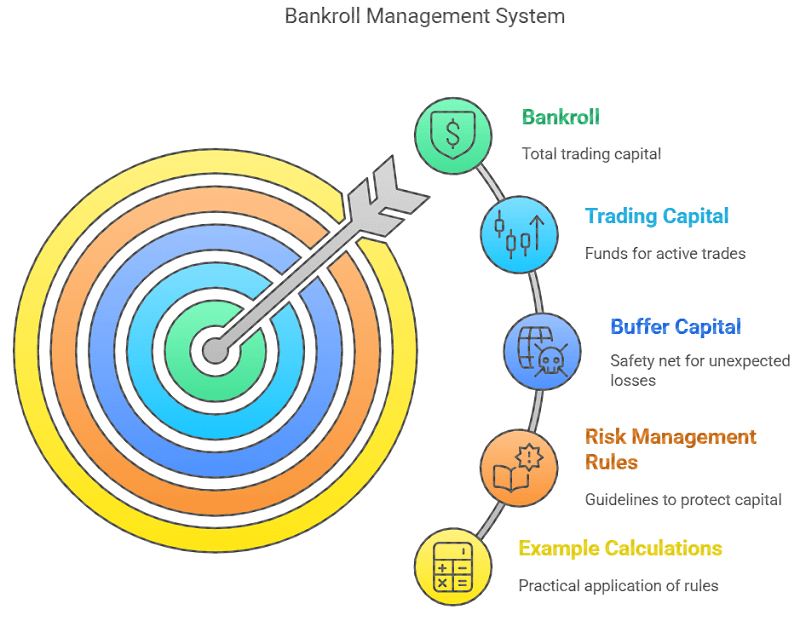
Let’s start with bankroll. Your bankroll is your total trading capital. When I first started, I treated every dollar the same. But I quickly realized that I needed to split my funds into two things:
- Trading Capital (used for active trades)
- Buffer Capital (just in case things go wrong)
So if I deposit $500, I’ll only allow myself to trade with $350 actively. The remaining $150 is off-limits to my safety net.
Here are the bankroll rules I follow:
- Never risk more than 5% of your total balance per trade
- Set a daily stop-loss (mine is 15%)
- Set a daily win goal (mine is 20%)
- Walk away after hitting either one
Let me break it down with an example. If my account has $500:
- 5% per trade = $25 max risk per trade
- 15% daily stop-loss = $75 loss limit
- 20% daily target = $100 win cap
This means I’ll stop trading if I lose $75 or win $100 in a day, no matter what, even if the market looks “perfect.”
Trading psychology is also important to manage your risk.
Stop-Loss on Pocket Option: Is It Even Possible?
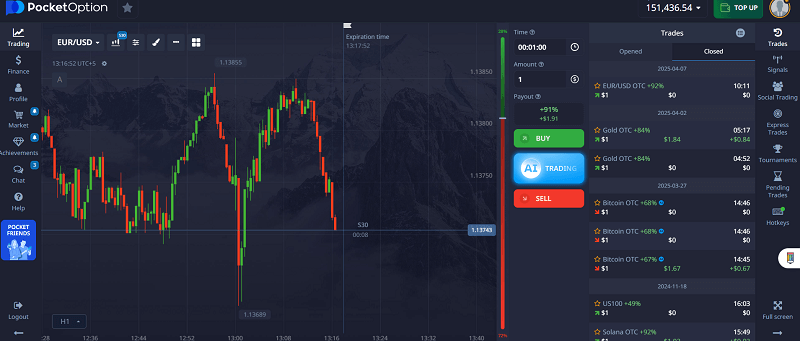
Unlike forex platforms or MT5, Pocket Option doesn’t have a built-in stop-loss feature for binary trades. You can’t just say, “Close my position if it goes against me.” But that doesn’t mean you can’t set one mentally and stick to it.
I call it a “soft stop-loss.” Here’s how I do it:
- Before I open a trade, I decide how many trades I’m willing to take today
- If I lose three trades in a row, I stop trading for the day
- If I lose two trades and start feeling emotional, I walk away
- I track every trade in a spreadsheet, including why I took it and how I felt
This form of discipline saved me countless times. One day, I remember losing two trades on GBP/JPY. I was tempted to double down and make it back. But I forced myself to stop. The next day, the market reversed, and I would’ve lost everything had I stayed.
Discipline starts before you hit ‘Trade’.
Pocket Option’s Pending Trades feature lets you pre-plan your entries — perfect for sticking to a mental stop-loss strategy. Try it now with a small real-money account or demo.
Ideal Risk-Reward Ratios for Binary Trading
Now let’s talk about the part most traders ignore: the risk-reward ratio.
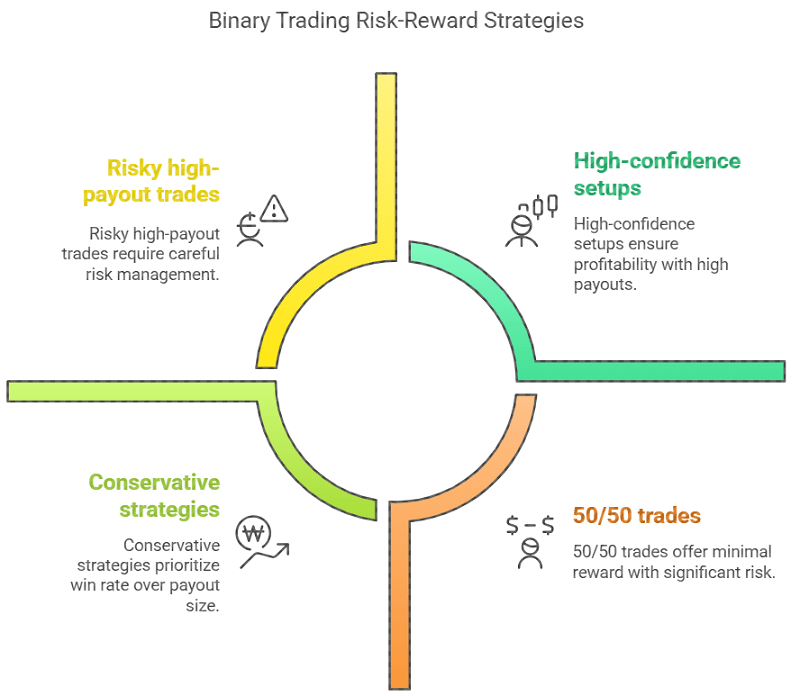
Binary options are a bit different because payouts are fixed. You either win a set percentage or lose the trade amount. But there’s still a way to manage risk-reward smartly.
If a trade offers an 80% payout, that means:
- You risk $100 to win $80
- If you lose, you lose $100
- Your reward is smaller than your risk
This doesn’t sound good, but you can still make it work by:
- Picking only high-confidence setups
- Avoiding 50/50 trades
- Limiting the number of trades per session
I aim for at least 2 wins for every one loss, which is a 66% win rate. This ensures that I stay profitable even with payouts under 90%.
Real Trade Example: Controlled Risk
Let me share a real trade I made last month.
Asset: EUR/USD
Time: 3-minute expiry
Signal: RSI was oversold + bullish engulfing candle
Trade size: $25
Payout: 88% ($21.75 profit)
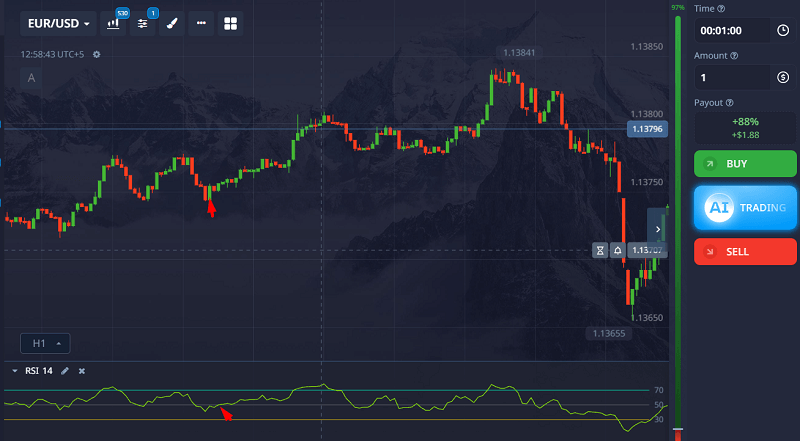
I had already lost one trade earlier, so this was my second for the day. I waited for all my confirmations, including the RSI, candlestick pattern, and news check, and placed the trade only after getting full alignment.
Result: Win
I made a $21.75 profit. I didn’t immediately go back for another trade. I took a break, reviewed the trade, and then placed another trade later that day. That second one was a win, too.
I ended the day up $43.50 on a $50 total risk, with zero stress. That’s the kind of trading that adds up.
What Happens When You Don’t Follow Your Rules
Let me be honest. I’ve broken my own rules. Once, I went into a trade with no signal, just revenge after losing two trades. I doubled my trade size to “make it back.” Lost again. Then doubled again. Lost again.
That day, I lost over $200 in under 10 minutes.
That one day took me a week to recover from, mentally and financially. I now use phone alarms to remind me when I hit my daily limits. It may sound silly, but it works.
Don’t repeat my mistake of revenge trading.
Use Pocket Option’s risk tools and set a daily stop-loss goal. Start small, trade clean, and protect your future wins by protecting your capital today.
Understanding Win Rate Requirements
| Average Payout | Approximate Breakeven Win Rate |
| 70% | 58.8% |
| 80% | 55.6% |
| 90% | 52.6% |
This is why disciplined trade selection matters more than simply trading more often.
What to Do During a Losing Streak
Every trader experiences losing periods.
The difference is how they respond.
Step 1: Stop Trading
Never try to immediately recover losses.
Step 2: Review Your Journal
Look for:
- Rule violations
- Emotional decisions
- Poor market conditions
- Weak setups
Step 3: Reduce Risk
Cut trade size by 50% until consistency returns.
Step 4: Use Demo Trading
Testing strategies in a demo environment helps rebuild confidence without additional losses.
For strategy testing and market outlook analysis, visit the Forecast Hub before entering new trades.
Safe Trading on Pocket Option: Habits That Help
Here are a few habits I use to stay consistent:
- I journal every trade with screenshots and reasons
- I never trade during emotional stress or when tired
- I use the 80/20 rule: 80% watching, 20% trading
- I practice on a demo once a week to test new ideas
- I use Pocket Option’s pending trades feature to avoid impulse trades
Also, I never chase losses. If I hit my stop for the day, I stop. No exceptions.
Common Risk Management Mistakes
Trading Too Large
Risking 20–50% of an account on a single trade leaves no room for mistakes.
Revenge Trading
Trying to recover losses immediately often creates bigger losses.
No Daily Loss Limit
Without a predefined stop point, traders continue making emotional decisions.
Overtrading
Taking dozens of low-quality trades usually reduces profitability.
FAQs About Pocket Option Risk Management
How much should I risk per trade on Pocket Option?
No more than 5% of your total account balance per trade. Many traders do better with just 1–3% risk per trade.
What’s the safest way to trade on Pocket Option?
Use strict bankroll limits, avoid emotional trading, and never risk more than you can afford to lose. High payout trades aren’t always the best if the setup is weak.
Can I use a stop-loss on Pocket Option?
There’s no built-in stop-loss, but you can use mental stop-loss limits or time-based trading caps to control losses.
How do I recover after a losing streak?
Stop trading for the day. Review your journal. Trade demo until your confidence returns. Don’t try to win it all back quickly.
Are there any risk management tools on Pocket Option?
Yes, some VIP features, like cashback, help cushion losses, such as pending trades, trade expiry control, and the demo account.
The Truth Most Traders Won’t Tell You
Trading isn’t about finding the perfect strategy. It’s about surviving the bad days. And those bad days come, no matter how skilled you are.
I’ve learned that the key isn’t to win every trade, but never to lose so much that you can’t return.
Risk management is your best friend if you want to trade full-time or profit consistently. It’s not flashy. It’s not exciting. But it works.
And when everyone else is blowing accounts chasing one big win, you’ll be quietly compounding your balance, one smart, low-risk trade at a time.
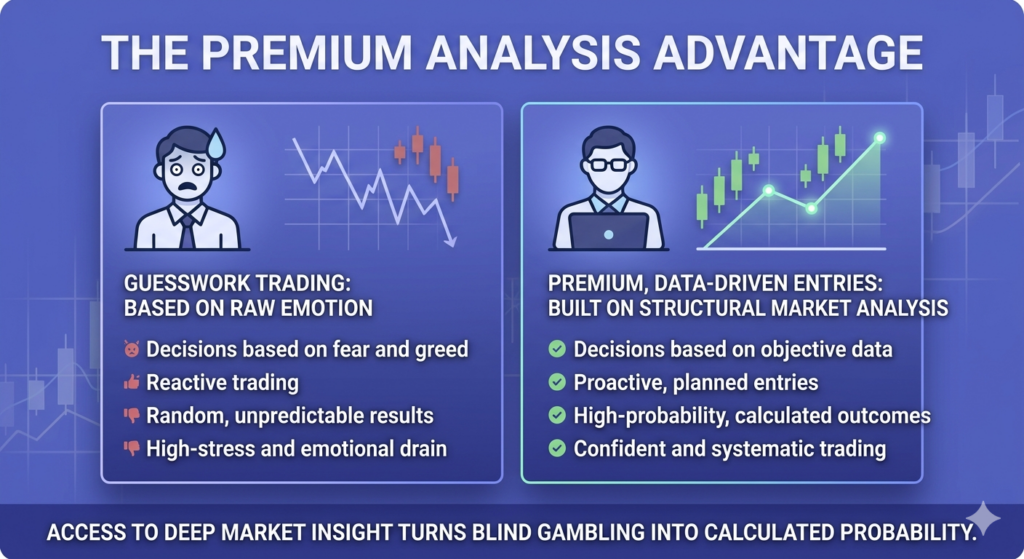
Moving Beyond Guesswork: The Ultimate Edge
If there is one thing my journey has taught me, it is that low-risk trading is not about avoiding losses entirely. It is about making sure that when you do lose, it is a tiny, controlled scratch rather than a fatal wound. The brokers we looked at today provide the physical toolkits to keep you safe, but the ultimate risk management tool is your own knowledge base.
To truly transform your trading from a stressful guessing game into an institutional process, you need deep, structural data analysis that goes far beyond basic retail charting. You need to understand market liquidity, institutional order flow, and underlying macroeconomic structures.
If you are ready to stop trading on pure hope and start building a real, professional edge grounded in institutional analysis, join our community of serious market students. Elevate your approach right now by subscribing to our exclusive framework on the Becoin Premium Membership Portal. Let’s build a sustainable, low-risk career together.