The Day I Stopped Trading and Finally Started Making Money
It was a rainy Tuesday morning, and I was staring at my screen with a familiar knot in my stomach. The previous three days had been a slow, agonizing slide into the red. I had given back two weeks of hard-earned profits in less than seventy-two hours. Every asset I clicked on looked like a jagged, broken mess.
Candles were leaping five pips in a millisecond, leaving long, ugly wicks that snapped through my support levels like dry twigs. Then, they would completely freeze, sitting flat and motionless for minutes at a time.
I was frustrated, exhausted, and desperately trying to find a pattern where none existed. My setup was clear: a simple price action bounce at a key historical level. I took the trade. Within three seconds, the market surged violently against me, paused, and expired out of the money.
I sat back, rubbed my eyes, and realized a painful truth. The problem wasn’t my strategy. The problem was that I was trying to force a valid strategy onto an invalid market.
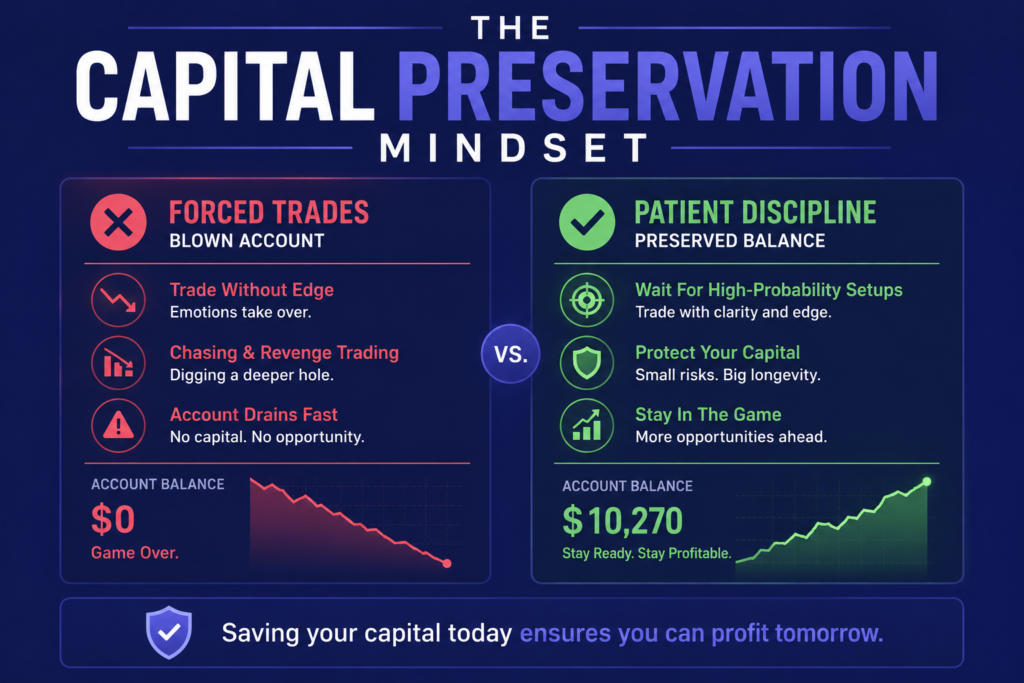
That morning was the turning point in my trading career. It was the day I stopped looking for reasons to trade and started looking for reasons not to trade. Learning how to identify a no-trade day in binary options is the single most important risk management tool you will ever develop.
When you learn to walk away, you protect your capital so that you actually have money left to risk when the market returns to a clean, predictable state.
Why Chasing Bad Markets is a Guaranteed Way to Blow Your Account
When you start out, you assume that being a trader means trading every single day. We look at charts like a regular nine to five job where hours spent behind the desk must equal money earned. In binary options, that mentality is highly dangerous.
Binary options are fixed-risk, all-or-nothing instruments. Because your payout is always slightly less than your risk, you need a high win rate just to break even. If you choose an unreliable platform, your odds drop even lower.
This is why finding the safest trading platforms with a strict risk breakdown is your first line of defense before you even look at the daily charts.
When market conditions degrade, your edge evaporates. In a choppy, low-liquidity market, price action becomes random noise. Your technical analysis fails because the broader market participants aren’t respecting standard structural levels.
If you force trades during these periods, you are not trading; you are simply gambling with worse odds.
The Anatomy of a No-Trade Day: What the Charts Are Telling You
To protect your balance, you must read the structural health of the market within the first fifteen minutes of sitting down. Here are the three distinct warning signs that tell me it is time to close the laptop and walk away.
1. The Chaos of Violent Wicks and Unnatural Spikes
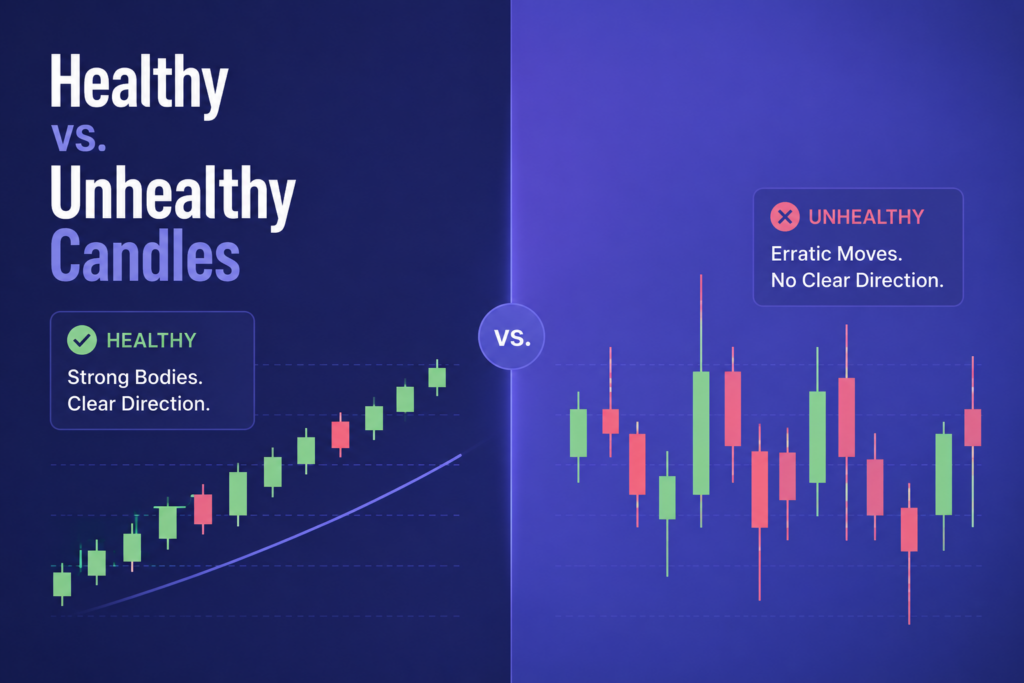
When a market is healthy, candles form smooth, rhythmic sequences. You can see the clear tug-of-war between buyers and sellers. On a no-trade day, that rhythm vanishes. Instead, you see small candle bodies surrounded by massive wicks on both the top and bottom.
These wicks mean the market is highly unstable. Orders are thinning out, and small volume injections are causing wild, erratic price jumps.
If you attempt to enter a position here, you will suffer from severe slippage, or the price will flip past your entry point in the last second of your expiration.
2. The Dead Zone of Flatline Volume
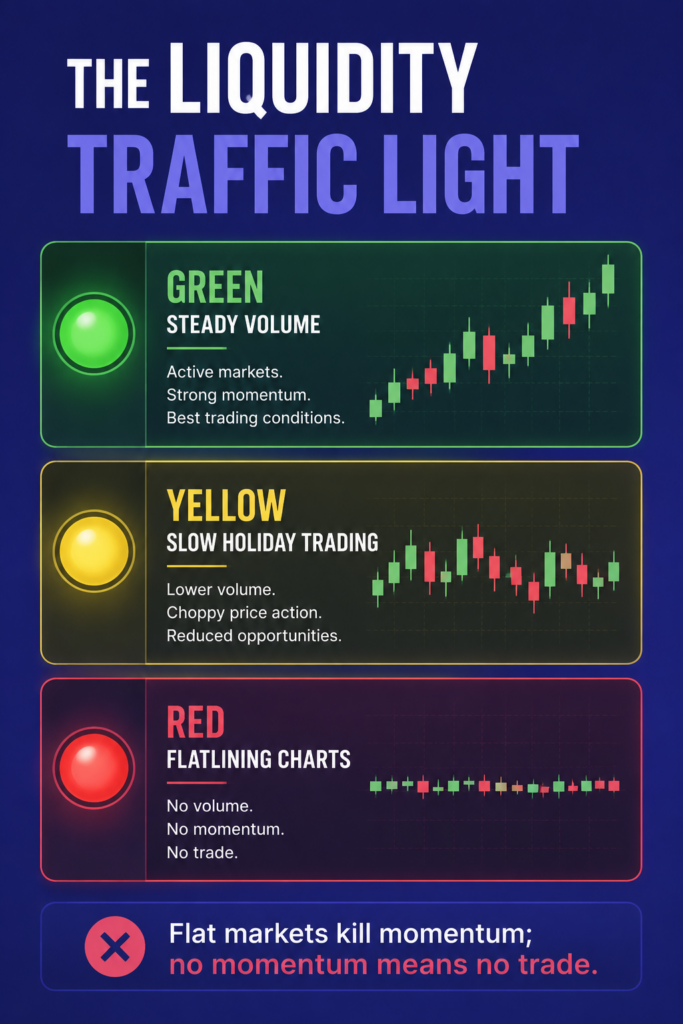
The exact opposite of violent volatility is a completely stagnant market. This usually happens during late Friday sessions, bank holidays, or the awkward gaps between major regional market sessions. The candles become tiny dots or flat dashes.
In this environment, price movement lacks any momentum. If you open a binary options position, the asset might sit exactly where you bought it for five minutes, only to tick against you by a fraction of a pip at the very last second.
Without momentum, technical indicators like Moving Averages or the Relative Strength Index become completely useless, flattening out across the center of your screen.
3. Major Economic Data Releases
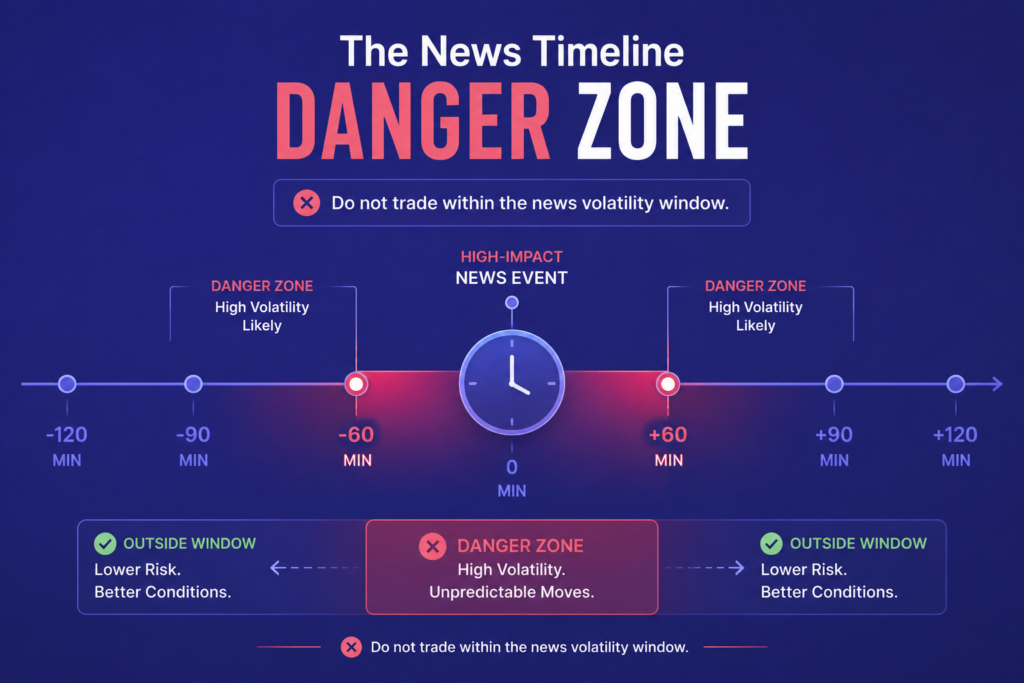
High-impact news is the ultimate disruptor of retail trading strategies. If the Federal Reserve is scheduled to announce interest rate decisions, or if global employment data is dropping, the hours leading up to the announcement are highly dangerous.
Institutions pull their liquidity from the books, causing the market to behave erratically. The minutes following the release are pure chaos. Trying to predict a binary direction during a major news event is a coin toss.
How I Filters My Charts Before Risking a Single Dollar
Every morning, I follow a strict diagnostic routine to determine if the market deserves my money. I start by checking an economic calendar. If there are red-folder, high-impact news events scheduled within two hours of my trading window, I automatically flag the day as high-risk.
Next, I log into my charting software and look at my favorite pairs across multiple timeframes. I look for smooth, trending behavior or clear, well-defined horizontal trading ranges.
If I see overlapping ranges, constant false breakouts, or unpredictable price gaps, I know the market conditions are working against my edge.
Choosing the right workspace also changes how clearly you spot these warnings. I found that using platforms with cluttered, heavily manipulated interfaces often masks bad market conditions.
You need a clear view of pure price action to make accurate judgments. If you are struggling to read the charts cleanly, it is worth looking into which broker has the cleanest interface for beginners to keep your visual analysis objective.
The Psychology of Walking Away: Overcoming FOMO
The hardest part of identifying a no-trade day isn’t reading the charts. It is managing your own mind. Fear of Missing Out (FOMO) is a powerful force.
When you decide not to trade, your brain tricks you into thinking that you are missing out on easy money. You might close your charts, only to open them thirty minutes later on your phone, searching for an excuse to take a quick position.
You must reframe how you view success. In trading, a saved dollar is exactly the same as a earned dollar. When you identify a bad market and choose to sit on your hands, you have successfully executed a professional risk-free decision.
You have beaten the emotional trap that destroys most retail accounts. If you want to dive deeper into why these psychological traps are so lethal for new traders, take a moment to understand why 90% of traders lose money and the real reasons beginners fail.
Setting Up Your Safest Environment for Trading Days
When the market is clean and behaving beautifully, you need to make sure you are executing your trades on reliable, fast infrastructure. A good strategy on a terrible platform will still lose money due to execution delays, unfair payouts, or hidden fees.
For standard, daily price action trading, I highly recommend using verified, established platforms. If you want to compare the two giants in the space regarding execution and usability, check out this guide on Binomo vs IQ Option for small accounts. Both offer stable environments when the market conditions align with your plan.
You can set up your official trading accounts using the links below to ensure you are on fully updated, verified versions of these platforms:
- Start tracking clean market trends on IQ Option Official Signup
- Practice your price action strategies via Deriv Trading Portal
- Access fast execution with Pocket Option Platform
- Trade on optimized charts through Quotex Broker
- Analyze major currency pairs on ExpertOption
- Test market liquidity using Olymp Trade
- Manage your risk profile with CapitalCore
Make Keeping Out of Bad Markets Your Superpower
Professional trading is a game of patience, preservation, and precise execution. The amateur looks at the market and asks how much money they can make on every single wave. The professional looks at the market and asks how they can protect their capital from unnecessary exposure.
Start treating your no-trade days as victories. When you look at an ugly, chaotic chart and confidently close your terminal, you are acting like a fund manager. You are treating your capital with the respect it deserves. The market will always be there tomorrow, but your account balance will only be there if you protect it today.
If you are tired of guessing whether today is a safe day to trade, or if you want to stop analyzing complex market data entirely on your own, let us do the heavy lifting for you.
Get access to real-time, professional daily market structure breakdowns, algorithmic filters, and high-probability setups curated by institutional analysts. Join our community today and upgrade to the Becoin Premium Tariff Plan to give your retail trading account a true professional edge.