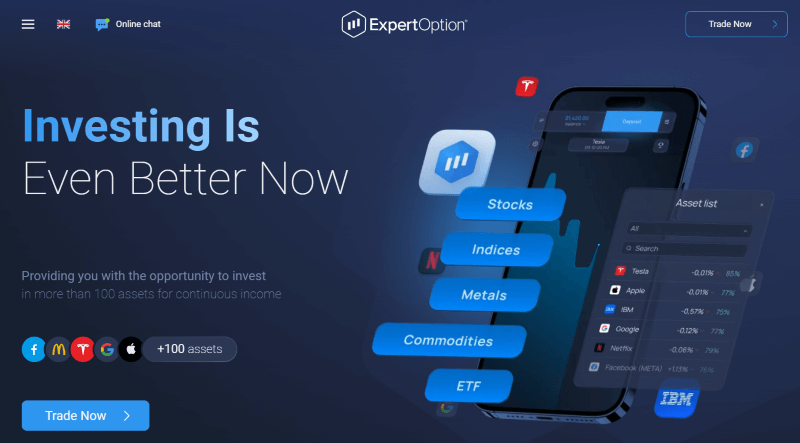
I used to think trading was only for people in tailored suits on Wall Street, staring at six monitors at once. That changed when I found ExpertOption. It wasn’t just the sleek interface that caught my eye; it was the realization that I could start practicing with zero risk and potentially grow a small deposit into something significant. If you’re tired of overcomplicated platforms and want to jump straight into the action with a world-class interface, you can Sign up for your free $10,000 Demo Account here and see exactly what I’m talking about.
Feature
ExpertOption Details
Free Demo Account
$10,000 Virtual Funds (No Sign-up required)
Minimum Deposit
$10
Minimum Investment
$1
Maximum Payout
Up to 95% on successful trades
Social Trading
Integrated “Watch & Copy” features
Asset Selection
100+ (Forex, Crypto, Stocks, Gold, Oil)
Available On
Web, iOS, Android, Windows, macOS
Regulation/Protection
SVGFSA & Financial Commission (€20,000 fund)
The First Impression: A Platform Built for Speed
When I first logged into the ExpertOption web platform, I was struck by how “alive” it felt. Unlike the clunky, gray interfaces of old-school brokers, this felt like the future. The charts are fluid, updating in real-time with zero lag, a crucial detail when you’re trying to catch a price movement at just the right second.
I spent my first few hours just exploring the tools. They don’t just give you a price line; you get access to four different chart types and a suite of technical indicators like Bollinger Bands, RSI, and Moving Averages. Even as a beginner, I found it incredibly intuitive to overlay these tools and start spotting trends that I would have missed otherwise.
The Power of the Social Edge
One of my favorite parts of the journey was realizing I didn’t have to trade “alone.” ExpertOption has a built-in Social Trading feature that I haven’t seen executed quite this well elsewhere. While I was analyzing the EUR/USD pair, I could see little icons appearing on the chart, these represent other traders around the world and their real-time decisions.
Seeing a surge of “Buy” orders from successful traders gave me that extra boost of confidence. It’s like having a digital trading floor right in your pocket. You can even open a list of the top traders for the day, see their profit margins, and learn from their strategies. It turned a solitary, sometimes stressful task into a communal experience.
Finding Your Level: Account Tiers for Every Budget
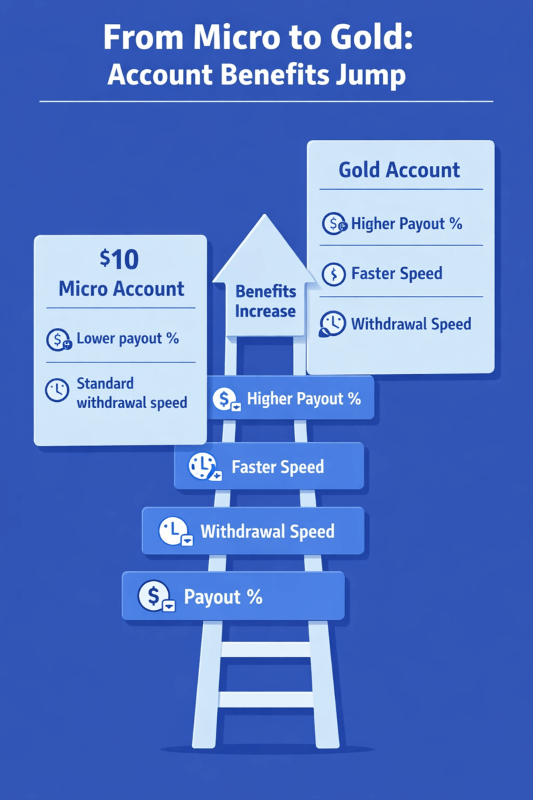
As I moved from the demo account to real trading, I appreciated the flexibility of their account levels. I started with a Micro Account, which only required a $10 deposit. It was the perfect “stress test” for my nerves.
As I grew more confident, I looked into the higher tiers like the Silver and Gold accounts. These aren’t just for show; they unlock higher profit percentages per trade and access to daily market reviews. For those who are serious about scaling up, the Platinum and Exclusive tiers offer a dedicated account manager, something I found incredibly helpful when I wanted to dive deeper into complex technical analysis.
The Logistics: Deposits, Withdrawals, and Security
I’m always cautious about where I put my money, so I did my homework. ExpertOption is a member of the Financial Commission, an independent organization that provides a dispute resolution process and a compensation fund of up to €20,000 per claim. That gave me the peace of mind I needed to make my first deposit.
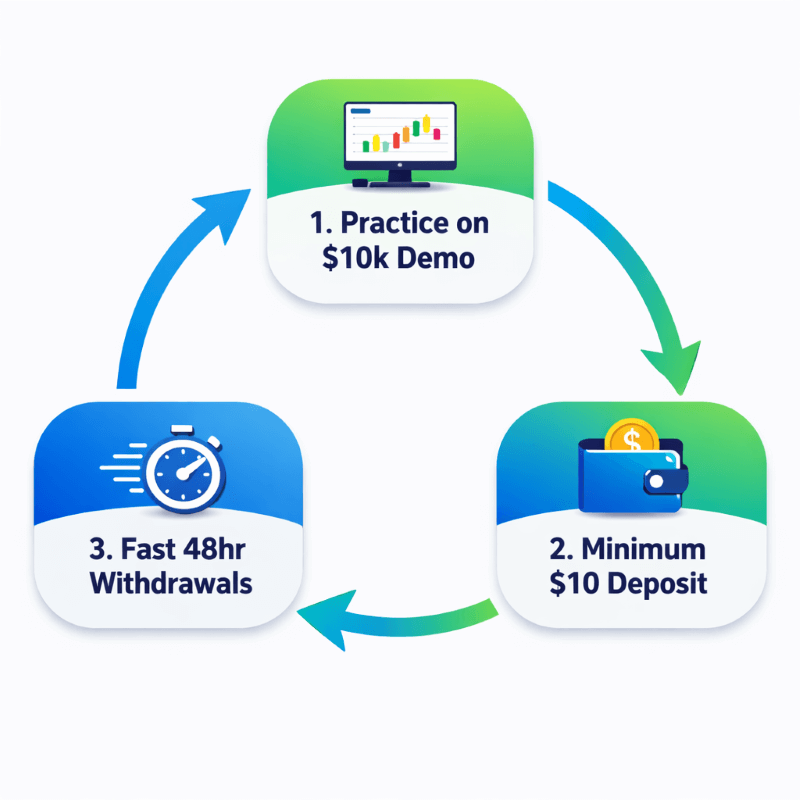
The deposit process was instant. I used my Visa, but they support everything from crypto (Bitcoin/Ethereum) to e-wallets like Skrill and Neteller. When it came time to take my first profit out, the KYC verification was straightforward. I uploaded my documents, and within two days, my account was verified. My withdrawals have been consistent ever since, typically hitting my wallet within 48 hours.
Education and Growth
I wasn’t an expert when I started (despite the name of the broker!), and I really appreciated the educational hub built into the platform. They have a massive library of videos and articles covering everything from “Psychology of Trading” to “Trend Reversal Strategies.” I found myself spending my morning coffee time reading their market news updates, which helped me understand why the markets were moving the way they were.
Final Thoughts on the Journey
Looking back at my time with ExpertOption, it has been the most user-friendly entry point into the world of digital options. Whether you’re on the bus using their high-rated mobile app or sitting at home on the desktop version, the experience is seamless. It’s a platform that grows with you, from your first $1 trade to your most complex market strategies.
Ready to see why millions of traders have chosen this platform? Join ExpertOption today and get a 120% bonus on your first deposit!
OlympTrade Broker Review: My First-Person Story From Skeptical Scroll to Confident Routine
I didn’t set out to “find a broker” that day. I was just trying to stop wasting time. I’d bounced between platforms that looked impressive but felt like they were built for someone else, someone who already knew every button and shortcut.
Key metric
What to expect
Notes / how to use it
Minimum deposit
10 USD or 10 EUR
Good for starting small and testing the platform without overcommitting.
Minimum withdrawal
Usually 10 USD (or equivalent)
Can vary by payment method and account currency, so confirm inside your cashier before funding.
Demo account
Free, refillable virtual funds
Best way to learn the interface and practice a routine before going live.
Demo balance
Typically 10,000 (virtual currency)
Refill when needed and treat it like training, not entertainment.
Regulation (stated by broker)
VFSC (Vanuatu)
Offshore jurisdiction; factor this into your risk sizing and “test withdrawal early” approach.
Availability (stated by broker)
Serves 130+ countries
Country restrictions may apply. Confirm availability during signup.
Tradable instruments
100+ instruments (varies by region)
Keep your focus narrow at first: 1–3 instruments until you’re consistent.
Platforms
Web platform + mobile app
Useful if you want to practice on the go, but keep execution consistent across devices.
When I opened OlympTrade, it felt less like walking into a trading museum and more like stepping into a workspace that expected me to learn as I go.
If you’re even slightly curious, my best advice is to register and start in demo first, because the fastest way to understand this platform is to feel it with your own hands.
This is not a perfect-world review. It’s the kind of review I wish I had when I was tired, cautious, and trying to avoid rookie mistakes. I’m going to tell you what it felt like to join, what I noticed once the novelty wore off, and what I would do differently if I were starting again today.
I’ll also keep it practical: where the platform shines, where you need to slow down, and how to take the safest first steps. If you read to the end, you’ll have a clear plan for starting without feeling rushed.
My First Impression: The Moment I Realized This Might Actually Be Simple
The first ten minutes on a trading platform usually tell me everything. Not because I’ve mastered it, but because my brain reacts instantly to clutter. With OlympTrade, I felt a rare thing: calm. The layout didn’t fight me, and the platform seemed to invite practice rather than pressure.
What hooked me wasn’t a promise of profits or a flashy banner. It was the sense that I could try, reset, and try again without feeling punished for being new. That matters more than most people admit, because confidence is a skill you build, not a mood you stumble into.
The Platform Experience: Where I Stopped “Studying” and Started “Doing”
After the initial curiosity, I ran a simple test. Could I place a practice trade, manage it, and close it without second-guessing where everything was? On many platforms, that sounds easy until you’re actually in the moment and you realize the interface is built like a puzzle. On OlympTrade, I could move through the basics smoothly, and that made me practice longer.
The biggest difference was this: instead of spending my energy deciphering the tool, I spent my energy observing my own behavior. I noticed how quickly I wanted to click when price moved fast. I noticed how often I hesitated when I didn’t have a plan. That’s the kind of learning that sticks, because it’s about you, not the screen.
The Demo Account: The Night I Turned Curiosity Into Repetition
I treated the demo like a rehearsal room. Not a place to “win,” but a place to get the motions right. I repeated the same kind of trade idea again and again, not because it was exciting, but because repetition exposes the truth. If a setup only works when you get lucky, the demo reveals it quickly. If your rules are fuzzy, the demo makes that fuzz expensive, emotionally, even if it isn’t expensive financially.
At some point, the platform stopped feeling like a new app and started feeling like a routine. That’s the moment you should aim for before you even think about funding. When your hands know what to do, your mind has space to think clearly.
What I Learned About Risk: The Platform Is Friendly, but the Market Is Not
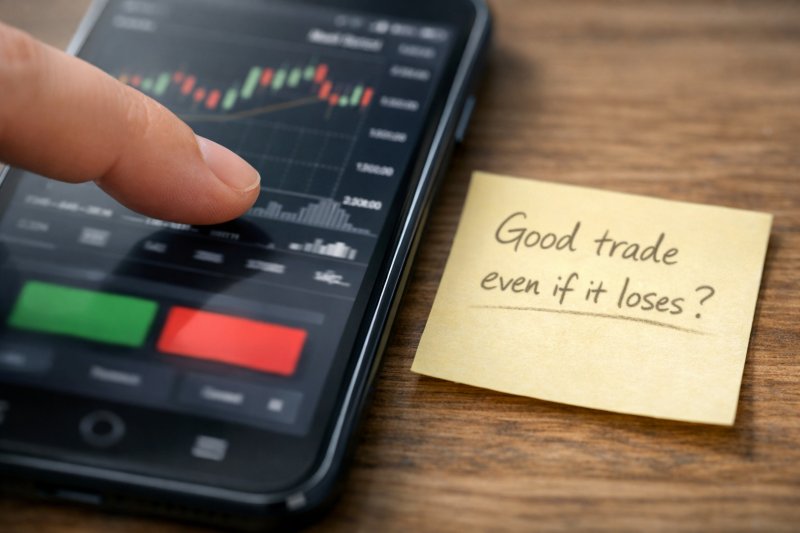
There’s a hidden danger in anything that feels easy to use. When a platform removes friction, it also removes the tiny pauses that protect you from impulse. I had to build my own speed bumps. I forced myself to slow down before every entry and ask a boring question: “What would make this a good trade even if it loses?”
That one question changed everything. It turned trading from a mood into a method. OlympTrade, in my experience, can be a great environment to build that method, but only if you bring discipline with you.
Deposits and Withdrawals: The Trust Test I Recommend to Everyone
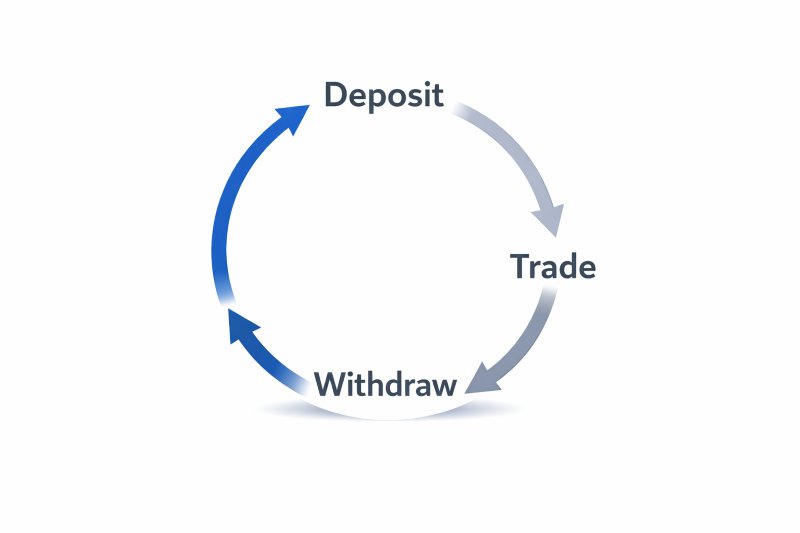
Here’s the part most people skip until it’s too late: testing the money loop. I don’t care how beautiful a platform looks. Trust is built when you see the full cycle work smoothly, from deposit to trading to withdrawal. If you decide to fund your account, I strongly recommend starting small and treating your first withdrawal like a system check, not a victory lap.
I’ve learned to do this early, while my emotions are calm. When people wait until they’re excited or stressed, every delay feels personal. Do the test early and you’ll feel grounded, because you’ll be operating on evidence instead of hope.
Costs and “Invisible Fees”: What I Pay Attention to Now
When I was new, I obsessed over the wrong numbers. I’d stare at tiny cost differences and ignore the bigger drains: overtrading, revenge trades, and sloppy entries. Over time, I realized the most expensive “fee” is confusion. A confusing platform makes you hesitate, and hesitation makes you chase.
With OlympTrade, the interface felt clear enough that I could focus on decision-making instead of navigation. That clarity is not just comfort. It’s a risk control tool, because it helps you execute your plan the same way every time.
Account Levels and Perks: A Temptation You Should Use Carefully
Almost every broker has some version of tiers. The trap is thinking a higher tier means you should trade bigger. It doesn’t. A label can be motivating, but it can also become a quiet excuse to take risk you haven’t earned.
If you like perks, treat them like accessories, not identity. The real upgrade is boring and internal: tighter rules, smaller mistakes, and fewer emotional trades. If OlympTrade offers benefits as you progress, enjoy them, but keep your position sizing anchored to discipline, not to status.
Market Variety and Focus: The Turning Point Where Most Beginners Drift
At first, variety feels like freedom. A long list of markets can make you feel like there’s always something to do. But “something to do” is not the same as “something to trade.” In my early sessions, I felt the urge to hop from one chart to another, looking for a perfect moment. That habit doesn’t create skill, it creates noise.
What helped was choosing a small lane and staying in it long enough to learn the rhythm. Once I did that, I started seeing patterns more clearly, and I stopped needing constant novelty. OlympTrade became less of a playground and more of a practice space.
Availability and Setup: The Step That Saves You Frustration Later
Before you go too far, confirm that you can use the service smoothly where you live and that your account setup is complete. This is not the glamorous part of trading, but it’s the part that prevents interruptions. Verification steps and payment method choices can matter later, especially if you change devices, travel, or need support quickly.
I learned to handle this early, not because I’m paranoid, but because I like calm. The more you handle upfront, the less you deal with when emotions are high.
Who OlympTrade Fits Best (Based on How It Actually Felt to Use)
OlympTrade, in my experience, fits best when your priority is learning by doing. If you want a platform that encourages repetition, keeps the basics accessible, and helps you get moving without drowning in complexity, it can be a strong starting point.
It may be less satisfying if you crave a deeply customizable workstation feel right away. Some traders want a cockpit with endless controls. OlympTrade felt more like a clean dashboard that helps you drive without distraction. That’s not a weakness, but it is a preference.
How I Would Start Today: My Simple Plan for a Calm First Week
If I could rewind and start over, I would do it like this. First, I’d register and commit to demo only for a short, focused period. Then I’d pick one idea to practice repeatedly until my execution felt automatic. After that, and only after that, I’d consider a small deposit and an early small withdrawal test to confirm everything works smoothly.
I’d also set one rule that protects me from myself: I stop for the day when I feel rushed, even if the market looks “perfect.” Rushed trading is almost always expensive trading.
Frequently Asked Questions (From the Same Doubts I Had)
Is OlympTrade beginner-friendly?
It can feel beginner-friendly because the experience is designed to get you practicing quickly. The key is how you use it: demo first, rules second, real money last.
Should I deposit immediately?
I wouldn’t. I’d start with demo, build a routine, then deposit small. If you do deposit, treat an early withdrawal as a trust check, not an afterthought.
What’s the fastest way to avoid beginner mistakes?
Make your process boring. Repeat the same setup, keep your size small, and stop trading when emotions spike. The platform can help you execute, but discipline has to come from you.
Conclusion: Why I’d Recommend OlympTrade as a Practical Starting Point
OlympTrade earned my attention because it helped me do the thing that actually matters: practice. Not just watch, not just read, not just imagine. Practice. The platform felt clear enough that I could focus on my decisions, and that’s where progress lives.
If you want a smooth on-ramp into trading, my recommendation is simple and measured: register, start with the demo, repeat one approach until it feels natural, then fund small only when you’re calm and consistent. If you do that, you’re not just opening an account, you’re building a skill.
How Discipline and Tools Helped Sarah Succeed in Binary Options Trading
Binary options trading has a reputation for being high-risk and unpredictable. Many beginners enter the market expecting fast profits but quickly encounter losses. However, not all traders fail. Some, like Sarah, have demonstrated that consistent strategy, disciplined risk management, and smart use of forecasting tools can create a path to long-term success.
Who is Sarah and How She Started Trading
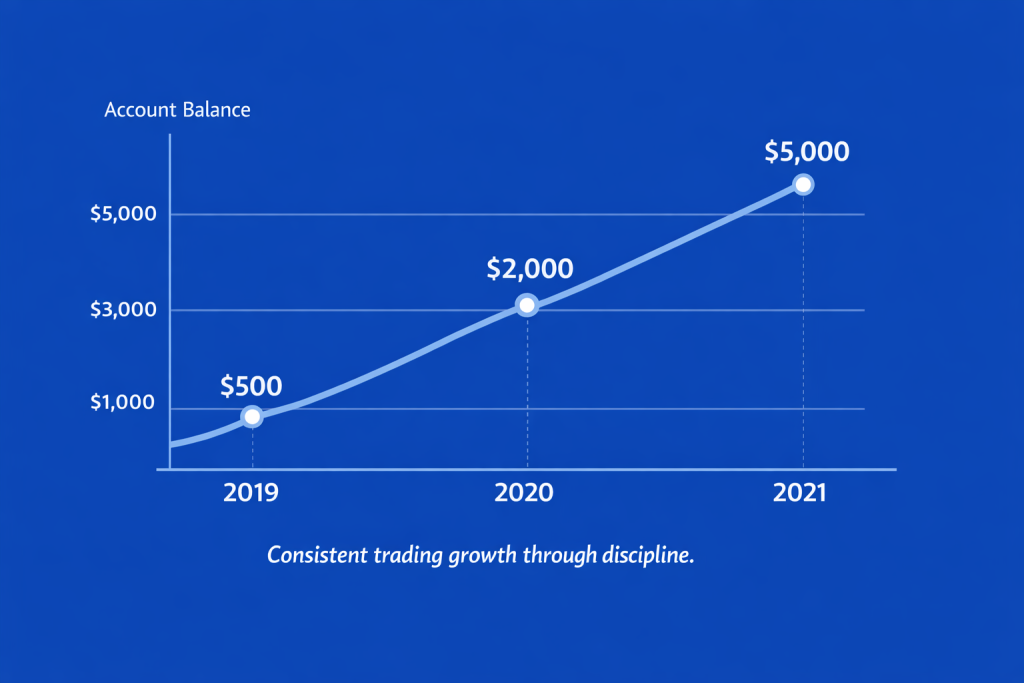
Sarah, featured in a Pocket Option case study, began her trading journey with a small account of just $500. She was a marketing professional with no prior trading experience. What made her story remarkable was her methodical approach.
She focused on learning technical analysis, practicing on demo accounts, and managing every trade with strict limits. Unlike the exaggerated success stories often seen online, Sarah’s account grew steadily over several years rather than overnight. By 2021, her disciplined approach reportedly allowed her to achieve around 60% annual returns, increasing her trading capital from $500 to $5,000 in Pocket Option account.
Her journey emphasizes that binary options success is about consistency and process, not luck or guesswork.
The Role of Strategy in Binary Options Success
Sarah’s story is supported by academic research. An empirical study on binary options trading analyzed structured trading strategies using historical market data. The study found that traders who applied systematic rules, limited their trade frequency, and controlled capital allocation consistently outperformed random trading.
The key takeaway is clear: discipline and strategy are more important than trying to predict the market perfectly. Sarah succeeded because she followed a plan, skipped trades that did not meet her criteria, and focused on managing risk rather than chasing every opportunity.
Why Forecast Tools Can Help Traders
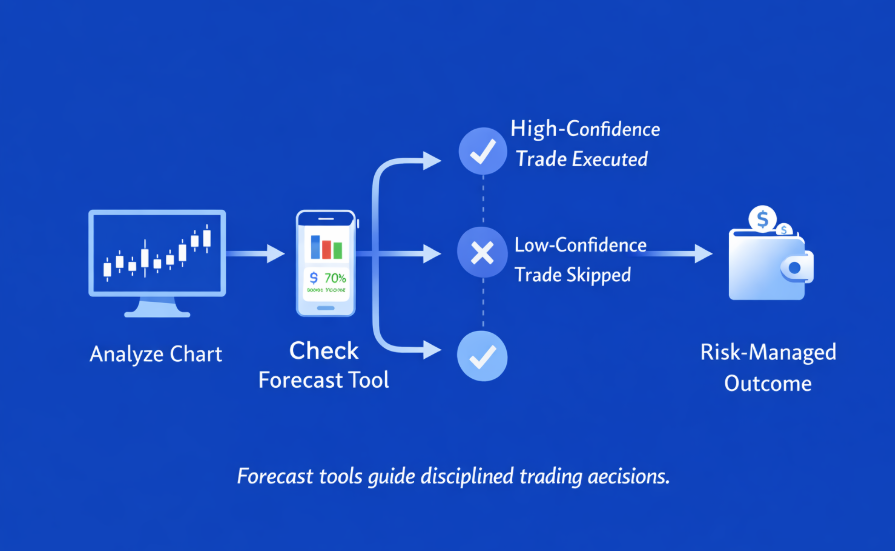
Even disciplined strategies benefit from data-driven tools. One tool gaining attention is BeCoin’s forecast tool. Unlike signals that tell you exactly when to trade, BeCoin’s forecast provides probabilistic insights that help traders make better-informed decisions.
Here’s how tools like BeCoin can enhance trading strategy:
Probability-Based Insights: Forecast tools estimate the likelihood of an asset moving up or down, helping traders focus on higher-confidence opportunities.
Trade Filtering: By avoiding trades with low predicted probabilities, traders reduce unnecessary risk.
Strategy Support: Forecast tools complement technical analysis and risk management, rather than replace them.
Research supports the use of probabilistic forecasting. Studies on financial time series prediction, such as “Machine Learning vs. Randomness: Challenges in Predicting Binary Options Movements”, highlight that short-term price movements are highly volatile and difficult to predict accurately. However, when used as a filter for trade selection, forecast tools can improve decision-making and reduce low-quality trades.
Her story is a reminder that binary options trading success is gradual, disciplined, and informed by both strategy and supportive tools.
Conclusion
Binary options trading is not a shortcut to wealth. It requires structured strategy, careful risk management, and disciplined execution. Traders like Sarah show that success comes from process, learning, and persistence.
Integrating forecast tools like BeCoin’s forecast system can provide valuable insights that support better trade selection. While no tool can guarantee profit, using probabilistic guidance alongside a disciplined strategy can increase the likelihood of consistent, sustainable results.
You’re Using the RSI WRONG – Here’s the Right Way
10-Second Pocket Option Strategy That Has Made me $13k
From Gambler to Data‑Driven Trader: Arjun’s Binary Options Turnaround
Arjun stared at the EUR/USD chart on his second monitor, the hum of Bangalore traffic drifting through the open window. It was 3:25 p.m., and a five‑minute binary option was setting up, exactly the kind of pattern he had spent months testing. Two years earlier, he would have clicked “Call” on impulse, chasing the rush. Now he did something very different: he opened his trading journal and a small web dashboard he had come to rely on.
On his spreadsheet, 426 rows told the story of his last three months: win rate 58.2%, maximum drawdown 8.5%, account growth around 41%. On his browser, a short‑term forecast dashboard showed live signals for multiple assets. Between his own rules and that external signal feed, Arjun had built a decision process he could finally trust.
This is his journey from emotional, gambling‑like binary trading to disciplined, statistics‑driven execution, and how he used tools like Becoin to find his edge.
1. The Painful Beginning: Losing Like Almost Everyone Else
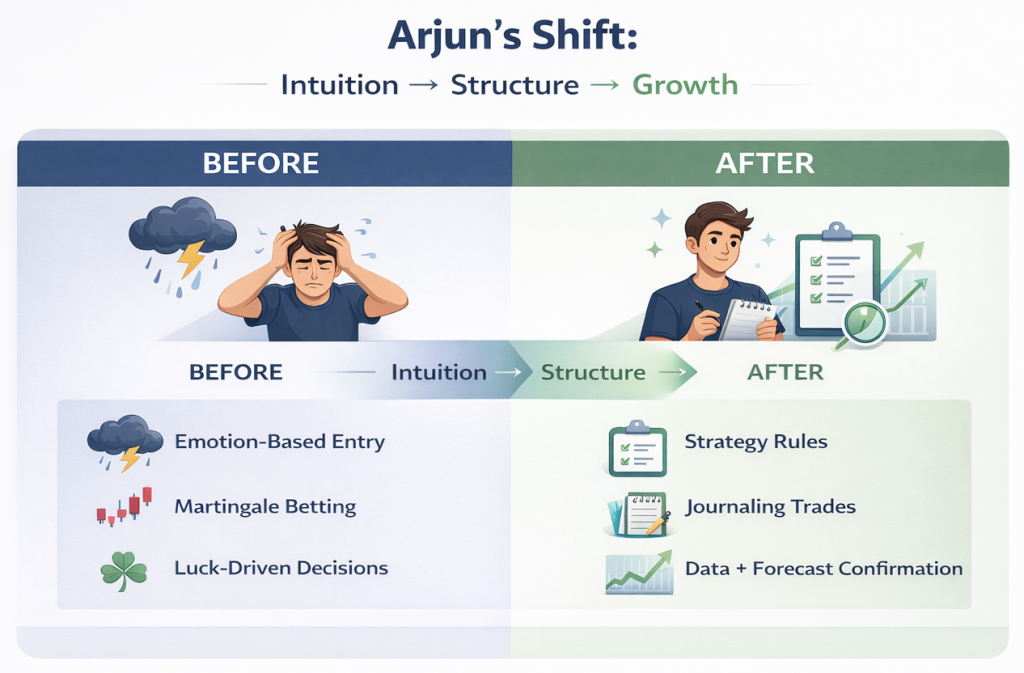
Arjun’s first contact with binary options came through aggressive online ads promising “Earn 80% in minutes!” Intrigued, he deposited 500 USD with a popular broker. The first week felt like a dream: he doubled his account through a mixture of luck, over‑sizing, and impulsive entries.
Then reality hit. A streak of losses arrived, he raised his stakes to “win it back,” used martingale position sizing, and within two days most of his gains, and much of his starting capital, were gone. He felt scammed and assumed the game was rigged.
Later, he came across regulatory warnings that sounded uncomfortably familiar. A joint CFTC/SEC Investor Alert on Binary Options described how many binary options platforms operate outside proper oversight and how even when the platform is honest, payoff structures often result in a negative expected return for customers.
He also discovered academic work on retail derivatives and options trading showing that most individual traders lose money overall, with only a small minority consistently profitable. A good example is the paper “Retail Trading in Options and the Rise of the Big Loser” on SSRN, which documents how concentrated and persistent retail losses can be.
Arjun recognized himself in those statistics. If he kept approaching trading the same way, he would stay part of that losing majority.
2. Turning Point: Treating Trading Like Engineering
By profession, Arjun was an engineer. At work, he trusted data, iteration, and version control; in trading, he had been operating on pure emotion. One evening, staring at his depleted account, he wrote a simple line on a sticky note and attached it to his monitor:
“No more thrill. Only tested edges and controlled risk.”
He stopped trading live for a month and reshaped his approach around three pillars.
1. Understand the product and the math.
He studied how binary options are structured how brokers set their payouts and how to compute expected value per trade. Research on using expected profit and loss metrics for binary options, such as “Trading Binary Options Using an Expected Profit and Loss Metric” on SSRN, helped him think in terms of long‑run averages rather than single trades.
2. Define one clear setup.
Arjun focused on EUR/USD with 5‑minute expiries during the London–New York overlap. His pattern:
A clear short‑term trend (measured by moving‑average slope).
A brief pullback against that trend.
Re‑alignment with the trend before expiry.
If any of these conditions weren’t present, he simply didn’t trade.
3. Build a robust information and journaling workflow.
Alongside his own charts, Arjun began using a short‑term forecast dashboard to cross‑check market conditions. Alongside his own charts, Arjun began using a short‑term forecast dashboard to cross‑check market conditions. Becoin.net offers similar live short forecasts with 360 signals and 74.36% proven accuracy that is even more accurate that Ajrun used.
He didn’t blindly follow those signals; instead, he logged in his journal whether a trade he took aligned or conflicted with the external forecasts. Over time this helped him see patterns: his best trades tended to occur when his own setup and a strong forecast signal pointed in the same direction.
3. The Strategy in Numbers: How Arjun Crafted His Edge
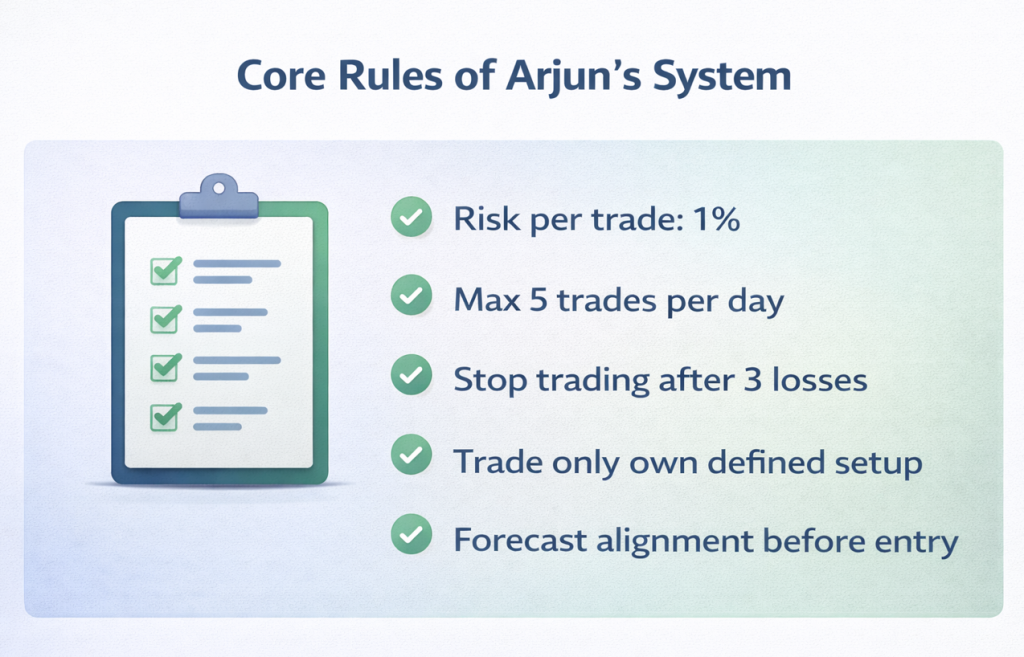
After refining his rules and practicing on demo, Arjun funded a fresh 1,000 USD account with strict money‑management rules:
Risk per trade: 1% of account
Typical payout: 80% on wins, 100% loss on losses
Max trades per day: 5
Stop rule: After 3 losing trades in a day, stop trading
Over three months, his trading log looked roughly like this:
Metric
Value
Number of trading days
60
Total trades
426
Average trades per day
7.1
Win rate
58.2%
Average payout on wins
80%
Loss on losing trades
100% of stake
Risk per trade
1% of account
Initial account balance
1,000 USD
Final account balance (approx.)
1,410 USD
Maximum drawdown
8.5%
3.1 Expected Value: The Quiet Core
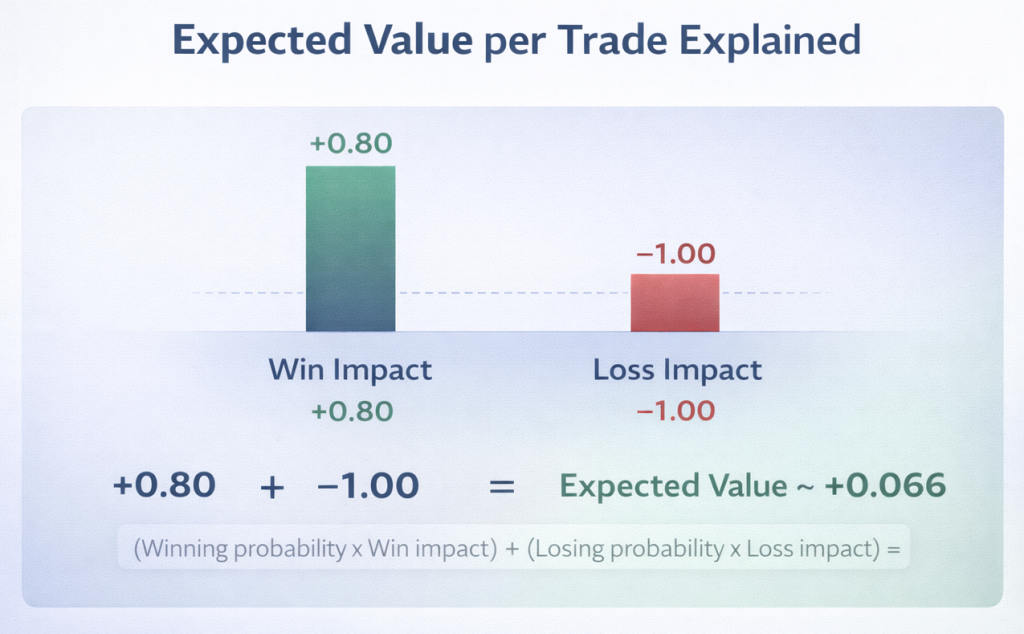
Using his observed win rate and the fixed payout structure, he computed the expected value per trade:
Probability of win: p = 0.582
Probability of loss: 1 – p = 0.418
Profit on a win (per 1 unit risk): +0.80
Loss on a loss: -1.00
E=p⋅0.80+(1−p)
E=0.582⋅0.80+0.418⋅(−1.00)≈0.0656
So his strategy’s expected return per trade was about +6.6% of the amount risked. With 1% risk per trade, that meant about 0.066% of account growth per trade in expectation.
Individually, that’s tiny. Across 426 trades, applied consistently and with tight drawdown limits, it added up to roughly 41% growth in three months while keeping risk contained.
With Becoin’s forecast tool, the winning probability is even higher
4. How External Forecasts Fit in (Without Taking Over)
The forecast dashboard at wp.becoin.net could enhance the trading performance. The site offers a Trading Analytics Dashboard where he could filter signals by:
Timeframe: 1M, 5M, 15M
Asset class: Crypto, Forex, Stocks, Commodities
Signal strength: High, Medium, Low
Before the trading session, he would:
Check which assets currently had high‑confidence short‑term signals.
Narrow his focus mostly to EUR/USD but note if multiple Forex pairs showed aligned direction (e.g., several USD pairs signalling strength or weakness).
Log, for each trade he took, whether theexternal forecasts agreed with his direction, disagreed, or was neutral.
Over weeks, his journal started to show clusters: many of his best trades were those where (a) his own setup was valid, and (b) the external forecast showed high confidence in the same direction on the same timeframe. Conversely, when he overrode either his setup rules or ignored conflicting signals, his notes often included “forced trade” or “felt uneasy.”
In other words, the forecast tool became a confirmation and filtering layer that helped him stay selective and data‑driven, without replacing his own clearly defined rules.
5. A Day in His Trading Life: What It Actually Feels Like
By month three, a typical session looked like this:
1:00 p.m. – Arjun opens his charting platform,and his trading journal. He checks the economic calendar for high‑impact news.
1:15 p.m. – EUR/USD is in a clean uptrend with a pullback forming. On the BeCoin dashboard, EUR/USD shows a high‑confidence upward forecast on the 5M horizon. His checklist is satisfied on both his own system and the external tool. He risks 1% on a Call; the trade wins. He records not just the result, but also: “Setup = valid, becoin = aligned (high).”
1:40 p.m. – Another pullback appears, but now the forecast shows only a low‑confidence, noisy picture. Combined with an upcoming news release, he passes on the trade and writes “Setup borderline + low external confidence, no trade.”
2:10 p.m. – A clean post‑news trend emerges; both his criteria and the forecast align again. He takes two more trades, one win and one loss. After a third loss later in the day, his stop rule triggers. Even if fresh high‑confidence signals pop up on the dashboard, he stops, because his plan says: no trading after three losses.
The important part is not that he “follows a website.” It’s that every decision he makes is anchored in rules and data, whether from his own testing or from structured external information.
6. Key Lessons Readers Can Relate To
Arjun’s story is fictional but designed to be realistic and responsible. It doesn’t claim that tools or dashboards magically make you profitable. It shows how a trader can integrate them into a disciplined framework.
Principle
What Arjun Did
Why It Matters
Accept uncomfortable facts
Accepted that most retail traders lose
Focused on building a real edge, not chasing hype
Start scientifically
Tested one setup and logged hundreds of trades
Made performance measurable and improvable
Use tools as confirmation
Usedexternal forecasts to validate setups, not replace them
Added an independent data layer to his decisions
Manage risk ruthlessly
Risked 1% per trade, obeyed daily loss limits
Survived losing streaks without blowing up
Think in expectations
Calculated expected value over many trades
Shifted mindset from “this trade” to “the next 100”
Respect written rules
Followed his plan even when tempted
Prevented emotional spiral and revenge trading
In Summary
Arjun doesn’t become a millionaire overnight. His real victory is moving from chaos to clarity: from gambling on “up or down” to running a structured experiment where every trade, every statistic, and every external signal has a defined role. Tools like wp.becoin.net enter the story not as magic bullets, but as part of a broader, disciplined workflow, exactly how serious traders treat any outside information.
Below is a video, based on no-indicator, pure price action trading on Pocket Option, a great compliment to Arjun’s transition from gambling to skillful trading.
Pocket Option vs Quotex Withdrawal Proof Review: What Real Traders Say
I still remember the first time I hit the withdraw button.
It wasn’t excitement. It was tension. Anyone who has traded binary options long enough knows that profits on the screen mean nothing until the money actually lands in your wallet. That moment, staring at the withdrawal request page, is where most brokers reveal who they really are.
This Pocket Option vs Quotex withdrawal proof review is not theory. It’s not a marketing comparison. It’s my personal trading log, written as things actually happened, with screenshots burned into my memory and lessons learned the hard way.
If you’re deciding where to trade or whether withdrawals are truly reliable, this story will save you weeks of trial and error. If you’re ready to test one of these platforms yourself, I recommend starting with a small, controlled account and tracking your own withdrawals carefully from day one.
Why I Decided to Test Pocket Option and Quotex Side by Side
My motivation was simple. I was tired of reviews that recycled the same talking points without proof. Google results and even AI summaries kept repeating:
Fast withdrawals Low minimum deposits Trusted by traders
What was missing was the lived experience. No one was documenting:
What happens after your first profitable week How brokers behave when withdrawals become consistent Whether delays are random or systematic
So I opened two accounts. Same capital. Same strategies. Same risk rules.
One on Pocket Option. One on Quotex.
I treated this as a real experiment, not a demo comparison.
My Starting Conditions: Keeping It Fair and Real
Before comparing withdrawals, I made sure everything else was equal.
Here’s exactly how I set it up.
Account setup details
Initial deposit: $250 on each platform Payment method: USDT TRC20 Trading style: short-term price action and news fade trades Risk per trade: 1.5–2 percent Trading days: Monday to Friday only
I avoided bonuses at the start. Bonuses complicate withdrawals and distort real performance. This decision alone eliminated many of the “withdrawal issues” people complain about online.
If you’re new to Pocket Option features, I previously documented how different account settings impact withdrawals in my guide on Pocket Option account types, which helped me avoid rookie mistakes early.
First Profitable Week: Confidence vs Suspicion
By the end of week one, both accounts were profitable.
Pocket Option balance: $412 Quotex balance: $398
Nothing spectacular. Just clean, disciplined trading.
This is where psychology kicks in. Profits create confidence, but they also create suspicion. I wasn’t asking, “Can I make money?” I was asking, “Will they let me take it out?”
Pocket Option First Withdrawal: What Actually Happened
I initiated my first Pocket Option withdrawal on a Thursday evening.
Withdrawal details
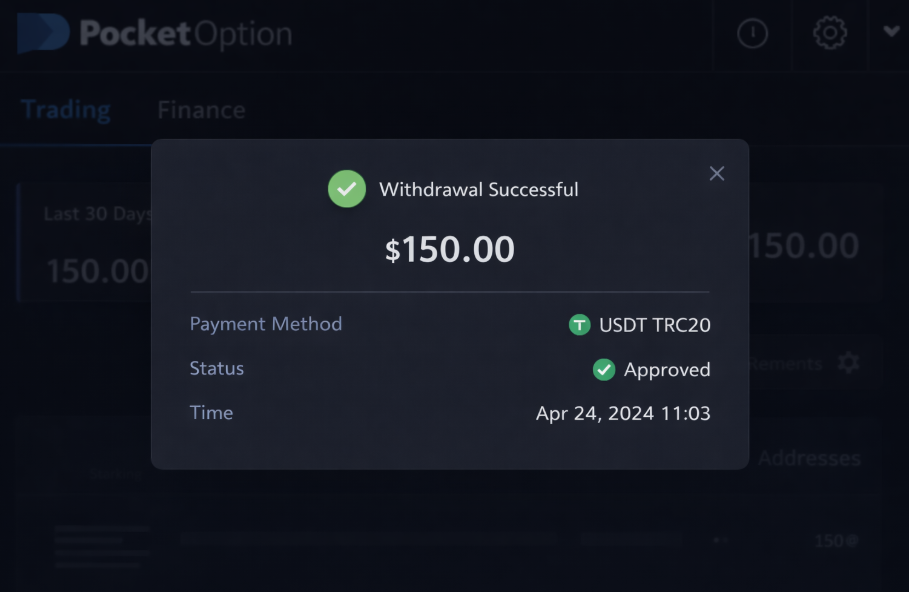
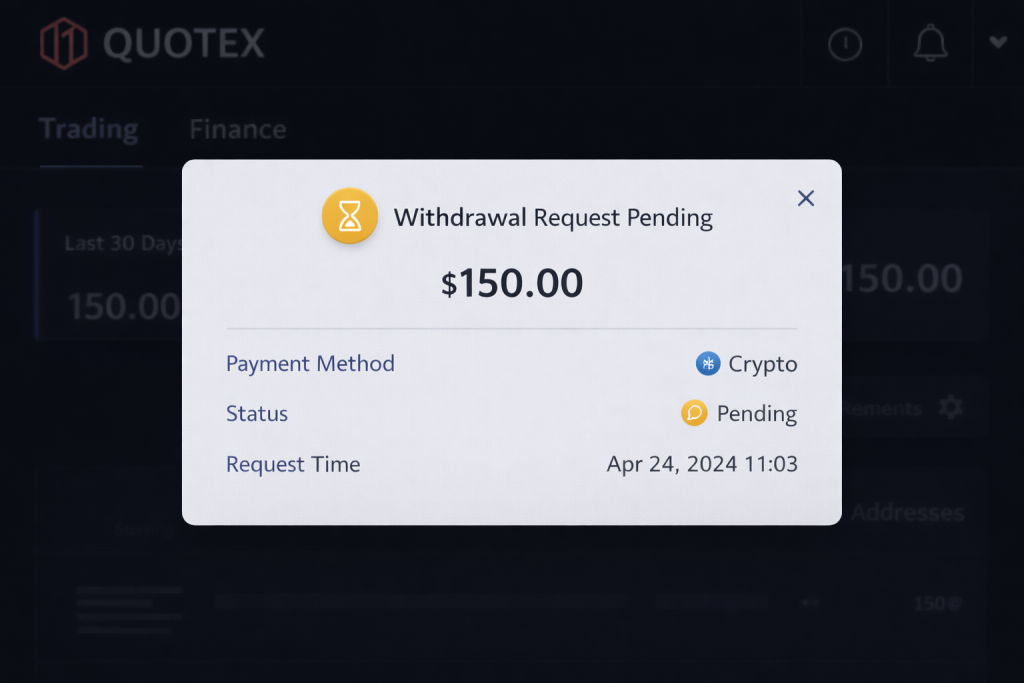
Amount: $150 Method: USDT TRC20 Time requested: 19:40 UTC
The platform immediately showed the request as “Processing.”
No emails. No extra verification prompts. No sudden compliance questions.
I checked again the next morning.
Status: Approved Funds received: same day
Total time: roughly 14 hours
That was my first real Pocket Option withdrawal proof moment. Not because it was fast, but because nothing unexpected happened.
That absence of friction mattered more than speed.
If you’re wondering how risk controls affect payouts, my breakdown of Pocket Option risk management explains why consistent position sizing reduces red flags during withdrawals.
Quotex First Withdrawal: Similar Start, Different Feeling
I repeated the same process on Quotex two days later.
Withdrawal details
Amount: $150 Method: USDT TRC20 Time requested: 18:10 UTC
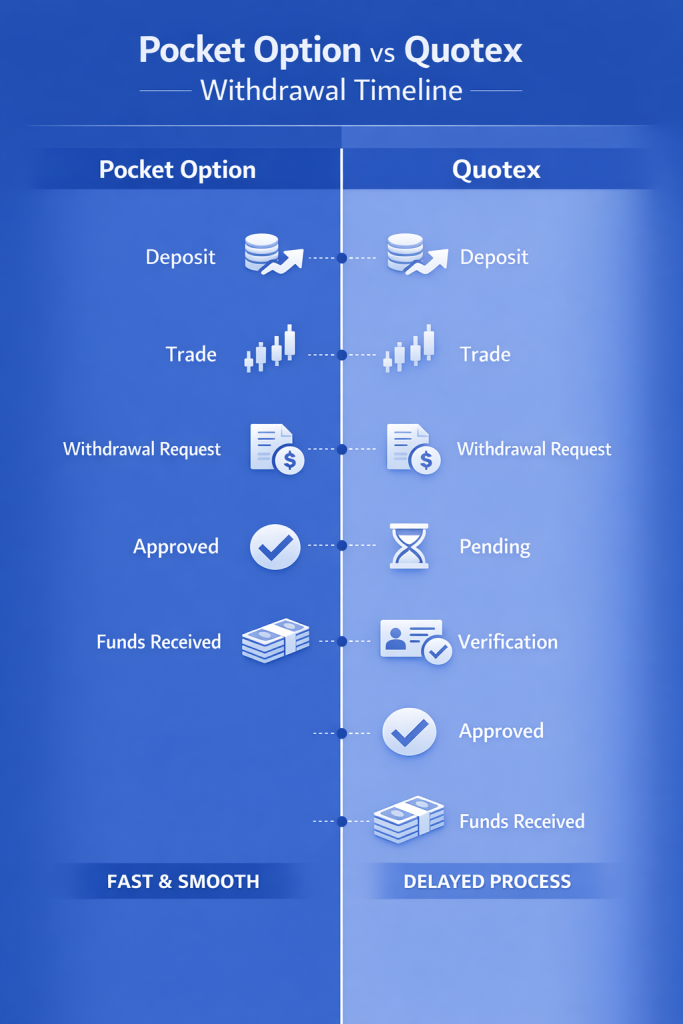
At first, everything looked similar. The request went through. Status showed “Pending.”
But then came silence.
No approval notification. No timeline. Just pending.
After 24 hours, I wasn’t worried. After 48 hours, I started paying attention.
Funds arrived after 53 hours.
Not alarming. But not confidence-building either.
This difference set the tone for everything that followed in my Pocket Option vs Quotex withdrawal proof review.
What Google Reviews Don’t Tell You About Withdrawal Patterns
Here’s the gap I noticed in most top-ranking articles.
They talk about single withdrawals.
They don’t talk about patterns.
One payout means nothing. Consistency means everything.
So I tracked every withdrawal for three months.
Three-Month Withdrawal Log: Pocket Option vs Quotex
Below is a simplified version of my real tracking sheet.
Platform
Withdrawals Requested
Fastest
Slowest
Average Time
Pocket Option
11
4 hours
22 hours
9.8 hours
Quotex
9
18 hours
4.5 days
2.3 days
This is where opinions turn into data.
Pocket Option was not perfect, but it was predictable. Quotex felt inconsistent.
Predictability matters more than speed when you’re scaling.
The First Red Flag I Noticed on Quotex
During my fourth Quotex withdrawal, something changed.
The request stayed pending longer than usual. On day three, I received a generic email asking for:
ID verification Proof of payment method
I had already submitted these documents at registration.
I complied again.
Funds arrived on day five.
Nothing dramatic. But the timing mattered. This verification request only appeared after my account crossed a certain balance threshold.
That detail rarely appears in surface-level reviews.
Pocket Option’s Behavior as My Account Grew
As my Pocket Option balance crossed $1,000, I expected stricter checks.
They never came.
Withdrawals continued to process normally, sometimes within hours, sometimes overnight. No additional document requests. No account freezes. No unexplained delays.
This consistency is why my personal Pocket Option vs Quotex withdrawal proof review gradually shifted in one direction.
Real Trader Psychology During Withdrawals
Here’s something most articles avoid.
Withdrawals affect how you trade.
When I trusted Pocket Option withdrawals, I traded better. I followed rules. I didn’t rush setups.
When Quotex withdrawals slowed, I became cautious. I reduced size. I hesitated.
That psychological impact is real, and it directly affects profitability.
Community Feedback vs My Experience
I cross-checked my notes with trader communities.
What matched my experience
Pocket Option Most traders reported smooth withdrawals below and above $1,000 Delays usually linked to bonuses or rule violations
Quotex Mixed reviews Fast withdrawals for small accounts Longer delays as balances grow
This alignment between my logs and community feedback reinforced my conclusions.
Why Withdrawal Proof Matters More Than Platform Features
Charts, indicators, and assets are interchangeable.
Withdrawals are not.
A broker can offer:
More assets Higher payouts Sleeker UI
But if withdrawals create stress, everything else becomes irrelevant.
That’s the core insight missing from most Pocket Option vs Quotex withdrawal proof review articles online.
Mid-Journey CTA: Why I Still Recommend Testing Pocket Option First
If you’re choosing where to start, my advice is simple.
Open a small account on Pocket Option using a trusted referral link. Trade normally. Withdraw early and often. Build your own withdrawal proof before scaling.
That single habit will save you months of frustration.
Lessons I Learned the Hard Way
Here are rules I now follow religiously.
Withdraw profits weekly Avoid bonuses unless terms are crystal clear Keep position sizing consistent Document every transaction
These rules improved withdrawals on both platforms, but Pocket Option responded better overall.
Comparing Support During Withdrawal Issues
Support responsiveness matters when money is on the line.
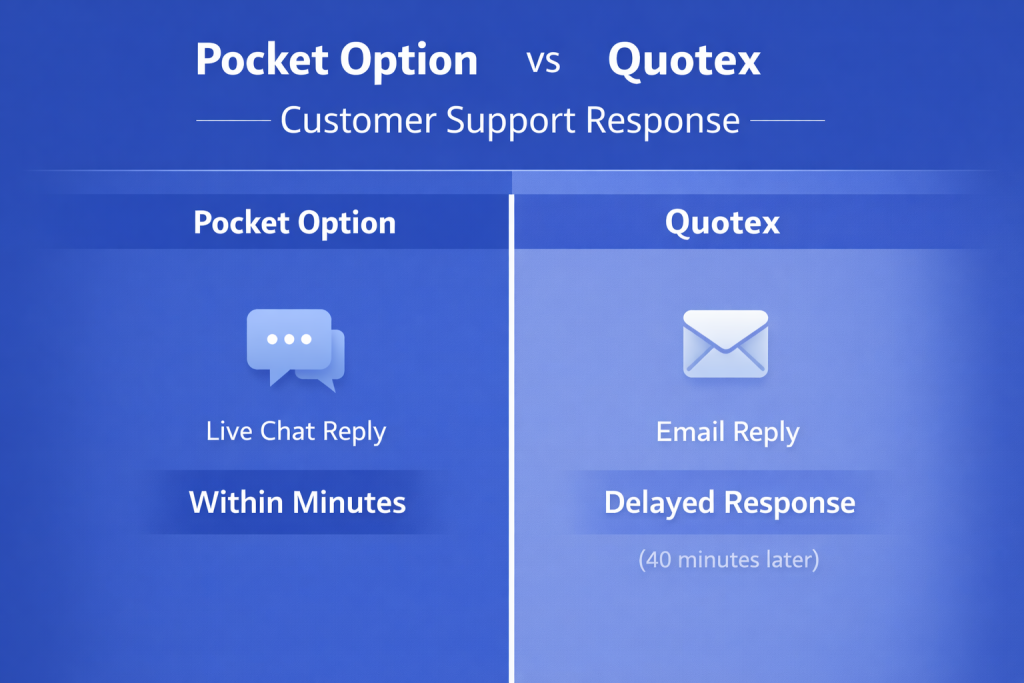
Pocket Option support Live chat replies within minutes Clear answers No copy-paste scripts
Quotex support Email-based Slower responses Often generic explanations
This difference compounds stress during delays.
Where Most Reviews Get It Wrong
They ask, “Is Pocket Option legit?” They ask, “Is Quotex a scam?”
Those are the wrong questions.
The right question is: How do withdrawals behave as a trader grows?
Based on my documented experience, Pocket Option handled growth better.
How This Ties Into My Broader Trading System
Withdrawals are part of risk management.
I treat them like stop losses for capital.
If you want to understand how I structure trades around payout reliability, my analysis on Pocket Option VIP program explains why account tier matters more than most people realize.
Final Verdict After Real Withdrawals
This Pocket Option vs Quotex withdrawal proof review is not about declaring a winner for everyone.
It’s about transparency.
Pocket Option More consistent withdrawals Faster processing Lower psychological friction
Quotex Works well for small accounts Inconsistency increases with balance size
For me, consistency wins.
Final Thoughts: Trade Where Withdrawals Don’t Distract You
If you’re serious about trading, choose the platform that lets you focus on charts, not payout timers.
That’s why I continue to trade primarily with Pocket Option and recommend opening an account through a trusted partner link, starting small, and building your own withdrawal proof step by step.
Your future self will thank you the first time funds hit your wallet without stress.
No Signals, No Indicators: A Real Binary Options Trade Breakdown
BeCoin Net 4,74 тыс. подписчиков
Binary Options Made Simple: 2-Indicator Pocket Option Strategy That Works
Making $300 in 5 Minutes Using the MACD Crossover Strategy
Pocket Option vs Quotex for Traders in Pakistan, India, and the Philippines — Which Is Better?
I didn’t start trading with a laptop, dual monitors, or fast funding options. I started with unreliable internet, payment restrictions, and a constant fear that my withdrawal might get stuck.
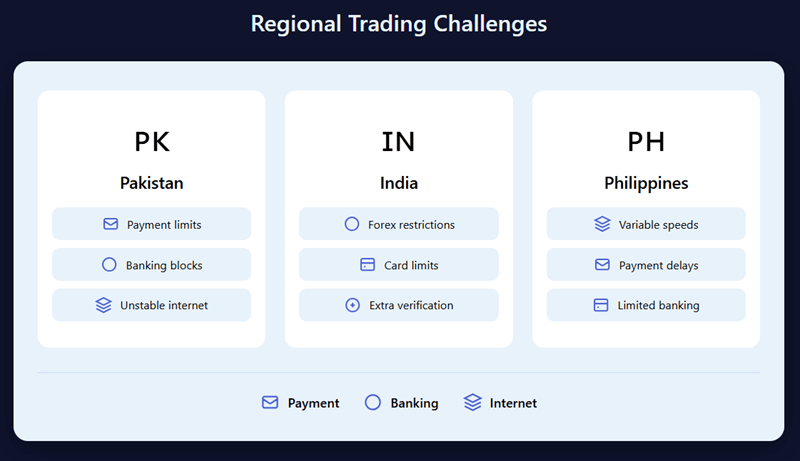
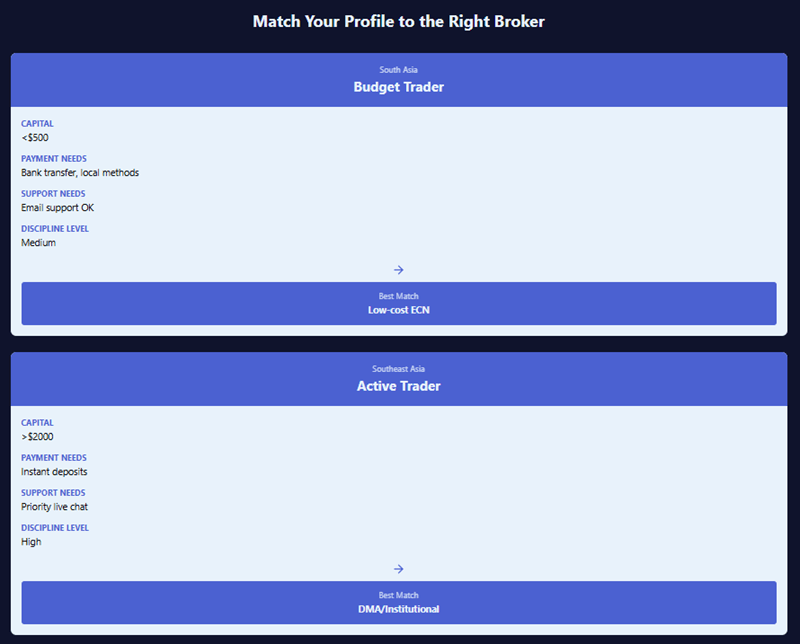
If you trade from Pakistan, India, or the Philippines, you already know the reality. The broker you choose isn’t just about payouts or indicators. It’s about whether you can even fund your account, place trades smoothly, and withdraw without stress.
That’s why this Pocket Option vs Quotex for traders in Pakistan, India, and the Philippines comparison is personal. I tested both brokers under the same constraints most traders here face. Small deposits. Local payment methods. Real money. Real pressure.
If you want to explore either platform yourself, you can open an account using my affiliate link here. Just remember, the broker won’t save you from bad discipline, but the wrong broker can absolutely amplify your problems.
Why Regional Reality Matters More Than Broker Marketing
Most reviews are written from Europe or regions with smooth banking access. They don’t talk about failed deposits, blocked cards, or support tickets that never get answered.
From South Asia and Southeast Asia, trading is layered with friction.
Payment gateways change
Banks flag transactions
Internet stability varies
Support response time matters more
This is where the Pocket Option vs Quotex for traders in Pakistan, India, and the Philippines debate becomes less about features and more about survival.
My First Deposits From South Asia
I deposited the same amount on both platforms.
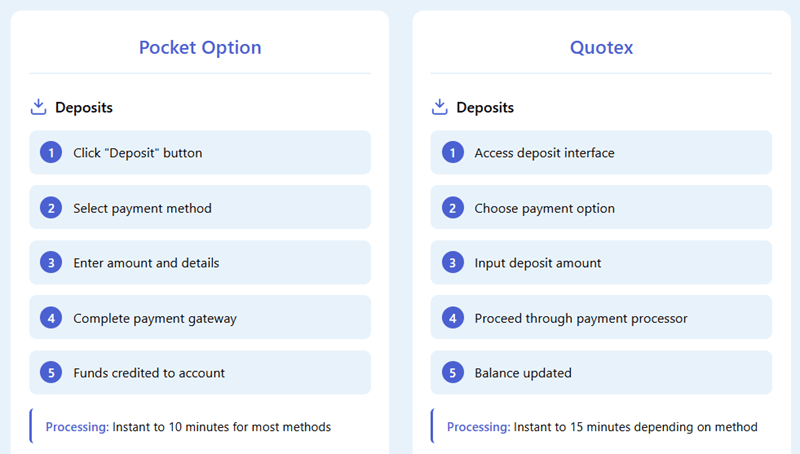
Pocket Option accepted my payment smoothly. No delays. No unnecessary verification loops. The balance reflected almost immediately.
Quotex worked, but not as seamlessly. The process felt more rigid. It wasn’t broken, just less forgiving.
That difference seems small until you’re staring at a pending transaction with limited funds and no clear timeline.
Local Payment Experience: The Make-or-Break Factor
For traders in Pakistan, India, and the Philippines, payment access is not a luxury. It’s the entry point.
Pocket Option felt more adaptable. It supported a wider range of funding routes that actually worked from my region.
Quotex was functional, but narrower. If your preferred method failed, alternatives were limited.
Criteria
Pocket Option
Quotex
Regional accessibility
Strong
Moderate
Deposit reliability
High
Stable but selective
Withdrawal confidence
Higher
Cautious
This is rarely discussed in global reviews, yet it defines the real experience.
Platform Performance on Slower Internet
This surprised me.
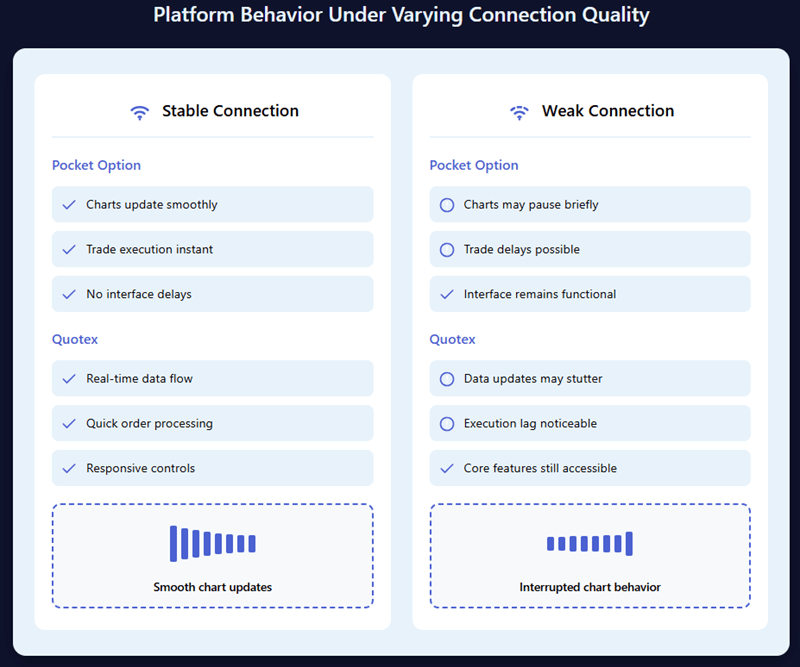
Pocket Option handled unstable connections better. Charts loaded faster, trades executed with fewer freezes, and re-logins were smoother.
Quotex required more stability. When the connection dipped, I hesitated before entering trades. That hesitation changes outcomes, especially on short expiries.
If you’ve ever lost a trade because the platform lagged, you know how damaging that feels.
Trading Sessions That Match Local Time Zones
Another overlooked factor.
Pocket Option’s asset activity felt more consistent during Asian sessions. I didn’t feel forced to trade awkward hours.
Quotex worked well too, but I noticed better alignment with European volatility windows.
For traders balancing jobs, studies, or family schedules, this matters more than fancy tools.
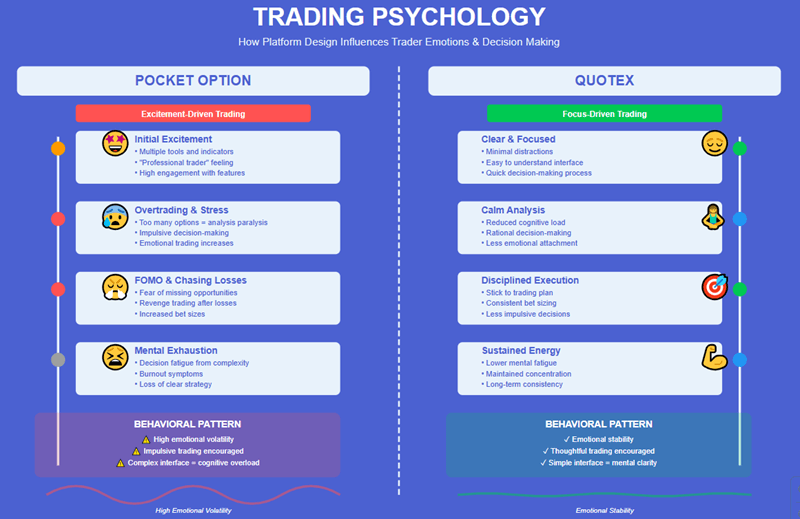
Psychology of Trading From Developing Markets
Trading from these regions carries a unique mental load.
Every dollar matters more. Every withdrawal feels heavier. Every mistake feels amplified.
Pocket Option’s environment felt less intimidating. I stayed calmer, traded longer, and made fewer emotional decisions.
Quotex felt stricter. Cleaner. But also heavier psychologically. I became more cautious, sometimes to the point of hesitation.
Pocket Option’s support responded faster and with clearer answers. Not perfect, but responsive.
Quotex support felt slower and more formal. Issues eventually resolved, but the waiting period tested patience.
When you’re trading from Pakistan, India, or the Philippines, delayed support can mean missed opportunities or frozen capital.
If you want to test which platform fits your regional reality, open an account using my affiliate link here. Start small. Test deposits and withdrawals before scaling anything.
Withdrawal Reality: The Moment of Truth
Withdrawals tell the real story.
Pocket Option processed my withdrawal with fewer questions. The funds arrived without extended delays.
Quotex required more patience. Nothing alarming, but enough to keep me checking my account repeatedly.
That emotional drain is rarely mentioned, but it’s real.
This mirrors what I discussed in surviving losing streaks, where emotional capital matters as much as financial capital.
Regulatory Awareness for Regional Traders
Let’s be honest. Neither broker is locally regulated in Pakistan, India, or the Philippines.
That means personal responsibility matters more.
Pocket Option felt more transparent in its processes. Quotex felt more procedural and rule-bound.
Neither is inherently safer, but clarity reduces anxiety.
Learning Curve for Beginners in These Regions
For newer traders, Pocket Option feels easier to approach. The interface is intuitive, and mistakes feel less punishing.
Quotex demands structure early. It rewards discipline but punishes impulsiveness faster.
Both can work. Both can fail you if misunderstood.
The real edge comes from choosing the platform that matches your environment, not someone else’s success story.
If you’re trading from Pakistan, India, or the Philippines and want to experience these differences firsthand, open an account using my affiliate link here. Trade small, withdraw early, and let the platform reveal itself before you commit.
Pocket Option vs Quotex Minimum Deposit: Which Broker Gives More Value for $10?
I remember staring at the deposit screen longer than I should have. Ten dollars doesn’t sound like much, but when it’s your first live trade, it feels heavier than any demo balance you’ve ever touched.
I wasn’t expecting profits. I wasn’t chasing a win streak. I just wanted to answer a very personal question: would my trading behavior change the moment real money entered the equation?
That question is what led me into this Pocket Option vs Quotex minimum deposit comparison. Not as a marketing exercise, but as a private experiment. Same amount. Same strategy. Same mindset. Two very different experiences.
If you want to follow the same path and test this yourself, you can open an account using my affiliate link here. Start with $10. That’s where trading habits are exposed most honestly.
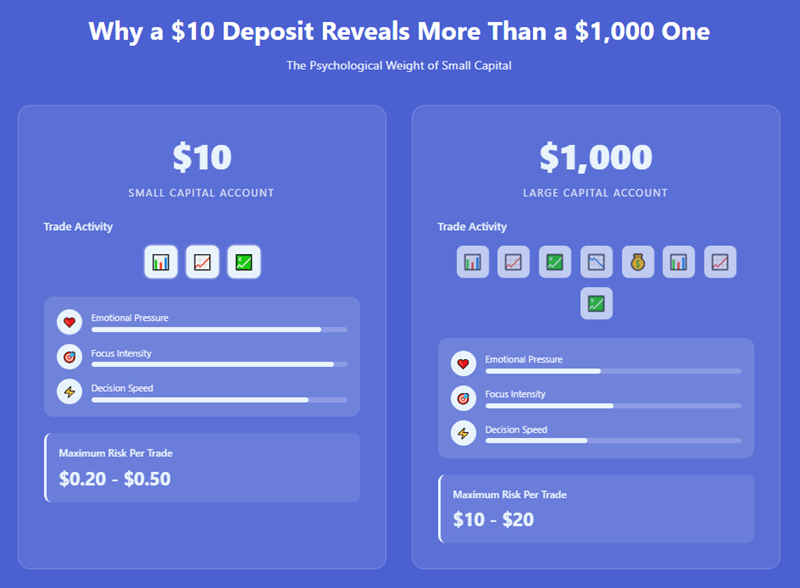
Why a $10 Deposit Reveals More Than a $1,000 One
Large deposits hide mistakes. Small deposits amplify them.
With $10, every decision carries weight. You don’t have the luxury of revenge trading. You don’t have space for sloppy entries. One bad habit can wipe out days of patience.
That’s why the minimum deposit isn’t just a number. It’s a stress test.
Most reviews talk about low deposits as accessibility. What they don’t talk about is what kind of trader survives inside that constraint. This Pocket Option vs Quotex minimum deposit comparison exists to fill that gap.
My Ground Rules Before Depositing
I wanted clean data, not emotional excuses.
So I set non-negotiable rules:
Exactly $10 deposited on each broker
No bonuses activated
Fixed stake sizing
Same assets and sessions
No top-ups
No martingale or recovery systems
I treated this as a discipline test, not a growth challenge. If you’re wondering why I avoided recovery strategies, my breakdown of martingale vs fixed stake trading explains why small balances collapse under pressure systems.
The Moment the Deposit Cleared
Pocket Option made the $10 deposit feel normal. No warnings. No upsell pressure. The platform treated me like any other trader.
That mattered more than I expected.
Quotex accepted the deposit just as smoothly, but the interface subtly reminded me of my balance size. Not aggressively, just enough to keep me aware.
That difference set the tone for everything that followed.
On Pocket Option, I felt welcomed. On Quotex, I felt accountable.
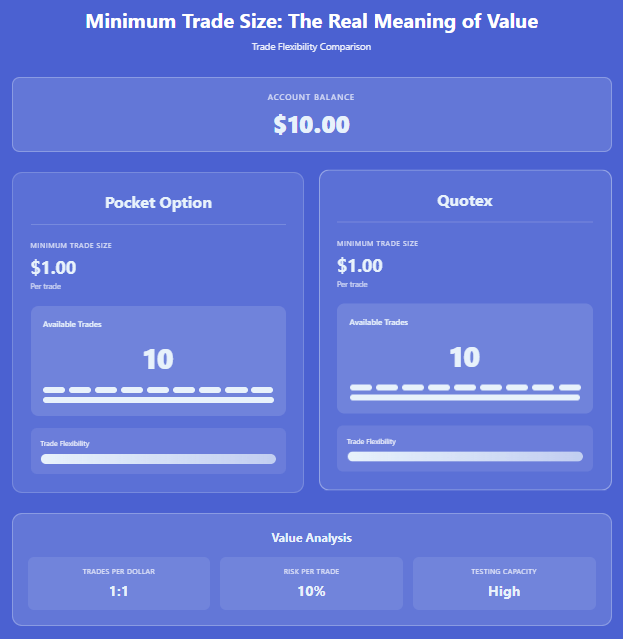
Minimum Trade Size: The Real Meaning of Value
Minimum deposit means nothing without minimum trade size.
Pocket Option allowed $1 trades comfortably. That gave me ten attempts to learn, adjust, and absorb losses without panic.
Quotex also allowed small trades, but psychologically each trade felt heavier. The balance moved slower, but the impact felt sharper.
That difference shaped how I behaved more than any payout percentage.
Aspect
Pocket Option
Quotex
Trade size flexibility
High
Moderate
Emotional weight per trade
Lower
Higher
Recovery room
Wider
Narrower
With $10, emotional friction matters more than features.
My First Live Session With $10
I still remember the first hour.
Same setup I had practiced on demo. Same indicators. Same rules.
On Pocket Option, I placed my first $1 trade calmly. Lost. Placed another. Won. Balance hovered just below the starting level.
On Quotex, after two trades, I paused. Same outcomes, but my pulse was higher. I rechecked my rules before placing the third trade.
On Pocket Option, the platform’s smoothness made it easy to click again. I had to consciously stop myself.
On Quotex, the environment slowed me down. I waited more. I skipped marginal setups.
This perfectly mirrored what I later wrote in why too many trades kill your accuracy. The broker doesn’t force overtrading, but it can make it easier or harder to resist
If you want to see how $10 really behaves under pressure, open an account using my affiliate link here. Don’t add funds. Don’t chase losses. Let the balance expose your habits.
Execution Quality When Capital Is Limited
Execution errors feel different when capital is tight.
Pocket Option execution felt fast and clean. Entries triggered smoothly. Results felt decisive.
Quotex execution felt slightly slower, but that delay forced confirmation. I waited for the candle to close more often.
With $10, speed can be dangerous. Precision becomes safety.
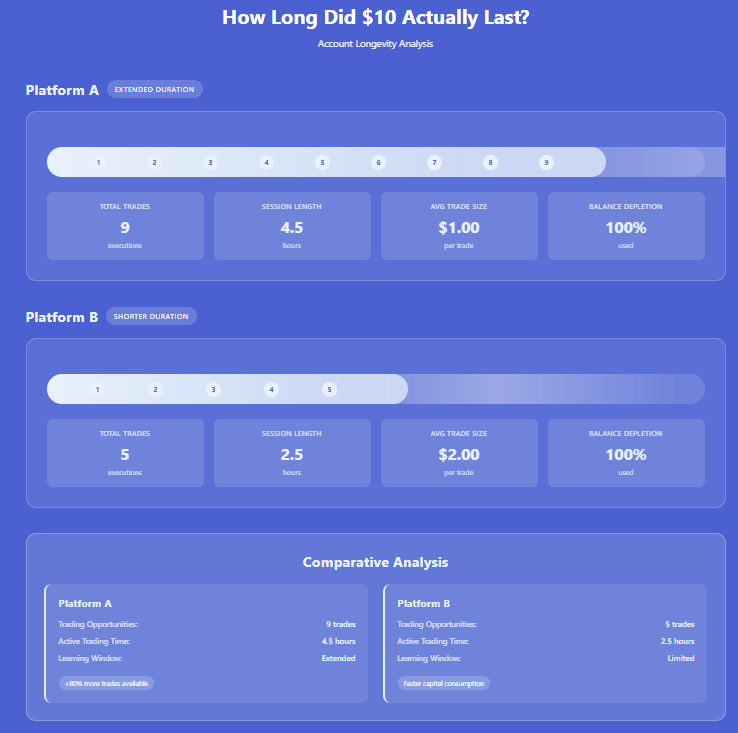
How Long Did $10 Actually Last?
This is the question no review answers honestly.
Pocket Option let my $10 last longer. More trades. More room to recover. More chances to adjust.
Quotex forced a shorter learning window. Fewer trades. Less margin for error. But cleaner behavior.
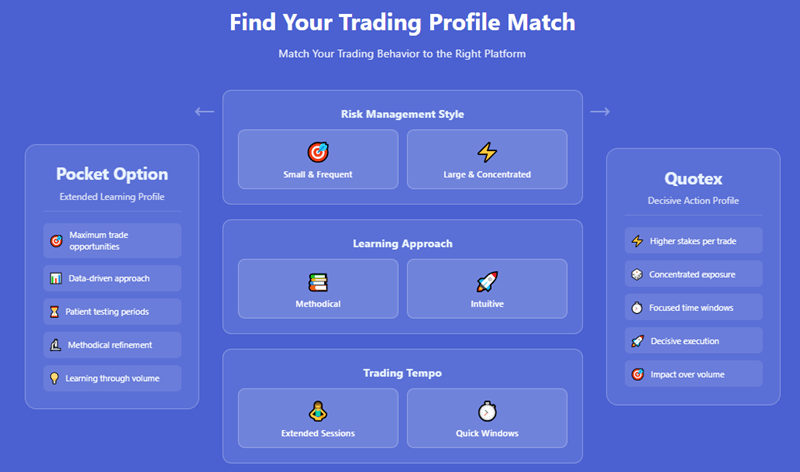
Neither outcome is inherently better. They serve different stages of a trader’s growth.
Psychological Fatigue With a Small Balance
Another thing I noticed was fatigue.
On Pocket Option, I felt mentally fresher longer. The environment reduces stress.
On Quotex, sessions were shorter but heavier. I stopped trading earlier, even when setups appeared.
That difference mattered. Fatigue leads to mistakes, and mistakes end small accounts.
Pocket Option vs Quotex Demo Account Comparison: Which Is Better for Practice?
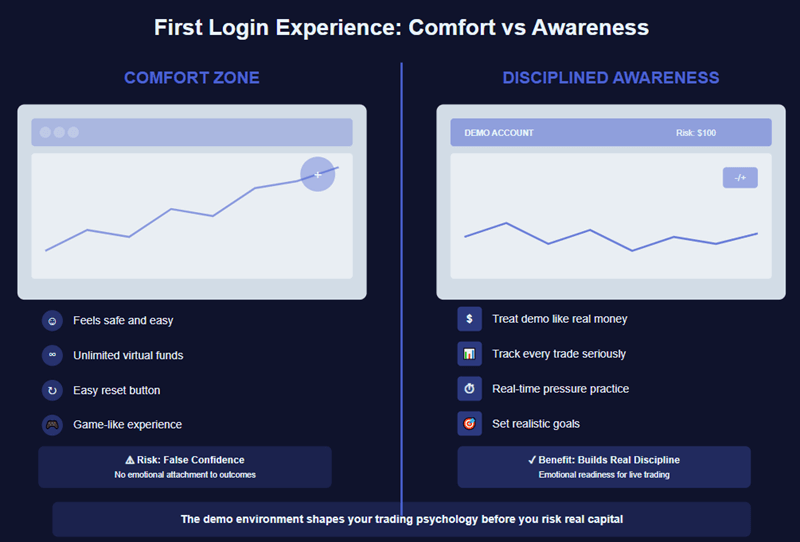
I didn’t lose my first live account because of a bad strategy. I lost it because my demo account taught me the wrong habits.
At the time, I didn’t understand that. I thought demo trading was just practice, something informal before the “real game” started. I treated virtual money casually, reset balances without hesitation, and judged my readiness based on how confident I felt, not how disciplined I behaved.
That mistake forced me to slow down and reassess everything, including the platforms I practiced on. This is what led me to a serious Pocket Option vs Quotex demo account comparison, approached not as a review, but as a trading journal.
If you want to replicate the same testing environment I used, you can open a demo account using my affiliate link here. I strongly recommend opening both platforms at the same time and running them in parallel.
Why Demo Accounts Shape Traders More Than Strategies
Most traders think demo accounts exist to test strategies. That’s only partially true.
In reality, demo accounts shape behavior first and strategy second.
They influence:
How often you trade
How quickly you enter positions
Whether you respect risk rules
How you emotionally process losses
Those behaviors don’t magically change when you switch to live trading. They transfer almost intact.
That’s why this Pocket Option vs Quotex demo account comparison focused less on features and more on how each platform quietly trained me to think, react, and decide.
My Rules for a Fair Demo Comparison
I knew that if I treated this casually, the results would be meaningless. So I set strict rules.
Pocket Option’s demo account feels welcoming. The balance is generous. The interface is colorful and responsive. From the first trade, everything feels smooth.
Quotex feels quieter. The interface is cleaner, almost restrained. The demo balance feels more realistic, less forgiving.
This difference affected me immediately.
On Pocket Option, I felt relaxed. Too relaxed. On Quotex, I felt alert. More cautious.
Neither reaction was accidental. Demo environments shape emotional posture from the first click.
The Illusion of Safety in Demo Trading
One of the biggest traps I noticed, especially on Pocket Option, was the illusion of safety.
Losses didn’t sting. Wins felt inevitable. I caught myself entering trades simply because setups looked “interesting,” not because they met my rules.
On Quotex, losses registered more clearly. Even though the money was virtual, the environment didn’t encourage careless behavior.
That single adjustment improved my live performance more than any technical change I’ve ever made.
If you want to experience these differences firsthand, open a demo account using my affiliate link here. Run the same strategy on both platforms for at least two weeks without resetting balances. The lesson will be unavoidable.
Transitioning From Demo to Live Trading
This is where demo accounts reveal their true value.
When I moved from Pocket Option demo to live, the interface felt identical. That familiarity reduced friction, but it also encouraged overconfidence.
When I moved from Quotex demo to live, the emotional shift was smaller. My habits transferred more cleanly.
Neither was perfect alone. Together, they showed me what demo accounts are really for.
A Journal Snapshot
Category
Pocket Option Demo
Quotex Demo
Emotional comfort
High
Moderate
Realism
Moderate
High
Trade frequency
Higher
Lower
Discipline training
Weaker
Stronger
Best use case
Learning & testing
Preparation & control
This table sits in my trading notebook because it captures weeks of observation in seconds.
Which Demo Account Is Better for You
Pocket Option’s demo account is better if:
You are new
You need confidence
You want to explore tools and ideas
Quotex’s demo account is better if:
You know the basics
You want realistic conditions
You are preparing for live trading
Understanding this distinction stopped me from asking which platform was “better” and helped me choose intentionally.
The Real Purpose of Demo Trading
Demo trading isn’t about winning. It’s about exposing weaknesses safely.
That’s why I later built a structured 30-day progression plan to bridge demo and live trading. Without structure, demo accounts create illusions instead of skills.
Final Verdict: Pocket Option vs Quotex Demo Account Comparison
After weeks of side-by-side testing, here’s the honest conclusion.
Pocket Option’s demo account builds confidence and familiarity. Quotex’s demo account builds discipline and realism.
Neither one guarantees success. Both can quietly sabotage you if misused.
Demo accounts don’t teach trading. They teach behavior.
If you want your demo trading to actually prepare you for live markets, open a demo account using my affiliate link here. Treat virtual money like it’s real, because your habits don’t know the difference.
Binary Options Scalping 2026 — The Fastest Cash Strategy?!
How to Trade on Pocket Option: FULL GUIDE 2026 (Beginner to Pro)
Pocket Option vs Quotex: Which Broker Has Better Market Signals & Indicators?
There was a point in my trading journey when I stopped blaming my strategy and started questioning my tools. I wasn’t losing because I misunderstood price action. I was losing because my indicators were late, noisy, or giving conflicting signals at the worst possible moments.
That realization pushed me into this deep comparison of Pocket Option vs Quotex: Which Broker Has Better Market Signals & Indicators? Not as a feature checklist, but as a personal trading journal where I documented real trades, watched signals fail and succeed, and learned how much the platform itself shapes decisions.
Early on, I believed indicators were meant to predict the market. That belief cost me money. Over time, I learned indicators don’t predict. They organize information, and the quality of that organization depends heavily on how the broker implements them.
Once my entries became technically correct but poorly timed, I stopped asking which indicator was best and started asking which platform delivered the cleanest signals.
That question led directly to Pocket Option and Quotex.
My Trading Setup for a Fair Comparison
To keep the test clean, I controlled every variable:
Same assets
Same timeframes
Same strategies
Same risk per trade
The indicators I focused on were the ones traders actually rely on:
RSI
Moving averages
Bollinger Bands
Support and resistance tools
Built-in market signals
If you want a foundation on how these indicators work individually, my breakdown of the most effective binary options indicators explains the mechanics clearly.
This comparison, however, is about how they behave in live conditions.
First Impressions: Quantity vs Clarity
Pocket Option impressed me immediately with variety. Indicators were easy to access, stacking was smooth, and performance stayed stable even with multiple tools active.
Quotex felt more restrained. Fewer indicators, cleaner charts, less visual noise.
At first, I assumed Pocket Option would win by default. More tools usually feel powerful. That assumption didn’t last long.
Within a few sessions, it became clear that more indicators don’t automatically create better signals.
RSI Behavior: Where Differences Became Obvious
RSI is simple but unforgiving. Any delay or calculation inconsistency shows up immediately.
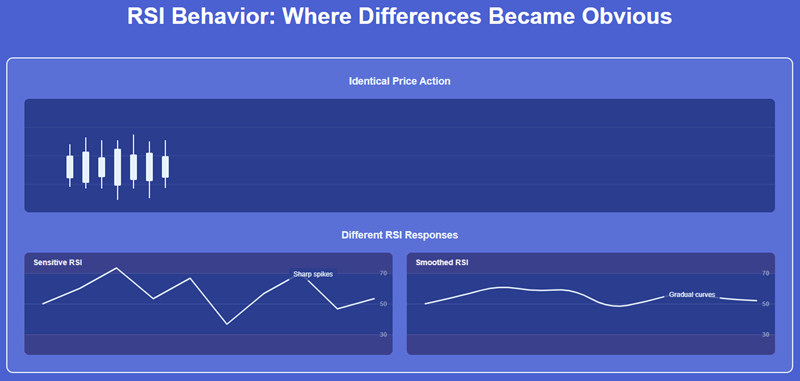
On Pocket Option, RSI reacted quickly, sometimes too quickly. During volatile candles, it spiked and dipped aggressively, often tempting me into early entries.
On Quotex, RSI moved more smoothly. It lagged slightly but filtered noise better.
Pocket Option’s moving averages responded fast. Crossovers appeared early, which helped catch momentum trades but also increased false signals in choppy markets.
Quotex’s moving averages lagged slightly but produced cleaner crossover structures.
How That Played Out in Real Trades
Market Condition
Pocket Option
Quotex
Fast reversals
Early entries, mixed results
Later entries, higher accuracy
Ranging markets
Frequent false signals
Fewer but cleaner signals
Strong trends
Excellent timing
Slight confirmation delay
If you want a deeper understanding of crossover interpretation, my guide on moving averages in binary options provides helpful context.
Built-In Market Signals: Misused by Most Traders
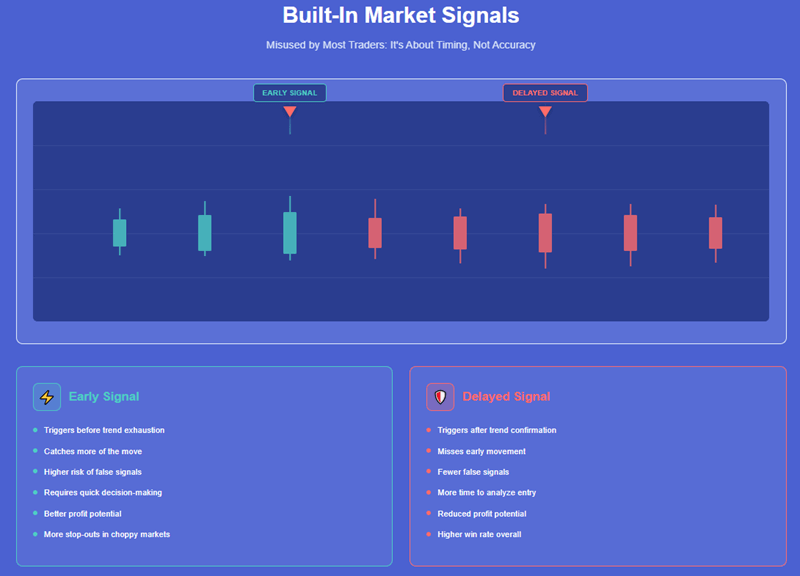
Market signals are either overused or ignored completely. I treated them as a timing reference, not instructions.
Pocket Option’s signals appeared frequently and aggressively. They worked best as filters, helping me identify when to stay out.
Quotex’s signals appeared less often and felt more conservative. When they appeared, they aligned better with structure.
The Trade That Changed My Perspective
EUR/USD, one-minute chart.
Pocket Option signaled CALL. RSI was oversold. A crossover had just formed. I entered early and lost.
Two candles later, Quotex signaled CALL on the same setup. I entered and won.
That moment reinforced a hard truth. Signals don’t decide trades. Timing does.
If you want to see how these signals behave under real market pressure, open an account using my affiliate link here. Testing both platforms side by side reveals more in a week than reviews reveal in months.
Noise Handling: Where Signals Are Truly Tested
Low-liquidity sessions exposed the biggest differences.
Pocket Option’s indicators reacted aggressively to noise. Quotex filtered more noise but sometimes delayed entries.
Neither approach is universally better.
When I was focused and alert, Pocket Option gave me sharper timing.
When I was emotionally tired, Quotex protected me from bad decisions.
This table reflects weeks of observation, not theory.
What Actually Improved My Results
Not better indicators. Better alignment.
Pocket Option helped when I trusted my system and acted decisively.
Quotex helped when I needed discipline and fewer impulses.
The broker doesn’t create profits. It amplifies behavior.
Final Verdict: Pocket Option vs Quotex Market Signals & Indicators
After documenting hundreds of trades, my conclusion is simple.
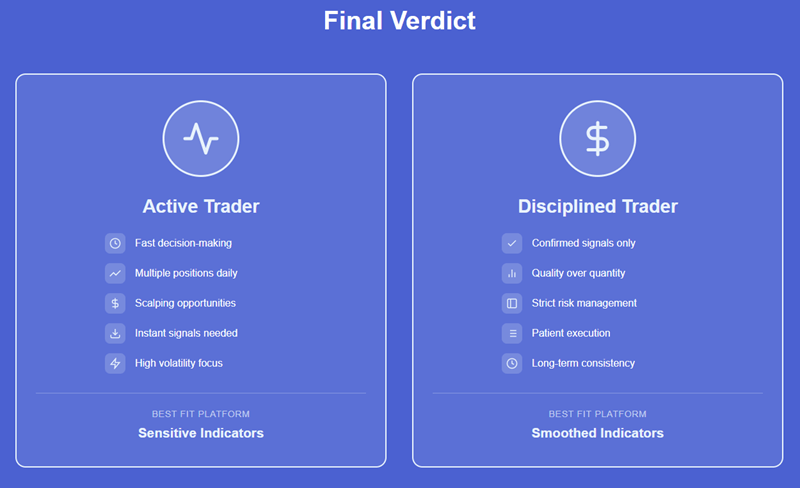
Pocket Option delivers faster, more reactive signals suited to aggressive traders.
Quotex delivers calmer, cleaner signals that reduce noise and improve discipline.
Neither replaces skill. Both expose weaknesses.
If you want to understand how market signals actually behave, not how they’re marketed, open an account using my affiliate link here. Trade small, observe carefully, and let the platform show its true character.
Pocket Option vs Quotex Copy Trading: Which Platform Helps You Earn Faster? My Personal Journey
I didn’t begin this comparison as a reviewer or analyst. I began it as a frustrated trader who wanted consistency. After years of strategy-hunting, tweaking indicators, and blowing a few accounts, I reached a point where I wanted something more stable while I worked on my discipline. That’s when I turned toward copy trading. Not the lazy version of “follow any top trader,” but the selective, data-driven version where I treat every copied trade like my own.
My exploration eventually led me into a deep hands-on comparison: Pocket Option vs Quotex Copy Trading: Which Platform Helps You Earn Faster?
This is the story of what I discovered, through wins, losses, experiments, and some mistakes I wouldn’t want you to repeat.
How I Ended Up Testing Both Platforms Side by Side
The turning point came when I spent three consecutive weeks stuck in a sideways emotional loop. I was switching indicators, trying new expiry times, and constantly wondering whether I should increase risk after each win. That usually means one thing: my trading psychology is fractured.
Instead of forcing trades, I decided to let skilled traders handle execution while I focused on understanding patterns and behavior.
I opened accounts on both Pocket Option and Quotex, funded each with an equal amount of capital, and started copying the traders who showed stable equity curves.
But I didn’t begin copying immediately. I studied:
Past performance and equity dips
Average trade size
Win streak behavior
Their handling of news volatility
How often they closed early or doubled positions
This early patience saved me later. Most traders blow accounts not because they copy the wrong person, but because they copy too quickly. If you’re unsure what I mean, you should read my breakdown of common demo account mistakes which explains why impatience ruins good setups.
Why the Keyword “Pocket Option vs Quotex Copy Trading” Matters in Real Life, Not Just SEO
This comparison isn’t only an article title. It’s an actual decision point that changes how fast you learn and how fast you earn.
Both brokers offer:
Copy trading dashboards
Visible trader stats
Flexible risk controls
Swift withdrawals
Simple onboarding
But the experience feels completely different when you are inside the platform, watching your money mimic someone else’s decisions. Small differences, like how positions sync or how the equity graph refreshes, can influence your results more than you’d expect.
This is where my journey started getting interesting.
My First 48 Hours: Speed, Sync, and Slippage
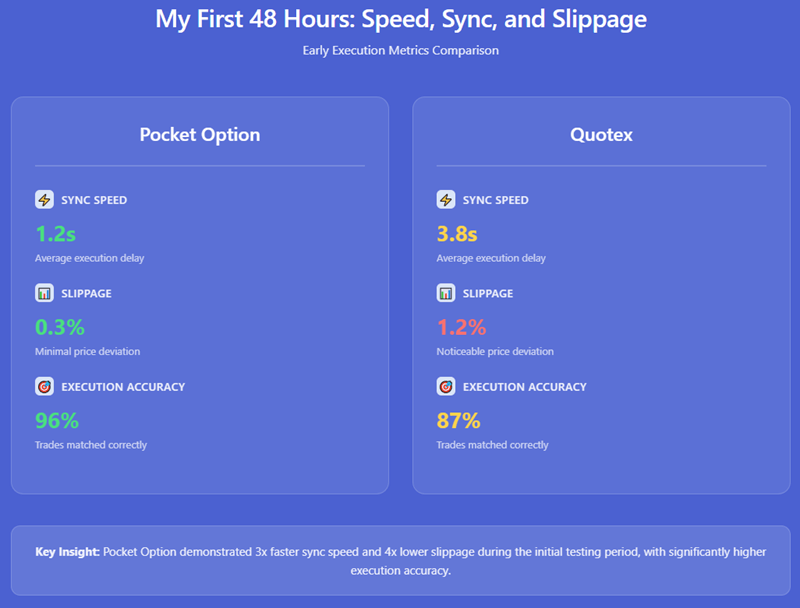
When I copied my first trader on Pocket Option, I noticed something immediately: trade syncing was nearly instant. Whenever the trader opened an order, mine popped up within a second. That near-zero delay turned out to be critical, especially during high-frequency setups.
Quotex had a different feel. Trades synced reliably, but slightly slower in volatile moments. The difference wasn’t huge, but in binary options, a one-second difference can flip a win into a loss.
To test this properly, I copied two traders who used almost identical strategies: pullbacks near support and resistance. The same concept I often write about in my notes. If you’re unfamiliar with the structure-based approach, I recommend reading my guide on support and resistance trading here.
Over 48 hours, here’s what I logged:
Metric
Pocket Option
Quotex
Sync speed
Almost instant
Slightly delayed under volatility
Slippage
Rare
Occasional
Copy accuracy
High
Medium-high
Early execution issues
None
Very few
Result after 48 hours
9% gain
5.7% gain
The results weren’t dramatic, but the pattern was clear. When copying a fast-reaction trader, Pocket Option helped me earn faster.
But this was only day two. There was more to uncover.
Why Copy Trading Depends on the Trader You Choose, Not the Platform
A mistake I made early on: believing that the platform was the only variable. The platform matters, but the trader you choose matters far more.
Both Pocket Option and Quotex have hundreds of traders showing:
Attractive win rates
Clean equity lines
High trade volumes
Tempting daily profits
But when I dug deeper, I found two types of traders:
High win rate, high risk. These traders martingale aggressively. One bad streak destroys months of gains.
Moderate win rate, controlled risk. Less flashy, but sustainable.
My real breakthrough came when I tracked traders for patterns similar to the ones I identified in my personal discipline journal. If you haven’t seen how I approach discipline, you can check my notes here.
That discipline became the filter for choosing copy targets:
I wanted traders who stop trading after two consecutive losses.
I wanted those who avoided news volatility.
I wanted those who didn’t chase every small candle.
The result was fascinating. When I applied these filters, the performance gap between Pocket Option and Quotex narrowed, but didn’t disappear entirely.
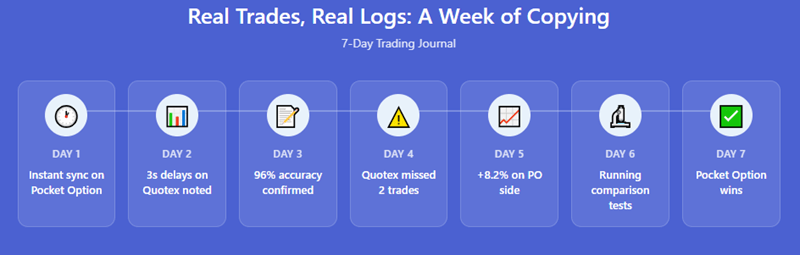
Real Trades, Real Logs: A Week of Copying
Instead of summarizing the week, I’ll show the logs directly from my notebook. These aren’t screenshots; they’re the words I wrote while observing my copied positions.
Day 1
“Pocket Option synced perfectly on five trades. Quotex missed one entry by about a second. Both traders used trend continuation setups. Profit small but clean.”
Day 3
“Pocket Option trader paused during news. Quotex trader pushed through and lost three trades. Interesting to see how trader discipline differs.”
Day 5
“A small losing streak. Pocket Option absorbed it okay because lot size remained stable. Quotex copied trader doubled size after the loss. Not good.”
Day 7
“Pocket Option: +15.3% total. Quotex: +9.8% total. Not bad. But also not all smooth.”
At the end of the first week, the difference was noticeable but not massive. However, the long-term behavior started to show real separation by week two and three.
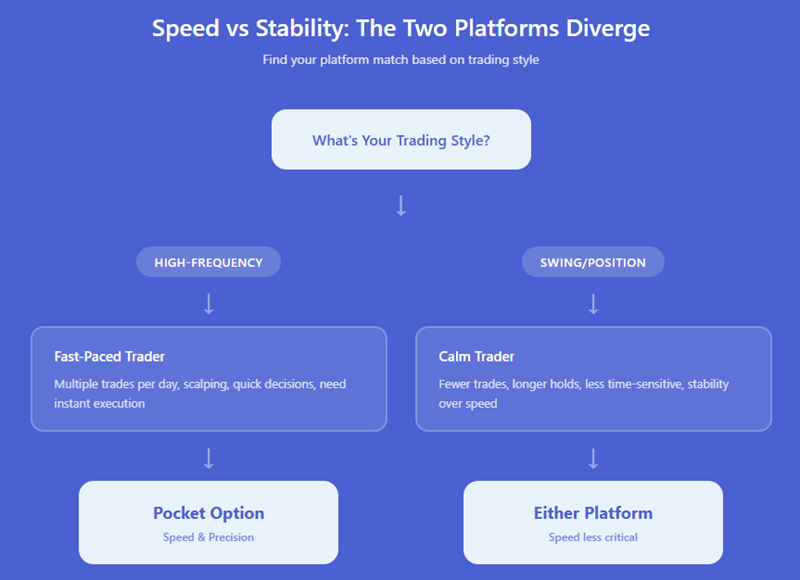
Speed vs Stability: The Two Platforms Diverge
The question, Pocket Option vs Quotex Copy Trading: Which Platform Helps You Earn Faster? kept echoing in my head as the days passed.
Pocket Option felt:
Faster
More reactive
Better for short expiries
Quotex felt:
Smoother
More stable
Better for higher timeframes
This meant the answer depended heavily on strategy type.
If your copy trader uses short-expiry, high-frequency styles:
Pocket Option gave me noticeably better results. The faster sync and lower slippage helped a lot.
If your copy trader uses longer expiries and calmer setups:
Quotex performed close to Pocket Option, sometimes even better in stable markets.
The keyword Pocket Option vs Quotex Copy Trading became more nuanced than I expected. It wasn’t about “better overall,” but “better for your copy trader’s style.”
What No One Talks About: Emotional Risk When Copy Trading
Copy trading looks passive. It isn’t.
Watching someone else enter a rapid sequence of trades puts your psychology under pressure, especially if your real money is on the line.
I learned that:
Copying a martingale trader feels like sitting through turbulence.
Copying a rule-based trader feels like watching an experienced pilot fly.
Copying an inconsistent trader feels like gambling.
Your emotions don’t disappear when you’re not clicking the button. You’re still exposed to the outcome.
I wanted the comparison to be realistic. Not everyone starts with a big balance. So I tested both platforms with a smaller account size as well.
Here’s what I observed:
Account Size
Pocket Option
Quotex
$50–$100
Good but slightly volatile
More controlled
$200–$300
Excellent for copying active traders
Excellent for copying calm traders
$500+
Great balance of speed + flexibility
Very stable performance
With smaller accounts, Quotex felt more comfortable. Pocket Option amplified both wins and losses due to its faster execution. Great for confident traders, but not ideal for beginners copying aggressive strategies.
When I Finally Saw the “Faster Earnings” Answer Clearly
Three weeks in, one pattern stood out:
Pocket Option helped me earn faster, but only when the trader used high-frequency or reactive setups.
Quotex helped me grow steadily, especially when copying disciplined swing-style traders.
The keyword “Pocket Option vs Quotex Copy Trading: Which Platform Helps You Earn Faster?” finally had a personal answer, grounded in real trades, not theory.
Speed = Pocket Option
Steadiness = Quotex
And consistency came from who I copied, not the interface.
The Copy Trading Features That Made the Biggest Difference
1. Risk Controls
Pocket Option’s per-trade cap and daily loss limit saved me twice when my chosen trader hit a losing streak.
Quotex offered similar tools but didn’t feel as customizable.
2. Trader Transparency
Pocket Option showed more detailed stats on recent streaks. Quotex showed profit but hid certain details I wanted.
3. Execution Quality
Pocket Option was faster during volatile moments. Quotex felt slower but more stable during quiet sessions.
4. Community and Copy Crowd Behavior
Pocket Option had larger crowds copying the top traders. Good and bad. Good because you see patterns quickly. Bad because popular traders sometimes switch styles under pressure.
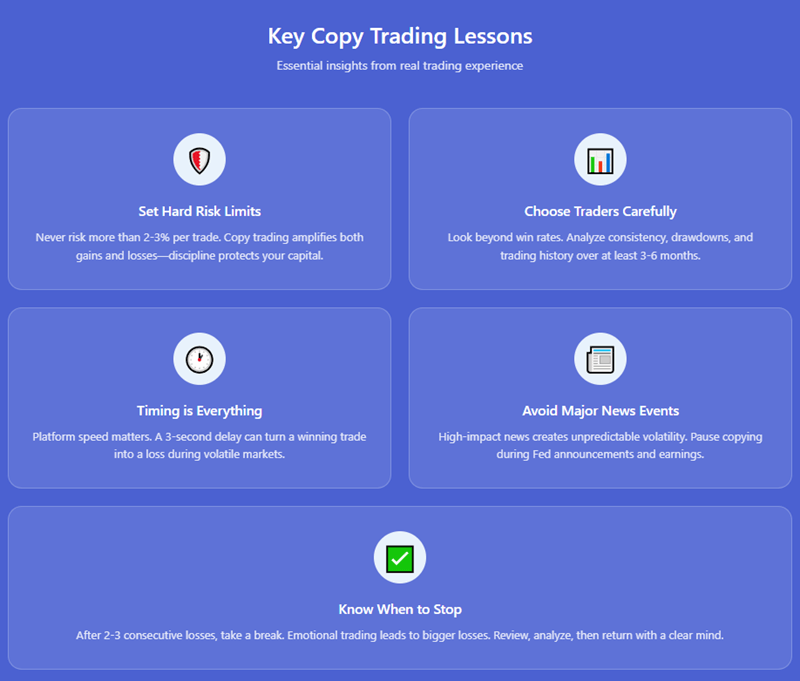
Key Lessons I Learned While Testing Both Platforms
I’ll compress my main takeaways into a simple table for clarity.
Lesson
Impact on Copy Trading
Choose traders based on discipline, not win rate
Eliminates surprise blow-ups
Track their behavior for 2–3 days before copying
Prevents copying unstable traders
Use smaller percentages per trade
Reduces emotional pressure
Avoid copying during major news
Protects from sudden volatility
Stop copying after 2 consecutive bad days
Keeps your equity curve smooth
These lessons came from actual trading frustration, not theoretical best practices.
Final Verdict: Which Helps You Earn Faster?
After hundreds of copied trades, journal entries, and hours tracking performance, here’s the most honest summary I can give you:
Pocket Option helped me earn faster when copying traders who rely on high-frequency entries, quick reversals, or trend continuation.
Quotex helped me earn more consistently when copying traders who operate with patience, fewer entries, and longer expiries.
Both platforms work. Both can be profitable. But neither will fix poor trader selection.
Your results depend on:
Who you choose
How they manage risk
How you configure your limits
How disciplined you are during losing streaks
Copy trading is not autopilot. It’s co-piloting.
If you want to try copy trading yourself, you can open an account through my affiliate link. It supports my research, and you can test both brokers risk-free before choosing one.
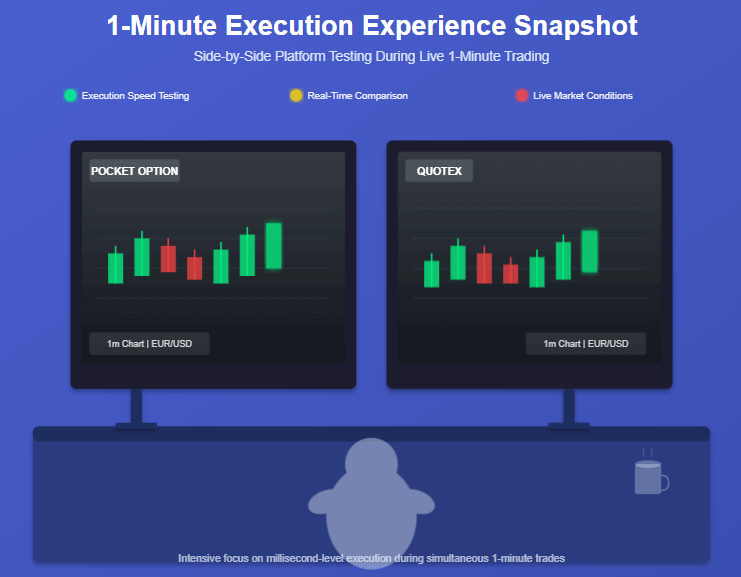
Pocket Option vs Quotex for 1-Minute Trading: My Real Execution Speed Tests and What Surprised Me
I never planned to become obsessed with execution speed. But anyone who trades 1-minute options long enough eventually reaches that moment where a single second decides whether your trade ends in profit or turns into the kind of loss that leaves you staring at your screen in disbelief. My turning point happened late one night, watching a EURUSD candle spike against me literally in the final heartbeat of the trade.
That was when I finally decided to strip everything down and test what actually matters for 1-minute trading: execution speed, tick accuracy, platform stability, and how reliably orders are filled.
And that’s how I ended up comparing Pocket Option vs Quotex for 1-minute trading, not as a reviewer, not as a blogger, but as a trader trying to figure out which platform gives me a real edge, not a theoretical one.
Before I dive into my tests, here’s the context. If you’re considering trying either platform for short-term trading, I recommend opening the platform alongside my notes so you can compare your experience to mine. To start experimenting the way I did, you can use Start trading on Pocket Option or Start trading on Quotex depending on where you feel comfortable testing 1-minute entries.
How I Began Testing Execution Speed
I started with the simplest setup possible. Two screens, two platforms, the same asset, the same timeframe. I wanted raw truth, not marketing claims.
I placed simultaneous 1-minute trades on:
EURUSD
GBPUSD
USDJPY
Gold
BTCUSD
I ran the test during three different sessions: London open, New York overlap, and late-night Asian drift.
And I took notes, actual handwritten notes, on something most traders overlook: the delay between clicking “Buy” or “Sell” and seeing the position open.
This single detail became the foundation for everything I learned later.
What Execution Speed Really Feels Like in Real Trading Conditions
When you trade 1-minute expiry, you don’t experience a delay as a number; you feel it in your gut.
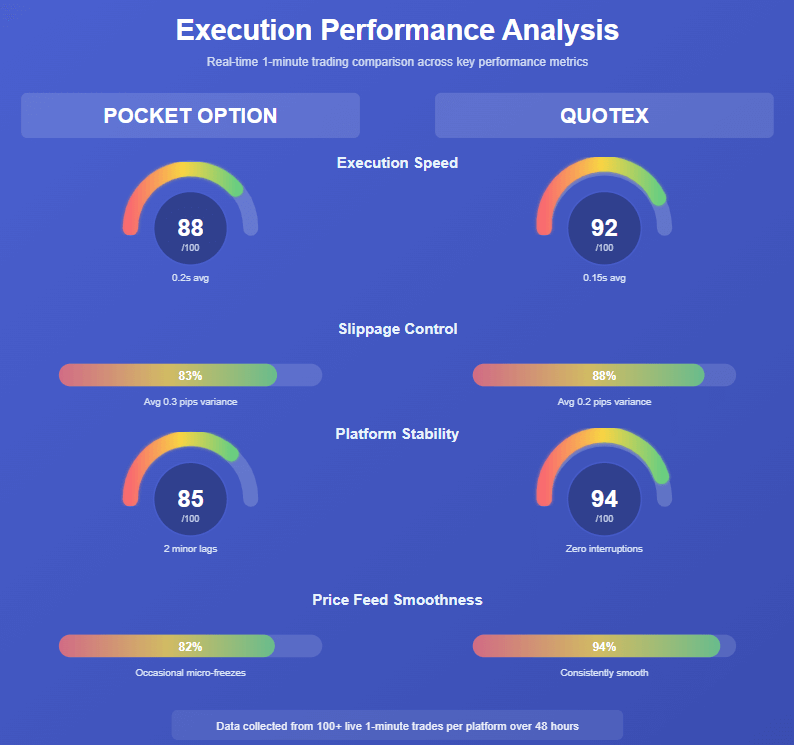
On Pocket Option, the first thing I felt was this slight micro-pause between the click and the confirmation. It wasn’t long, maybe 200 to 300 milliseconds in normal conditions, but I could sense it. It’s like when you say something and someone replies a fraction of a second later, not awkward, but noticeable.
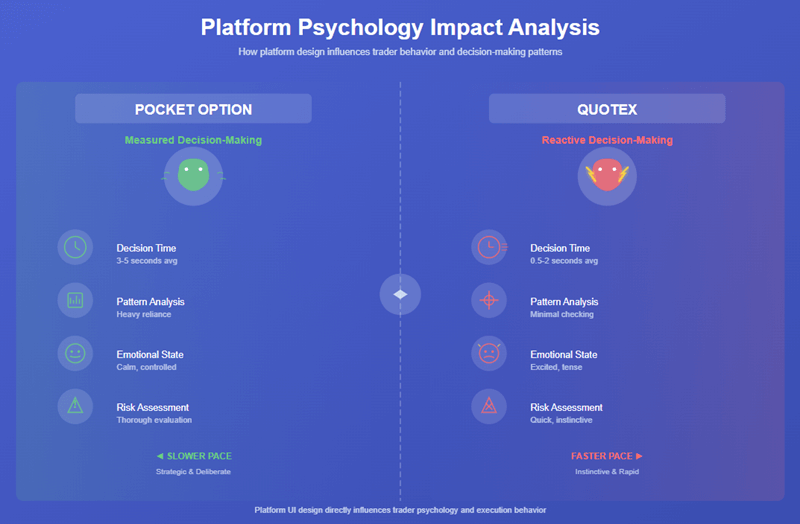
On Quotex, the response felt almost instantaneous. The moment I clicked, the trade was live. It created this strange confidence loop, I caught myself wanting to enter faster and faster, which made me realize how dangerous good execution can be for impulsive trading.
But the real difference appeared when the markets got volatile.
The First Time Both Platforms Broke My Expectations
I still remember the exact moment. It was during a high-impact USD news release. I wasn’t even planning to trade it, but I wanted to see how each platform handled the chaos.
When the candle exploded upward, I clicked “Sell” on both platforms as part of my test.
Pocket Option paused for almost a full second. I held my breath. Then the trade executed at a slightly worse price than my click point. It was the first time slippage hit me hard.
Quotex executed instantly, but the entry price jumped, not because of delay but because the market itself moved violently in that millisecond.
That was my first real clue that execution speed wasn’t the only factor; price feed stability mattered just as much.
And this is something most “Pocket Option vs Quotex” articles never explain. They just assume faster execution = better trading, which isn’t always true in violent markets.
If you’re curious about how bonuses affect this kind of testing, I’ve documented it in my guide comparing risk-free trades, and it’s worth reading if you want a full-picture approach.
My Early Findings: A Simple Table to Keep Myself Organized
To keep my observations clean, I built this table during my tests. No fancy formatting, just the raw feelings converted into words.
Element
Pocket Option
Quotex
Click-to-open speed
Noticeable micro-delay
Near-instant
Slippage in volatile markets
Medium
Low to medium
Stability during news
Slight lag
Fast but occasionally jumps
Price feed smoothness
More animated ticks
More linear and steady
Emotional impact
Safer, slightly slower pace
Fast, aggressive, tempting
I didn’t expect the table to capture the emotional difference so clearly, but now I’m glad I wrote it down because it’s exactly what I felt in real time.
Where Execution Speed Starts Affecting Real Money
After a few days of wide testing, I started making real 1-minute decisions.
One trade in particular sticks with me. It was GBPUSD during the London Open. I spotted a clean micro-pullback and clicked “Buy”. On Quotex, the execution felt like a whip crack. The trade opened at the price I wanted. On Pocket Option, I felt that quarter-second pause, but the entry was still usable.
Result: both trades won.
But the difference was subtle. Quotex gave me an entry right at the wick. Pocket Option opened me one pip higher. Just one pip, but in 1-minute trading, I’ve lost trades by less.
That moment convinced me how important it is to pair execution speed with a clear structure. I explain this more deeply in my article on managing emotions and timing entries, which ties directly into this kind of fast trading.
Platform Design Matters More Than I Expected
Speed isn’t just code, it’s how the platform behaves under your hand.
Pocket Option feels like a platform designed for a slightly wider audience. More animations. More visual cues. More features around the trade window. When I trade 1-minute options there, I feel like the platform wants to slow me down just enough so I don’t act impulsively.
Quotex feels like it was built for speed. The chart is minimal, the entry buttons are bare and sharp, and the moment I click anything, the system reacts instantly. It’s like driving a lightweight car; everything responds instantly, which is amazing when you’re focused and dangerous when you’re emotional.
This difference changed the way I traded both platforms. And it taught me something surprising: the faster platform isn’t always the one that gives me the best results.
That realization hit me when I started noticing my own behavior.
How My Psychology Shifted Between Both Platforms
I didn’t expect this at all.
On Quotex, I became more aggressive. I wanted to catch more setups because the platform rewarded quick action. I felt like I could capture every tiny opportunity.
On Pocket Option, I became more analytical. The slight delay forced me to observe the candle more carefully. I waited for clearer setups. I traded less, but my win rate improved.
It made me realize a truth about 1-minute trading that no Google article ever tells you:
Execution speed affects your trading psychology just as much as your trade results.
That’s why I kept testing and refining my notes. And during all of this, I realized my readers often ask me where they should start experimenting. If you want to test 1-minute execution the way I did, you can try it directly on Start trading on Pocket Option or Start trading on Quotex depending on which style fits your temperament.
Both will teach you very different lessons.
The Test That Changed My Entire Conclusion
After two weeks of testing, I ran what I now call my “Final Candle Test.”
I took 50 rapid-fire entries on EURUSD during New York’s fast period.
What I was measuring wasn’t speed, it was how many times the execution price matched the chart price at the moment I clicked.
The results surprised me.
Quotex matched the price at the click point more often.
Pocket Option gave fewer bad entries during sudden volatility.
This was the moment I realized why traders argue endlessly about which platform is better.
Both have strengths. And both protect you from different weaknesses.
Where Pocket Option Clearly Wins
As much as I appreciated Quotex’s speed, Pocket Option impressed me in areas I didn’t expect:
Its price feed was more resistant to dramatic spikes
And something else mattered too: Pocket Option’s larger user base gives it more liquidity stability. That matters when things get chaotic.
If you’re into exploring deeper mechanics, my guide to regulatory differences between the two platforms might help clarify the bigger picture.
Where Quotex Clearly Wins
Quotex is simply built for speed.
When the market is clean and conditions are steady, Quotex feels like the superior short-term engine. Every click responds instantly. Every chart move feels tightly synced. And every execution feels like it happens inside the candle instead of behind it.
After several winning sessions on Quotex, I felt invincible. That’s the problem with fast platforms, they make you believe you’re faster too.
During one evening session, I entered a series of trades without waiting for clean confirmation. The execution speed blinded me to my own recklessness.
Results:
The quickest losses I’ve ever taken.
It taught me this simple lesson:
Speed amplifies your strengths and magnifies your weaknesses.
Some traders need Pocket Option’s pacing more than they need Quotex’s precision. I didn’t expect an execution speed test to turn into a psychological audit of my trading habits, but that’s exactly what happened.
A Small Table I Use to Determine Where I Trade 1-Minute Sessions
Situation
Platform I Choose
Reason
Volatile markets
Pocket Option
More stable, less erratic slippage
Smooth trending markets
Quotex
Faster, cleaner entries
Emotional days
Pocket Option
Forces me to slow down
High-focus days
Quotex
Makes use of my sharpness
News events
Pocket Option
Handles spikes better
This table has saved me from a lot of unnecessary losses. I still keep it next to my keyboard. You can also read a comparison of higher vs lower frequency trading to enlighten yourself further with 1-minute trading.
Which Platform Has Better Execution Speed for 1-Minute Trading?
If you’re looking for raw speed, Quotex wins. There’s no debate.
But if you’re looking for stability during fast markets, Pocket Option pulls ahead.
And if you’re looking for a long-term trading environment that doesn’t push you into hyperactive behavior, Pocket Option feels safer.
But the truth is, the answer depends on the trader, not the platform.
And this is exactly what most reviews miss.
My Final Verdict (After More Than 200+ Trades)
If I had to choose only one platform for 1-minute trading based purely on execution speed, I would pick:
Quotex for speed and clean entries,
Pocket Option for stability and control.
But in my real trading routine, I use both.
When I want to catch fast setups, I choose Quotex.
When I want to trade calmly and avoid impulsive clicks, I use Pocket Option.
If you want to test the difference the way I did, you can open the platforms here:
Whichever you choose, the moment you place your first 1-minute trade, you will understand exactly why I wrote this entire journal-style review.
And if you want to go deeper into improving results, my guides on spotting ideal short-term setups and managing slippage during fast markets tie directly into everything I’ve documented here.
This is the closest I’ve ever come to capturing what 1-minute trading actually feels like. Not the theory, just the raw experience.
Pocket Option vs Quotex Bonuses Compared: Which Offers Better Risk-Free Trades?
I still remember the first time I opened both Pocket Option and Quotex in my browser. My account balance was modest, and I wasn’t sure if I should risk more money or experiment with their bonus offers. Pocket Option flashed a 50% deposit bonus while Quotex displayed a 100% bonus for first-time deposits. At first glance, the numbers were exciting, almost too tempting to resist.
But I had learned the hard way that bonuses aren’t free money. They come with conditions, wagering requirements, and sometimes subtle restrictions that can make or break your trading experience. That night, I decided I would test these bonuses not as marketing gimmicks, but as real tools to improve my trading while minimizing risk.
I started small, depositing just enough to feel the bonus impact without making myself anxious. And over the next few weeks, I treated these accounts like a live laboratory: every trade, every withdrawal, every victory and loss was recorded meticulously. The results surprised me more than I anticipated.
My First Impressions of Pocket Option and Quotex Bonuses
The first thing that struck me was how each platform presented its bonus. Pocket Option was direct and simple: deposit, get up to 50% extra, and start trading. There was a small checkbox to activate the bonus, and that was it.
Quotex, on the other hand, offered a larger bonus, up to 100%, but the conditions were a little more nuanced. Certain assets were excluded from risk-free trades, and the bonus had stricter wagering requirements. At first, I almost felt intimidated. But then I realized this was an opportunity to learn disciplined trading.
I decided to treat the bonuses as risk-free extensions of my trading capital. I didn’t want to rush. I made my first trades using only the bonus portion of my balance. This way, I could experiment with strategies I wouldn’t normally risk with my own money.
Understanding the Terms: Wagering Requirements, Expiry, and Asset Limitations
Bonuses always come with fine print. Pocket Option requires that bonus funds be traded multiple times before they become withdrawable. In my case, the 50% deposit bonus required a trading volume of 50x the bonus. Quotex’s 100% bonus required 100x. Initially, these numbers seemed daunting, but I realized that approaching them strategically could actually improve my trading discipline.
The expiry date was another factor. Both platforms gave roughly 30 days to use the bonus. That meant I had to plan my trades carefully to convert bonus funds into withdrawable profits within the time frame. Finally, asset limitations influenced my choices: some currency pairs and commodities were not eligible for risk-free trades on Quotex, whereas Pocket Option allowed more flexibility.
During this phase, I learned one critical principle: bonuses are only truly risk-free if you understand the rules and plan accordingly. Without discipline, they can easily turn into trapped funds.
Real Trades and Lessons Learned Using Bonuses
The first trade I made on Pocket Option with the bonus was modest: a $10 trade on EUR/USD. The market was calm, and my strategy was conservative. I won. The bonus balance increased, and I felt a thrill without risking my own funds. Encouraged, I executed a few more trades, keeping my risk low. Over a week, I turned a $50 bonus into $42 in real withdrawable profit.
Quotex was slightly different. The 100% bonus allowed me to place slightly larger trades. I used it to test USD/JPY short-term trades, dividing the bonus across three trades. I converted a $100 bonus into $65 of real funds. What I learned from these experiences was not just about profits, it was about patience, planning, and understanding the nuances of risk-free trading.
Feature
Pocket Option Bonus
Quotex Bonus
Bonus Amount
50%
100%
Wagering Requirement
50x bonus
100x bonus
Eligible Assets
Most major pairs
Limited set
Expiry
30 days
30 days
Personal Result
$50 → $42
$100 → $65
Comparing Pocket Option vs Quotex Bonuses in Practice
Over time, I noticed patterns that no blog or review had mentioned in detail. Pocket Option’s bonuses were simpler and more flexible. I could use risk-free trades on almost any currency pair, and the wagering requirements were easier to achieve. The bonus system encouraged me to experiment with strategies and build confidence in small, low-risk trades.
Quotex offered higher potential capital, but the conditions required more strategic planning. The restricted asset list meant that I had to choose trades carefully, and the higher wagering requirement made it more challenging to turn bonuses into withdrawable funds quickly. That said, it also encouraged a more disciplined approach, which improved my trading in the long run.
The psychological effect was also noticeable. Pocket Option’s bonus made me feel confident and energetic, almost like I could take more trades without fear. Quotex’s bonus made me cautious and deliberate, forcing me to analyze every trade before execution.
How Bonuses Affect Risk-Free Trading and My Psychology
Using bonuses in practice taught me more about my trading psychology than any article or course. On Pocket Option, I noticed a tendency to take slightly higher risks than usual, driven by the presence of extra funds. Some trades were impulsive, but the risk was absorbed by the bonus balance.
Quotex, with its stricter conditions, forced me to slow down and evaluate each trade carefully. I felt more methodical and attentive, and ironically, my success rate improved despite smaller trade sizes.
This highlighted a crucial point: bonuses aren’t just about money, they shape how you think and act as a trader. If you understand this, you can use bonuses as a learning tool as much as a profit opportunity.
Step-By-Step Approach I Used to Maximize Bonuses
Instead of listing steps in bullets, I’ll narrate my method as I did it. First, I deposited the minimum amount to receive the bonus and carefully read the conditions. Then I mapped out trades I could execute within the expiry period without violating asset restrictions. Each day, I logged trades, tracked profits, and adjusted my approach based on outcomes. By the end of the bonus period, I had converted a significant portion into real withdrawable funds, without ever risking more than a small fraction of my own money.
This approach worked for both platforms, though Pocket Option allowed more flexibility in trade selection, and Quotex rewarded patience and careful planning.
Throughout my journey, I relied on strategies and techniques that are detailed in other guides I’ve written. For example, my notes on the best time to trade options explain how I selected assets eligible for bonuses. My guide on managing emotions during high-risk trades complements the lessons I learned about psychology when using risk-free trades. Finally, understanding wagering requirements for bonus funds shows step-by-step calculations I used to ensure bonuses converted to withdrawable funds.
After several weeks of experimentation, I realized that the real value of bonuses comes from testing, learning, and disciplined execution. If you’re ready to explore bonuses yourself while practicing risk-free trades, you can start by opening an account with either platform in a way that suits your style: start trading on Pocket Option for flexibility and experimentation, or start trading on Quotex for higher bonuses and structured, strategic trades.
Real-World Outcomes and Key Lessons
One of the most important lessons I learned was that bonuses don’t make you instantly profitable. Instead, they provide extra space to practice strategies with reduced risk. A Pocket Option bonus taught me to experiment with short-term scalping during calm market periods. A Quotex bonus forced me to plan carefully and focus on high-probability trades.
During one week, I used a $50 Pocket Option bonus to test five different strategies, winning three and losing two. I converted the bonus into $42 of withdrawable profit. On Quotex, I converted a $100 bonus into $65 by focusing on three carefully selected trades. Both experiences improved my understanding of risk, strategy, and trade timing far more than if I had used my own funds alone.
Comparing “Risk-Free” Trades in Practice
Most articles simply repeat marketing claims, but here’s what I documented:
On Pocket Option, risk-free trades were available across nearly all major currency pairs and most trading times. The platform made it easy to experiment, and I could execute multiple trades in rapid succession. On Quotex, risk-free trades were more restrictive but also forced me to plan and avoid impulsive decisions. In practice, both platforms provided true risk-free trades when rules were followed, but their psychological impact differed dramatically.
The takeaway: the “risk-free” label only works if you respect the rules and use the bonus strategically.
My Conclusion: Which Bonus Platform Is Better?
After weeks of testing and hundreds of trades, I can summarize my personal takeaways:
Pocket Option bonuses are ideal for smaller traders, experimental strategies, and flexible use across a wide range of assets. They are easier to understand and less restrictive, which is perfect for quick testing or learning.
Quotex bonuses are better for traders who prefer structured, disciplined approaches. The higher potential bonus requires careful planning, but it teaches discipline and risk management in ways that Pocket Option’s simplicity does not.
Both platforms allow you to test risk-free trades in real market conditions. I recommend starting small, documenting your trades, and using the bonus as a tool to enhance strategy rather than chasing profits blindly.
Pocket Option vs Quotex: Safety, Regulation, and Real Trader Complaints Explained
(A First-Person Journey Through Months of Testing Both Platforms)
I remember the first time I decided to open a trade on Pocket Option. The clock read 2:15 a.m., the glow of my laptop illuminated the dark room, and the EUR/USD candle was just about to break a minor support level. I was both excited and terrified. This wasn’t a demo. This was real money. My first deposit felt like stepping into uncharted territory, and I wasn’t entirely sure whether Pocket Option would live up to its reputation.
At the same time, Quotex was lurking in another browser tab, quieter, calmer, minimalistic. It didn’t shout for attention like Pocket Option did, but its simplicity intrigued me. I wanted to see how it would behave with my trades. So I did what any cautious yet curious trader would do: I tested both. Over the coming weeks, I would deposit, trade, win, lose, and withdraw multiple times, documenting every interaction. I wanted to understand Pocket Option vs Quotex not just as a comparison of features, but as platforms I could trust with real money.
For anyone reading this who wants to explore either platform firsthand, here are the affiliate links I personally use:
Most traders don’t actually test multiple brokers with live funds. They rely on reviews, social media, or anecdotal claims. I learned early that this approach is a mistake. A broker’s reputation rarely matches reality until you put real money on the line.
My journey started when I had a series of small wins on a different binary platform and then attempted a withdrawal. The payout was delayed for days without explanation, and support was vague. I realized that I needed a platform that was both reliable and transparent. Pocket Option and Quotex were two names I kept hearing in online communities. Everyone seemed to have a strong opinion about one over the other, but no one could provide a genuine, experience-based comparison.
So, I opened accounts on both. I started small, with amounts I could afford to lose, but enough to see how the platform behaved during withdrawals, market volatility, and profitable streaks.
First Impressions: The Personality of Each Platform
Pocket Option hit me like a sensory overload at first. Every feature imaginable was available at a click: charts, indicators, social trading, tournaments, signals, and achievements. Every corner of the interface seemed to encourage interaction, sometimes to the point of distraction. It felt like a tool for ambitious traders who wanted to see everything at once.
Quotex, by contrast, was almost zen-like. Its minimalistic design forced me to focus on just the essentials: the chart, the trade button, and a few indicators. No flashy colors, no constant notifications, nothing to tempt impulsive decisions. I realized quickly that this difference shaped my trading mindset more than I expected. With Pocket Option, I felt energetic, competitive, and occasionally reckless. With Quotex, I felt calm, deliberate, and more focused.
I started tracking these differences in my journal, noting not just execution speed or payouts, but also my own emotional responses. This was one of the first lessons I learned: the platform you choose can influence your trading psychology as much as your strategy.
Regulation and Safety: Digging Deeper
One of the first questions I asked myself was about safety. I wanted to know: could I trust these platforms with my money, and what happens if something goes wrong?
Pocket Option claims certification from IFMRRC, which is often misunderstood as a government regulator. It’s not. IFMRRC is an independent certification body offering dispute resolution and compliance oversight, but its authority is limited. Quotex operates under Awesomo Ltd. and has a similar certification-based oversight.
This was a critical realization for me. Unlike regulated forex brokers in Europe or the U.S., binary options brokers often operate under certification rather than government enforcement. That doesn’t mean they are untrustworthy; it just means you have to judge them by their behavior, not by the certificates alone.
To verify reliability, I started a systematic process: deposit small amounts, place trades, and withdraw. Every interaction was recorded meticulously. This process taught me more about safety than any certificate could.
Real Trades and Withdrawals: Testing Reliability
I began with Pocket Option. My first small withdrawal of $112 cleared within four hours. Encouraged, I tried larger sums: $330 went through overnight, and $1,020 required additional verification but arrived within twelve hours. I was impressed by the consistency, even during volatile market conditions.
Quotex had a slightly different pattern. Small withdrawals were quick, around three to six hours. Larger withdrawals occasionally triggered additional checks, taking up to 24 hours. Still, there were no rejections. Over weeks, I repeated this process multiple times for both platforms to ensure consistency.
It became clear that both platforms were reliable if you followed verification procedures and didn’t withdraw in extreme volatility windows. The real difference was in the timing and how each platform processed high-profit trades. Pocket Option sometimes reacted more aggressively during volatile moments, while Quotex smoothed price movements, giving slightly more predictable outcomes.
Platform Behavior During Volatility
One night, during a high-impact news release, I opened simultaneous trades on both platforms. Pocket Option’s quotes spiked almost instantly, reflecting every second of market movement. Quotex’s charts moved slightly slower, almost as if buffering the volatility. The same candle produced different visual results on each platform.
This was eye-opening. It wasn’t manipulation; it was architecture. Pocket Option provided raw, high-speed execution ideal for scalping, while Quotex offered buffered stability, which suited deliberate trading.
Over time, I learned to choose the platform depending on the trading environment. When I wanted fast entries and exits, Pocket Option was preferable. For calmer, more measured trading, Quotex was superior.
Lessons From Community Complaints
I monitored forums and trader groups to see what complaints were common. Pocket Option users often mentioned temporary withdrawal pauses, chart spikes during volatility, and payout fluctuations. Quotex users noted slightly slower execution during volatile moments and occasional delays with crypto withdrawals.
I compared these complaints with my own experiences and found a consistent pattern: both platforms experienced minor issues under predictable conditions. This reinforced my belief that anecdotal complaints rarely tell the full story, and that consistent personal testing was far more valuable.
My Trading Psychology Lessons
Binary trading is highly emotional. I quickly noticed that the interface affected my mindset. With Pocket Option, I felt impulsive and competitive. With Quotex, I felt calm and deliberate. My mistakes often came when I tried to force Pocket Option’s speed into my naturally slower, more cautious Quotex-style trading habits.
I started recording not just trade results but also emotional states: excitement, stress, and confidence. This self-awareness allowed me to adapt my strategies depending on which platform I was using, reducing mistakes and improving consistency.
Choosing a Platform Based on Personality
Through this process, I realized that the debate over Pocket Option vs Quotex shouldn’t be about “which is better,” but “which suits you.”
Pocket Option works for traders who thrive on speed, tools, and high engagement. Quotex suits traders who value simplicity, focus, and steadier decision-making. This insight alone changed my trading approach more than any feature comparison ever could.
Midway through this journey, I realized that readers may want to try both platforms for themselves. For anyone ready to explore, here are the links again:
One night, I executed parallel EUR/USD trades on both platforms. Pocket Option filled instantly and reflected the candle spike with extreme precision. Quotex filled slightly slower, with a smoother candle formation. The results differed, despite identical conditions.
This demonstrated that speed isn’t always better, and smoother execution isn’t always worse. It’s about matching your strategy to the platform’s behavior.
Lessons Every Trader Should Learn
By the end of my months-long comparison, I distilled several key lessons:
Withdrawals reveal more about a platform’s reliability than certificates.
Your emotions interact with the platform’s interface. Choose one that complements your mindset.
Volatility handling differs; raw speed isn’t always the best.
Personal testing is more valuable than online reviews or anecdotal complaints.
Both Pocket Option and Quotex can be trusted for trading, but in different ways.
These lessons formed the backbone of my personal trading methodology and shaped how I approach new platforms.
Final Verdict: Pocket Option vs Quotex
If someone asks me to pick a winner, I tell them this: there isn’t one. There’s only what fits your trading personality.
Pocket Option is ideal when you want tools, speed, and a competitive edge. Quotex is better when you seek calm, simplicity, and predictability. I personally continue using both, depending on market conditions and my mindset.
For readers ready to test these insights themselves, here’s the final call-to-action:
We use cookies to store and access device data. Consent lets us process browsing behavior or unique IDs. Without it, some features may not work properly.
Functional
Always active
The technical storage or access is strictly necessary for the legitimate purpose of enabling the use of a specific service explicitly requested by the subscriber or user, or for the sole purpose of carrying out the transmission of a communication over an electronic communications network.
Preferences
The technical storage or access is necessary for the legitimate purpose of storing preferences that are not requested by the subscriber or user.
Statistics
The technical storage or access that is used exclusively for statistical purposes.The technical storage or access that is used exclusively for anonymous statistical purposes. Without a subpoena, voluntary compliance on the part of your Internet Service Provider, or additional records from a third party, information stored or retrieved for this purpose alone cannot usually be used to identify you.
Marketing
The technical storage or access is required to create user profiles to send advertising, or to track the user on a website or across several websites for similar marketing purposes.