Pocket Option 1 Minute Strategy (Tested): Best 60-Second Setup for Beginners

One-minute trading on Pocket Option has become extremely popular among beginners because trades close quickly, setups appear frequently, and even small accounts can participate with low trade amounts.
But fast trading also creates problems. Most traders lose money because they overtrade, enter randomly, or use aggressive recovery systems after losses. The goal of a good 1 minute strategy is not to predict every candle correctly, it’s to consistently take higher-probability setups while managing risk properly.
After testing multiple short-term setups, one of the most reliable approaches for beginners is a simple combination of EMA trend confirmation and RSI momentum filtering. It’s easy to understand, doesn’t overload the chart with indicators, and works surprisingly well during active market sessions.
In this guide, you’ll learn:
- the best Pocket Option 1 minute setup
- exact indicator settings
- ideal expiry times
- how to avoid bad entries
- risk management rules for small accounts
- whether 30 seconds or 1 minute works better for beginners
If you’re completely new to short-term trading, you may also want to read:
What Is the Best Pocket Option 1 Minute Strategy?
The best beginner-friendly Pocket Option 1 minute strategy combines short-term trend direction with momentum confirmation. Instead of trying to guess every move, the strategy waits for the market to show momentum first before entering a trade.
The setup uses:
- EMA 5
- EMA 13
- RSI 7
- 60-second expiry
This combination works best during:
- London session
- New York session
- High-volume overlap periods
It performs especially well on assets like EUR/USD and GBP/USD because those pairs usually have cleaner short-term movement compared to highly erratic charts.
Ready to try these strategies yourself? Open your free Pocket Option account and start testing them with real charts and fast 60-second trades.
Pocket Option 1 Minute Strategy Settings
Before taking trades, configure your chart with these settings:
| Setting | Value |
| Timeframe | 1 Minute |
| Expiry Time | 60 Seconds |
| EMA Fast | 5 |
| EMA Slow | 13 |
| RSI Length | 7 |
| RSI Levels | 30 / 70 |
The goal here is simplicity. Many beginners fail because they clutter charts with too many indicators and end up second-guessing every entry.
If you want to improve consistency further, proper position sizing matters just as much as entries. Use the:
before increasing your trade size.
How the Strategy Works in Pocket Option
The logic behind the strategy is straightforward.
The EMA crossover identifies short-term trend direction, while RSI confirms whether momentum is actually strong enough to support the move. This helps filter out weak setups that often fail in 60-second trading.
A bullish setup becomes stronger when the EMA 5 crosses above the EMA 13 while RSI pushes above the 50 level. Instead of entering immediately, it’s usually safer to wait for one strong bullish candle to confirm momentum before opening a CALL trade.
For bearish setups, the opposite applies. When EMA 5 crosses below EMA 13 and RSI weakens below 50, bearish momentum starts building. A confirmation candle helps reduce fake entries.
This approach won’t eliminate losses completely, but it does help avoid many random trades that destroy small accounts.
Pocket Option Scalping 1 Minute Strategy
One-minute trading is essentially a form of scalping. The objective is to capture quick momentum bursts without holding trades for long periods.
The biggest mistake beginners make with scalping is trading during dead market hours. Short-term strategies require volatility and participation. Without movement, candles become noisy and unpredictable.
The best times to trade are usually:
- London market open
- New York market open
- London/New York overlap
During these sessions, momentum becomes cleaner and signals generally perform better.
If you’re building a small account, consistency matters far more than aggressive compounding. This is especially important for traders attempting:
Safe $10 Trading Workflow Strategies
Best Pocket Option Expiry Times (30 Seconds vs 1 Minute vs 5 Minutes)
One of the most searched questions is whether 30-second or 1-minute expiry works better.
Here’s the reality:
| Expiry Time | Difficulty | Recommended For |
| 30 Seconds | Very High | Advanced traders |
| 1 Minute | Moderate | Most beginners |
| 5 Minutes | Easier | Slower trading styles |
Thirty-second trading looks attractive because trades finish quickly, but market noise becomes extremely dangerous on such short expiries. Beginners usually struggle because tiny fluctuations can invalidate otherwise good setups.
One-minute expiry offers a much better balance between speed and confirmation. It still allows active trading while giving price enough room to move naturally.
Five-minute expiry tends to produce cleaner signals, but many scalpers prefer the faster pace of 1-minute trading.
Want better execution and cleaner setups? Sign up with Pocket Option and unlock access to real-time charts, customizable indicators, and instant 1-minute trade placements.
Pocket Option 1 Minute vs 2 Minute Strategy
Many traders actually get better results by combining:
- 1-minute charts
with - 2-minute expiry
This small adjustment gives trades slightly more time to develop and reduces the impact of random candle spikes.
Learn more about the best time to trade.
Pure 1-minute expiry is more aggressive and emotionally intense, while 2-minute expiry can smooth out many premature losses.
If you notice that your entries are often correct but expire too early, testing longer expiries may improve consistency significantly.
Best Entry Ideas for Pocket Option 1 Minute Trades
Good entries usually happen when momentum enters the market suddenly.
Some of the strongest setups appear after:
- breakout candles
- EMA crossover alignment
- RSI acceleration
- strong rejection candles near support or resistance
Bad entries usually happen when traders:
- chase oversized candles
- enter during sideways movement
- ignore trend direction
- trade emotionally after losses
If you struggle with emotional trading, this guide may help:
How to Protect a Small Trading Account
Pocket Option OTC Market 1 Minute Strategy
OTC markets remain popular because traders can access them outside normal market hours. However, OTC charts tend to move more aggressively and unpredictably than regular forex sessions.
That doesn’t mean OTC trading is impossible, it simply requires more caution.
When trading OTC:
- reduce position size
- avoid Martingale systems
- wait for stronger confirmations
- avoid entering after huge candles
Many beginners lose accounts by trying to force trades during unstable OTC movement.
You can practice short-term setups safely using the:
BeCoin Trading Simulator
before risking real money.
Strategy 1: RSI + 2 EMA Cross
Setup:
- RSI (7) with 70/30 levels
- EMA 5 and EMA 13
- 1-minute chart on EUR/USD
Entry Rules:
- Look for RSI above 70 or below 30
- Wait for EMA cross (fast crosses over slow)
- Enter on the close of the candle after cross and RSI confirmation
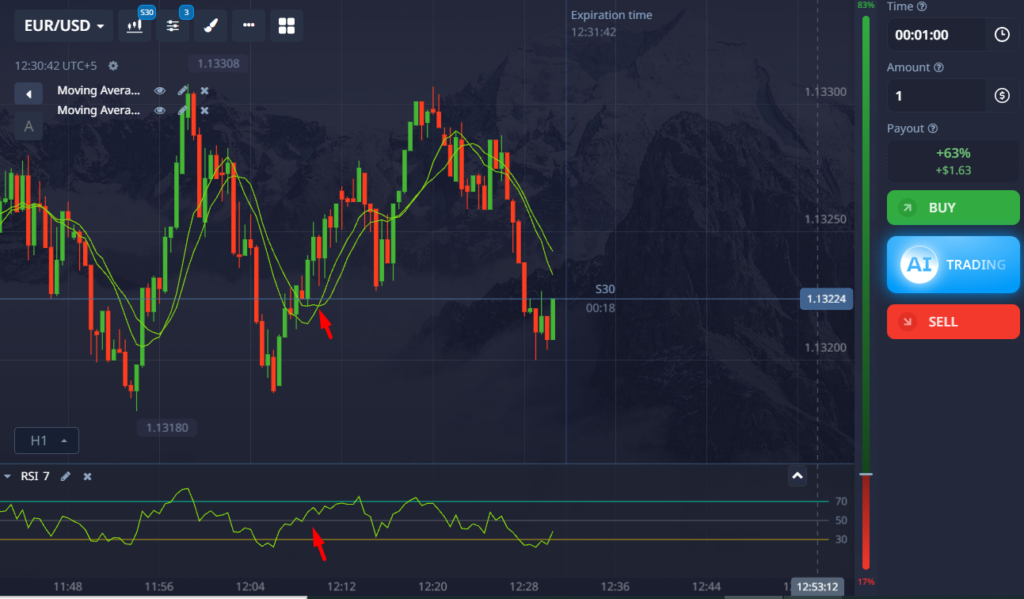
Results:
- Win rate: 58%
- Risk: Moderate (needed good timing)
- Drawdowns: 3–4 losses in a row
- Emotion: Easy to execute, but signals came rarely
Insight:
This worked best in trending markets. The RSI helped avoid bad entries, but in choppy markets, it gave fake signals. I found this strategy needed patience, which isn’t easy in 60-second trading. But when it hit, it hit well.
Strategy 2: Candlestick Reversal at Support/Resistance
Setup:
- Manual charting of support/resistance zones
- No indicators
- Look for reversal candlestick patterns (pin bars, engulfing)
Entry Rules:
- Price must hit a well-drawn zone
- Enter on the first strong reversal candle pattern
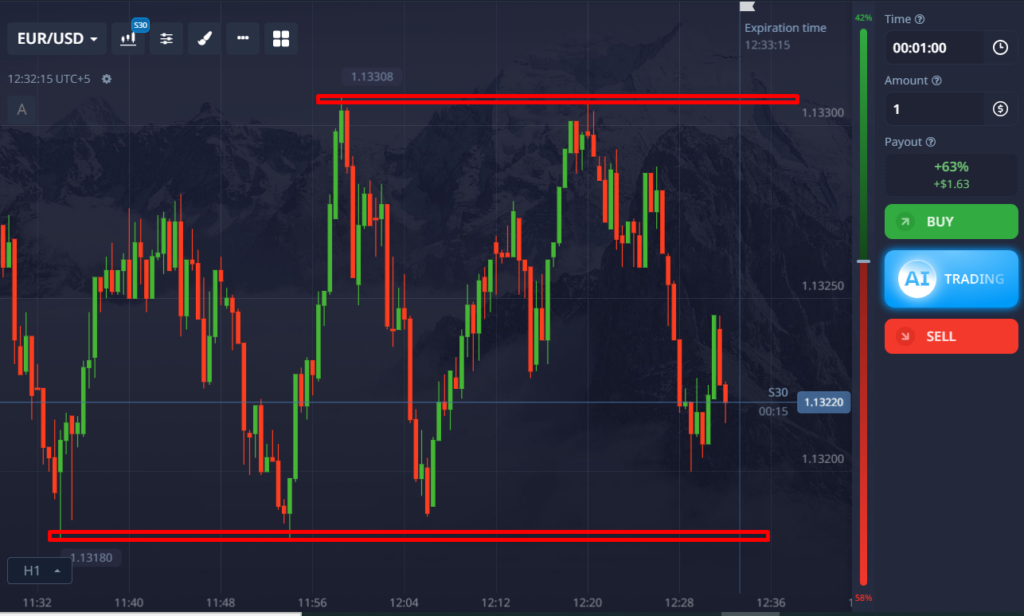
Results:
- Win rate: 63%
- Risk: High (depends on how accurate your zones are)
- Drawdowns: 2–3 losses max
- Emotion: Required constant focus and charting skill
Insight:
This one surprised me. When I got the zones right, it felt like cheating. But when I misread the structure, it burned me. The key was manual skill, not just pattern recognition. Beginners may struggle. But for me, this had the best win rate of all.
Strategy 3: News Spike Reversals
Setup:
- Check economic calendar (Forex Factory)
- Find a high-impact news event
- Wait for price to spike hard, then enter in the opposite direction
Entry Rules:
- Price spikes within 30 seconds of release
- Look for exhaustion candle (like a pin bar or long wick)
- Enter reversal trade with 1-minute expiry
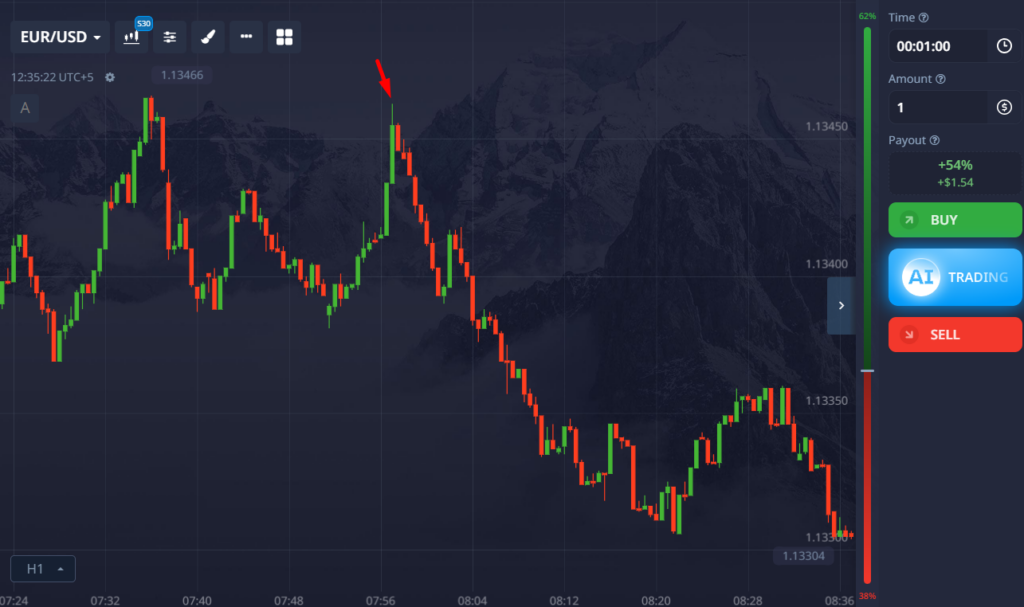
Results:
- Win rate: 51%
- Risk: Very high (slippage and late entry)
- Drawdowns: 5+ losses possible
- Emotion: Very stressful, fast decisions needed
Insight:
This one felt like gambling. I made a few wins that felt amazing. But the losses came just as fast. Not recommended unless you’re ultra-disciplined and have fast reaction time. Most traders would just bleed money trying this.
Common 1 Minute Trading Mistakes
Most losing traders repeat the same mistakes repeatedly.
Overtrading is probably the biggest one. Fast setups create the illusion that more trades equal more profits, but poor-quality entries usually destroy consistency.
Revenge trading is another major issue. After a loss, beginners often increase their trade size emotionally to recover quickly. This usually leads to even larger losses.
Many traders also ignore trend direction completely and try to predict reversals on every candle. On low timeframes, momentum matters much more than prediction.
If you want long-term survival in fast trading environments, discipline matters more than finding a “perfect” strategy.
You may also like:
Risk Management for Traders in Pocket Option
Is Pocket Option 1 Minute Trading Profitable?
Yes, but only when traders approach it realistically.
A good 1 minute strategy will not win every trade. In fact, even experienced traders experience losing streaks regularly. The difference is that professionals manage risk carefully and avoid emotional decision-making.
A realistic win rate for structured 60-second strategies is usually around 55–65% over time. That may not sound impressive, but with proper discipline and risk management, it can still produce steady growth.
The traders who fail usually:
- risk too much per trade
- trade emotionally
- overtrade after losses
- rely on aggressive recovery systems
Consistency beats aggression almost every time.
Learn more about Pocket Option trading hacks.
Risk Management Rules for 60-Second Trading
Risk management is what separates traders who survive from traders who constantly restart accounts.
A simple rule many professionals follow is risking only 1–2% per trade. This prevents short-term losing streaks from destroying the account emotionally and financially.
It’s also smart to stop trading after:
- 3 consecutive losses
OR - 5% daily drawdown
This helps prevent emotional revenge trading.
If you want to improve discipline further, you should also read:
- PocketOption Indicators and Signals
- Risk Management for Traders
- Best Trading Psychology Habits for Beginners
The best way to master fast-paced trades is to start small and test what works. Join Pocket Option today and begin building your own winning system, one minute at a time.
The Real Edge Beginners Need
Most beginners focus too much on entries and not enough on analysis quality.
Random signals and emotional trades usually fail because traders ignore higher timeframe structure.
That is where serious analysis changes everything.
At BeCoin Premium, traders get multi timeframe market analysis designed to help reduce emotional decisions and improve trade quality. Instead of guessing direction from one chart, you learn how higher timeframe momentum, structure, and confirmation work together.
If you want an extra edge instead of trading blindly, explore the BeCoin Premium plans.
Final Thoughts
The Pocket Option 1 minute strategy works best when traders focus on simplicity and discipline rather than trying to force profits from every candle.
The combination of EMA trend confirmation, RSI momentum filtering, and controlled expiry timing provides a structured framework that beginners can actually follow consistently.
Fast trading can absolutely become dangerous when emotions take over, which is why proper risk management matters just as much as entries.
Start slowly, practice on demo accounts, focus on consistency, and treat 60-second trading as a skill that develops over time rather than a shortcut to instant profits.
Frequently Asked Questions
What is the best Pocket Option 1 minute strategy?
One of the most beginner-friendly setups combines EMA 5/13 crossovers with RSI confirmation and 60-second expiry timing.
Is 30 seconds or 1 minute better on Pocket Option?
For most traders, 1-minute expiry is safer because it reduces random market noise compared to 30-second trading.
Which indicators work best for 1-minute trading?
Popular indicators include:
- EMA
- RSI
- Bollinger Bands
- Support and resistance zones
Can beginners use Pocket Option 1 minute strategies?
Yes, but beginners should focus heavily on:
- risk management
- demo practice
- emotional discipline
- small position sizing
Is OTC trading good for 1-minute strategies?
OTC trading can work, but volatility is often more unpredictable. Beginners should use smaller trade sizes and avoid emotional recovery systems.